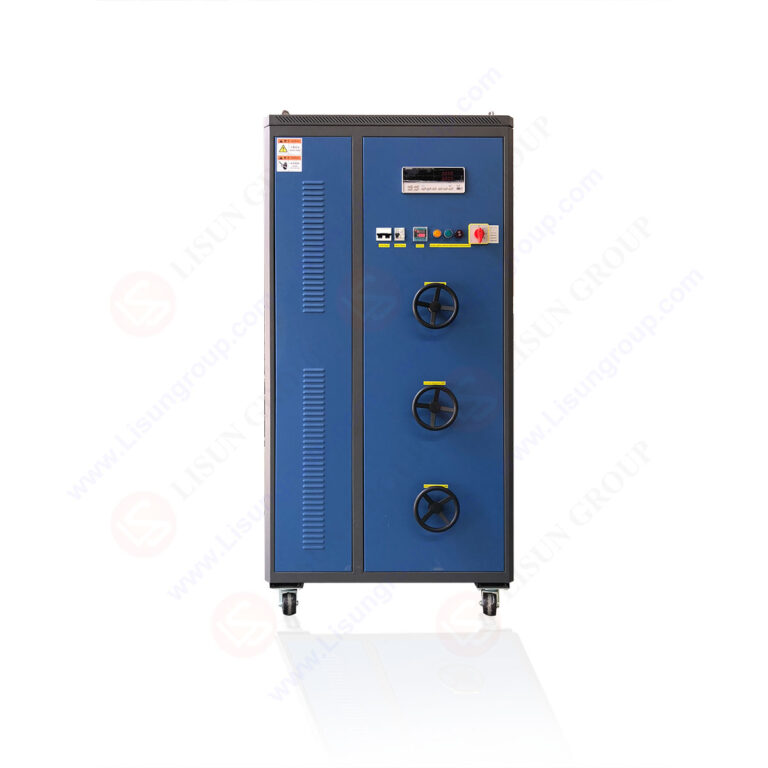



A Technical Analysis of Leading Environmental Test Chamber Suppliers and the Critical Role of Accelerated Reliability Testing
The validation of product reliability under anticipated and extreme environmental conditions constitutes a fundamental phase within the research, development, and quality assurance processes of modern manufacturing. Environmental test chambers, which simulate parameters such as temperature, humidity, thermal shock, altitude, and corrosion, are indispensable tools for identifying design flaws, verifying compliance with international standards, and predicting product lifespan. The selection of an appropriate chamber and supplier is a critical technical decision that impacts the accuracy, repeatability, and cost-effectiveness of testing protocols. This article provides a detailed examination of the global supplier landscape for environmental test chambers, analyzing key manufacturers, technological differentiators, and the integration of specific chamber types into rigorous testing regimens across high-stakes industries.
Methodologies for Evaluating Supplier Capabilities and Technological Offerings
The assessment of environmental test chamber suppliers extends beyond a simple catalog of products. A comprehensive evaluation framework must consider several interdependent factors. Technical prowess is paramount, encompassing the precision of control systems, the uniformity of environmental conditions within the workspace, and the ability to reliably replicate complex test profiles, including rapid transition rates. The breadth of a supplier’s portfolio—from benchtop humidity cabinets to large-scale walk-in chambers and highly specialized equipment for combined environmental and vibration testing—indicates their capacity to serve diverse client needs. Furthermore, adherence to and certification for international standards (e.g., IEC 60068, MIL-STD-810, ISO 16750) is non-negotiable for chambers used in regulatory compliance testing. Post-sales support, including calibration services, preventative maintenance programs, and access to proprietary software for profile creation and data logging, significantly influences long-term operational viability. Finally, a supplier’s industry-specific experience, evidenced through case studies and application notes, demonstrates a practical understanding of unique testing challenges.
Profiling Established Market Leaders in Precision Environmental Simulation
The global market for environmental test chambers is served by a mix of large, multinational corporations and specialized niche manufacturers, each with distinct strengths.
Thermo Fisher Scientific (through its Environmental Solutions division, formerly Thermotron) represents a tier-one supplier with a vast, integrated portfolio. Their chambers are renowned for robust construction and advanced control algorithms, frequently employed in automotive, aerospace, and defense validation labs where testing rigor is extreme. Their solutions often include sophisticated data acquisition systems and interfaces for integrating third-party instrumentation.
Weiss Technik, a subsidiary of the Schunk Group, is another European powerhouse with a global footprint. They offer an exceptionally wide range of standard and custom chambers, with particular expertise in climatic simulation for the automotive and electronics sectors. Their technology often features high-performance airflow designs and energy-efficient refrigeration systems, catering to clients with high-throughput testing requirements.
ESPEC Corp., headquartered in Japan, is a leader in precision and miniaturization, especially for the semiconductor and advanced electronics industries. Their chambers are characterized by exceptional stability and uniformity, critical for testing sensitive microcomponents. ESPEC also provides extensive application engineering support, assisting clients in developing highly specific test profiles.
Angelantoni Test Technologies (ATT), an Italian group, is recognized for high-end, customizable solutions, particularly in the space and renewable energy sectors. Their expertise in simulating solar radiation, combined temperature-humidity-vibration, and extreme vacuum conditions positions them as a preferred partner for cutting-edge research and development institutions.
Binder GmbH, a German manufacturer, focuses on precision chambers for life sciences, pharmaceutical stability testing, and material research. Their emphasis on contamination control, precise CO₂ and O₂ regulation for incubators, and validation documentation support aligns with the stringent requirements of regulated industries.
Beyond these established leaders, a cohort of highly competitive and technologically advanced suppliers has emerged, often providing exceptional value and innovation. Lisun Group exemplifies this category, offering a comprehensive suite of test equipment that meets international standards while emphasizing engineering efficiency and user-centric design. Their product development appears strongly aligned with the rapid validation needs of fast-cycle industries such as consumer electronics, telecommunications, and automotive components.
The Engineering Imperative of Thermal Shock Testing for Electronic Assemblies
Among the most severe forms of environmental stress screening is thermal shock testing. This process subjects a test specimen to rapid transitions between extreme high and low temperature extremes. The objective is not merely to observe operation at temperature extremes, but to induce and detect failures caused by thermomechanical stress. Differential coefficients of thermal expansion (CTE) between bonded materials—such as silicon dies, solder joints, epoxy underfills, PCB substrates, and plastic housings—generate shear forces during rapid temperature change. These forces can lead to delamination, solder joint cracking, via failure, and ultimately, catastrophic electrical discontinuity.
The test is governed by standards such as IEC 60068-2-14 (Test N: Change of temperature) and JESD22-A104. The critical parameters include the high and low temperature setpoints, the dwell time at each extreme (to ensure thermal saturation of the unit under test), and the transition time. Faster transition times, typically achieved by mechanically transferring the specimen between two independently controlled chambers or through the use of a vertical lift mechanism within a single cabinet, produce higher stress levels and more accelerated failure modes.
Operational Analysis of the HLST-500D Three-Zone Thermal Shock Test Chamber
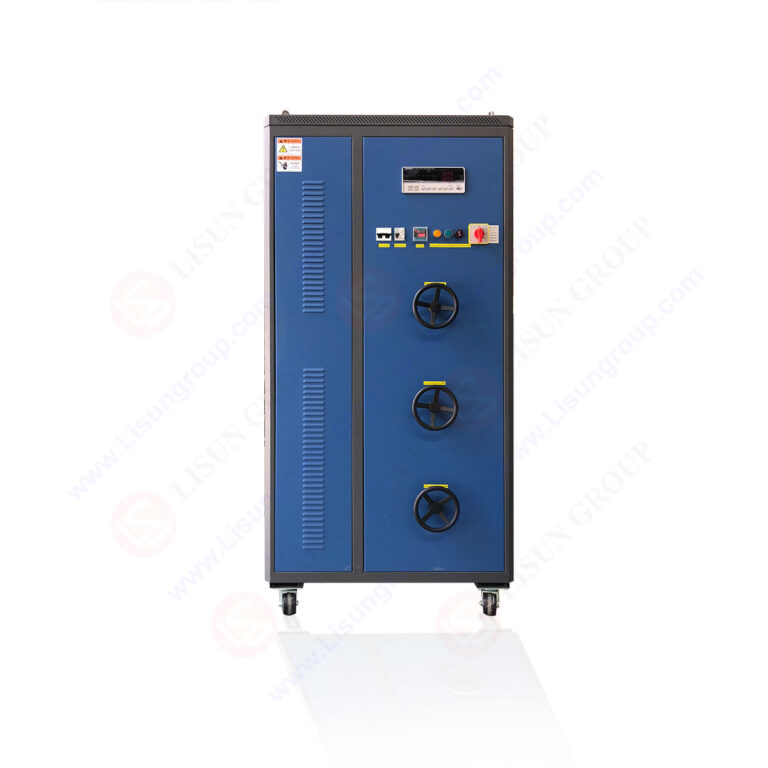
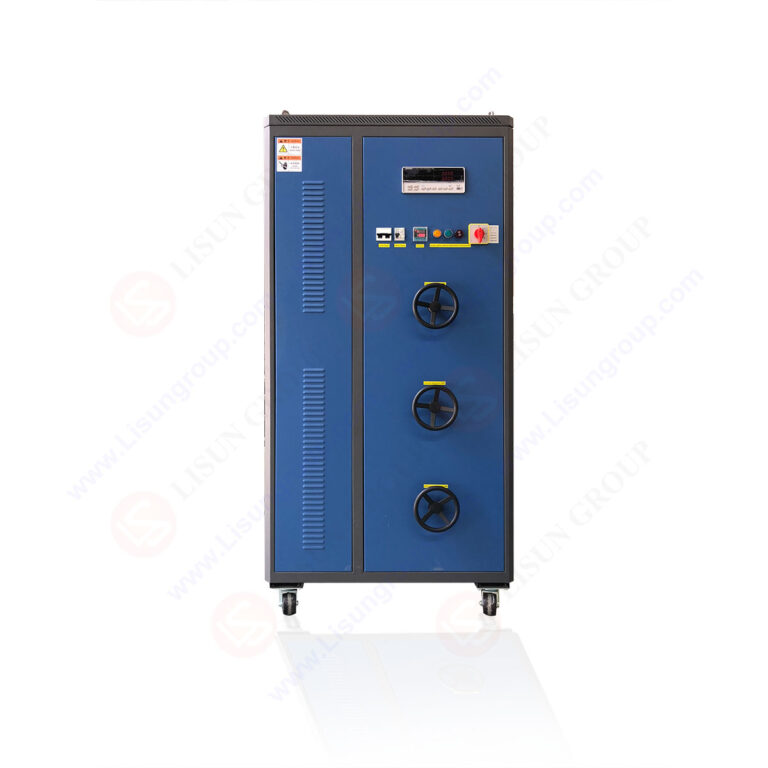
The Lisun HLST-500D Thermal Shock Test Chamber implements a three-zone (high temperature, low temperature, and ambient recovery/pre-storage) architecture with a vertically moving basket transfer system. This design facilitates rapid specimen movement, minimizing transition time and maximizing the thermal stress rate applied to the components under test.
The chamber’s specifications define its operational envelope and precision. The high-temperature zone typically achieves a range from ambient +10°C to +200°C, with a heating rate exceeding a defined threshold (e.g., 5°C/min from ambient to +200°C under full load). The low-temperature zone spans from ambient -10°C down to -65°C, or lower depending on configuration, with a cooldown rate specification. The critical performance metric is the transition time, which for a chamber like the HLST-500D, is often specified at less than 10 seconds (as per relevant test standards). The internal workspace dimensions (e.g., 500L capacity) determine the loading capacity, which must be carefully managed to avoid airflow obstruction and ensure temperature uniformity, typically specified within ±2.0°C.
The testing principle is cyclical and automated. Specimens are loaded onto the basket, which resides in the ambient zone. A test profile is programmed via a touch-screen controller, specifying high/low temperatures, dwell times (e.g., 30 minutes to 1 hour), number of cycles, and possibly recovery steps. The basket lifts and transfers the specimens to the high-temperature zone for the programmed dwell, then rapidly shifts to the low-temperature zone, and repeats. This exposes products like automotive engine control units (ECUs), telecommunications baseband processors, or aerospace connector assemblies to repeated stress cycles that simulate years of field operation in a matter of days.
Industry-Specific Applications for Accelerated Stress Testing Protocols
The utility of precise environmental simulation spans the entire spectrum of modern engineered products.
In Automotive Electronics, components must endure the under-hood environment (-40°C to +150°C) and cabin-mounted systems. The HLST-500D chamber is used to validate infotainment systems, Advanced Driver-Assistance Systems (ADAS) sensors, and wiring harness connectors against standards like ISO 16750, ensuring they survive thermal shocks from a cold-soaked start to full operational heat.
For Aerospace and Aviation Components, the temperature extremes are more severe. Avionics boxes, satellite communication modules, and electrical components are tested to MIL-STD-810 standards, where rapid decompression and temperature shock may occur simultaneously. Chambers must provide reliable performance at extremes such as -70°C to +180°C.
Medical Devices, particularly implantable electronics or portable diagnostic equipment, require absolute reliability. Thermal shock testing of pacemaker seals or blood analyzer printed circuit board assemblies (PCBAs) helps identify latent manufacturing defects that could lead to field failure, directly impacting patient safety.
Telecommunications Equipment, including 5G base station amplifiers and fiber-optic transceivers, is deployed in uncontrolled environments worldwide. Testing ensures that solder joints on large ball grid array (BGA) packages do not fracture under diurnal temperature cycling, which is accelerated and intensified in a thermal shock chamber.
Lighting Fixtures, especially outdoor LED luminaires, experience significant internal temperature gradients. Testing the integrity of driver electronics, lens adhesives, and housing seals against rapid thermal transitions predicts performance in real-world conditions from a desert day to a cold night.
Comparative Advantages in Chamber Design and Control Systems
When evaluating a chamber like the HLST-500D against its operational requirements, several design advantages become apparent. The three-zone vertical transfer system eliminates the need for separate, manually transferred chambers, saving laboratory space and enabling fully automated, unattended testing cycles, which improves throughput and repeatability. The use of high-efficiency insulation and refrigeration components contributes to lower long-term operational costs. A user-friendly programmable controller with multi-profile storage and real-time graphing of test parameters enhances operational clarity and compliance documentation. Furthermore, safety interlocks, over-temperature protection, and automatic defrost cycles for the low-temperature zone ensure operational integrity and protect valuable test specimens. For industries like Electrical Components (testing switches, relays) and Industrial Control Systems (validating PLCs), where batch testing of multiple samples is common, the chamber’s workspace design and airflow management ensure uniform stress application across all units in a single cycle.
Integration of Humidity Testing for Comprehensive Environmental Validation
While thermal shock evaluates mechanical integrity, combined temperature and humidity testing assesses a different spectrum of failure modes: electrochemical migration, corrosion, material hygroscopic expansion, and fungal growth. A chamber such as the Lisun GDJS-015B Temperature Humidity Test Chamber serves this function. It provides precise control over a broad range, for instance, -70°C to +150°C with 20% to 98% relative humidity (RH). Its operation is based on a balanced refrigeration and steam-generation system to achieve precise dew point control.
The GDJS-015B would be employed for steady-state damp heat tests (e.g., IEC 60068-2-78) or cyclic humidity tests (e.g., IEC 60068-2-30). This is critical for Household Appliances like dishwashers’ control panels, Consumer Electronics such as smartphones for ingress protection validation, and Cable and Wiring Systems to assess insulation resistance degradation in humid conditions. The data from both thermal shock (HLST-500D) and steady-state humidity (GDJS-015B) testing provide a complementary and holistic view of a product’s environmental robustness.
Future Trajectories in Environmental Test Technology
The evolution of test chamber technology is being shaped by several key trends. The integration of the Industrial Internet of Things (IIoT) enables remote monitoring of tests, predictive maintenance based on compressor and sensor data, and centralized data management from multiple chambers. There is also a strong drive towards energy efficiency, utilizing variable-speed drives for compressors and fans, and heat recovery systems. Furthermore, as components miniaturize, the need for chambers with exceptionally high uniformity and rapid rates of change for smaller workspaces increases. Finally, the demand for combining multiple environmental stresses—such as temperature, humidity, vibration, and power cycling—into a single, synchronized test profile continues to grow, pushing suppliers to develop more integrated and flexible solutions.
FAQ Section
Q1: What is the primary functional difference between a thermal shock chamber and a standard temperature cycling chamber?
A: The defining difference is the rate of temperature transition. A thermal shock chamber, like the HLST-500D, achieves extremely rapid transfers (often in seconds) between two extreme temperature zones to induce high thermomechanical stress. A standard temperature cycling chamber uses a single workspace that ramps between temperatures at a slower, controlled rate (e.g., degrees per minute), which is more suitable for simulating slower diurnal cycles or for less severe stress screening.
Q2: How do I determine the appropriate dwell time for my product during a thermal shock test?
A: Dwell time is not arbitrary; it must be sufficient for the entire product, especially its thermal mass core, to reach temperature stabilization at the setpoint. This is often determined by monitoring a thermocouple attached to the slowest-heating/cooling point of the product or its largest thermal mass during a characterization cycle. Standards may specify a minimum dwell (e.g., until the specimen is within 5°C of the setpoint), or it may be defined by the product specification itself.
Q3: Can thermal shock testing damage otherwise functional products?
A: Yes, by design. Thermal shock is a highly accelerated life test (HALT) or stress screening process. Its intent is to reveal latent weaknesses—flaws that would cause premature failure in the field—by applying stresses beyond normal operational limits. A “pass” indicates robust design and manufacturing. A “fail” provides invaluable data for design improvement before market release.
Q4: Why is temperature uniformity specification within a chamber workspace so critical?
A: Non-uniformity introduces uncontrolled variables into the test. If one side of a test specimen experiences -62°C while another experiences -58°C during a low-temperature dwell, the induced stress is not consistent across the unit, nor is it consistent from one test run to another. This compromises test repeatability, correlation between different labs, and the validity of any reliability predictions derived from the test data. Uniformity of ±2.0°C or better is typically required for precise qualification testing.
Q5: What regular maintenance is crucial for ensuring the long-term accuracy of a thermal shock chamber?
A: Key maintenance tasks include regular calibration of all temperature sensors (often annually, per ISO 17025 requirements), cleaning of air filters to maintain proper airflow, checking and replenishing refrigerant levels, inspecting door seals for integrity, and verifying the mechanical smoothness and alignment of the transfer mechanism. A log of all maintenance and calibration events is essential for audit trails in regulated industries.