


Advancements in Portable Water Testing Equipment for On-Site Analysis in Electrical and Electronic Applications
Introduction to On-Site Water Ingress Evaluation
The integrity of electrical and electronic equipment against environmental ingress, particularly water, is a paramount concern across a multitude of industries. Traditional laboratory-based testing, while controlled, often fails to capture the real-world conditions and logistical challenges of field deployment. The evolution of portable water testing equipment represents a significant technological shift, enabling precise, on-site verification of ingress protection (IP) ratings as defined by standards such as IEC 60529. This capability is critical for quality assurance, failure analysis, and compliance validation without the need to transport large or installed components to a dedicated facility. On-site analysis mitigates risk, accelerates time-to-market, and provides immediate, actionable data for engineers and inspectors operating in diverse environments, from manufacturing floors to remote installation sites.
The Imperative for Field-Based IPX Testing Protocols
The limitations of fixed-location testing chambers are increasingly apparent in a globalized industrial landscape. For equipment installed in infrastructure—such as telecommunications cabinets, industrial control panels, or automotive electronic control units (ECUs)—removal for testing is often prohibitively expensive or operationally disruptive. Furthermore, post-production modifications or repairs necessitate re-validation under conditions that mirror the original certification test. Portable testing equipment addresses these gaps by delivering laboratory-grade performance in a deployable format. The technical imperative extends beyond mere convenience; it is rooted in the need for dynamic assessment where environmental variables like temperature, orientation, and mounting can be evaluated in situ. This ensures that the protective performance of seals, gaskets, and enclosures is validated under the actual mechanical and environmental stresses they will encounter throughout their service life.
Core Technological Principles of Portable Water Testing Systems
Portable water testing devices operate on the same fundamental principles as their benchtop counterparts but achieve this through innovative miniaturization and power management. The primary methodologies simulated include:
- IPX1 to IPX4 (Drip and Splash Water): Utilizing precisely calibrated nozzles and oscillating mechanisms to produce defined water droplet sizes and impact angles. Portable systems replicate the “dripping water” and “spraying water” conditions with controlled pressure and flow rates, often employing integrated pumps and solenoid valves.
- IPX5 and IPX6 (Jet and Powerful Jet Water): These tests require nozzles that produce water jets of specific diameter and force. Portable equipment incorporates high-pressure pumps and pressure regulation systems to deliver the mandated 12.5 L/min at 30 kPa (IPX5) or 100 L/min at 100 kPa (IPX6) from a standardized distance.
- IPX7 and IPX8 (Temporary and Continuous Immersion): While full immersion testing is less commonly conducted on-site due to tank size, portable systems can be configured for localized immersion or to verify the preconditioning of samples for lower IPX tests after immersion cycles conducted elsewhere.
Key to the functionality of these systems is the integration of precision flow meters, digital pressure sensors, and programmable logic controllers (PLCs) that allow for test parameter customization and repeatability. Advanced units feature real-time data logging, documenting pressure, flow, duration, and ambient conditions throughout the test cycle for auditable reporting.
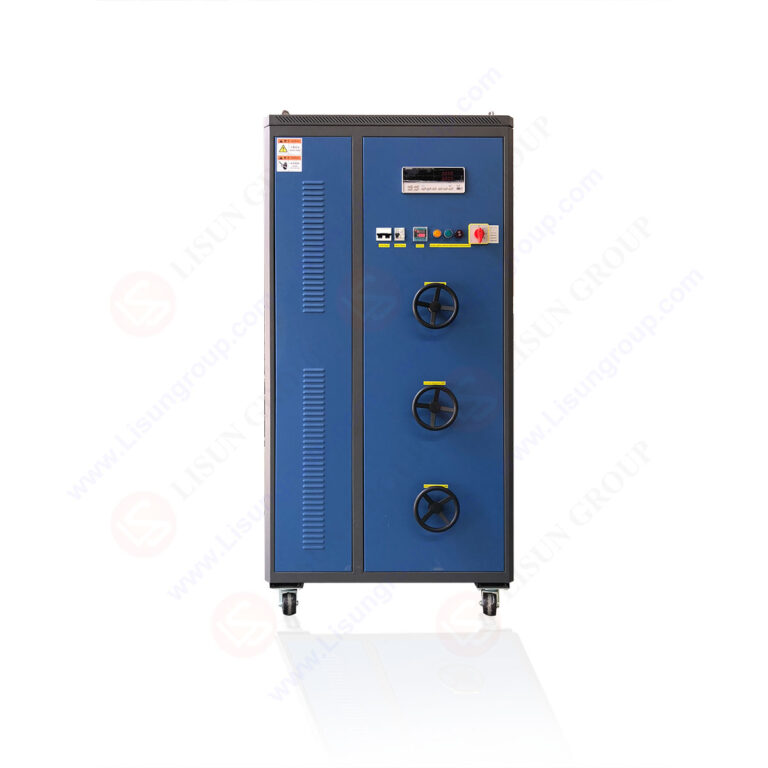
Introducing the LISUN JL-XC Series Portable Waterproof Test Apparatus
The LISUN JL-XC Series embodies the convergence of rigorous testing standards and field-deployable design. Engineered for reliability and accuracy, this series provides a comprehensive solution for on-site IPX1 through IPX6 testing, addressing the critical need for mobile verification capabilities.
Specifications and Operational Parameters
The JL-XC Series is characterized by its robust construction and user-configurable test profiles. Key specifications include:
- Test Standards Compliance: Fully compliant with IEC 60529, ISO 20653, and other derivative national standards for IP code testing.
- Test Grade Range: Configurable for IPX1, IPX2, IPX3, IPX4, IPX5, and IPX6.
- Water Pressure Regulation: Adjustable range from 0 to 150 kPa, with digital display and closed-loop feedback control for stability.
- Flow Rate Control: Precision flow meter with a range of 10 to 120 L/min, ensuring accurate adherence to standard requirements.
- Oscillation Mechanism: For IPX3/IPX4 tests, an integrated oscillating tube or platform provides the required ±60° or ±180° motion with adjustable speed.
- Power Supply: Designed for versatility with AC mains input (110V/220V) and optional DC battery pack operation for completely cordless use in remote locations.
- Construction: Frame and critical components utilize stainless steel and anodized aluminum for corrosion resistance. The system is housed in a ruggedized, wheeled case for transport.
Testing Principle and System Architecture
The JL-XC Series operates on a closed-loop control system. The user selects the desired IPX test via an intuitive HMI (Human-Machine Interface). The system’s PLC then activates the appropriate pump, sets the pressure regulator, and selects the correct test nozzle from an integrated manifold. For spray tests (IPX3/IPX4), the oscillation motor is engaged. Sensors continuously monitor water pressure at the nozzle outlet and flow rate, feeding data back to the controller to maintain parameters within a ±2% tolerance band throughout the test duration. This ensures that the hydrodynamic conditions impacting the device under test (DUT) are precisely as stipulated by the relevant standard clause.
Industry-Specific Use Cases and Applications
The portability of the JL-XC Series makes it indispensable across sectors where electronics face exposure to liquids.
- Automotive Electronics: Testing ECUs, sensor housings (e.g., LiDAR, cameras), battery management systems (BMS) enclosures, and exterior lighting assemblies on the production line or after installation in vehicle prototypes.
- Telecommunications Equipment: Validating the weatherproofing of outdoor 5G mmWave units, fiber optic terminal enclosures, and base station cabinets installed on towers or urban infrastructure.
- Industrial Control Systems: Field testing of programmable logic controller (PLC) panels, motor drives, and human-machine interface (HMI) terminals located in washdown environments or outdoor industrial sites.
- Lighting Fixtures: Verifying IP ratings of LED street lights, architectural floodlights, and underwater pool lights post-installation or following maintenance.
- Aerospace and Aviation Components: Assessing connectors, avionics bay enclosures, and external navigation light housings for resistance to driving rain and high-pressure spray during ground maintenance operations.
- Medical Devices: Ensuring the ingress protection of portable diagnostic equipment, handheld monitors, and surgical tool interfaces that require cleaning and disinfection in clinical settings.
Competitive Advantages in Technical Deployment
The JL-XC Series distinguishes itself through several key engineering advantages:
- Parametric Fidelity: Its closed-loop sensor feedback system guarantees that the kinetic energy of the water jet or spray conforms strictly to standard requirements, a factor where simpler, pressure-only controlled systems may deviate.
- Operational Autonomy: The optional battery pack and integrated water reservoir allow for complete off-grid operation for several hours, enabling testing in locations without ready access to power or water mains.
- Rapid Reconfiguration: The quick-change nozzle system and pre-programmed test profiles reduce setup time between different IPX tests from hours to minutes, increasing throughput during factory audits or field inspections.
- Data Integrity: Integrated logging creates a immutable digital record of the test, including environmental conditions, which is crucial for compliance documentation and failure analysis.
Integration with Broader Quality Assurance and Compliance Frameworks
The data generated by portable testing equipment like the JL-XC Series does not exist in isolation. It feeds directly into broader Quality Management Systems (QMS) and digital product lifecycle management platforms. By providing standardized, quantitative data from the field, it allows for trend analysis of supplier component quality, correlation between laboratory and real-world performance, and informed decision-making for design iterations. This integration is essential for industries operating under stringent regulatory oversight, such as medical devices (FDA 21 CFR Part 820) and automotive (IATF 16949), where documented evidence of validation at all stages is mandatory.
Conclusion: The Strategic Value of Deployable Verification
The advent of sophisticated portable water testing equipment marks a maturation in environmental reliability engineering. Moving beyond the static laboratory, it empowers organizations to implement a proactive, distributed verification strategy. The LISUN JL-XC Series, with its precision, robustness, and flexibility, exemplifies this capability. By enabling accurate, on-demand IP testing, it reduces warranty risks, strengthens supply chain quality controls, and ultimately contributes to the enhanced durability and safety of electrical and electronic products across every sector of the modern economy. As devices become more interconnected and deployed in increasingly challenging environments, the role of such portable analytical tools will only grow in strategic importance.
Frequently Asked Questions (FAQ)
Q1: Can the JL-XC Series be used to certify a product for a specific IP rating?
A: While the JL-XC Series performs tests in exact accordance with IEC 60529 methodology, formal certification is typically issued by an accredited third-party laboratory. However, this equipment is ideal for pre-compliance testing, production line quality control, and post-installation verification, providing data that is directly comparable to and supportive of formal certification.
Q2: How is water quality managed in a portable system to prevent nozzle clogging or measurement inaccuracy?
A: The system includes integrated particulate filtration. For optimal performance and longevity, it is recommended to use clean water, such as deionized or distilled water, which also prevents mineral deposition on both the test equipment and the device under test.
Q3: What is the typical setup and calibration routine required before field use?
A: The system requires initial leveling and a brief priming of the pump and lines. Calibration of pressure transducers and flow meters should be performed at periodic intervals as per the manufacturer’s schedule (e.g., annually) or according to the user’s internal quality procedures. Daily verification against a built-in diagnostic routine is recommended.
Q4: For IPX7/8 immersion tests, is portable equipment feasible?
A: Portable equipment for full immersion (IPX7/8) is inherently limited by the need for a large, sealed tank capable of maintaining depth pressure. The JL-XC Series focuses on IPX1-IPX6. For immersion tests, specialized portable tanks exist but are less common; such tests are often more practically conducted in a fixed laboratory.
Q5: How does the system account for variations in ambient temperature that might affect test results?
A: Water viscosity and, to a lesser extent, pump performance can be influenced by temperature. The JL-XC Series monitors ambient temperature and, in advanced models, can apply minor compensatory adjustments to pump control algorithms. For critical testing, operating within a specified ambient range (typically 15°C to 35°C) and allowing the water reservoir to acclimate is advised to ensure strictest adherence to standard conditions.