


Advancements in Portable Water Testing Equipment for On-Site Environmental and Product Durability Analysis
The accurate assessment of water quality and the simulation of aqueous environmental conditions are critical across a diverse spectrum of industrial and scientific disciplines. Traditional laboratory-based analysis, while highly precise, often introduces significant logistical constraints, including sample degradation during transport, time delays, and high operational costs. Concurrently, the verification of product resilience against water ingress—a key determinant of longevity and safety—requires robust, repeatable testing outside controlled laboratory environments. This dual necessity has driven the development of sophisticated portable water testing equipment capable of delivering laboratory-grade analytical and environmental simulation results directly at the point of need. This technical article examines the principles, applications, and specifications of modern portable systems, with a detailed focus on integrated environmental simulation solutions such as the LISUN JL-XC Series waterproof test equipment.
Fundamental Principles of On-Site Water Quality Analysis
Portable water testing equipment operates on several core analytical principles, adapted for field deployment. Colorimetric and spectrophotometric methods remain prevalent for parameters like chlorine, pH, hardness, and specific ions (e.g., iron, copper, nitrate). These systems utilize pre-formulated reagents that react with target analytes to produce a color change, the intensity of which is measured by a built-in optical sensor or a handheld spectrophotometer. Modern iterations employ LED light sources and solid-state detectors, offering stability and low power consumption. Electrochemical techniques, including potentiometry and amperometry, are integral for measuring pH, oxidation-reduction potential (ORP), and dissolved oxygen. Advanced portable meters now incorporate ion-selective electrodes (ISEs) for direct measurement of ions like fluoride, ammonium, and nitrate, with onboard algorithms for temperature compensation and calibration management.
For more complex contaminant screening, portable fluorometers and nephelometers provide sensitive detection of organic compounds and turbidity, respectively. The unifying technological advancement across all these modalities is the integration of microprocessor control, digital signal processing, and intuitive software interfaces. This allows for automatic calibration, data logging, error diagnostics, and the export of results in standardized formats, ensuring data integrity for regulatory compliance and quality assurance protocols.
Simulating Aqueous Environmental Stress for Product Validation
Beyond direct water analysis, there exists a parallel requirement to subject manufactured components and finished goods to controlled, reproducible water-based environmental stress. This is not a test of water quality, but a test of a product’s ability to resist water ingress and function within or despite exposure to moisture, precipitation, and condensation. Standards such as IEC 60529 (Ingress Protection, IP Code), ISO 20653 (road vehicles – degrees of protection), and various MIL-STD-810 methods define rigorous test procedures for splash, spray, drip, and immersion resistance.
Portable test equipment for this purpose must generate precise and consistent water exposure conditions. This involves calibrated nozzle systems for spray and jet testing, controlled water pressure and flow rates, specified water temperature ranges, and exacting geometric relationships between the test specimen and the water source. The equipment’s portability allows for validation testing to be conducted at manufacturing sites, incoming quality control checkpoints, or even in-situ for large assemblies, eliminating the need to transport bulky products to a central test lab.
The LISUN JL-XC Series: Integrated Portable Solution for Water Ingress Protection Testing
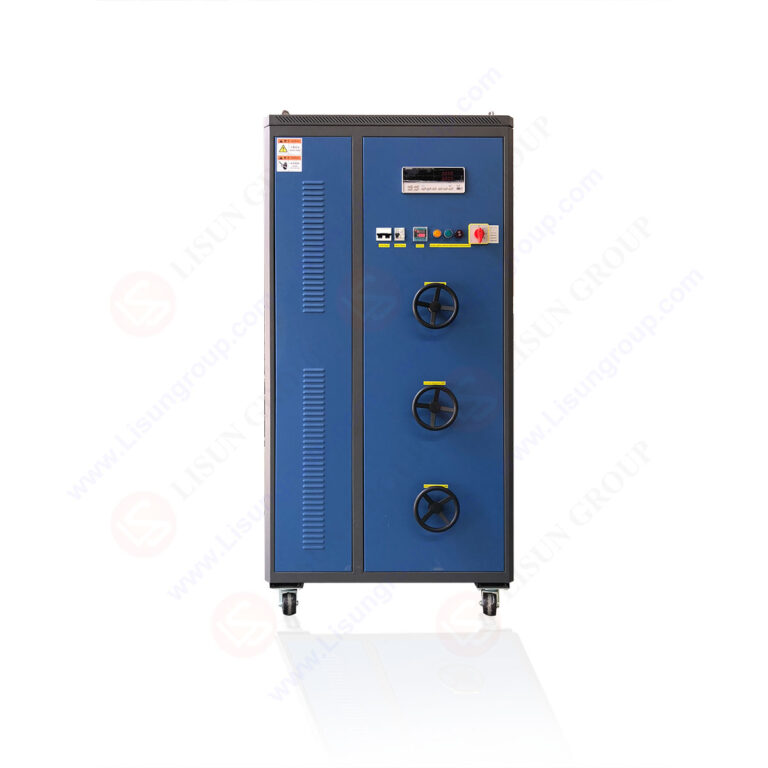
A representative paradigm of this specialized portable testing equipment is the LISUN JL-XC Series waterproof test apparatus. This series is engineered to perform the critical IPX3 (spraying water) and IPX4 (splashing water) tests as defined by IEC 60529, among other relevant standards. Its design philosophy centers on providing a self-contained, precise, and user-friendly system that can be deployed flexibly within a production or development environment.
Core Specifications and Testing Principle:
The JL-XC Series typically consists of a calibrated oscillating tube or spray ring fixture with standardized nozzles, a high-precision water pump, a flow control and metering system, a water tank, and a comprehensive electronic control unit. The test principle is mechanical and reproducible: water is pumped at a specified pressure (e.g., 80-100 kPa for IPX3/IPX4) through nozzles of a defined aperture. For an IPX4 test, the spray assembly oscillates over a prescribed arc, ensuring the test specimen is exposed to splashing water from all relevant directions. The unit’s portability is achieved through a robust, often wheeled, frame that houses all components, requiring only a standard electrical connection and a water source for operation.
Key specifications include:
- Test Standards: Compliant with IEC 60529 IPX3, IPX4; ISO 20653; and equivalent automotive, appliance, and lighting standards.
- Water Flow Rate: Precisely adjustable and calibrated, typically within a range of 0.07 – 0.1 L/min per nozzle for IPX3/IPX4.
- Oscillation Control: Programmable swing speed and angle to meet standard requirements (e.g., approx. 120° arc for IPX4).
- Spray Distance: Adjustable stand or fixture to maintain the mandated 200-300mm distance between nozzle and specimen.
- Test Duration: Programmable timer with a wide range (1 second to 999 hours) for automated test cycles.
- Construction: Stainless steel and corrosion-resistant materials for critical fluid paths, ensuring long-term reliability and preventing contamination that could affect nozzle performance.
Industry-Specific Applications and Use Cases
The application of portable waterproof test equipment like the JL-XC Series is vast, spanning industries where moisture resistance is a non-negotiable attribute of product safety, reliability, and quality.
Electrical and Electronic Equipment & Industrial Control Systems: Control panels, motor drives, PLC housings, and operator interfaces must withstand incidental exposure to cleaning processes or industrial humidity. The JL-XC Series verifies that enclosure seals and gaskets prevent water ingress that could cause short circuits, corrosion, or control failure.
Household Appliances and Consumer Electronics: From kitchen blenders and electric kettles (resistant to splashing) to outdoor speakers and smart home controllers, products are tested for resilience against typical use-case spills and humid conditions. Portable testing allows for high-frequency production line audits.
Automotive Electronics: Components such as sensors, electronic control units (ECUs), lighting assemblies, and infotainment systems mounted in wheel wells, underbody, or engine compartments require validation against road spray. The JL-XC apparatus simulates these conditions per automotive-specific standards.
Lighting Fixtures: Both indoor (e.g., bathroom fixtures) and outdoor (garden, architectural, street lighting) luminaires are subjected to spray tests to ensure internal electronics are protected, preventing failure and electrical hazards.
Telecommunications Equipment: Outdoor cabinets, base station components, and junction boxes are exposed to rain and driven precipitation. On-site testing with portable equipment is essential for validating installations and new enclosure designs in the field.
Medical Devices: Equipment intended for use in cleanrooms, laboratories, or near patient care areas (e.g., monitoring devices, mobile carts) may need to withstand cleaning and disinfection protocols involving sprays or splashes, necessitating IPX3/X4 validation.
Aerospace and Aviation Components: While subject to more extreme environmental testing overall, certain cabin and avionics components may require verification against fluid spills or condensation.
Electrical Components, Cable and Wiring Systems: Connectors, switches, sockets, and cable glands are tested to ensure their IP-rated versions effectively seal against dripping and spraying water, critical for safety in damp locations.
Office Equipment and Office Equipment: Specialty printers, projectors, or networking equipment used in varied environments may require proof of resistance to incidental moisture.
Competitive Advantages of Integrated Portable Test Systems
Deploying a system like the LISUN JL-XC Series offers distinct operational and technical advantages over traditional ad-hoc testing or reliance on centralized laboratories.
Accuracy and Compliance Assurance: By integrating calibrated nozzles, controlled pressure, and standardized oscillation, the system removes operator variability. This ensures test results are consistent, repeatable, and directly traceable to international standards, which is paramount for certification and liability management.
Operational Efficiency and Cost Reduction: Portability eliminates sample transport, reduces queue times at central labs, and enables immediate feedback to production lines. This accelerates design iteration cycles, streamlines incoming quality control (IQC) for sealed components, and reduces overall time-to-market for new products.
Enhanced Testing Flexibility: The unit can be moved to the product, which is indispensable for testing large, heavy, or fixed installations (e.g., an industrial control cabinet on a factory floor). It also allows for testing under real-world environmental conditions if required.
Data Integrity and Traceability: Modern units feature digital controls and data logging, recording key test parameters (pressure, flow, time, temperature) alongside a test result. This creates an auditable trail for quality management systems like ISO 9001 or IATF 16949.
Improved Safety: Containing the water spray within a defined test area or using optional test chambers improves workplace safety and housekeeping compared to improvised testing setups.
Integration with Broader Quality Assurance and Environmental Monitoring Frameworks
The data generated by portable water testing equipment—both analytical and environmental simulation—does not exist in isolation. It feeds into broader Quality Assurance (QA) and Environmental, Social, and Governance (ESG) frameworks. Water quality data from field analyzers can be geotagged and timestamped, populating environmental monitoring databases in near real-time. Similarly, the pass/fail data and performance metrics from JL-XC type tests become critical inputs for Statistical Process Control (SPC) charts in manufacturing. A spike in IP test failures can trigger root-cause analysis on sealant application processes or gasket supplier quality, enabling proactive correction. This closed-loop integration of portable test data into digital management systems represents the evolution from simple verification to intelligent quality control and environmental stewardship.
Conclusion
The domain of portable water testing encompasses both the analysis of aqueous environments and the simulation of those environments for product validation. The technological convergence of precision fluid dynamics, digital control, and robust mechanical design has resulted in systems that deliver laboratory-grade rigor in a field-deployable format. Equipment such as the LISUN JL-XC Series waterproof test apparatus exemplifies this advancement, providing industries with a reliable, standardized, and efficient method to verify the ingress protection of a vast array of products. As global supply chains and quality expectations continue to intensify, the role of precise, portable validation tools will only grow in significance, ensuring product durability, user safety, and regulatory compliance from the factory floor to the end-user environment.
FAQ Section
Q1: What is the primary difference between an IPX3 and an IPX4 test, and can the JL-XC Series perform both?
A1: The primary difference lies in the angle and coverage of water exposure. IPX3 defines a test for spraying water at an angle up to 60° from vertical. IPX4 defines a test for splashing water from all directions, typically achieved by oscillating the spray fixture. The JL-XC Series is specifically designed with an oscillating mechanism and calibrated nozzles to perform both tests in compliance with IEC 60529, by adjusting the oscillation arc and test setup as per the standard’s requirements.
Q2: For how long must a component be tested to achieve IPX3 or IPX4 certification?
A2: According to IEC 60529, the test duration for both IPX3 and IPX4 is a minimum of 10 minutes per relevant orientation. For IPX4, due to the oscillating spray covering all directions, the typical total test duration is 10 minutes. For IPX3, if the enclosure is tested in four fixed positions (tilted 0°, 30°, 60°, and 90°), the duration is 2.5 minutes per position, totaling 10 minutes. The JL-XC Series’ programmable timer ensures accurate adherence to these durations.
Q3: Can ordinary tap water be used in the JL-XC Series for IP testing, or does it require deionized water?
A3: IEC 60529 generally specifies that water used for IPX3 and IPX4 testing should be of “drinking water quality.” Therefore, typical tap water is often acceptable. However, the standard allows for the addition of a wetting agent in very small concentrations to reduce surface tension if local water has unusually high tension. The key concern is to prevent nozzle clogging; thus, clean, filtered water is recommended to maintain the precision of the nozzle aperture and flow rate over time.
Q4: How is the water flow rate verified and calibrated on a portable system like the JL-XC?
A4: The flow rate is a critical calibrated parameter. Verification is performed using a graduated cylinder and a stopwatch, collecting water from the test nozzle over a measured time. The JL-XC Series incorporates a precision flow control valve and meter. Regular calibration against a master flow meter or gravimetric method is part of recommended preventative maintenance to ensure ongoing compliance with the standard’s tolerances (e.g., 0.07 L/min ±5%).
Q5: Our product is large and cannot fit in a standard test chamber. How can the JL-XC Series accommodate this?
A5: A significant advantage of the JL-XC Series’ portable design is its flexibility. The spray assembly can often be detached or the entire unit positioned adjacent to a large product, such as an industrial control cabinet or a vehicle-mounted assembly. The standard mandates a specific distance (e.g., 200-300mm) between the nozzle and the test surface. As long as this geometric relationship is maintained and the test covers all relevant surfaces, the test is valid. The unit’s mobility makes such in-situ testing feasible.