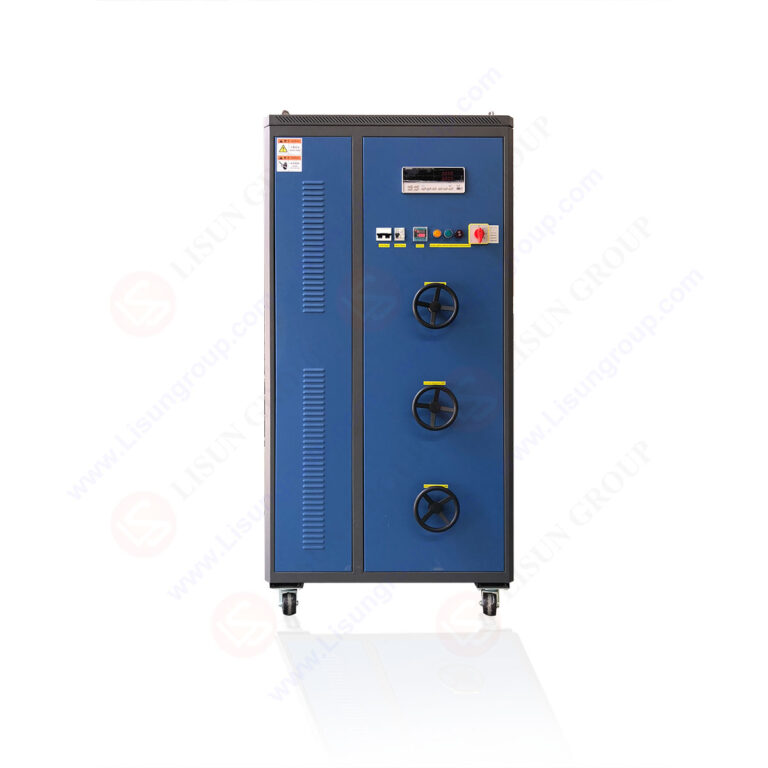



Dustproof Test Chambers: Ensuring Product Reliability in Harsh Environments
The pervasive infiltration of particulate matter represents a significant and often underestimated threat to the operational integrity and longevity of modern technological systems. From the fine silica dust of arid deserts to the conductive metallic shavings within industrial workshops, environmental particulates can induce catastrophic failures, including electrical short circuits, mechanical binding, optical obscuration, and accelerated wear of moving components. Consequently, the validation of a product’s ingress protection (IP) rating against solids, particularly its dustproof capability, is not merely a compliance exercise but a fundamental pillar of reliability engineering. Dustproof test chambers serve as the critical apparatus for simulating these adversarial conditions in a controlled, repeatable, and quantifiable manner, thereby enabling manufacturers to identify design vulnerabilities, verify sealing efficacy, and substantiate product claims prior to field deployment.
The Imperative of Dust Ingress Protection Across Industries
The requirement for dustproof validation spans a remarkably broad spectrum of sectors, each with distinct failure modes and consequences. In the domain of Electrical and Electronic Equipment and Industrial Control Systems, dust accumulation on printed circuit boards (PCBs) can create leakage paths, leading to signal corruption, parasitic currents, and ultimately, thermal runaway. Automotive Electronics, particularly components mounted in under-hood or underbody locations, must withstand road dust and brake pad particulates that can compromise sensors, connectors, and control units critical to vehicle safety and performance.
Lighting Fixtures, especially those employed in outdoor, industrial, or roadway applications, suffer from lumen depreciation and overheating when dust coats heat sinks and optical surfaces. Telecommunications Equipment deployed in base stations or rural areas relies on dustproof enclosures to maintain signal integrity and prevent cooling system blockages. For Medical Devices, such as portable diagnostic equipment or surgical tools, dust ingress is not only a reliability concern but a potential contamination vector, directly impacting patient safety.
The Aerospace and Aviation Components sector subjects parts to extreme particulate environments, from runway debris to high-altitude dust, where failure is non-negotiable. Even seemingly benign products like Household Appliances (e.g., robotic vacuums, outdoor air conditioners), Consumer Electronics (smartphones, cameras), Office Equipment (printers, servers), and fundamental Electrical Components like switches, sockets, and Cable and Wiring Systems connectors, require proven dust resistance to ensure expected service life and user safety across diverse global environments.
Fundamental Principles of Dust Testing: Simulation and Assessment
Dust testing is governed by international standards, most notably IEC 60529 (which defines IP codes) and its regional equivalents like DIN 40050 or ISO 20653. The IP5X and IP6X ratings specifically address dust protection. IP5X denotes “dust protected,” where ingress of dust is not entirely prevented, but it cannot enter in sufficient quantity to interfere with satisfactory operation of the equipment. IP6X is more stringent, signifying “dust tight,” with no dust ingress permitted under defined test conditions.
The core principle involves exposing the test specimen to a controlled cloud of fine dust within a sealed chamber. The test dust is typically dry Arizona Road Dust or equivalent, with a specified particle size distribution (e.g., ≤ 75 µm). The chamber creates and maintains a turbulent dust cloud, often using circulated air or mechanical agitation. The test specimen is usually subjected to a partial vacuum (for IP6X) to create a pressure differential that actively drives dust particles toward potential ingress points, simulating the effect of wind or thermal cycling. Post-test evaluation involves meticulous internal inspection for dust presence, coupled with functional testing to verify no degradation in performance.
The LISUN SC-015 Dust Sand Test Chamber: A Technical Examination
The LISUN SC-015 represents a specialized apparatus engineered for conducting precise and standards-compliant IP5X and IP6X dust ingress tests. Its design integrates the necessary environmental controls, safety features, and measurement systems to deliver reproducible and authoritative results.
Specifications and Operational Parameters:
- Chamber Volume: A defined internal workspace sufficient to accommodate a turbulent dust cloud around the test specimen.
- Test Dust: Utilizes standardized fine grain dust, such as Arizona Road Dust (conforming to ISO 12103-1, A2 Fine Test Dust).
- Dust Circulation System: Incorporates a closed-loop airflow system with a blower and ducting to suspend and uniformly distribute dust throughout the chamber volume. The dust is fluidized and circulated for the duration of the test cycle.
- Vacuum System: Integral to IP6X testing, the system generates and regulates a sustained partial vacuum inside the test specimen, typically at a pressure differential of 2 kPa or as specified by the relevant standard. A flowmeter monitors the suction rate to ensure consistent test conditions.
- Control System: A programmable logic controller (PLC) or microprocessor-based interface allows for precise setting and monitoring of test parameters: test duration (commonly 2-8 hours), vacuum level, and circulation fan operation.
- Construction: The chamber is fabricated from corrosion-resistant materials (e.g., stainless steel or coated steel) with a sealed viewing window for observation. A dust recovery and filtration system minimizes operator exposure and facilitates dust reuse.
- Safety Features: Include emergency stop, over-temperature protection, and electrical safety interlocks.
Testing Principle and Methodology:
The specimen is placed inside the chamber, and all cable glands or intentional openings are sealed, except for the connection to the vacuum system if required. The chamber is charged with a calculated mass of test dust per cubic meter. For an IP5X test, the dust circulation system is activated, engulfing the specimen in a dense, turbulent cloud for the prescribed period. For IP6X, the internal vacuum is applied to the specimen simultaneously with dust circulation, creating an inward pressure differential that aggressively challenges seals and gaskets. Following exposure, the specimen is carefully removed, externally cleaned, and disassembled in a clean environment. Internal components are inspected microscopically for any dust penetration, and the device undergoes full functional verification.
Industry Application Scenarios:
- Automotive: Validating the sealing of headlight assemblies (IP6X), electronic control units (ECUs) for engine management, and dashboard instrument clusters.
- Lighting: Testing LED drivers, outdoor luminaire housings, and emergency lighting fixtures destined for industrial or coastal settings.
- Telecom: Ensuring the integrity of 5G small cell enclosures, fiber optic terminal boxes, and outdoor routers.
- Medical: Verifying the seals of portable patient monitors, handheld diagnostic probes, and dental equipment motors.
- Aerospace: Qualifying flight data recorder housings, cockpit switchgear, and external sensor modules.
Competitive Advantages of the LISUN SC-015 Design:
The apparatus distinguishes itself through several engineered features. Its closed-loop dust circulation promotes a highly uniform dust concentration, eliminating dead zones and ensuring consistent exposure on all specimen surfaces—a critical factor for repeatable testing. The integrated vacuum system is precisely calibrated and regulated, providing stable pressure differentials as mandated by standards, which is a common point of failure in less sophisticated setups. Furthermore, the chamber’s construction emphasizes operator safety and maintenance efficiency; the dust recovery system contains particulate matter effectively, while accessible filters and seals simplify chamber cleaning between tests, reducing downtime and operational cost.
Correlation Between Laboratory Testing and Real-World Field Performance
A critical function of dust chamber testing is establishing a predictive correlation between accelerated laboratory findings and long-term field reliability. While an 8-hour test cannot directly equate to a 10-year product life, it serves as a severe, accelerated stressor on sealing technologies. The vacuum phase of the IP6X test is particularly revealing, as it accelerates the ingress potential that might occur slowly over time due to cyclic thermal expansion and contraction (which creates breathing effects), or from constant wind pressure. A product that passes this stringent test with no ingress demonstrates a robust sealing design with a high probability of surviving equivalent cumulative exposure in real-world conditions. Data from such tests feed into reliability prediction models like FMEA (Failure Mode and Effects Analysis), allowing engineers to quantify and mitigate risks associated with particulate environments.
Standards Compliance and Testing Protocol Design
Adherence to published standards is paramount for test credibility. The LISUN SC-015 is designed to meet the core requirements of:
- IEC 60529: Degrees of protection provided by enclosures (IP Code)
- ISO 20653: Road vehicles — Degrees of protection (IP code)
- GB/T 4208: Chinese national standard equivalent to IEC 60529
- DIN 40050-9: Road vehicles IP protection codes
A typical test protocol involves the following stages:
- Pre-Test Conditioning: The specimen may be stored in a standard atmospheric condition to stabilize materials.
- Initial Examination & Functional Check: Documenting the specimen’s condition and verifying baseline operation.
- Mounting and Sealing: Placing the specimen in the chamber and connecting the vacuum line (for IP6X).
- Test Execution: Running the prescribed dust exposure cycle with monitored parameters.
- Post-Test Recovery: Careful external cleaning to prevent contamination during disassembly.
- Final Inspection & Functional Verification: Internal visual inspection (often aided by magnification) and repetition of the pre-test functional checks.
Interpreting Results and Implementing Design Remediations
A failed test, indicated by the presence of internal dust or functional impairment, necessitates root cause analysis. Common failure points include inadequate gasket compression, poor mating surface finishes, imperfect seam welds, or flawed labyrinth seal designs. Findings directly inform design iterations: a switch to a more compliant elastomer, an increase in fastener density to improve gasket load distribution, the addition of sealant to weld seams, or a redesign of venting membranes. The chamber enables rapid design-verify-iterate cycles, preventing costly field failures and recalls. A pass result, with a detailed test report, becomes a powerful tool for marketing, procurement specifications, and regulatory submissions, providing objective evidence of product durability.
Future Trajectories in Dust Ingress Testing Technology
The evolution of dustproof testing continues in tandem with product innovation. Future chambers may incorporate more sophisticated in-situ monitoring, such as internal particle counters or optical sensors within the test specimen itself, to quantify ingress in real-time rather than relying solely on post-mortem inspection. There is also a trend towards combining environmental stressors; sequential or simultaneous testing with temperature cycling, humidity, and vibration within a dust environment provides a more holistic and punishing assessment of product robustness, closely mimicking the synergistic degradation encountered in actual service. Furthermore, as nanomaterials and novel composite seals emerge, test standards and chamber designs will adapt to validate their performance against ultrafine particulates.
Conclusion
In an era where electronic and mechanical systems permeate every environment on Earth and beyond, assuring their resilience against particulate ingress is a non-negotiable aspect of quality assurance. Dustproof test chambers, such as the LISUN SC-015, provide the essential, controlled, and standardized environment to subject product enclosures to the harsh reality of dust-laden atmospheres. By rigorously applying these tests, manufacturers across industries from automotive to aerospace can de-risk product launches, enhance brand reputation for reliability, and ultimately deliver devices that fulfill their intended lifespan despite the abrasive and intrusive challenge of particulate matter. The data derived forms the bedrock of evidence-based design, transforming dustproofing from an assumed feature into a quantitatively verified characteristic.
Frequently Asked Questions (FAQ)
Q1: What is the key difference between an IP5X and an IP6X test, and how does the SC-015 chamber accommodate both?
A1: The fundamental difference is the allowable ingress and the test method. IP5X (“dust protected”) testing requires exposing the specimen to a dense dust cloud with no vacuum applied. IP6X (“dust tight”) is more severe, requiring the same dust cloud exposure while a partial vacuum is drawn inside the specimen to create an inward pressure differential. The LISUN SC-015 accommodates both by integrating a programmable vacuum system and flowmeter. For IP5X, the vacuum system is simply not activated, while for IP6X, it is engaged and precisely controlled to the standard’s specification (e.g., 2 kPa pressure differential).
Q2: For how long should a product be tested in the chamber to ensure adequate real-world protection?
A2: The test duration is typically prescribed by the applicable standard or the product’s own specification. IEC 60529 suggests a common duration of 8 hours for both IP5X and IP6X tests. However, some industry-specific standards (e.g., in automotive or military) may dictate longer or multiple test cycles. The 8-hour period is an accelerated test designed to reveal sealing weaknesses; it represents a severe cumulative exposure that a product might encounter over years of service. The correlation is based on the severity of the stress (high dust concentration + vacuum), not a direct temporal equivalence.
Q3: Can the SC-015 chamber test for resistance to other types of particulates, like metal shavings or flour?
A3: While the chamber is specifically calibrated and validated for standardized test dusts like Arizona Road Dust (silica), its mechanical operation can circulate other dry, fine particulates. However, for official standards compliance and IP rating certification, the use of the specified dust is mandatory. If a manufacturer wishes to conduct proprietary “tailored” tests using a specific contaminant (e.g., carbon powder for office equipment, or flour for food processing machinery), the chamber can be used, but the results would not correspond to a formal IP rating. Safety precautions must be heightened for conductive or combustible dusts.
Q4: How is the uniformity of the dust cloud inside the chamber verified and maintained?
A4: The LISUN SC-015 employs a closed-loop circulation system where air is continuously drawn through a reservoir of fluidized dust and reinjected into the chamber, creating a turbulent, homogeneous cloud. Uniformity is maintained by the design of the airflow ducts and blower speed. While formal validation might involve particle sampling at multiple points during chamber commissioning, routine verification is achieved by ensuring the system operates within its designed parameters (flow rates, timer functions) and by observing the opaque, uniform cloud through the viewing window during operation.
Q5: What are the most common reasons for test failure, and what are the typical design fixes?
A5: The most prevalent failure modes are dust penetration at static seal interfaces and through cable/connector entry points. Common root causes include insufficient gasket compression force, uneven flange surfaces, lack of sealant on threaded joints, or underspecified cable glands. Typical remediations involve redesigning the gasket profile for better compression, improving surface flatness, applying conformal coatings or potting compounds to cable entries, specifying higher IP-rated connectors, or adding protective boots. The test chamber’s value lies in pinpointing these specific leakage paths for targeted engineering correction.