


A Comprehensive Framework for Evaluating Material Flammability: UL 746A Compliance Testing
The evaluation of polymeric materials for use in electrical and electronic equipment constitutes a critical juncture in product safety engineering. Regulatory frameworks exist to quantify and mitigate fire risks inherent to insulating components, enclosures, and structural parts. Among these, UL 746A, the Standard for Safety for Polymeric Materials – Short Term Property Evaluations, provides a foundational set of test protocols. Compliance with UL 746A is not merely a procedural checkpoint; it is a rigorous scientific process that validates a material’s resistance to ignition and flame propagation under defined thermal insults. This article delineates the core testing methodologies mandated by UL 746A, with particular emphasis on the needle flame test, and examines the instrumental precision required for consistent, certifiable results across diverse industrial applications.
The Foundational Principles of UL 746A Material Evaluation
UL 746A establishes a battery of comparative tracking index, high-current arc ignition, and hot-wire ignition tests. However, its provisions for assessing resistance to small sources of ignition—simulating faults like overheated components, electrical arcing, or momentary contact with a small flame—are paramount. The standard’s philosophy is predicated on the understanding that a material should not readily ignite or sustain combustion when exposed to a low-energy fire source, thereby containing a potential fault and preventing conflagration. This evaluation is not a measure of a material’s behavior in a fully developed fire, but rather its performance in the incipient stage, which is often decisive in overall system safety. The tests prescribed, including the Glow-Wire Ignition Test (GWIT), Glow-Wire Flammability Index (GWFI), and the Needle-Flame Test, apply simulated thermal stresses to material specimens under controlled laboratory conditions. The resulting data—ignition time, flame persistence, and dripping behavior—feed directly into material selection databases and component certification processes, influencing design choices from the molecular formulation level to final assembly.
Simulating Fault Conditions: The Role of the Needle Flame Test
While glow-wire tests simulate overheating elements, the needle flame test (clause 7 of UL 746A) addresses a different, yet equally probable, risk scenario: exposure to a small, open flame. This could originate from a failed capacitor, a poor connection, or external sources. The test employs a specified propane flame of 12±2 mm height, applied to a test specimen at a 45-degree angle for a predetermined period (typically 30 seconds). The post-application observation period is critical, as it assesses whether the specimen ignites and, if so, for how long combustion persists. Key pass/fail criteria often include the duration of flaming combustion after removal of the test flame, whether flaming droplets occur, and if these droplets ignite a surgical cotton indicator placed below the specimen. The needle flame test’s value lies in its simulation of a localized, transient flame impingement, providing data on a material’s propensity to resist ignition from such events and its ability to self-extinguish. This is particularly relevant for enclosures, connectors, and internal barriers where a small internal fault must not escalate.
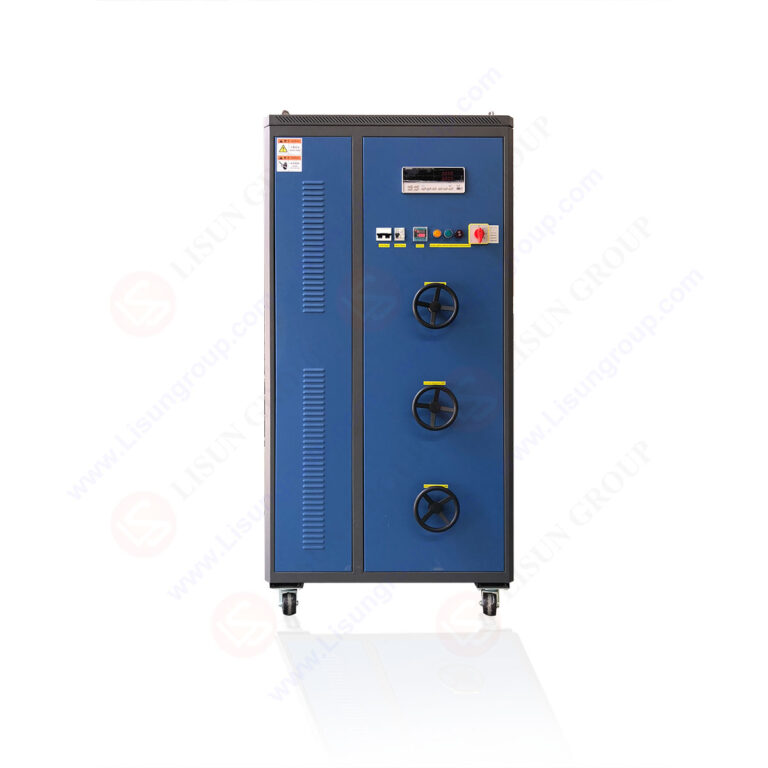
Instrumentation for Precision: The LISUN ZY-3 Needle Flame Tester
The integrity of compliance testing is inextricably linked to the precision and repeatability of the test apparatus. The LISUN ZY-3 Needle Flame Tester is engineered to meet the exacting requirements of UL 746A Clause 7, IEC 60695-11-5, and related standards. Its design prioritizes operational consistency, user safety, and accurate flame application—parameters that are non-negotiable for generating certifiable data.
The apparatus features a microprocessor-controlled ignition and timing system, ensuring precise flame application durations from 0 to 999.9 seconds. The needle burner itself is constructed to maintain a consistent 12±2 mm flame height, fueled by high-purity (≥95%) propane. A calibrated flow meter and pressure regulator provide stable gas conditions. The test chamber is constructed from stainless steel and incorporates a viewing window, internal lighting, and an exhaust system to remove combustion products. A key differentiator of the ZY-3 is its integrated specimen clamp and positioning mechanism, which allows for precise and reproducible alignment of the specimen relative to the flame, a variable that significantly impacts test outcomes. The unit includes a standardized cotton indicator pad holder and a drip tray to assess flaming droplets.
Primary Specifications of the LISUN ZY-3:
- Standards Compliance: UL 746A, IEC 60695-11-5, GB/T 5169.5.
- Flame Height: Adjustable 12±2 mm.
- Timer Range: 0~999.9 seconds (digital display, accuracy ±0.1s).
- Fuel: ≥95% purity propane.
- Burner Tube: Stainless steel, length approximately 35 mm, orifice diameter 0.5 mm.
- Test Chamber Volume: ≥0.5 m³ with forced exhaust.
- Safety Features: Gas leak detection, automatic shut-off, flame-out protection.
The competitive advantage of the ZY-3 lies in its robust construction, which minimizes maintenance downtime, and its calibration traceability, which supports audit readiness. Its user interface simplifies the setup of complex test sequences, reducing operator error and enhancing laboratory throughput.
Cross-Industry Application of Needle Flame Compliance Data
The data derived from UL 746A needle flame testing informs material selection and component design across a vast spectrum of industries. Compliance is not an academic exercise but a direct input into risk assessment and mitigation.
- Electrical and Electronic Equipment & Industrial Control Systems: Enclosures for programmable logic controllers (PLCs), motor drives, and power supplies must contain internal electrical faults. A relay housing that withstands a needle flame test without producing flaming droplets prevents a single component failure from cascading through a control panel.
- Household Appliances and Consumer Electronics: Internal wiring harnesses, socket assemblies, and structural supports within washing machines, televisions, and gaming consoles are evaluated. For instance, the polymer bezel around a power switch must not sustain combustion after a brief flame exposure.
- Automotive Electronics and Aerospace Components: The density of electronics in modern vehicles and aircraft creates a challenging environment. Connectors, sensor housings, and insulation materials within wire conduits are tested to ensure they do not propagate a flame from an electrical short, a critical consideration in confined, oxygen-rich, or difficult-to-evacuate spaces.
- Lighting Fixtures and Telecommunications Equipment: LED driver housings, diffuser materials, and junction boxes in light fixtures are subject to thermal stress. Similarly, plastic covers for fiber-optic splice trays and router enclosures in telecom cabinets are tested to prevent fire spread in data centers.
- Medical Devices and Office Equipment: External casings for patient monitors, imaging devices, and printers must demonstrate limited flammability. This protects both the device integrity and the surrounding environment, which may include oxygen sources in medical settings.
- Electrical Components and Cable Systems: Terminal blocks, switch housings, and cable insulation or jacketing materials are primary candidates for needle flame testing. The test assesses whether a fault at a connection point could cause the insulation to become a fuel source along a cable run.
Correlative Analysis with Other UL 746A Thermal Stress Tests
Material evaluation is holistic. Data from the needle flame test is most valuable when correlated with results from other UL 746A protocols. The Glow-Wire Ignition Test (GWIT) determines the temperature at which a material ignites from a glowing element. The Glow-Wire Flammability Index (GWFI) identifies the highest temperature at which a material does not ignite or self-extinguishes within 30 seconds after removal of the glow-wire, and does not ignite surrounding parts via dripping. These tests, combined with the needle flame test, create a multi-axial profile of a material’s behavior under different thermal insult types: convective heating and flaming (needle flame) versus conductive heating and glowing (glow-wire).
A material may perform admirably in one test but poorly in another, guiding engineers to its appropriate use case. For example, a glass-filled phenolic might exhibit excellent glow-wire resistance due to its high thermal inertia but could be more susceptible to a direct, localized flame. This correlative analysis is essential for applications with multiple fault mode possibilities.
Methodological Rigor and Data Interpretation Challenges
Executing a compliant needle flame test requires meticulous attention to detail beyond simply operating the apparatus. Specimen conditioning—typically 48 hours at 23±2°C and 50±5% relative humidity—is mandatory to eliminate moisture content as a variable. The positioning of the flame relative to the specimen’s edge, surface, or a molded aperture can drastically alter results; standards specify these application points precisely. The assessment of “flaming droplets” is subjective and requires trained technicians to distinguish between non-incendiary melting and actual ignited particles that pose a hazard.
Furthermore, the test’s pass/fail criteria are often defined by the end-product standard referencing UL 746A. A common requirement is that after-flame time does not exceed 30 seconds, and that flaming droplets do not ignite the cotton indicator. Data interpretation must therefore always link the raw observation (e.g., “after-flame time: 15 seconds; cotton ignited by droplets”) back to the specific clause in the applicable end-product standard (e.g., UL 60950-1 for IT equipment, UL 60730 for controls). This chain of documentation is what transforms a laboratory observation into a certification record.
Integrating Compliance Testing into the Product Development Lifecycle
Proactive integration of UL 746A testing, including needle flame evaluation, into the design phase yields significant cost and time savings. Rather than treating compliance as a final validation step, leading manufacturers employ a concurrent engineering approach. Material suppliers provide preliminary test data on their resin grades. Design engineers use this data to select candidate materials for prototypes. Early-stage verification testing on molded parts—which can behave differently from standardized test plaques due to wall thickness, flow lines, and filler orientation—identifies potential failures before tooling is finalized.
The use of a reliable, repeatable instrument like the LISUN ZY-3 in this iterative phase is crucial. In-house testing capability allows for rapid comparison of material alternatives and design iterations (e.g., adding a flame-retardant barrier, changing wall thickness). This shifts the compliance strategy from reactive problem-solving to predictive design validation, mitigating the risk of costly redesigns and project delays during formal certification audits.
FAQ: Needle Flame Testing and the LISUN ZY-3 Apparatus
Q1: How often should the LISUN ZY-3 Needle Flame Tester be calibrated, and what does calibration involve?
A: Annual calibration is recommended for maintained compliance with ISO/IEC 17025 laboratory accreditation requirements. Calibration typically involves verifying and adjusting the gas flow rate to ensure the 12±2 mm flame height, checking the accuracy and repeatability of the digital timer, and validating the thermometer used for environmental monitoring. Calibration should be performed by trained personnel using traceable reference standards.
Q2: Can the ZY-3 test non-standard specimen shapes, such as a complete small switch or connector?
A: Yes, UL 746A permits testing of end-products or sub-assemblies to evaluate “real-world” performance. The ZY-3’s adjustable specimen holder can accommodate various shapes. The test report must meticulously document the flame application point (e.g., “applied to the seam between the cover and base”) as this is not prescribed for non-standard specimens. Testing complete assemblies often provides the most relevant safety data.
Q3: What is the significance of the surgical cotton indicator in the test?
A: The cotton pad simulates easily ignitable materials (like paper, dust, or lightweight insulation) that may be present below the equipment in service. Ignition of the cotton by flaming droplets or sustained burning from the specimen constitutes a test failure, as it demonstrates the fault’s ability to propagate fire to adjacent combustible materials.
Q4: Our material passed the GWIT test but failed the needle flame test. Is this common, and what does it imply?
A: It is not uncommon. It indicates the material has good resistance to ignition from a hot, solid surface (glow-wire) but is more susceptible to a direct, small flame. This profile might be acceptable for an internal component shielded from open flames but could be unsuitable for an external enclosure near potential ignition sources. The results guide application-specific suitability.
Q5: Does the ZY-3 apparatus include software for data logging and report generation?
A: Standard configurations of the ZY-3 focus on precise mechanical and timing control. Data logging typically involves manual recording of observations (after-flame time, dripping, cotton ignition) on a standardized test worksheet. For laboratories requiring automated data acquisition, third-party systems can be integrated to record test parameters, though the observational criteria remain reliant on technician judgment.