


A Comprehensive Framework for Material Compliance: UL 746A Testing and the Role of Needle Flame Evaluation
The relentless advancement of technology across sectors—from miniaturized medical implants to high-power electric vehicle charging systems—places unprecedented demands on the polymeric materials used in their construction. These materials are not merely passive enclosures; they are integral components that ensure electrical insulation, mechanical integrity, and, critically, resistance to fire. In this landscape, compliance with established safety standards is not a matter of optional diligence but a fundamental requirement for market access and risk mitigation. UL 746A, the Standard for Safety for Polymeric Materials – Short Term Property Evaluations, serves as a foundational benchmark in this regard, providing a rigorous methodology for assessing the flammability and other short-term properties of polymeric materials used in equipment. This article delineates the core testing protocols within UL 746A, with particular emphasis on the critical needle flame test, and examines the instrumental role of specialized apparatus such as the LISUN ZY-3 Needle Flame Tester in executing these evaluations with precision and repeatability.
The Foundational Principles of UL 746A Evaluation
UL 746A establishes a series of standardized tests designed to evaluate the short-term properties of polymeric materials under specific thermal, electrical, and mechanical stresses. The standard’s primary objective is to provide comparative data that allows engineers and specifiers to select materials appropriate for the intended end-use application, considering the potential fire and electrical hazards. Compliance is often a prerequisite for the broader certification of an end product under relevant UL equipment standards. The evaluation suite is multifaceted, encompassing tests for hot wire ignition (HWI), high-current arc ignition (HAI), high-voltage arc tracking rate (HVTR), and comparative tracking index (CTI). However, the assessment of resistance to a small, localized flame—simulating a fault condition such as an overheated component or an electrical arc—is addressed through the needle flame test, a procedure of paramount importance for materials used in compact or densely packed assemblies.
This test is particularly relevant because it does not assess the material’s propensity for ignition from a large flame source, but rather its reaction when impinged by a small, targeted flame representative of an internal fault. The behavior observed—whether the material ignites, self-extinguishes, drips flaming particles, or ignites a specified tissue indicator—directly informs the material’s suitability for applications where such fault conditions are a considered risk. The data derived feeds into the material’s UL recognition, often documented in a yellow card, which lists its performance across all required UL 746A tests.
Simulating Fault Conditions: The Needle Flame Test Methodology
The needle flame test, detailed in Clause 32 of UL 746A (and harmonized with IEC 60695-11-5), is designed to simulate the thermal stress effect of small flames which may arise from malfunctioning electrical components, such as overloaded resistors, faulty connections, or overheated capacitors. The test apparatus subjects a vertically oriented material specimen to a defined, small flame from a specified burner for a predetermined application time (typically 30 seconds). The flame is applied either to the specimen’s surface or, more stringently, to its edge. Following flame application, the test continues for an observation period to monitor the specimen’s after-flame and after-glow times, as well as any propensity to produce flaming droplets or particles.
The pass/fail criteria are stringent and application-focused. Key metrics include:
- After-flame time (t₁): The duration for which the specimen continues to flame after removal of the test flame. Must not exceed a specified limit.
- After-glow time (t₂): The duration of glowing combustion after flames cease.
- Ignition of surgical cotton indicator: A layer of dry surgical cotton positioned below the specimen must not be ignited by flaming drops or particles.
- Burning to clamp: The specimen must not burn up to its holding clamp.
The specificity of the flame—a 12mm ± 1mm height from a burner with a 0.5mm ± 0.1mm orifice—demands exceptional consistency in test apparatus calibration and operation. Any deviation in flame geometry, temperature, or application angle can introduce significant variability, compromising the validity and repeatability of test results. This is where the design and engineering of the test instrument itself become critical factors in the compliance workflow.
Instrumentation for Precision: The LISUN ZY-3 Needle Flame Tester
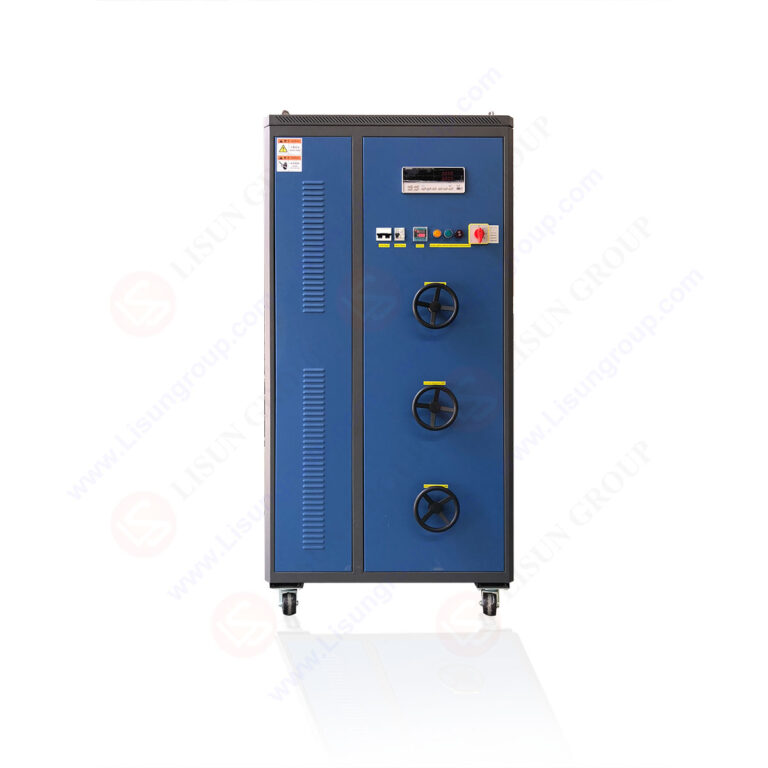
To execute the needle flame test with the fidelity required by UL 746A, laboratories require instrumentation that offers not just functionality, but calibrated precision, operational safety, and repeatability. The LISUN ZY-3 Needle Flame Tester is engineered to meet these exacting demands. Its design integrates the specific parameters mandated by the standard into a robust and user-controlled system.
The core specifications of the ZY-3 align directly with the normative requirements:
- Burner Configuration: Utilizes a precision needle burner with a 0.5mm ± 0.1mm orifice, supplied with 99% purity butane fuel, to generate the standardized test flame.
- Flame Calibration: Incorporates a dedicated flame calibration gauge and a thermocouple-based measurement system to verify the flame’s 12mm height and its requisite temperature (approximately 1000°C ± 50°C at a defined point).
- Timing System: Features an automated, digital timing sequence for precise control of flame application duration (0-999.9s adjustable) and measurement of after-flame/after-glow times with 0.1s resolution.
- Specimen Mounting: Provides a fully adjustable specimen holder that allows for precise positioning of the test specimen in the vertical orientation, with easy adjustment for both surface and edge flame application as per the test protocol.
- Safety & Extraction: Includes integrated safety features such as gas leak prevention and an exhaust system to remove combustion products, maintaining laboratory air quality.
The testing principle employed by the ZY-3 is one of controlled simulation. The operator secures the specimen, positions the burner at the mandated 45-degree angle (or 90-degree for edge application), and initiates the automated test cycle. The instrument applies the flame for the set period, retracts it automatically, and the operator or integrated sensors then record the material’s reaction. The use of a standardized, well-maintained instrument like the ZY-3 minimizes inter-laboratory variation, ensuring that material performance data is reliable and directly comparable—a necessity for global supply chains.
Industry-Specific Applications and Material Selection Implications
The implications of needle flame test performance are far-reaching across industries where polymers are used in proximity to electrical energy or potential ignition sources.
- Electrical and Electronic Equipment & Industrial Control Systems: Circuit breakers, contactors, and terminal blocks use polymeric housings and insulating barriers. A fault causing a localized overheat must not lead to the ignition of these components. The needle flame test validates that the chosen material will self-extinguish.
- Household Appliances and Office Equipment: In devices like food processors, printers, and power supplies, densely packed PCBs and wiring harnesses are common. The test assesses whether a fault in a small component (e.g., a failed diode) could propagate fire to the structural plastic parts.
- Automotive Electronics: Under-hood control units, battery management systems, and charging inlet connectors are exposed to harsh environments and high electrical loads. Materials must resist ignition from short-circuit events, as validated by this test.
- Lighting Fixtures: Especially for LED drivers and compact housings where heat sinking is critical, the test evaluates the safety of plastic components adjacent to thermal management elements.
- Telecommunications Equipment: Data servers, routers, and 5G small cells operate continuously. The flammability of PCB substrates, connector bodies, and internal guides is critical to preventing fire spread in fault scenarios.
- Medical Devices and Aerospace Components: For portable monitors or avionics enclosures, the use of lightweight, high-performance polymers is essential. The needle flame test provides data to support material selection where safety margins are non-negotiable and regulatory scrutiny is intense.
- Electrical Components, Cables, and Consumer Electronics: Switches, socket faces, cable insulation, and device housings are all subject to evaluation. A compliant material for a USB-C connector housing, for example, offers a vital layer of safety.
In each case, the data from the needle flame test, generated using reliable instrumentation, allows design engineers to make informed material selections. It moves the decision beyond basic mechanical and cost parameters into the realm of verified safety performance, potentially enabling the use of thinner walls, more complex geometries, or new polymer blends with confidence.
Advantages of Automated and Calibrated Test Systems
Employing a dedicated, precision-engineered tester like the LISUN ZY-3 confers several distinct advantages over improvised or less specialized test setups. First is repeatability and compliance assurance. The ZY-3’s design ensures strict adherence to the flame dimensions, application angle, and timing sequences mandated by UL 746A, reducing human error and generating audit-ready data. Second is operator safety and efficiency. Automated flame application and retraction, combined with gas safety features and fume extraction, protect technicians. The intuitive control system streamlines the testing process, from calibration to result recording. Third is data integrity. Precise digital timers and consistent flame characteristics yield reliable, quantitative results for after-flame times, which are crucial for accurate material classification and reporting.
For a testing laboratory or a corporate compliance department, these advantages translate into higher throughput, lower risk of non-conformance during audits, and greater confidence in the material specifications provided to customers or internal design teams. The instrument becomes a capital asset that underpins the organization’s commitment to product safety and quality.
Integrating Test Data into the Product Safety Ecosystem
The results from UL 746A testing, including the needle flame test, do not exist in isolation. They form a critical node within a broader product safety ecosystem. This data is submitted to UL or other Nationally Recognized Testing Laboratories (NRTLs) to achieve material recognition. This recognition is then referenced by engineers certifying an entire piece of equipment under a separate end-product standard (e.g., UL 62368-1 for AV/IT equipment, UL 60730 for automatic controls, or UL 94 for flammability of plastic materials for parts in devices and appliances).
Furthermore, the quantitative results inform Failure Mode and Effects Analysis (FMEA) and risk assessment documents required by many safety standards. Demonstrating that a material has passed a specific severity level of the needle flame test provides objective evidence that the risk of fire propagation from a small internal fault has been adequately addressed in the design. This integration is essential for achieving global market access, as the principles of UL 746A are widely referenced and accepted, even where local standards may have primacy.
Conclusion
UL 746A compliance testing represents a rigorous, science-based approach to characterizing the short-term hazardous properties of polymeric materials. Within this framework, the needle flame test serves as a vital simulation of real-world fault conditions, providing indispensable data on a material’s reaction to a small, localized flame. The accuracy and reliability of this test are fundamentally dependent on the precision of the instrumentation used. Apparatus like the LISUN ZY-3 Needle Flame Tester, with its calibrated flame generation, automated sequencing, and safety-focused design, provides the necessary control and repeatability to generate valid compliance data. As technological complexity grows across all sectors, the role of such standardized, instrument-assisted material evaluation will only increase in importance, forming an indispensable foundation for the development of safer, more reliable electrical and electronic equipment worldwide.
Frequently Asked Questions (FAQ)
Q1: How often should the LISUN ZY-3 Needle Flame Tester be calibrated, and what does calibration involve?
A: Calibration should be performed at least annually, or more frequently per laboratory quality procedures or after any maintenance. The calibration process involves verifying the critical test parameters: the orifice diameter of the burner needle, the height of the test flame using a calibrated gauge block, and the flame temperature using a specified thermocouple positioned at a defined distance from the burner tip. Gas flow rate may also be checked. Proper calibration ensures strict adherence to UL 746A/IEC 60695-11-5 specifications.
Q2: Can the ZY-3 tester be used for standards other than UL 746A?
A: Yes. While optimized for UL 746A (Clause 32), the core test method is identical to IEC 60695-11-5 and is referenced in other equipment-specific standards such as IEC/UL 62368-1, IEC/UL 60730, and IEC 60884-1. The adjustable parameters (flame application time, specimen positioning) allow it to be configured for various test severity levels prescribed by different end-product standards, making it a versatile tool for laboratories serving multiple industries.
Q3: What are the key specimen preparation requirements for a valid needle flame test?
A: Specimens must be conditioned at 23°C ± 2°C and 50% ± 5% relative humidity for a minimum of 48 hours prior to testing. The standard specimen size is 120mm x 15mm x thickness (typically the product’s minimum wall thickness). The edges must be smooth. For materials that may be used in multiple forms (e.g., textured, pigmented), testing is often required on both the worst-case thickness and the worst-case surface finish to ensure comprehensive evaluation.
Q4: In an edge application test, what determines if a material “burns up to the clamp”?
A: The specimen is held in a vertical position by a clamp at its top. If, during or after flame application, combustion (flaming or glowing) propagates to a point within 50mm of the upper edge of the clamp, it is considered a failure. This criterion is designed to ensure that the fire does not compromise the mechanical fixing point of the component, which could lead to collapse or further hazard.
Q5: How does the needle flame test differ from the more common UL 94 vertical burning test?
A: While both involve a vertical specimen and a flame source, their purposes differ. UL 94 uses a larger (20mm) Bunsen burner flame and assesses the material’s general flammability classification (V-0, V-1, V-2). The needle flame test uses a much smaller, targeted flame (simulating an electrical fault) and has specific pass/fail criteria related to after-flame time, dripping, and ignition of an indicator. A material may have a UL 94 V-0 rating but still require needle flame testing to evaluate its performance under a small-impingement flame scenario.