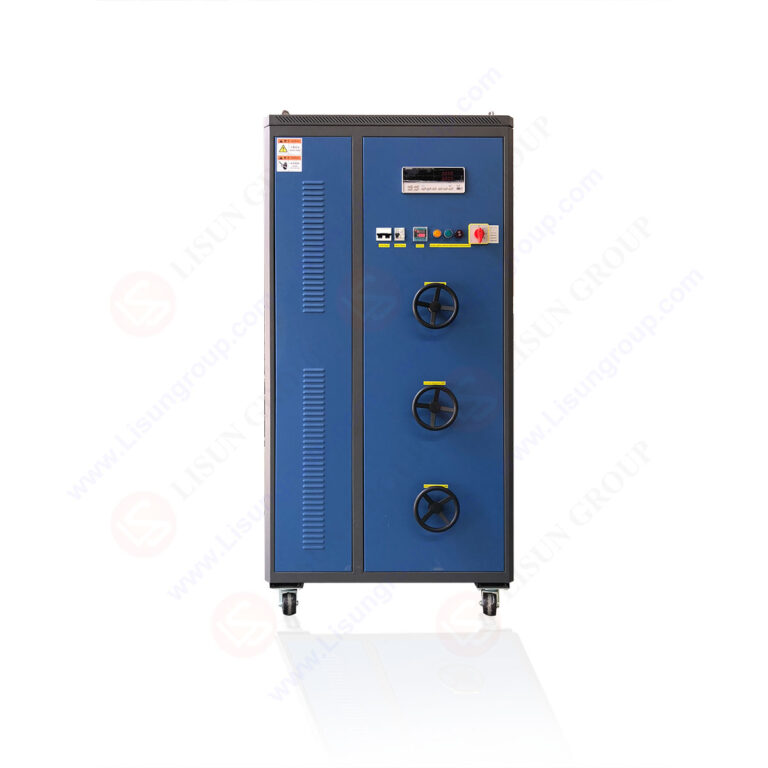



IP6X Dust Test Chamber: Ensuring Complete Protection Against Ingress
Introduction to Ingress Protection and the IP6X Standard
In the contemporary landscape of product design and manufacturing, the resilience of equipment against environmental particulates is not merely an added feature but a fundamental requirement. The International Electrotechnical Commission (IEC) standard 60529, commonly known as the Ingress Protection (IP) Code, provides a systematic classification for the degrees of protection offered by enclosures. Within this framework, the IP6X rating represents the highest echelon of protection against solid foreign objects, specifically dust ingress. Achieving this designation signifies that an enclosure is “dust-tight,” a critical benchmark for components and systems deployed in harsh or mission-critical environments. The verification of this claim, however, necessitates rigorous, standardized, and repeatable laboratory testing. This article examines the technical principles, methodologies, and applications of IP6X dust testing, with a detailed focus on the implementation of such testing through specialized equipment like the LISUN SC-015 Dust Sand Test Chamber.
The Scientific and Engineering Principles of Dust Ingress Testing
The challenge of validating dust tightness extends beyond simple particulate exclusion. Dust, defined as fine solid particles of diverse composition and size, typically below 75 micrometers (µm), exhibits complex physical behaviors. Under test conditions, the primary mechanisms of ingress are pressure differentials and particulate sedimentation. The IP6X test is designed to simulate a severe, prolonged dust-laden environment to assess whether any dust penetrates the enclosure in sufficient quantity to interfere with safe operation or impair performance.
The test standard, detailed in IEC 60529, prescribes a controlled environment where a test powder, often Arizona Test Dust or equivalent standardized talcum powder, is circulated within a test chamber. The enclosure under test (EUT) is subjected to a partial vacuum relative to the chamber atmosphere. This negative pressure differential, typically maintained at 2 kPa (20 mbar) below ambient, actively draws dust particles toward any potential leakage paths. The test duration is a minimum of 8 hours, or until a stable thermal equilibrium is reached within the EUT if it is internally powered. Post-test evaluation involves a meticulous internal inspection for dust presence. The acceptance criterion for IP6X is stringent: no dust shall enter the enclosure in a quantity that would degrade performance or impair safety.
Architectural Overview of a Modern IP6X Test Chamber
A compliant IP6X test chamber is a sophisticated piece of environmental simulation equipment. Its core subsystems must work in concert to create a reproducible and homogenous dust cloud while maintaining precise control over pressure differentials. The primary components include a sealed test chamber volume, a dust reservoir and dispersion system, a vacuum system with precise regulation, an air circulation and filtration unit, and a comprehensive control and monitoring interface.
The dispersion system is critical. It must aerosolize the test powder uniformly to prevent settling and ensure the EUT is exposed to a consistent concentration. This is often achieved through mechanical agitation, compressed air nozzles, or a recirculating airflow that suspends the particles. The vacuum system, connected to the interior of the EUT via sealed ports, must provide stable and adjustable negative pressure. Simultaneously, the chamber’s internal air must be continuously circulated and filtered to maintain dust concentration and protect the chamber’s mechanical components. Modern chambers integrate programmable logic controllers (PLCs) and human-machine interfaces (HMIs) to automate test sequences, log parameters like pressure, temperature, and test duration, and ensure adherence to the standard’s procedural requirements.
The LISUN SC-015 Dust Sand Test Chamber: Specifications and Operational Methodology
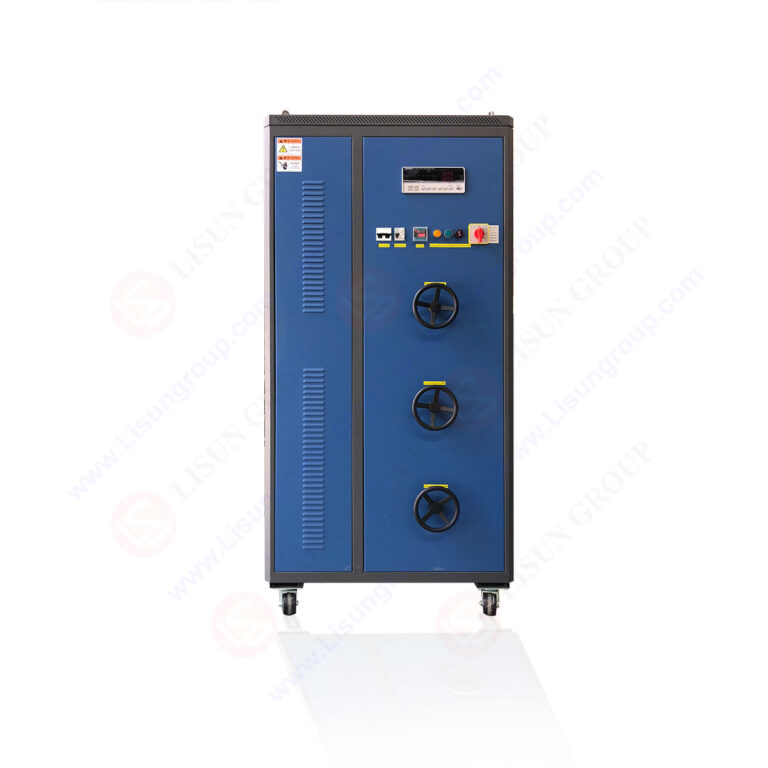
The LISUN SC-015 Dust Sand Test Chamber exemplifies the engineering required for precise IP5X and IP6X compliance testing. Designed to meet IEC 60529, IEC 60068-2-68, and other related standards, it provides a controlled environment for validating product enclosures against dust ingress.
Key Technical Specifications:
- Chamber Volume: A defined internal workspace sufficient to accommodate a range of product sizes while allowing for proper dust circulation.
- Test Dust: Utilizes standardized talcum powder (typically 75µm or finer sieve grade) stored in a dedicated reservoir.
- Dispersion System: Incorporates a vibration mechanism or controlled airflow to eject and suspend dust at a specified rate (e.g., 2 kg per cubic meter of chamber volume per hour), creating a dense, uniform cloud.
- Vacuum System: Features a regulated vacuum pump capable of drawing and maintaining a negative pressure of 2 kPa (adjustable) inside the EUT, with a flow rate sufficient to simulate realistic ingress forces.
- Filtration and Circulation: Includes an internal blower to keep dust suspended and a high-efficiency filter on the exhaust to prevent environmental contamination and recover dust.
- Control System: A digital microcomputer controller with an intuitive interface for setting test time, vacuum degree, and dust suspension intervals. It provides real-time monitoring and data logging.
Testing Principle with the SC-015: The EUT is placed inside the chamber. Its interior is connected to the vacuum system via sealed cables or tubes. The controller initiates the test sequence: the dust dispersion system activates, filling the chamber with a homogenous cloud. The vacuum system simultaneously creates and holds the specified negative pressure inside the EUT. This dual-condition exposure—constant dust cloud and internal vacuum—continues for the programmed duration. After completion, the chamber’s circulation system purges the air, and the EUT is carefully removed for internal inspection under appropriate lighting and magnification.
Industry-Specific Applications and Compliance Imperatives
The demand for IP6X validation spans numerous sectors where reliability in particulate-rich environments is paramount.
- Automotive Electronics: Control units (ECUs), sensors, battery management systems (BMS) for electric vehicles, and infotainment systems must withstand road dust, brake pad debris, and off-road conditions. Ingress can cause short circuits, sensor drift, or connector failure.
- Aerospace and Aviation Components: Avionics, cabin pressure sensors, and external lighting must be impervious to fine dust at high altitudes and during ground operations in arid regions, where failure is not an option.
- Industrial Control Systems: Programmable Logic Controllers (PLCs), motor drives, and HMI panels installed on factory floors near machining, milling, or material handling operations require dust-tight enclosures to prevent operational downtime.
- Telecommunications Equipment: Outdoor 5G radios, fiber optic terminal enclosures, and base station electronics are exposed to wind-blown dust and sand. Ingress can degrade signal integrity and cause overheating.
- Medical Devices: Portable diagnostic equipment, ventilators, and surgical tools used in field hospitals or ambulances must remain sterile and functional despite challenging environments.
- Lighting Fixtures: Industrial high-bay lights, streetlights, and marine navigation lights require IP6X ratings to ensure lumen maintenance and prevent internal reflector or LED contamination.
- Electrical Components & Wiring Systems: Switches, sockets, junction boxes, and cable glands used in mining, construction, or maritime applications rely on dust-tight seals for safety and longevity.
- Consumer Electronics and Office Equipment: High-end cameras, professional drones, and specialized printers for industrial settings increasingly require proven dust resistance as a key selling point.
Comparative Advantages of Automated Chamber Testing
Utilizing a dedicated, automated chamber like the LISUN SC-015 offers distinct advantages over ad-hoc or manual testing methods. First, it ensures standard compliance, providing auditors and certification bodies with confidence that tests were performed according to internationally recognized parameters. Second, it delivers high repeatability and reproducibility; automated control of dust density, pressure, and timing eliminates human variability, allowing for reliable comparison between product batches or design iterations. Third, it enhances testing efficiency and safety. The enclosed system contains hazardous fine particulates, protecting laboratory personnel. Automated sequences allow for unattended operation, including pre-test vacuum leak checks and post-test purge cycles, freeing technician time for analysis. Finally, it provides defensible data. Continuous logging of test parameters creates an immutable record for quality documentation and failure analysis, which is crucial for liability management and continuous improvement processes.
Integrating Dust Testing into the Product Development Lifecycle
Proactive IP rating validation should be integrated into the product development lifecycle, not conducted as a final pass/fail gate. During the design phase, conceptual seals, gaskets, and venting strategies can be modeled and their prototypes tested early. The LISUN SC-015 chamber, with its adjustable parameters, can be used for comparative testing of different gasket materials or labyrinth seal designs. In the engineering validation testing (EVT) phase, fully functional prototypes undergo rigorous testing to verify the design meets the IP6X target. Failures at this stage inform design modifications before tooling is committed. During design validation testing (DVT) and production validation testing (PVT), the chamber tests units from pilot production runs to ensure manufacturing processes (e.g., screw torque, adhesive application, ultrasonic welding) consistently achieve the required sealing integrity. This integrated approach mitigates risk, reduces costly late-stage redesigns, and accelerates time-to-market for robust products.
Interpretation of Results and Failure Analysis Protocols
A “fail” result in an IP6X test is not merely a binary outcome but the starting point for a critical engineering analysis. Upon finding dust inside the enclosure, the investigation follows a structured protocol. The dust deposition pattern is the first clue: a uniform, light coating may indicate permeation through a porous material or a microscopic gap over a large area. A concentrated accumulation points to a specific leak path, such as an imperfect seam, a poorly seated connector, or a defective cable gland. Investigators use tools like borescopes, magnification, and even tracer powders to pinpoint the exact location.
Common root causes include:
- Seal Design Flaws: Incorrect gasket compression, unsuitable elastomer material, or lack of a continuous sealing path.
- Tolerance Stack-Ups: Accumulation of dimensional variances in mating parts that exceeds the seal’s compensation ability.
- Dynamic Seal Failure: Inability of seals around buttons, shafts, or hinges to maintain integrity over repeated actuation.
- Thermal Effects: Differential thermal expansion and contraction during operation creating transient gaps.
- Manufacturing Variability: Inconsistent application of adhesives, uneven screw torque, or contamination on sealing surfaces.
The data from the test chamber—including pressure stability logs—combined with physical evidence, guides effective corrective actions, leading to more robust product designs.
Future Trends and Evolving Standards in Particulate Ingress Testing
The field of environmental testing continues to evolve. While the core IP6X methodology remains stable, trends are pushing its boundaries. The rise of miniaturized electronics and MEMS (Micro-Electro-Mechanical Systems) sensors presents new challenges, as even nanogram quantities of dust can disrupt functionality. This may drive the development of more sensitive detection methods post-test, such as particle counting or mass gain analysis. Furthermore, the increasing prevalence of battery-powered devices and thermal management systems introduces the variable of internal pressure fluctuations due to gas generation and thermal cycling, which may necessitate modified test profiles that cycle vacuum pressure. The integration of IoT sensors within test chambers themselves is another trend, enabling real-time monitoring of dust density via laser scattering sensors and providing even richer datasets for analysis. Standards bodies periodically review and update test methods to reflect these technological shifts, ensuring the IP code remains a relevant and reliable indicator of product durability.
Frequently Asked Questions (FAQ)
Q1: What is the difference between IP5X and IP6X testing in a chamber like the LISUN SC-015?
A1: Both tests assess dust ingress but with different pass/fail criteria. IP5X (“dust protected”) allows for some dust ingress provided it does not interfere with safe operation. IP6X (“dust tight”) is far more stringent, permitting no ingress of dust in harmful quantities. The test method in the chamber is similar—creating a dust cloud and often using a vacuum—but the post-test inspection criteria for IP6X are exhaustive, typically requiring no visible dust accumulation on internal components.
Q2: Can the LISUN SC-015 chamber test for both dust and water ingress (IPX ratings)?
A2: No, the SC-015 is specifically designed for dust (IP5X/IP6X) testing. Water ingress testing (e.g., IPX1 through IPX9K) requires entirely different apparatus, such as drip boxes, spray nozzles, immersion tanks, or high-pressure jet test equipment. Comprehensive IP rating validation usually requires a suite of specialized chambers.
Q3: How is the internal vacuum connection made to a sealed product without creating an artificial leak path?
A3: The standard provides for this. A dedicated opening is made in the enclosure (or an existing drain port is used) to attach the vacuum hose. This opening is then sealed meticulously using the chamber’s sealing accessories, ensuring the vacuum path is only through this intentional port. The test evaluates the integrity of the product’s own seals and joints, not the test seal.
Q4: What maintenance is required for the dust chamber to ensure accurate results?
A4: Regular maintenance is crucial. Key tasks include: complete removal and cleaning of residual test powder from the chamber interior and dispersion system to prevent cross-contamination; inspection and replacement of seals on the chamber door and ports to maintain vacuum integrity; checking and cleaning the exhaust filter; and calibration of the vacuum gauge and flow meter at recommended intervals to ensure pressure differential accuracy.
Q5: For a product with internal fans or vents, how is IP6X testing conducted?
A5: Products with functional vents designed to allow airflow for cooling present a unique challenge. They cannot be classified as IP6X if the vent is open during operation, as the standard defines protection when the enclosure is “as installed.” Testing may be performed with the fan powered and running, but the product cannot claim the “dust-tight” rating if dust enters through the intended airflow path. Alternative strategies include testing the design with a sealed version for specific environments or incorporating internally rated, filtered vents that are themselves part of the tested assembly.