


Understanding Temperature Shock Testing: Principles and Applications
Introduction to Environmental Stress Screening
In the relentless pursuit of product reliability and longevity, manufacturers across critical industries must simulate years of environmental stress within a condensed testing timeframe. Among the most severe of these simulated stresses is thermal shock, a rapid and extreme transition between temperature extremes. Temperature shock testing, a cornerstone of environmental stress screening (ESS), is not merely a quality check but a fundamental engineering discipline designed to uncover latent defects, validate material integrity, and predict field failure modes. This technical examination delves into the underlying principles, standardized methodologies, and broad industrial applications of temperature shock testing, with a specific focus on the mechanisms and capabilities of advanced testing instrumentation.
The Thermodynamic Principles of Induced Thermal Stress
At its core, temperature shock testing operates on well-established principles of thermodynamics and material science. When a component or assembly is subjected to a rapid temperature change, differential expansion or contraction occurs due to varying coefficients of thermal expansion (CTE) among dissimilar materials. This CTE mismatch generates significant internal mechanical stresses—tensile, compressive, and shear—at material boundaries, solder joints, bonded interfaces, and within the bulk material itself.
The severity of the stress is governed by the formula for thermal strain (ε = α * ΔT), where α is the coefficient of thermal expansion and ΔT is the temperature change. A rapid transition, or high temperature ramp rate, exacerbates this effect by preventing stress relaxation, effectively “locking in” the strain and forcing it to manifest as physical deformation or fracture. This process efficiently precipitates failures in weak points that steady-state temperature cycling might not reveal for thousands of cycles, including micro-cracks in ceramic substrates, delamination of printed circuit boards (PCBs), solder joint fatigue, and failure of hermetic seals. The test, therefore, accelerates the aging process, identifying design flaws and manufacturing imperfections—such as poor solder wetting, contaminant inclusion, or suboptimal adhesive application—that would otherwise lead to premature field returns.
Methodological Frameworks and Governing Standards
To ensure consistency, reproducibility, and relevance, temperature shock testing is conducted within strict frameworks defined by international and industry-specific standards. These documents prescribe parameters including temperature extremes, dwell times at each extreme, transfer time between chambers, and the total number of cycles. Key standards include:
- IEC 60068-2-14: The foundational international standard for change-of-temperature tests, detailing procedures for both gradual change (Test Nb) and rapid change (Test Nc).
- MIL-STD-883, Method 1010.9: A stringent United States military standard defining test conditions for microelectronic devices, often referenced in aerospace and high-reliability applications.
- JESD22-A104: A JEDEC standard for temperature cycling of solid-state devices.
- ISO 16750-4: Specifically for road vehicles, outlining electrical and electronic equipment environmental tests, including thermal shock.
A typical test profile involves cycling a product between a high-temperature chamber (e.g., +125°C to +150°C) and a low-temperature chamber (e.g., -40°C to -65°C). Dwell times are sufficient for the entire product, not just its surface, to reach thermal equilibrium. The most critical parameter is the transfer time, typically mandated to be less than 30 seconds, and often under 10 seconds for severe shock testing. This rapid transfer is what distinguishes a true “shock” test from a standard temperature cycle.
Instrumentation for Precision Shock: The Two-Zone Basket Transfer System
Achieving the rapid transfer and precise temperature control mandated by standards requires specialized apparatus. The most common and effective configuration is the two-zone thermal shock test chamber, utilizing a basket transfer system. In this design, a test basket containing the specimens is mechanically shuttled between independently controlled high-temperature and low-temperature zones.
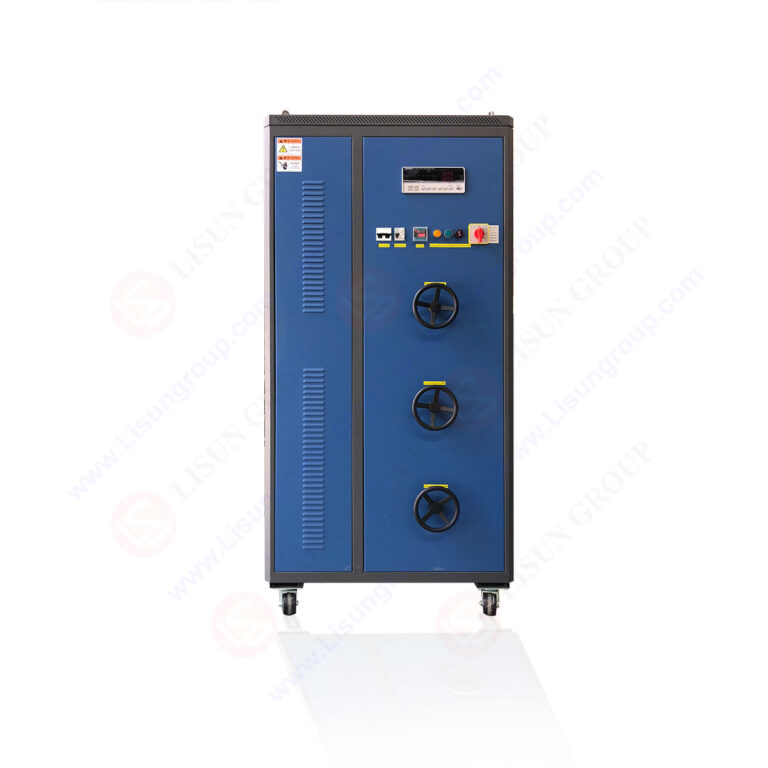
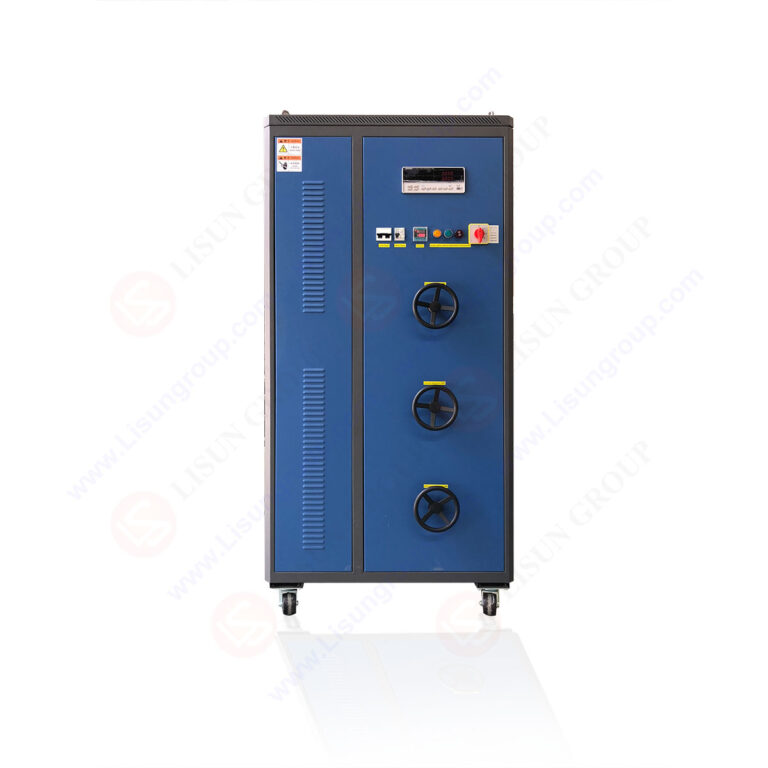
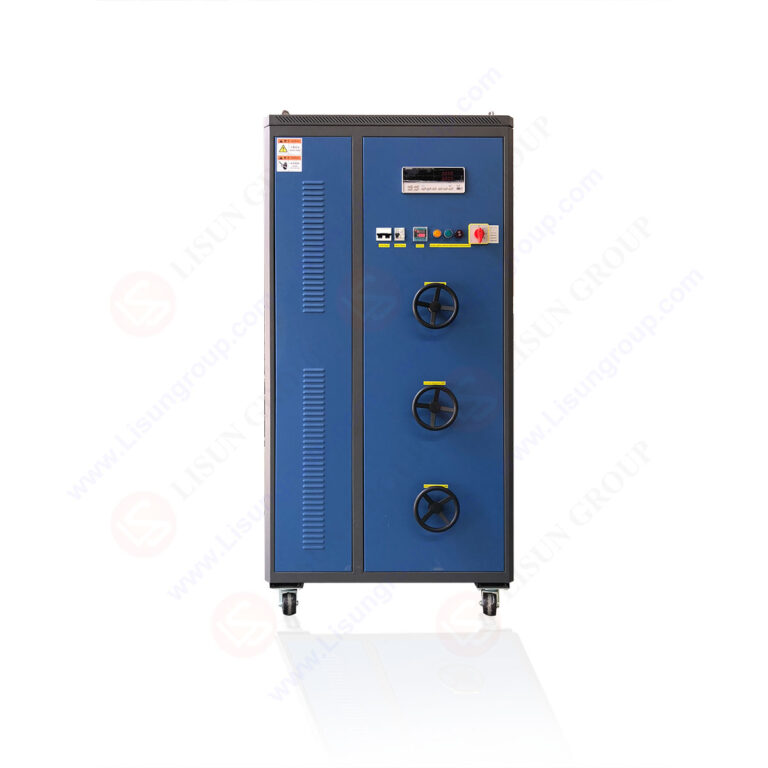
A representative example of this engineering is the LISUN HLST-500D Thermal Shock Test Chamber. This system is engineered to deliver rigorous, repeatable shock testing for components and assemblies across the industries previously enumerated. Its operational principle involves a vertically moving basket that transfers samples between upper (high temperature) and lower (low temperature) chambers via a high-speed elevator mechanism. Key specifications and design advantages of such a system include:
- Temperature Range: A typical range might span -65°C to +150°C, covering the vast majority of industrial and automotive testing requirements.
- Recovery Time: After the basket transfer, the chamber must rapidly return to its setpoint. Advanced systems achieve this in under 5 minutes, ensuring the dwell time at the target temperature is maximized.
- Transfer Time: The HLST-500D, for instance, can achieve a transfer time of ≤10 seconds, meeting the most demanding specifications for true thermal shock.
- Air Circulation: High-velocity airflow within each zone ensures uniform temperature distribution and rapid thermal equilibrium of the test specimens.
- Control and Monitoring: A programmable logic controller (PLC) with a touch-screen human-machine interface (HMI) allows for precise profile programming, real-time monitoring of chamber and product temperatures (via external sensors), and data logging for audit trails.
The competitive advantage of a well-engineered chamber like the HLST-500D lies in its precision, reliability, and sample capacity. Robust construction minimizes maintenance downtime, while precise control ensures test validity. The 500-liter test space (model-dependent) allows for batch testing of multiple products or larger assemblies, improving laboratory throughput.
Industrial Applications and Failure Mode Elicitation
The utility of temperature shock testing is demonstrated through its widespread adoption in sectors where failure is not an option.
- Automotive Electronics: Engine control units (ECUs), sensors, and infotainment systems are tested from -40°C to +125°C to simulate the shock of a cold start in a Arctic winter or the heat soak from engine bay exposure. The test reveals cracked capacitors, solder joint failures in headlight control modules, and seal failures in connectors.
- Aerospace and Aviation Components: Avionics, satellite components, and communication gear are subjected to extreme shocks (e.g., -65°C to +150°C) to validate performance after rapid ascent/descent or exposure to space environments. It is critical for screening latent defects in the high-reliality solder used in flight control systems.
- Telecommunications Equipment: Base station electronics, fiber optic transceivers, and outdoor-mounted switches undergo shock testing to ensure survival in varying climates, identifying issues like plastic housing embrittlement or relay contact malfunction.
- Medical Devices: Implantable device prototypes, diagnostic equipment, and laboratory analyzers are tested to guarantee functionality after sterilization cycles (which can involve rapid heating/cooling) or during emergency transport. It tests the integrity of battery welds and fluidic channel seals.
- Consumer Electronics and Lighting: Smartphones, LED drivers, and industrial luminaires are tested for resistance to shock from indoor climate control or outdoor installation. A common failure mode is the delamination of the dielectric layer within an LED driver’s PCB, leading to short-circuit failure.
- Electrical Components and Industrial Control: Circuit breakers, contactors, PLCs, and switchgear are validated to ensure operational safety and reliability after abrupt changes in ambient factory conditions, checking for contact welding or insulation cracking.
Correlative Analysis and Failure Mode Verification
A complete thermal shock test protocol does not conclude with the final cycle. Post-test inspection and functional verification are paramount. Techniques include:
- Electrical Functional Testing: Continuity, insulation resistance, and operational checks are performed to identify intermittent or complete failures.
- Visual Inspection: Under magnification (e.g., 10X to 40X) to identify cracks, bulges, delamination, or solder joint defects.
- Non-Destructive Evaluation (NDE): Techniques like scanning acoustic microscopy (CSAM) or X-ray imaging can reveal sub-surface delamination or voids in complex assemblies.
- Destructive Physical Analysis (DPA): Cross-sectioning of failed components to perform root cause analysis at the microstructural level.
Correlating the test parameters to real-world field failure data allows engineers to refine the test profile, creating an accelerated life model that accurately predicts product reliability over its intended lifespan.
Integrating Shock Testing into a Broader Reliability Program
Temperature shock testing is most effective when integrated into a holistic reliability engineering strategy. It typically follows initial design verification and precedes long-term reliability life testing (like HALT/HASS). Its position in the product development cycle is strategic: it is a screen for gross manufacturing defects and fundamental design weaknesses before committing to full-scale production or qualification testing. Data derived from shock testing feeds back into the design-for-manufacturability (DFM) and design-for-reliability (DFR) processes, informing material selection, geometric design, and assembly processes.
Conclusion
Temperature shock testing remains an indispensable, non-negotiable practice for manufacturers committed to product integrity. By applying the severe, scientifically-grounded stress of rapid thermal transition, it serves as a powerful filter for latent defects and a validation tool for material and design choices. The fidelity of this testing is wholly dependent on the precision and capability of the test equipment employed. Advanced two-zone thermal shock chambers, exemplified by systems like the LISUN HLST-500D, provide the controlled, repeatable, and standards-compliant environment necessary to generate meaningful, actionable reliability data. As product complexity increases and operational environments become more demanding, the role of rigorous environmental stress screening, with thermal shock at its forefront, will only continue to expand in critical importance.
Frequently Asked Questions (FAQ)
Q1: What is the fundamental difference between temperature cycling and thermal shock testing?
A1: The key differentiator is the rate of temperature change. Temperature cycling involves relatively gradual ramp rates (e.g., 5°C to 15°C per minute), allowing the product to heat or cool more uniformly. Thermal shock mandates an extremely rapid transition (typically with a transfer time under 30 seconds) between two extreme setpoints, creating a more severe thermodynamic stress that targets different and often more acute failure mechanisms, particularly at material interfaces.
Q2: For a product destined for automotive under-hood use, what temperature range should be specified in a shock test?
A2: While the final specification should be defined by the applicable standard (e.g., ISO 16750-4) and customer requirements, a common range for under-hood automotive electronics is -40°C to +125°C. This covers cold-start conditions in extreme climates and the high heat soak from proximity to the engine. More severe applications may require a higher upper limit, such as +150°C.
Q3: How is the dwell time at each temperature extreme determined for a test?
A3: Dwell time is not arbitrary; it must be sufficient for the entire test specimen, including its thermal mass core, to reach thermal equilibrium at the target temperature. This is often determined empirically by placing thermocouples on both the surface and the thermally slowest point of a sample product during a characterization study. Standards often provide guidance, but the principle is stabilization, not a fixed duration.
Q4: Can the LISUN HLST-500D chamber accommodate testing with powered devices (dynamic testing)?
A4: Yes, most advanced thermal shock chambers, including the HLST-500D, are designed with porting for electrical feed-throughs. This allows for in-situ powering and monitoring of devices during the test—known as dynamic or powered testing. This is crucial for detecting intermittent failures that only occur when the device is operational under stress, providing a more realistic assessment of reliability.
Q5: What maintenance is critical for ensuring the long-term accuracy of a two-zone thermal shock chamber?
A5: Regular preventive maintenance is essential. Key tasks include: checking and calibrating temperature sensors; inspecting and cleaning the air ducts and evaporators to maintain airflow; verifying the mechanical operation and alignment of the basket transfer system; monitoring and maintaining the refrigerant charge for the low-temperature zone; and checking the integrity of chamber seals to prevent temperature leakage and moisture ingress.