


IPX2 Water Spray Test Explained: A Technical Analysis of Dripping Water Protection
In the rigorous landscape of product qualification, the ingress protection (IP) rating system, defined by international standards such as IEC 60529, provides a critical and quantifiable framework for evaluating the resilience of enclosures against foreign bodies and moisture. Within this hierarchy, the IPX2 classification represents a fundamental but essential tier of water protection. This article provides a detailed technical examination of the IPX2 water spray test, its operational parameters, applications across diverse industries, and the instrumentation required for its precise execution, with specific reference to advanced testing solutions.
Defining the IPX2 Classification: Scope and Limitations
The IP code’s second numeral specifically denotes protection against harmful ingress of water. An IPX2 rating signifies that the enclosure offers protection against dripping water when tilted at an angle up to 15 degrees from its normal orientation. The “X” placeholder indicates that the degree of protection against solid objects (the first numeral) is not specified, not that it is zero. It is imperative to understand that IPX2 is not a test for direct water jets, splashing, or immersion. Its domain is strictly limited to vertically falling drops or condensation that may occur when a product is installed in a non-upright position. This makes it a baseline certification for products that, while not intended for wet environments, must withstand incidental moisture exposure from above, such as condensation from air handling systems or leakage from a structure above.
The test simulates a scenario where water drips onto the enclosure from a defined height and trajectory. The standard stipulates that the test is passed if no harmful water ingress occurs that could compromise safety, impair performance, or damage internal components. Harmful ingress is typically defined as water accumulation that bridges insulated parts, enters live components, or pools in quantities that could lead to corrosion or electrical failure over time. The test duration is 10 minutes per four fixed positions of tilt (or 2.5 minutes per direction in a tilting apparatus), ensuring all upper surfaces are subjected to the dripping water.
Mechanical and Environmental Parameters of the Test Procedure
The IPX2 test is characterized by specific and reproducible mechanical conditions. The water drip is generated by a dedicated “drip box” or “oscillating tube” apparatus, as per the methodology chosen from IEC 60529. The most common method utilizes a showerhead-like device with 1.0mm diameter holes spaced 20mm apart in a grid. The critical parameters are:
- Water Flow Rate: 3 mm ± 0.5 mm per minute. This equates to approximately 0.5 liters per minute for a standard test surface area.
- Droplet Height: The water drops fall from a height of 200 mm above the top of the test specimen.
- Tilt Angle: The specimen is tilted at 15° relative to the vertical in two perpendicular planes (four test positions in total).
- Water Temperature: The test water temperature should be within a range not exceeding 5°C of the specimen’s temperature prior to testing, to minimize thermal shock and condensation effects inside the enclosure.
- Test Duration: A minimum of 10 minutes, apportioned to cover all relevant surfaces.
These parameters create a predictable and uniform precipitation, allowing for comparative assessments between different products and designs. The 15° tilt is a key differentiator from IPX1 (vertical drops only), acknowledging real-world installation variances in products like wall-mounted control panels, angled lighting fixtures, or sloped automotive electronic control units (ECUs).
Instrumentation for Compliance: The LISUN JL-8 Waterproof Test Chamber
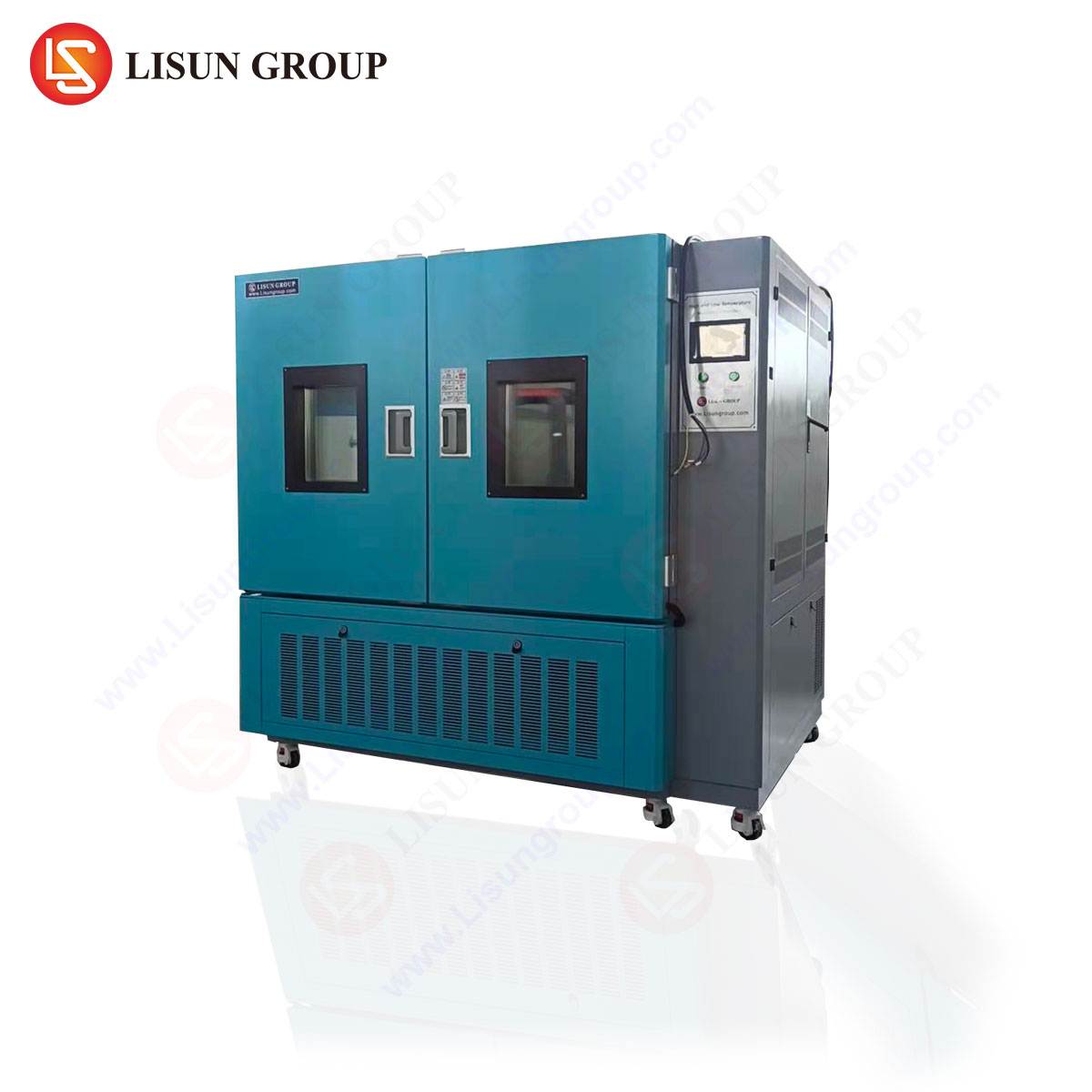
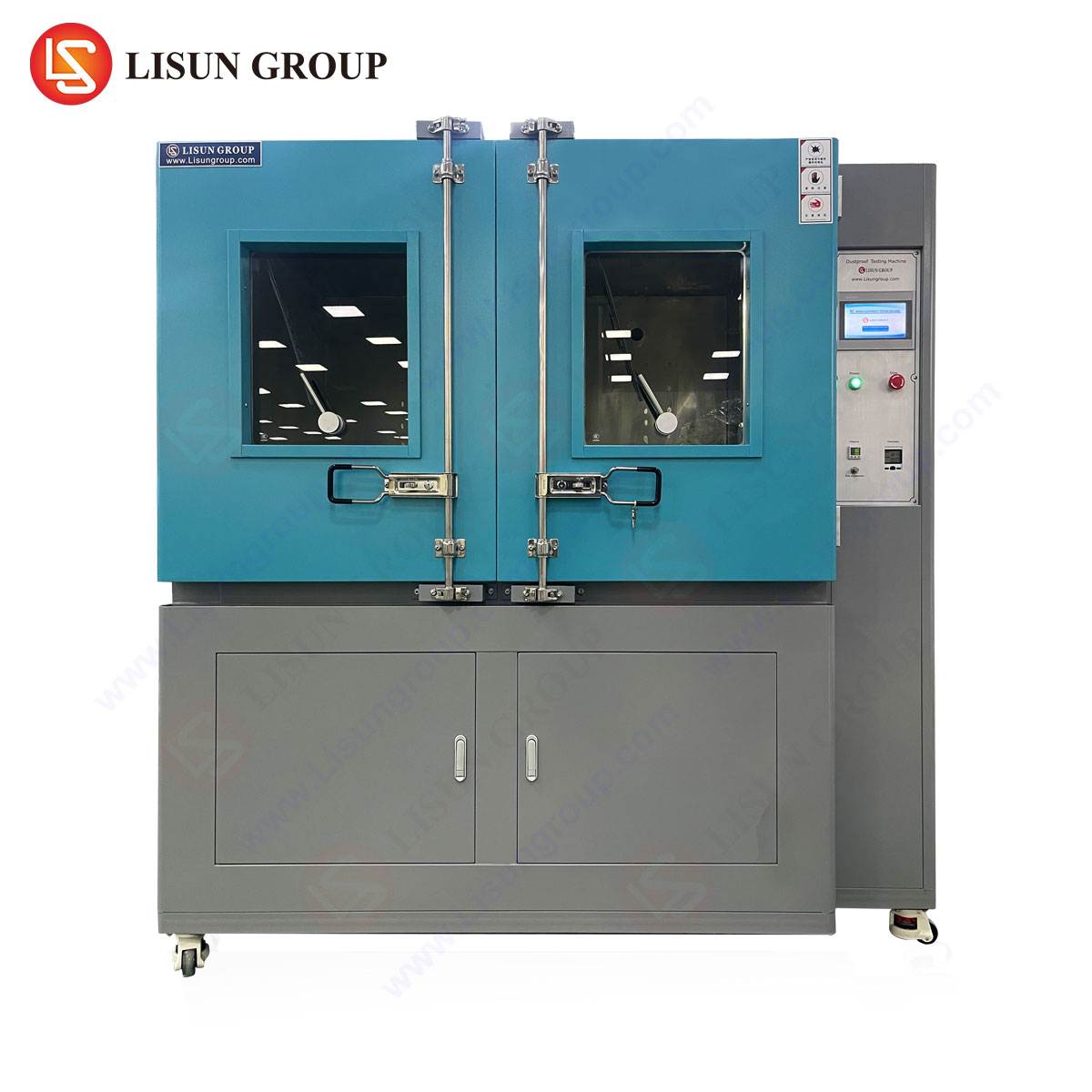
Accurate and repeatable IPX2 testing necessitates specialized equipment that can precisely control the stipulated environmental and mechanical variables. The LISUN JL-8 Drip Waterproof Test Chamber is engineered to meet and exceed these requirements, providing a controlled environment for IPX1 and IPX2 testing in accordance with IEC 60529, ISO 20653, and other derivative standards.
The JL-8 operates on a closed-loop water circulation principle. A reservoir holds the test water, which is pumped through a filtration system to a precision drip nozzle assembly. The flow rate is meticulously regulated via a calibrated flow meter and control valve to maintain the required 3 mm/min precipitation. The test sample is mounted on a motorized tilting table, which can be programmed to oscillate or hold at the precise 15° angle for the required duration, ensuring complete and consistent coverage.
Key Specifications of the LISUN JL-8:
- Test Standards: IEC 60529, ISO 20653, GB/T 4208.
- Drip Rain Area: Customizable, typically 800mm x 800mm or larger upon request.
- Drip Height: Adjustable, set to the standard 200mm.
- Water Flow Control: Precision needle valve and flow meter for accurate regulation between 1-5 mm/min.
- Sample Table: Motorized, with adjustable tilt angle (0-30°+) and programmable rotation/oscillation.
- Construction: Stainless steel main structure, tempered glass viewing window, and corrosion-resistant components for long-term reliability.
- Control System: Digital programmable controller with touchscreen interface for setting test duration, tilt angle, and rotation cycles.
The competitive advantage of the JL-8 lies in its integration of precision, durability, and user-centric design. Its closed-loop system conserves water, while the programmable controls eliminate operator error in timing and angle positioning. The robust construction ensures minimal maintenance and consistent performance, which is critical for certification laboratories and high-volume quality assurance departments where repeatability is paramount.
Industry Applications and Product Design Implications
The IPX2 rating finds relevance in a multitude of sectors where protection from condensation and light dripping is a design requirement. It serves as a cost-effective safeguard, often integrated into products where full waterproofing is unnecessary but a failure due to minor moisture would be unacceptable.
- Electrical and Electronic Equipment & Industrial Control Systems: Enclosures for terminal blocks, small programmable logic controllers (PLCs), and power supplies mounted under workbenches or in industrial settings where overhead piping may condense.
- Household Appliances: The internal electronics of dishwashers or refrigerators, where protection from condensation is required, or for the control panels of appliances installed under cabinets.
- Automotive Electronics: Non-underhood electronic modules, such as those for infotainment systems or body control modules (BCMs) mounted inside the passenger compartment, which may be subjected to condensation or minor leaks.
- Lighting Fixtures: Indoor luminaires installed on sloped ceilings or in covered outdoor areas like porches, where they are shielded from rain but not from humidity and dripping condensation.
- Telecommunications Equipment: Indoor network switches, routers, or baseband units in controlled environments where airborne moisture or building leakage is a potential risk.
- Office Equipment and Consumer Electronics: High-end printers, servers, or audio/video equipment installed in data closets or cabinets where air conditioning drip lines may be present.
For design engineers, achieving an IPX2 rating often involves strategic gasket placement, labyrinth seals on covers, hydrophobic coatings on PCBs, and adequate drainage paths within the enclosure to channel any incidental moisture away from critical components. Ventilation design must also consider the potential for dripping water to enter through vents.
Comparative Analysis with Adjacent IP Ratings
Placing IPX2 within the broader IPX scale clarifies its specific niche. It is a step above IPX1 (vertical drops) and a distinct step below IPX3 (spraying water at an angle up to 60°). IPX3 simulates rain, while IPX2 simulates dripping. A product designed for IPX3 will almost invariably pass IPX2, but the reverse is not true. The distinction is crucial for procurement and specification. For instance, an outdoor electrical junction box intended for direct rainfall would require a minimum of IPX3/IPX4, whereas an indoor box located in a basement might be adequately specified as IPX2. Misapplication can lead to either unnecessary cost (over-specification) or field failures (under-specification).
Validation, Reporting, and Standards Compliance
Post-test evaluation is as critical as the test itself. The assessment involves a thorough visual inspection for water ingress, followed by functional testing of the device. Dielectric strength tests, insulation resistance measurements, and operational checks are commonly performed to verify that no harmful ingress has occurred. The test report must document all parameters: equipment used (e.g., LISUN JL-8, serial number), calibration dates, environmental conditions, test duration, specimen orientation, and detailed results of the post-test inspection and verification. Compliance with IEC 60529 ensures global recognition, though regional variations like ISO 20653 (road vehicles) or GB/T 4208 (China) may have supplementary requirements.
Conclusion
The IPX2 water spray test is a deceptively simple yet vital procedure in the product validation ecosystem. It defines a clear threshold for protection against dripping water, a hazard present in many ostensibly “dry” environments. For manufacturers across the electrical, automotive, consumer, and industrial sectors, understanding and correctly implementing this test is essential for product reliability, safety certification, and market access. Utilizing precise and reliable testing instrumentation, such as the LISUN JL-8 chamber, ensures that the evaluation is consistent, repeatable, and defensible, forming a solid foundation for a product’s ingress protection claims.
FAQ Section
Q1: Can the LISUN JL-8 test chamber be used for both IPX1 and IPX2 tests?
Yes, the JL-8 is explicitly designed for both IPX1 (vertical drip) and IPX2 (15° tilted drip) tests. Its motorized tilting table can be set to 0° for IPX1 and precisely to 15° for IPX2, with programmable rotation to cover all necessary test positions as required by the standards.
Q2: How often should the flow rate of a drip test chamber like the JL-8 be calibrated?
Calibration frequency should follow laboratory accreditation guidelines (e.g., ISO/IEC 17025) and the manufacturer’s recommendation. Typically, an annual calibration of the flow meter and a verification of the drip pattern and rate is advised. For high-usage labs, more frequent spot checks using gravimetric methods (collecting water over time) are recommended to ensure ongoing accuracy.
Q3: Our product has vents for thermal management. Can it still achieve an IPX2 rating?
Potentially, yes. IPX2 does not require the enclosure to be hermetically sealed. The standard tests for “harmful ingress.” Vents can be designed with baffles, hydrophobic membranes, or labyrinth paths that allow air flow but prevent vertically falling drops from entering in a harmful manner. The design must be validated through actual testing on a unit like the JL-8.
Q4: What is the consequence of using tap water instead of deionized water in IPX2 testing?
The standard generally specifies clean water. While not always mandating deionized water for IPX2, using tap water can introduce minerals that clog fine drip nozzles over time and leave residues on the test sample, potentially interfering with post-test electrical verification. Deionized or distilled water is strongly recommended for test consistency and equipment maintenance, especially in a recirculating system like the JL-8’s.
Q5: For a large product, can the JL-8 accommodate a custom test area?
LISUN typically offers standard sizes, but customizations are a common request. The drip grid area, sample table size, and overall chamber dimensions can often be engineered to suit large or unusually shaped products, such as automotive sub-assemblies or large industrial control cabinets. It is essential to consult with the manufacturer to ensure the modified design maintains the required drip uniformity and standard compliance.