


The Critical Role of Salt Contamination Testing in Ensuring Automotive Component Reliability
The relentless pursuit of durability and safety within the automotive industry necessitates rigorous validation of components against environmental stressors. Among these, corrosion induced by chloride ions—ubiquitous in de-icing salts and coastal atmospheres—represents a pervasive and insidious threat. Salt contamination testing, therefore, is not merely a compliance checkpoint but a fundamental pillar of product development, quality assurance, and lifecycle prediction for automotive systems. This technical examination delves into the methodologies, standards, and critical importance of salt spray and cyclic corrosion testing, with a specific focus on its application across the increasingly complex ecosystem of automotive electronics and hardware.
The Electrochemical Basis of Chloride-Induced Corrosion
At its core, salt-induced degradation is an electrochemical process accelerated by the presence of an electrolyte. Sodium chloride (NaCl) solutions, when deposited on metallic surfaces and exposed to atmospheric oxygen and moisture, facilitate the anodic dissolution of base metals and the cathodic reduction of oxygen. This process is particularly aggressive for ferrous alloys, leading to uniform rust, but is equally detrimental to protective coatings and can induce galvanic corrosion at junctions of dissimilar metals. For modern vehicles, which integrate materials ranging from advanced high-strength steels and aluminum alloys to magnesium composites and plated plastics, the galvanic series becomes a critical design consideration. The introduction of electrical potential from integrated circuits or wiring harnesses can further exacerbate these reactions, making the testing of complete electronic assemblies paramount.
Evolution from Basic Salt Spray to Cyclic Corrosion Methodologies
Traditional salt spray testing, as defined by standards such as ASTM B117, employs a continuous, static fog of a 5% NaCl solution at 35°C. While this method provides a controlled, severe, and reproducible environment for comparative testing of coatings and materials, its limitation lies in its lack of realism. Automotive components in service are subjected to dynamic conditions: wetting from humidity or precipitation, drying phases, and fluctuations in temperature. This recognition has driven the industry toward more sophisticated Cyclic Corrosion Tests (CCT). These profiles, such as those outlined in SAE J2334, GM 9540P, or Volkswagen PV1210, incorporate distinct phases—salt spray, humidity, dry-off, and sometimes freeze-thaw cycles—to better simulate real-world environmental stresses and the associated wet-dry kinetics that drive corrosion propagation and coating delamination.
Interdisciplinary Applications Across Automotive Subsystems
The scope of salt contamination testing extends far beyond body panels and chassis components. The vehicle’s electrical and electronic architecture, often termed the “central nervous system,” is profoundly vulnerable.
Automotive Electronics and Control Units: Engine Control Modules (ECMs), Battery Management Systems (BMS) for electric vehicles, and Advanced Driver-Assistance Systems (ADAS) sensor housings must maintain hermetic integrity. Salt fog penetration can lead to dendritic growth on printed circuit boards (PCBs), short-circuiting, and failure of microelectronic components. Testing validates conformal coatings, potting compounds, and enclosure seal designs.
Lighting Fixtures and Signaling Devices: Headlamps, tail lights, and LED arrays are critical for safety. Salt corrosion can cloud lenses, degrade reflector surfaces, and compromise the solder joints of LED drivers, leading to reduced luminous flux or complete failure. Testing ensures optical performance and electrical continuity are maintained.
Electrical Components and Connector Systems: Switches, relays, sockets, and the vast array of electrical connectors throughout a vehicle are high-risk points. Corrosion at contact surfaces increases electrical resistance, causing voltage drops, overheating, and intermittent signals. Salt spray testing of plated contacts (e.g., tin, silver, gold over nickel) is essential for validating contact resistance stability.
Cable and Wiring Harnesses: Insulation materials must resist tracking and degradation. Furthermore, testing assesses the performance of shielded cables and their grounding points, where corrosion can compromise electromagnetic compatibility (EMC) and signal integrity, affecting everything from infotainment to CAN bus communications.
Sensor and Actuator Assemblies: Components like wheel speed sensors, LiDAR/radar housings, and electric parking brake actuators are located in exposure-prone zones. Their functional reliability directly impacts vehicle dynamics and safety systems.
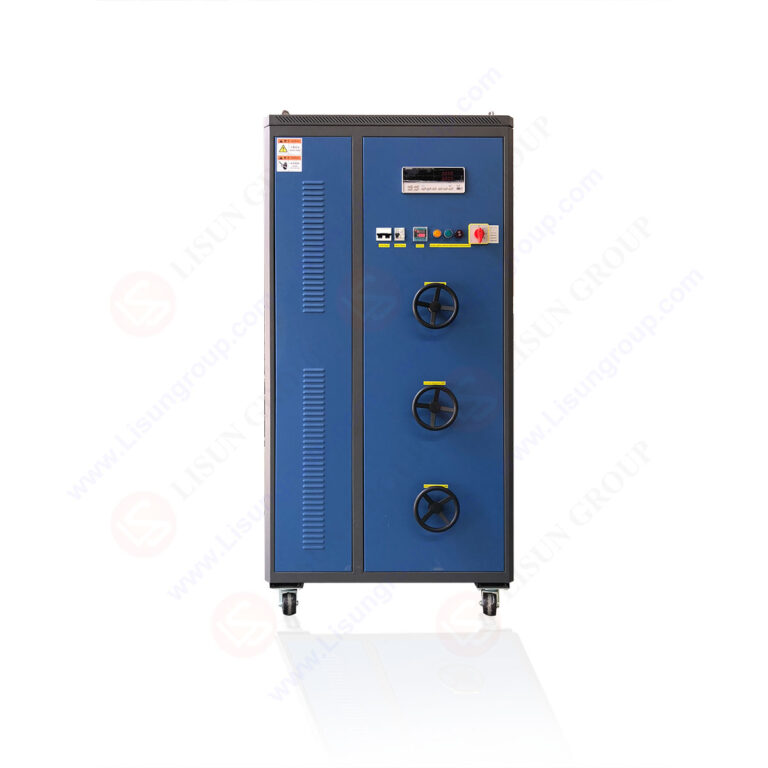
Instrumentation for Controlled Accelerated Testing: The LISUN YWX/Q-010 Series Salt Spray Test Chambers
To execute these standardized tests with precision and repeatability, specialized environmental chambers are required. The LISUN YWX/Q-010 series of salt spray test chambers represents a engineered solution designed to meet the stringent requirements of both basic and cyclic corrosion testing protocols.
Core Testing Principles and Chamber Design: The chamber operates on the principle of creating a controlled, corrosive environment. A heated reservoir containing a prepared NaCl solution (typically 5% per ASTM B117 or other specified concentrations) is pumped and atomized through a nozzle system using compressed air, generating a dense, uniform fog. The chamber’s interior, constructed from corrosion-resistant materials like polypropylene or fiber-reinforced plastic, houses the test specimens. A critical design feature is the saturated tower (or air bubbler), which heats and humidifies the compressed air before atomization, preventing solution concentration changes and ensuring consistent droplet size and settlement rate. For cyclic testing, the chamber integrates with external environmental modules to automate transitions between salt spray, humidity, and drying phases.
Technical Specifications and Operational Parameters: The YWX/Q-010 series is characterized by several key specifications that define its capability. Chamber volume is a primary consideration, with standard models accommodating test capacities from 90 to 1000 liters, allowing for everything from small component batches to full assemblies. Temperature control is maintained via a PID (Proportional-Integral-Derivative) controller with digital readout, ensuring stability within ±0.5°C in the saturation tower and ±1.0°C in the test zone—a critical factor for test reproducibility. The pH of the collected solution is meticulously monitored and maintained between 6.5 and 7.2, as per standard requirements. Construction typically utilizes a triple-layer structure: an outer powder-coated steel shell, an intermediate insulated layer, and an inner chamber of molded polypropylene, offering excellent thermal stability and chemical resistance.
Industry Use Cases and Application Versatility: While automotive components are a primary focus, the chamber’s utility spans the broader industrial landscape, reflecting the interconnected supply chain. Electrical and Electronic Equipment manufacturers test enclosures and PCBs for industrial controls. Telecommunications Equipment providers validate outdoor cabinet and antenna hardware. Aerospace and Aviation Component suppliers subject parts to modified, often more concentrated, salt fog tests per standards like MIL-STD-810. Medical Device manufacturers use it to assess the durability of portable equipment housings. Household Appliance and Consumer Electronics brands test the finish and integrity of products intended for global markets, including coastal regions. This cross-industry applicability underscores the test’s role as a universal benchmark for material and product resilience.
Competitive Advantages in Precision Testing: The YWX/Q-010 series distinguishes itself through features engineered for data integrity and user operation. Advanced models incorporate fully automated cyclic test programming, enabling the execution of complex multi-stage profiles (e.g., salt spray → humidity → drying) without manual intervention, eliminating a source of human error. Enhanced fog dispersion systems ensure a uniform distribution of the salt mist, preventing “dead zones” within the chamber and guaranteeing consistent exposure for all specimens. Comprehensive data logging functions record temperature, humidity (if equipped), and test phase timings, providing an auditable trail for quality documentation. Furthermore, robust construction and high-quality atomizing nozzles reduce maintenance intervals and ensure long-term calibration stability, a critical factor for laboratories conducting accredited testing.
Standards Compliance and Test Correlation
Effective salt contamination testing is inextricably linked to adherence to published standards. These documents prescribe not only the test conditions (solution composition, pH, temperature, collection rate) but also the preparation of specimens, orientation in the chamber, and post-test evaluation methods. Key standards include:
- ASTM B117: Standard Practice for Operating Salt Spray (Fog) Apparatus.
- ISO 9227: Corrosion tests in artificial atmospheres – Salt spray tests.
- IEC 60068-2-11: Environmental testing – Part 2-11: Tests – Test Ka: Salt mist.
- SAE J2334: Laboratory Cyclic Corrosion Test.
- GM 9540P / Ford BI 103-01 / Chrysler SAE J2334: OEM-specific cyclic test protocols.
Correlation between accelerated laboratory tests and real-world performance remains a complex challenge. While cyclic tests offer improved correlation over static salt fog, the acceleration factor is highly material- and design-dependent. The primary value of these tests lies in comparative ranking (Material A vs. Material B), quality control (batch-to-batch consistency), and the identification of failure modes (e.g., coating blistering, crevice corrosion, galvanic attack).
Post-Test Analysis and Failure Mode Evaluation
Upon completion of the test duration, a structured evaluation is conducted. This involves careful rinsing of specimens to remove salt residues, followed by drying. Analysis is both qualitative and quantitative:
- Visual Inspection: Assessment of corrosion products (red rust, white rust), blistering density and size, cracking, and delamination per standards like ASTM D1654 (Evaluation of Painted or Coated Specimens).
- Metrological Analysis: Measurement of corrosion creep from a scribe (e.g., per ISO 4628), pit depth analysis using microscopes or profilometers.
- Functional Testing: For electronic and electrical components, verification of operational status, insulation resistance, dielectric withstand voltage, and contact resistance is mandatory.
- Cross-Sectional Analysis: Microscopic examination of coating thickness and undercut corrosion at scribes or cut edges.
This data feeds directly into design iterations, material selection processes, and supplier quality assessments.
Integrating Salt Testing into a Holistic Validation Strategy
Salt contamination testing should not exist in isolation. It is most powerful when integrated into a broader validation strategy that includes other environmental stress tests. Temperature-humidity cycling (THB), thermal shock, combined vibration and climate sequences, and UV exposure testing often act on components synergistically with salt corrosion. For instance, a humidity cycle preceding a salt spray can precondition organic coatings, making them more susceptible to blistering. A comprehensive test plan sequences these stresses to uncover potential failure mechanisms that single-factor testing might miss.
Future Directions and Increasing Demands
The automotive industry’s evolution toward electrification, autonomy, and connectivity imposes new demands on salt contamination testing. High-voltage connectors and busbars in electric vehicles require exceptional corrosion resistance to prevent resistive heating and arcing risks. The proliferation of exterior-mounted sensors for autonomous driving (cameras, radar, LiDAR) demands that their optical windows and housings remain free of corrosive obscuration. Furthermore, the use of lighter materials like aluminum and carbon fiber composites introduces new galvanic pairings and corrosion mechanisms that must be understood and mitigated. Test standards and chamber capabilities will continue to evolve to address these challenges, likely incorporating more complex multi-stressor profiles and in-situ monitoring of electrical performance during exposure.
Frequently Asked Questions (FAQ)
Q1: What is the key difference between the standard salt spray test (e.g., ASTM B117) and a Cyclic Corrosion Test (CCT), and which is more relevant for modern automotive components?
A1: The standard salt spray test provides a continuous, static corrosive environment and is excellent for comparative, quality control, and coating qualification tests. Cyclic Corrosion Tests incorporate alternating phases of salt spray, humidity, and drying to better simulate the wet-dry cycles experienced in real-world service. For most modern automotive components, especially electronic assemblies and coated systems, CCT profiles (like SAE J2334) offer significantly better correlation to field performance and are therefore considered more relevant for design validation.
Q2: When testing an assembled automotive electronic control unit (ECU), what are the critical failure modes to monitor during and after salt spray testing?
A2: Primary failure modes include loss of hermeticity leading to salt fog ingress, dendritic growth on the PCB causing short circuits, corrosion of external connectors leading to increased contact resistance, degradation of conformal coatings, and functional failure of the unit itself. Post-test analysis should involve electrical functional testing, insulation resistance checks, and detailed visual inspection under magnification before and after enclosure disassembly.
Q3: How does the pH of the collected salt solution impact test validity, and how is it controlled in a chamber like the LISUN YWX/Q-010?
A3: The pH of the atomized solution is strictly controlled by standards (e.g., 6.5 to 7.2 for ASTM B117) because acidity can drastically accelerate corrosion, making results non-standard and non-reproducible. The YWX/Q-010 chamber uses a saturated tower to preheat and humidity the compressed air, which helps stabilize the pH. Operators must regularly collect and measure the pH of the solution settling in the chamber, making adjustments using diluted analytical-grade sodium hydroxide (NaOH) or hydrochloric acid (HCl) as necessary to maintain the specified range.
Q4: Can the YWX/Q-010 series chamber be used for tests other than neutral salt spray, such as acidified salt spray (ASS) or copper-accelerated acetic acid salt spray (CASS)?
A4: Yes, the chamber’s construction from chemically resistant polymers like polypropylene allows for the use of different corrosive solutions as specified by various standards. To perform ASS (per ASTM G85) or CASS (per ASTM B368), the operator prepares the appropriate test solution (e.g., adding acetic acid to the NaCl solution for ASS). The chamber’s control system and atomization mechanism remain capable, though thorough cleaning is required between test types to prevent cross-contamination.
Q5: What are the essential calibration and maintenance routines required to ensure the long-term accuracy and repeatability of a salt spray chamber?
A5: Critical routines include: regular calibration of the temperature sensors and controllers; verification of the solution collection rate in ml/80cm²/hour; cleaning of the nozzle(s) and saturation tower to prevent clogging from salt crystallization; inspection and replacement of gaskets and seals on the chamber lid to prevent fog leakage; and periodic validation runs using standard reference panels to benchmark corrosion rates. A comprehensive maintenance log should be kept as part of quality management systems, particularly for ISO/IEC 17025 accredited laboratories.