


The Imperative of Complete Particulate Ingress Protection: A Technical Analysis of IP6X Certification for Electrical Enclosures
In the engineering of electrical and electronic systems, the integrity of the enclosure is not merely a matter of physical housing but a critical determinant of operational reliability, safety, and longevity. Among the various environmental threats, particulate ingress—ranging from fine dust to abrasive sand—poses a pervasive and insidious risk. The International Electrotechnical Commission’s (IEC) 60529 standard, which delineates Ingress Protection (IP) ratings, defines the highest level of particulate protection as IP6X: “Dust tight.” Achieving this certification is a non-negotiable requirement for equipment destined for harsh or mission-critical environments. This article provides a comprehensive technical examination of the IP6X certification process, its underlying principles, and the specialized instrumentation required for validation, with a focus on the LISUN SC-015 Dust Sand Test Chamber.
Defining the IP6X Benchmark: Beyond “Dust Proof”
The designation “IP6X” is often colloquially simplified as “dust proof,” but the standard’s language is precise and unforgiving: “Dust tight.” According to IEC 60529, an enclosure achieving an IP6X rating must prevent the ingress of dust in a quantity that would interfere with the satisfactory operation of the apparatus or impair safety. The test is absolute; no dust penetration is permitted. This is a significant escalation from the IP5X rating (“Dust protected”), which allows for limited, non-harmful ingress.
The scientific rationale is grounded in the failure modes induced by particulate contamination. In electrical components, conductive dust can bridge isolated traces, leading to short circuits, leakage currents, and potential arc faults. For mechanical systems, abrasive particles like silica sand can accelerate wear on bearings, gears, and sliding contacts. In optical systems, such as those in automotive LiDAR or aviation runway lighting, dust accumulation on lenses or sensors degrades performance catastrophically. For medical devices and telecommunications equipment, particulate ingress compromises sterility and disrupts sensitive signal transmission. Therefore, IP6X is not an optional enhancement but a foundational design criterion for resilience.
The Mechanics of Particulate Ingress Testing
The IP6X test methodology prescribed by IEC 60529 is designed to simulate extreme, prolonged exposure to fine dust. The test substance is talcum powder, chosen for its fine, dry, and abrasive properties, with a particle diameter predominantly ≤ 75 µm and a nominal density of approximately 2 kg/m³. The enclosure under test is placed within a sealed chamber and subjected to a controlled, recirculating dust cloud.
The key test parameters are rigorously defined:
- Dust Concentration: The chamber must maintain a dust concentration of 2 kg/m³ ± 10%.
- Test Duration: A minimum of 8 hours, unless a shorter period is specified by the relevant product standard. For many automotive and aerospace applications, extended durations (e.g., 24-48 hours) are common to simulate years of exposure.
- Pressure Differential: A critical and often misunderstood aspect. The test employs a vacuum pump to create a negative pressure inside the enclosure of 2 kPa (20 mbar) below atmospheric pressure. This negative pressure actively draws the external dust cloud towards potential ingress points, testing the efficacy of seals, gaskets, and joint integrity under a sustained pressure gradient. The vacuum is typically applied intermittently (e.g., 5 minutes on, 2 minutes off) to simulate thermal cycling effects.
- Assessment Criteria: Post-test, the interior is inspected for any trace of dust. The presence of dust, even in minute quantities, constitutes a failure if it could affect operation or safety. Functional testing of the internal components is often mandated to verify no degradation has occurred.
Instrumentation for Certification: The LISUN SC-015 Dust Sand Test Chamber
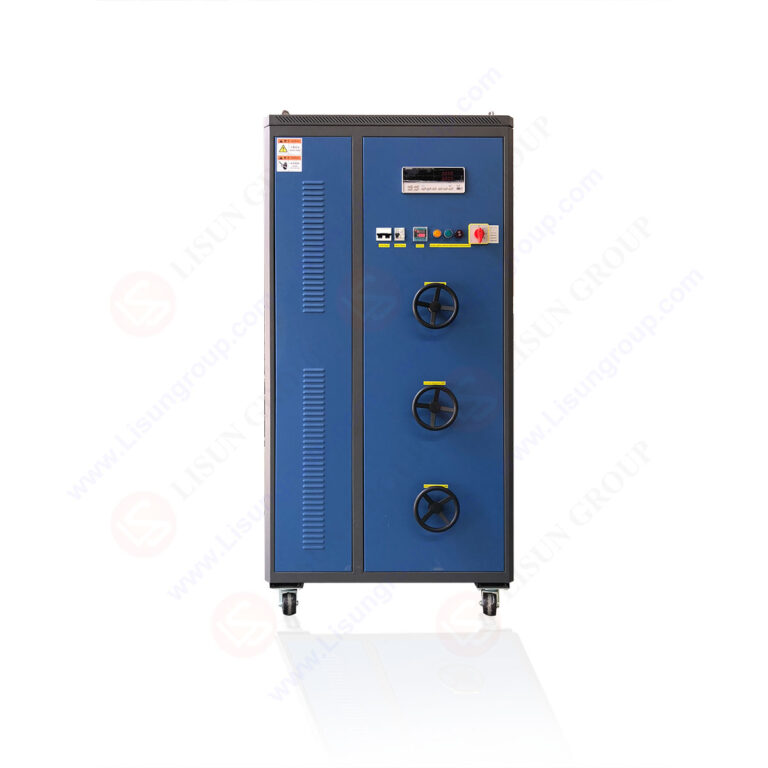
Validating an IP6X claim necessitates instrumentation capable of replicating the standard’s stringent conditions with high repeatability and accuracy. The LISUN SC-015 Dust Sand Test Chamber is engineered specifically for this purpose, serving as a critical tool for R&D laboratories and quality assurance departments across multiple industries.
Core Specifications and Design Principles:
The SC-015 is a fully integrated test system. Its chamber is constructed from corrosion-resistant stainless steel, with a large tempered glass observation window and internal illumination for real-time monitoring. The system incorporates a closed-loop dust circulation mechanism, utilizing a blower to fluidize and uniformly distribute the talcum powder throughout the test volume. A precision vacuum system, complete with flow meter and regulator, maintains the specified 2 kPa negative pressure with high stability. An integrated sieve ensures the test dust remains de-agglomerated and within the specified particle size distribution. The entire sequence is managed via a programmable logic controller (PLC) and touch-screen HMI, allowing for the automated execution of complex test profiles, including variable pressure cycles and durations.
Industry Applications and Use Cases:
The universality of the IP6X requirement is reflected in the breadth of the SC-015’s applications:
- Automotive Electronics: Testing battery management systems (BMS), electronic control units (ECUs), and charging connectors for electric vehicles that must endure desert or unpaved road conditions.
- Aerospace and Aviation: Validating the integrity of flight control avionics, black box recorders, and external lighting fixtures subjected to high-altitude dust and runway debris.
- Industrial Control Systems: Ensuring programmable logic controllers (PLCs), motor drives, and human-machine interfaces (HMIs) survive in cement plants, mining operations, and textile mills.
- Lighting Fixtures: Certifying LED streetlights, industrial high-bay lights, and automotive headlamps for long-term lumen maintenance and optical clarity.
- Medical Devices: Protecting sensitive imaging equipment and portable diagnostic devices used in field hospitals or ambulances.
- Telecommunications: Guaranteeing the reliability of 5G outdoor radio units, fiber optic terminal enclosures, and submarine cable repeaters.
- Electrical Components: Qualifying switches, sockets, circuit breakers, and connection systems for use in dusty industrial or agricultural settings.
Competitive Advantages in Testing Fidelity:
The SC-015 distinguishes itself through several engineered advantages that directly impact test validity. Its advanced airflow dynamics design ensures a homogenous dust cloud, eliminating “dead zones” within the chamber that could lead to false passes. The precision vacuum control system not only maintains the set pressure but also logs the data, providing an auditable trail for certification bodies. Furthermore, its robust filtration and dust recovery system minimizes test substance loss and cross-contamination between tests, reducing operational costs and improving laboratory safety. The chamber’s design also accommodates ancillary equipment, such as device power supplies and data acquisition systems, allowing for in-situ functional testing during the dust exposure—a critical capability for assessing real-time performance degradation.
Interpreting Results and Design Implications
A successful IP6X certification is a testament to a product’s mechanical design. It validates the selection of seal materials (e.g., silicones, fluorosilicones, TPU), the geometry of gasket grooves, the effectiveness of labyrinth seals, and the quality of assembly processes. Conversely, a failure provides critical forensic data. The pattern of dust ingress—whether along mating flanges, through cable glands, or around actuator shafts—directs targeted design improvements.
For cable and wiring systems, this may mean specifying IP6X-rated connectors with multi-seal profiles. For consumer electronics like outdoor speakers or cameras, it influences the design of button membranes and speaker meshes. In office equipment such as network printers in industrial settings, it dictates the sealing of paper paths and ventilation ducts.
Beyond the Standard: Correlative and Combined Testing
While IP6X is a standalone test, in practice, it is rarely the only environmental stress an enclosure faces. Consequently, advanced testing regimes often employ the LISUN SC-015 in sequence with other chambers. A common sequence is IP6X testing followed by IPX7 (immersion) or IPX9K (high-pressure, high-temperature water jet) testing to assess whether the dust exposure has compromised water seals. Similarly, thermal cycling before or after dust testing can reveal how seal elasticity and flange flatness are affected by temperature extremes, a crucial consideration for aerospace components and automotive electronics under the hood.
Conclusion
The IP6X “Dust tight” rating represents a pinnacle of enclosure integrity against particulate matter. Its achievement is not accidental but the result of deliberate design, precise manufacturing, and rigorous validation testing against a scientifically defined benchmark. Instruments like the LISUN SC-015 Dust Sand Test Chamber translate the abstract requirements of IEC 60529 into a controlled, repeatable, and measurable laboratory process. As electrical and electronic systems proliferate into ever more challenging environments—from autonomous vehicles in dust storms to medical devices in remote locales—the role of definitive IP6X certification, backed by reliable test instrumentation, will only grow in significance as a cornerstone of product reliability and user safety.
Frequently Asked Questions (FAQ)
Q1: Can the LISUN SC-015 chamber be used for testing other particulate standards beyond IEC 60529 IP6X?
Yes. While optimized for IEC 60529, the SC-015 can be configured to run tests per other major standards, such as ISO 20653 (road vehicles), MIL-STD-810G (Method 510.6 for military equipment), and various GB (Chinese national) standards. The chamber’s control over dust concentration, airflow, and test duration allows for parameter adjustment to meet these differing, though often similar, protocols.
Q2: How is the required 2 kg/m³ dust concentration inside the chamber verified and maintained during an 8-hour test?
The SC-015 employs a closed-loop recirculation system. The initial charge of talcum powder is calculated based on the chamber’s net volume. During operation, the blower continuously fluidizes and re-suspends the dust. The integrated sieve prevents agglomeration, and the sealed design minimizes loss. Periodic verification can be performed using gravimetric analysis, weighing a filter sample drawn from the chamber’s airstream, though the calibrated design of the system typically ensures consistent concentration.
Q3: Our product has internal cooling fans that draw in external air. Can it still achieve an IP6X rating?
This presents a significant challenge. An IP6X rating applies to the enclosure in its “as tested” state. If an active fan creates an airflow path, that path must be permanently sealed or filtered to a level that meets the “no dust ingress” criterion for the test duration. In practice, this usually requires installing a maintenance-free, high-efficiency particulate air (HEPA) filter over the intake, which itself must be framed and sealed as an integral part of the enclosure. The filter’s own integrity and dust-holding capacity become part of the system under test.
Q4: What is the typical preparation required for a device before placing it in the SC-015 chamber?
The device should be clean and dry. If it is functionally tested during the exposure, all necessary power and communication cables must be routed through sealed ports (which are part of the test). According to IEC 60529, the enclosure is tested in its most unfavorable configuration for dust ingress—for example, with removable covers installed but not bolted down with extra force, and with shafts or actuators in a rotating or stroking state if that is part of normal operation. The specific “testable state” must be defined by the manufacturer and the testing laboratory.
Q5: After a successful IP6X test, is any maintenance required on the SC-015 chamber itself?
Yes, preventative maintenance is crucial for long-term accuracy. Key tasks include: thoroughly cleaning the chamber interior and ductwork to prevent cross-contamination, inspecting and replacing the sieve if damaged, checking the seals on the main door and observation window, verifying the calibration of the vacuum gauge and flow meter, and ensuring the dust recovery filters are clean. A log of chamber usage and maintenance should be kept as part of quality management system compliance.