


The Imperative of Complete Particulate Ingress Protection: A Technical Analysis of IP6X Certification for Electrical Enclosures
In the engineering of electrical and electronic systems, the operational integrity and longevity of components are intrinsically linked to the environmental robustness of their enclosures. Among the various ingress protection (IP) classifications defined by international standards such as IEC 60529, the IP6X rating represents the highest echelon of defense against solid foreign objects, specifically dust. Achieving this certification is not merely a compliance checkbox but a critical validation of a product’s resilience in particulate-laden environments. This article provides a detailed examination of the IP6X certification process, its technical underpinnings, and its pivotal role across diverse industrial sectors.
Defining the IP6X Classification within the IEC 60529 Framework
The IP Code, as systematized by IEC 60529 and its regional equivalents (e.g., EN 60529), provides a standardized methodology for quantifying the degrees of protection offered by enclosures. The code is expressed as IPXY, where ‘X’ denotes protection against solid objects and ‘Y’ against liquids. The IP6X designation specifically addresses the first characteristic numeral.
A rating of ‘6’ signifies “Dust-tight.” The standard mandates that no ingress of dust shall occur under defined test conditions. This is a binary and absolute requirement; any visible accumulation of dust inside the enclosure during testing constitutes a failure. It is crucial to distinguish this from the IP5X rating (“Dust-protected”), which allows for limited, non-harmful ingress. IP6X demands complete exclusion, ensuring that fine particulate matter cannot penetrate sealing interfaces or material pores, thereby safeguarding sensitive internal components from contamination, tracking, short-circuiting, or mechanical interference.
The Mechanics and Mandates of Dust-Tight Testing Protocols
The test procedure for IP6X is meticulously prescribed to simulate extreme conditions of fine dust exposure. The test dust specified is talcum powder, with a prescribed particle size distribution where over 50% of particles by mass are between 1μm and 75μm, and at least 90% are under 150μm. This fine, abrasive powder is capable of exploiting microscopic gaps.
The enclosure under test is placed within a sealed test chamber and subjected to a controlled, recirculating dust cloud. A vacuum pump is used to create a negative pressure differential inside the enclosure of approximately 2 kPa (20 mbar) below atmospheric pressure, forcing the external dust-laden air to attempt ingress through any potential leak paths. The test duration is typically 8 hours for non-rotating specimens, though standards may permit a 2-hour test if the vacuum is maintained continuously. For rotating devices, the test runs for 80 revolutions. Post-test, the interior is inspected for any trace of dust. The acceptance criterion is unequivocal: no dust shall be visible to the naked eye (with normal vision, corrected if necessary) under illumination of approximately 200 lux.
Systemic Vulnerabilities: How Particulate Ingress Compromises Electrical Systems
The failure to achieve dust-tight integrity precipitates multiple, often cascading, failure modes. In electrical and electronic equipment, dust accumulation on printed circuit boards (PCBs) can create leakage paths, leading to parasitic currents, signal corruption, and ultimately, component failure. For household appliances like refrigerators or air purifiers, dust ingress into motor bearings or optical sensors degrades efficiency and accuracy. In automotive electronics, dust combined with moisture from condensation can form conductive bridges across engine control unit (ECU) connectors, risking catastrophic vehicle malfunctions.
Industrial control systems and telecommunications equipment housed in enclosures within manufacturing or outdoor settings are perpetually exposed to conductive metallic or carbon-based dusts, which can cause direct shorts. For medical devices, such as patient monitors or diagnostic imaging components, dust is not only an operational hazard but a contamination risk, violating stringent cleanliness protocols. In aerospace and aviation components, where reliability is non-negotiable, dust can interfere with sensitive avionics, actuator systems, and communication gear. Even passive components like switches, sockets, and cable gland entries must be IP6X-rated at their interface points to maintain the integrity of the entire system.
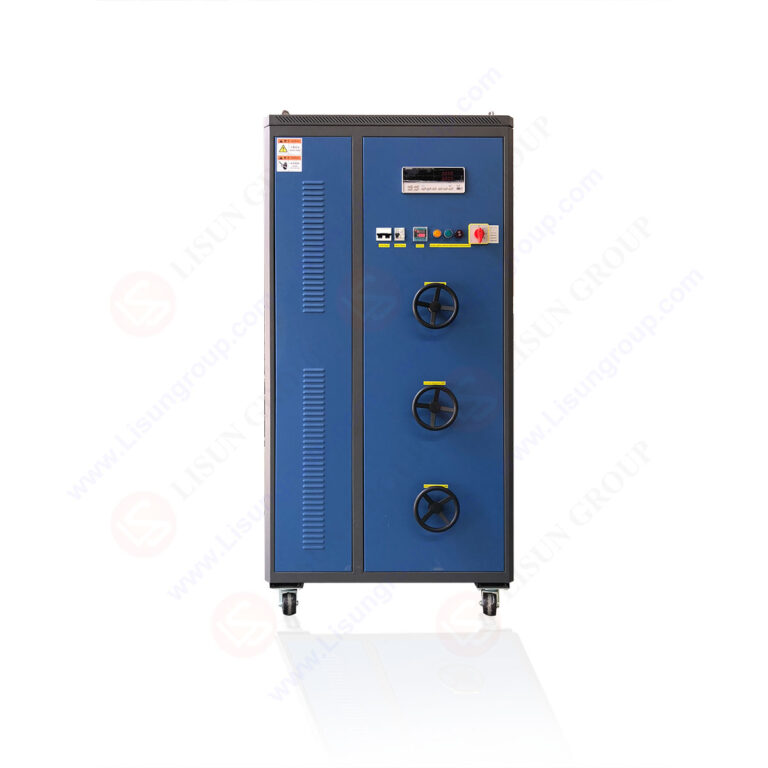
Instrumentation for Validation: The LISUN SC-015 Dust Sand Test Chamber
Accurate and repeatable IP6X certification demands precision-engineered test equipment that rigorously adheres to the parameters set forth in IEC 60529. The LISUN SC-015 Dust Sand Test Chamber is engineered specifically for this purpose, providing a controlled and standardized environment for validating dust-tight claims.
Testing Principles and Chamber Design: The SC-015 operates on the principle of forced dust circulation under negative pressure. A closed-loop system ensures a uniform and dense dust cloud within the test chamber. An integrated vacuum system draws a controlled pressure reduction inside the test specimen, simulating the pressure differentials that can occur in real-world applications due to thermal cycling or altitude changes. The chamber is constructed with robust materials to withstand the abrasive nature of the test dust, featuring a large viewing window with sealed illumination for in-test observation and post-test inspection.
Key Specifications and Competitive Advantages:
- Compliance: Designed in full conformity with IEC 60529, ISO 20653, and other derivative national standards.
- Chamber Volume: Offers a standardized internal workspace sufficient for a wide range of product sizes.
- Dust Circulation: Utilizes a controlled blower system to maintain a homogenous dust cloud at specified concentrations, ensuring consistent exposure on all surfaces of the test item.
- Vacuum Control System: Incorporates a precision vacuum pump, regulator, and flow meter to generate and maintain the critical 2 kPa negative pressure differential with high stability. A pressure gauge provides real-time monitoring.
- Dust Separation and Recovery: Includes an efficient recovery system to separate dust from the air stream post-test, minimizing waste and facilitating chamber cleaning.
- Safety and Usability: Features integrated safety controls, a dust reservoir with sieve, and a user interface for setting test duration and monitoring parameters.
The competitive advantage of the SC-015 lies in its measurement accuracy and system reliability. Inconsistent dust density or fluctuating vacuum pressure—common shortcomings in less sophisticated equipment—can yield false positives or negatives. The SC-015’s controlled environment ensures that a passing rating is a true indicator of dust-tight integrity, providing manufacturers with defensible and trustworthy certification data.
Sector-Specific Applications and Certification Imperatives
The requirement for IP6X protection permeates virtually all technology-driven industries.
- Electrical & Electronic Equipment / Industrial Control Systems: Panel builders and PLC manufacturers require IP6X enclosures to protect sensitive logic controllers and power supplies in foundries, cement plants, and grain processing facilities where conductive or combustible dusts are prevalent.
- Automotive Electronics: Components for electric vehicle (EV) battery management, under-hood sensors, and off-road vehicle control units must be IP6X rated to endure road dust, brake pad debris, and environmental grit.
- Lighting Fixtures: Industrial high-bay lighting, streetlights, and automotive headlamps require IP6X ratings to prevent lumen depreciation and overheating caused by internal dust accumulation on reflectors and LED arrays.
- Telecommunications Equipment: 5G small cells, outdoor routers, and base station electronics deployed in urban or desert environments rely on IP6X enclosures to ensure uninterrupted service.
- Medical Devices: Portable diagnostic equipment and imaging systems used in field hospitals or ambulances must prevent biological or particulate ingress to maintain sterility and function.
- Aerospace and Aviation: Avionics bays and external sensor housings require IP6X protection against runway dust, volcanic ash, and high-altitude particulate.
- Electrical Components: Sealed connectors, waterproof switches, and cable glands are foundational elements; their individual IP6X rating is essential for the overall system’s protection level.
- Office Equipment & Consumer Electronics: Data center servers, professional printers, and high-end cameras benefit from IP6X design to enhance reliability and reduce maintenance in demanding usage scenarios.
Beyond Initial Certification: Integrating IP6X into Product Lifecycle Management
Achieving IP6X certification is not a one-time event but a cornerstone of a robust design and quality assurance philosophy. It must be integrated into the product development lifecycle. This begins with Design for Reliability (DfR) principles, where gasket selection, seam welding, labyrinth seal design, and material choices are optimized for particulate exclusion. Prototypes must undergo rigorous pre-compliance testing using equipment like the LISUN SC-015 to identify and rectify design flaws before tooling commitment.
During manufacturing, process validation is critical. The consistency of gasket application, torque settings on fasteners, and the quality of ultrasonic welds directly impact the integrity of every unit produced. Therefore, periodic audit testing of production samples is a necessary quality control procedure to guard against manufacturing drift. Furthermore, understanding that IP ratings apply to unused, clean products, manufacturers of field-serviceable equipment must also design and validate maintenance procedures that allow end-users to reseal enclosures to the original IP6X level after access.
Interpreting Test Results and Addressing Common Failure Modes
A failure during IP6X testing necessitates a forensic engineering approach. Common failure points include static seal interfaces (e.g., door gaskets), dynamic seals (around buttons or shafts), cable entry points, and material porosity itself. Investigation often involves techniques like bubble testing under water or tracer gas detection to localize the leak path.
Remediation strategies may involve increasing gasket compression, redesigning seal geometries, specifying higher-durometer elastomers, implementing double-sealing strategies, or applying conformal coatings to internal PCBAs as a secondary defense. The goal is to create a holistic barrier system where the primary seal is absolute, validated by the stringent conditions of the IP6X test.
Frequently Asked Questions (FAQ)
Q1: Can a product be rated IP6X without being rated for any water ingress (IPX0)?
A1: Yes, the IP code is independent for solids and liquids. An enclosure can be rated IP6X, indicating complete dust-tightness, while having no official rating for liquid protection (denoted by the ‘X’ in the second position). The design criteria for excluding fine particulates are distinct from those for sealing against water.
Q2: How often should a manufacturer re-test products for IP6X compliance during production?
A2: There is no universal rule, but it should be embedded in the quality management system. Typical practices include testing first-article samples from new production lines, conducting annual or biannual audits, and performing tests after any significant change in material supply, assembly process, or tooling. Statistical process control for critical sealing parameters can reduce frequency but not eliminate the need for physical validation.
Q3: What is the key difference between the LISUN SC-015 and simpler “dust boxes” for testing?
A3: The critical differentiators are the precision control of the test environment. The SC-015 ensures a standardized, homogeneous dust cloud density and, most importantly, maintains a stable and accurate negative pressure differential inside the test specimen. Simple agitation boxes cannot reliably control pressure, leading to inconsistent and potentially invalid test results that may either overlook leaks or fail a properly sealed unit.
Q4: Does IP6X testing with talcum powder correlate to protection against all real-world dusts?
A4: IEC 60529’s talcum powder is a standardized, severe test medium designed to challenge seals with fine, abrasive particles. A passing rating provides a high degree of confidence against most common dusts like silica, flour, or dry soil. However, special considerations are needed for atypical particulates like conductive metal shavings, fibrous materials, or extremely hygroscopic dusts, which may require additional material compatibility or performance testing beyond the standard IP test.
Q5: Is an IP6X-rated enclosure inherently suitable for outdoor use?
A5: Not solely on the basis of IP6X. While IP6X provides excellent protection against wind-blown dust and sand, outdoor suitability requires evaluation of the liquid ingress protection (second numeral, e.g., IP65, IP66, IP67), UV resistance of materials, corrosion resistance, and operational temperature range. A full environmental profile assessment is necessary.