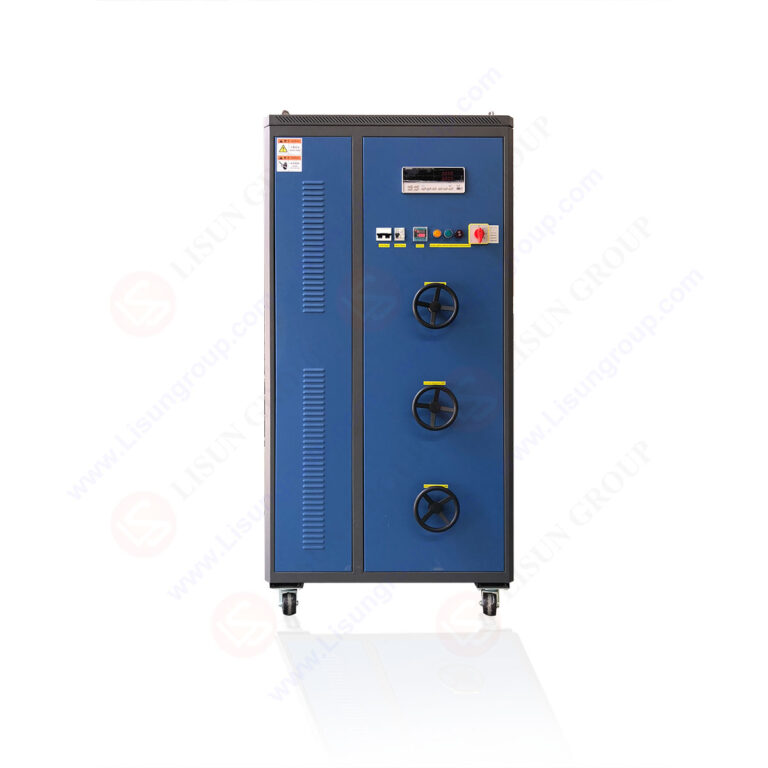



Optimizing Thermal Chamber Performance: A Technical Analysis of Precision Environmental Simulation
The reliable performance of electrical and electronic equipment across diverse and often extreme environmental conditions is a non-negotiable requirement in modern engineering. From the sub-zero temperatures encountered by automotive electronics during winter operation to the high heat and humidity challenging telecommunications equipment in tropical climates, product failure is not an option. Consequently, thermal chambers—specifically temperature humidity test chambers and thermal shock test chambers—serve as the critical proving grounds where product durability, material integrity, and functional reliability are validated under accelerated, controlled stress. This article provides a detailed technical examination of the core principles, operational optimization strategies, and application-specific considerations for these essential instruments, with a focus on achieving precise, repeatable, and standards-compliant testing outcomes.
Fundamental Principles of Environmental Stress Screening
At its core, environmental stress screening (ESS) within a thermal chamber operates on the principle of inducing controlled thermodynamic and hygroscopic stresses on a test specimen. The objective is not merely to observe function at a setpoint but to accelerate the aging process, identify latent defects, and verify design margins. The primary physical phenomena leveraged are conductive, convective, and, in some advanced systems, radiative heat transfer, coupled with mass transfer for humidity control. The chamber must create a homogeneous field where temperature and humidity uniformly envelop the unit under test (UUT), ensuring that the stress applied is consistent and attributable solely to the chamber’s parameters, not positional anomalies. Precise control of the rate of change (ramp rate) is equally critical, as a rapid thermal transition induces different mechanical stresses (due to coefficient of thermal expansion mismatches) compared to a slow soak. Understanding these fundamentals is prerequisite to optimizing any chamber’s performance, as calibration and control algorithms must account for the thermal mass of the UUT, load-induced turbulence, and sensor feedback latency.
Achieving Homogeneity and Stability in Climatic Testing
Two of the most cited metrics in chamber specifications, and rightly so, are temperature and humidity uniformity and stability. Uniformity refers to the spatial distribution of the parameter (e.g., the temperature difference between any two points in the workspace at a given time), while stability (or fluctuation) refers to the temporal variation at a single point over time. Poor uniformity can lead to inconsistent test results depending on the placement of the UUT, invalidating comparative data. Optimization here begins with chamber design: the placement, number, and baffling of airflow ducts; the power and modulation of heaters; and the efficiency of the refrigeration system. For example, a vertically circulating airflow pattern, often achieved with a ducted system that draws air from the top and discharges it from the bottom through a diffuser, can significantly improve temperature uniformity compared to a simple fan-driven circulation.
In practice, for a chamber like the LISUN GDJS-015B Temperature Humidity Test Chamber, achieving its specified uniformity of ±0.5°C / ±2.5% RH requires meticulous balancing. The chamber’s forced air circulation system, combined with a dedicated air duct design, minimizes dead zones. Stability, often specified at ±0.1°C / ±1.0% RH, is a function of the control system’s PID (Proportional-Integral-Derivative) tuning and the quality of the sensors. Optimizing performance involves regular validation against NIST-traceable standards, ensuring sensors are not placed in direct airflow or too close to chamber walls, and performing empty-chamber mapping to identify and mitigate areas of deviation before introducing product loads.
The Critical Role of Ramp Rate Control and Programming Fidelity
Many test standards, such as IEC 60068-2-1/2 (cold/dry heat tests) and IEC 60068-2-30 (damp heat, cyclic), prescribe not just extreme temperatures but specific transition profiles. The ability of a chamber to faithfully execute complex multi-segment programs—managing ramp rates, dwell times, and humidity setpoints—is paramount. A chamber that overshoots a setpoint or lags during a transition is not applying the intended stress profile. For instance, testing an aerospace component might require a slow ramp from +25°C to -55°C to prevent thermal shock during that phase of the test, followed by a rapid warm-up to +85°C in a subsequent phase to test solder joint integrity.
Optimization of dynamic performance hinges on the refrigeration system’s capacity and the control logic. Modern chambers utilize cascade refrigeration systems for low-temperature performance and sophisticated PID algorithms with adaptive gain scheduling. The controller must anticipate thermal inertia, modulating compressor output and heater power preemptively. The programmability of the GDJS-015B, with its multi-segment, loop-capable controller, allows engineers to precisely replicate field conditions or accelerated life cycles, such as simulating 24-hour diurnal cycles for solar-powered lighting fixtures or repeated on/off thermal cycles for household appliance control boards.
Mitigating the Impact of Product Load and Thermal Mass
A significant and often underestimated factor in chamber performance is the product load itself. A chamber calibrated while empty will behave differently when filled with 15kg of automotive electronic control units (ECUs), each with its own substantial thermal mass. The load absorbs energy during heating and releases it during cooling, acting as a heat buffer that can drastically slow ramp rates, create local humidity variations, and challenge the chamber’s stability. This is not a chamber defect but a physical reality that must be managed.
Optimization requires a load analysis prior to testing. Engineers should calculate the approximate total thermal mass (weight multiplied by specific heat capacity) of the UUT. Chamber selection must account for this; a chamber’s stated performance metrics typically assume a defined percentage of workspace volume utilization. Furthermore, strategic placement of the UUT is crucial. Items should be arranged to allow for unimpeded airflow around them, avoiding dense packing that creates wind shadows and hot spots. For very high-mass or high-power (self-heating) loads, such as a powered-up industrial control server, chambers with enhanced refrigeration capacity and independent cooling circuits for the electrical load feed-throughs may be necessary. The initial calibration and performance validation of the chamber should, where possible, include a representative load to establish real-world performance baselines.
Advanced Stress Simulation: The Principles of Thermal Shock Testing
While steady-state and cyclic temperature/humidity tests are invaluable, some failure mechanisms are only precipitated by extreme, rapid thermal transitions. Thermal shock testing, governed by standards like IEC 60068-2-14 (Test N), JESD22-A106B, and MIL-STD-883 Method 1010.9, subjects components to instantaneous transfers between extreme hot and cold environments. This test is particularly effective at revealing cracks in solder joints, ceramic substrates, or encapsulated microchips due to the shear stresses induced by rapid contraction and expansion.
The LISUN HLST-500D Thermal Shock Test Chamber employs a common two-zone (or three-zone) basket transfer system. It features a high-temperature zone (typically up to +200°C) and a low-temperature zone (typically down to -65°C or lower), with a mechanically driven basket that shuttles the test samples between them. The optimization of such a system revolves around transfer time, temperature recovery, and exposure stability. The specified transfer time, often ≤10 seconds, is critical; a sluggish transfer allows the sample to begin stabilizing at an intermediate temperature, diluting the shock effect. The HLST-500D utilizes an efficient vertical lifting mechanism to achieve this rapid transition.
Once the basket enters a zone, the chamber must rapidly recover to its setpoint. Powerful heaters and a high-capacity refrigeration system, often with liquid nitrogen or CO2 boost options for ultra-fast cooling, are essential. The design of the basket and airflow within each zone must ensure that all samples, regardless of position, experience the same temperature profile immediately upon entry. This test is indispensable for industries like automotive electronics (testing engine control modules), aerospace (avionics), and medical devices (implantable electronics), where a sudden failure from a temperature extreme transition could be catastrophic.
Industry-Specific Application Protocols and Standards Compliance
The configuration and operation of a thermal chamber are dictated by the relevant industry standards. Optimization, therefore, is synonymous with compliance.
- Automotive Electronics (AEC-Q100): Tests require precise temperature cycling with defined ramp rates and dwell times to simulate engine compartment and in-cabin environments. Chambers must reliably execute thousands of cycles.
- Telecommunications Equipment (GR-63-CORE, NEBS): Requires combined temperature and humidity cycling, along with operational testing, to ensure network equipment survives central office conditions.
- Medical Devices (ISO 13485, IEC 60601): Testing often focuses on stability and functionality at storage and operational limits, requiring excellent chamber uniformity and data logging for audit trails.
- Lighting Fixtures (IESNA LM-80, IEC 60598): LED lumen maintenance testing involves long-duration, steady-state high-temperature exposure (e.g., 1000 hours at 85°C), demanding exceptional chamber stability and reliability.
- Aerospace (DO-160, MIL-STD-810): Perhaps the most rigorous, involving rapid decompression and temperature-altitude profiles, often requiring custom chamber programming and robust construction.
A chamber like the GDJS-015B finds application across all these sectors. Its broad temperature range (-70°C to +150°C) and humidity range (20% to 98% RH) cover most standard requirements. Its key advantage in optimization is the integration of these ranges in a single, coherent system with precise control, reducing the need for multiple specialized chambers.
Data Integrity, Calibration, and Maintenance Regimens
The most perfectly designed test is worthless if the data collected cannot be trusted. Optimization of chamber performance is inextricably linked to a rigorous regime of calibration, validation, and preventive maintenance. All critical sensors—typically platinum resistance thermometers (PRTs) for temperature and capacitive polymer sensors for humidity—must undergo annual (or more frequent) calibration traceable to national standards. Furthermore, full chamber performance validation (mapping) should be conducted periodically to verify uniformity and stability specifications are still met across the entire workspace.
Maintenance is proactive, not reactive. Filters for the refrigeration system condensers must be cleaned regularly to maintain heat exchange efficiency. Humidification water reservoirs and dehumidification coils require descaling and cleaning to prevent microbial growth and mineral deposits that affect humidity response. The seals on chamber doors, especially for thermal shock models like the HLST-500D, must be inspected for integrity to prevent leakage and moisture ingress that compromise low-temperature performance. A well-documented log of all maintenance, calibration, and validation activities is not just good practice; it is often a requirement for ISO/IEC 17025 laboratory accreditation.
Conclusion: A Systems Approach to Reliability Assurance
Optimizing thermal chamber performance is not a singular task but a continuous, systems-oriented discipline. It encompasses the initial selection of a chamber with appropriate capacity and specifications, such as the LISUN GDJS-015B for comprehensive climatic testing or the HLST-500D for dedicated shock testing, followed by the scientific application of load and programming considerations. It demands an understanding of the relevant physics, a commitment to standards compliance, and an unwavering dedication to data integrity through meticulous calibration. When executed correctly, this optimization process transforms the thermal chamber from a simple enclosure into a high-fidelity simulation engine, providing engineers with the definitive evidence needed to ensure that electrical components, from a simple switch to a complex avionics module, will perform as intended wherever in the world they are deployed.
Frequently Asked Questions (FAQ)
Q1: What is the primary difference between a temperature humidity test chamber (like the GDJS-015B) and a thermal shock chamber (like the HLST-500D)?
A temperature humidity chamber provides precise, controlled ramping and soaking at combined temperature and humidity setpoints, used for steady-state, cyclic, or bias-life testing. A thermal shock chamber provides an instantaneous, violent transition between two extreme temperature zones, with no controlled ramp, specifically to induce mechanical stress from rapid expansion/contraction. They are complementary tools for different failure mechanism analyses.
Q2: How often should a thermal chamber be calibrated, and what does calibration involve?
At a minimum, chambers should undergo full sensor calibration annually, traceable to NIST or other national standards. This involves removing the temperature and humidity sensors and calibrating them against reference standards in a metrology lab. Additionally, a full chamber performance qualification (mapping) should be done annually or after any major repair or relocation to verify spatial uniformity and temporal stability across the workspace.
Q3: When testing products that generate their own heat (e.g., powered electronics), what special chamber considerations are needed?
This is known as “dead load” versus “live load” testing. For live loads, the chamber must have sufficient refrigeration capacity to overcome both the ambient cooling requirement and the heat dissipated by the product. Furthermore, the chamber’s control system should account for this extra heat source. It is also critical to use chambers with appropriate electrical feed-throughs rated for the required voltage and current, and to ensure the product’s wiring does not obstruct airflow or create a safety hazard.
Q4: Can a standard temperature humidity chamber perform thermal shock tests?
No, it is not designed for that purpose. Attempting rapid transfers by manually opening a standard chamber door invalidates the test (transfer time is too long) and severely stresses the chamber’s refrigeration system as ambient air rushes in. Thermal shock chambers are specifically engineered with separate zones and ultra-fast mechanical transfer systems to achieve the requisite sub-10-second transitions and rapid zone recovery.
Q5: Why is humidity control important for electronic testing, even for products not used in damp environments?
Humidity, particularly when combined with temperature cycling, accelerates multiple failure mechanisms. It can lead to electrochemical migration (forming dendrites that short-circuit boards), corrosion of metal contacts and traces, delamination of circuit board layers, and swelling or degradation of polymeric materials. Testing with humidity is a key accelerated life test for long-term reliability, even for products destined for dry climates, as it reveals material and manufacturing process vulnerabilities.