


A Comprehensive Framework for IP6X Compliance Testing: Methodologies, Equipment, and Industry Applications
Introduction to Ingress Protection (IP) Ratings and the IP6X Specification
The Ingress Protection (IP) rating system, codified under international standard IEC 60529, provides a systematic and universally recognized classification for the degree of protection offered by enclosures against the intrusion of solid foreign objects and water. This classification is paramount for ensuring the reliability, safety, and longevity of equipment across a diverse spectrum of industries. The rating comprises two characteristic numerals: the first indicates protection against solids, while the second denotes protection against liquids. An “X” is used when a characteristic is not specified or not tested.
The IP6X rating represents the highest echelon of protection against particulate ingress. Specifically, it certifies that an enclosure is “Dust-tight,” meaning no ingress of dust occurs under defined test conditions. This is a critical benchmark for products intended for deployment in environments where fine particulate matter—such as industrial dust, airborne sand, or other abrasive particles—poses a significant risk to internal components. Failure to achieve this level of sealing can lead to catastrophic outcomes, including electrical short circuits, mechanical binding, optical obstruction, thermal management failure, and accelerated corrosion.
The Imperative of Dust-Tight Certification in Modern Engineering
The demand for IP6X-rated products has escalated in parallel with technological advancement and the expansion of equipment into harsher operational environments. In the realm of Electrical and Electronic Equipment and Industrial Control Systems, dust ingress can disrupt sensitive logic boards, foul connectors, and degrade insulation resistance, leading to unplanned downtime in manufacturing or process control. Automotive Electronics, particularly components mounted in under-hood or under-body locations, are subjected to continuous exposure to road dust and grit; an IP6X rating is often a prerequisite for functional safety and durability validation.
Similarly, Lighting Fixtures in outdoor, industrial, or agricultural settings must resist the accumulation of dust on reflectors and lenses to maintain luminous efficacy. Telecommunications Equipment housed in roadside cabinets or deployed in arid, sandy regions requires dust-tight enclosures to ensure signal integrity and network reliability. For Medical Devices and Aerospace and Aviation Components, where failure is not an option, IP6X certification provides a quantifiable assurance of resilience against environmental contaminants that could compromise sterility or flight-critical systems. Even everyday Consumer Electronics, Office Equipment, and Household Appliances benefit from enhanced dust protection, improving product lifespan and user satisfaction in dusty domestic or commercial settings.
Deconstructing the IP6X Test Standard: Requirements and Procedures
The IP6X test is meticulously defined to simulate extreme dust exposure. The test specimen, in its operational housing, is subjected to a controlled atmosphere of fine talcum powder for a duration of 8 hours. The dust chamber must maintain a vacuum inside the enclosure, drawing air (and potentially dust) inward through any possible leakage paths. The key parameters are stringent:
- Test Dust: Finely ground talcum powder, with a particle size predominantly between 1µm and 75µm. This simulates a wide range of fine, invasive particulates.
- Dust Concentration: The chamber must maintain a dust concentration of 2 kg/m³ ± 20%, ensuring a severe and consistent challenge.
- Test Duration: 8 hours of continuous exposure.
- Vacuum Pressure: A sustained negative pressure differential is applied inside the enclosure, typically between 1.96 kPa (20 mbar) and 7.85 kPa (80 mbar), depending on the enclosure’s internal volume. This forces ingress attempts through any seals or gaps.
- Assessment Criteria: After testing, the specimen is inspected. To pass IP6X, there must be no observable deposit of dust inside the enclosure. A negligible amount that does not degrade performance or safety may be permitted per the standard’s notes, but the benchmark is effectively “zero ingress.”
Specialized Apparatus for IP6X Validation: The LISUN SC-015 Dust Sand Test Chamber
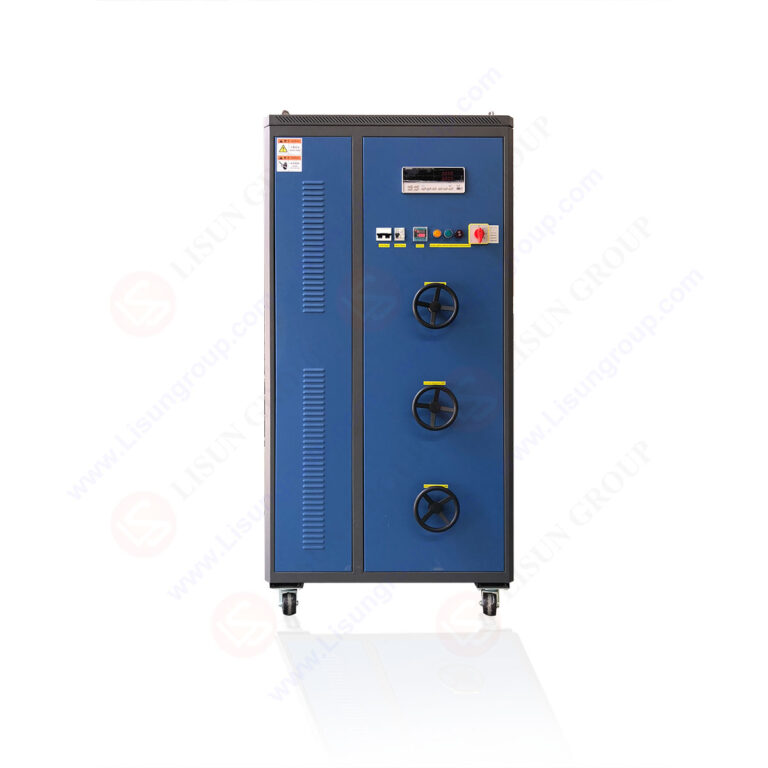
Accurate and repeatable IP6X testing necessitates specialized equipment that can precisely control the critical environmental and mechanical variables outlined in the standard. The LISUN SC-015 Dust Sand Test Chamber is engineered specifically to meet and exceed these requirements, providing laboratories and quality assurance departments with a reliable tool for definitive compliance testing.
Technical Specifications and Operational Principles
The LISUN SC-015 is a fully integrated test system. Its primary chamber is constructed from corrosion-resistant materials, such as stainless steel, with a transparent viewing window for real-time observation. The system incorporates a precision dust circulation mechanism, typically involving a blower and a fluidized bed system, to ensure a uniform and sustained suspension of talcum powder at the mandated concentration. A critical component is its programmable vacuum system, which automatically generates and regulates the required negative pressure inside the test specimen according to its volume, as per the IEC 60529 lookup table.
A sophisticated control system, often featuring a touch-screen HMI (Human-Machine Interface), allows the operator to set and monitor all parameters: test duration, dust concentration (via airflow control), vacuum level, and chamber conditions. Safety features, including emergency stops and filter systems to contain the test dust, are integral to its design.
Industry-Specific Use Cases and Applications
The versatility of the SC-015 makes it indispensable across the verticals previously mentioned. To illustrate:
- An automotive supplier would use it to validate the dust-tight integrity of a new generation of electronic control units (ECUs) for electric vehicle battery management before approving them for series production.
- A lighting manufacturer would test a new line of IP6X-rated LED high-bay lights destined for a cement plant, ensuring their optical systems remain unobstructed.
- A producer of industrial sensors for predictive maintenance would certify that the enclosures for vibration and temperature sensors can withstand years of exposure in a steel mill’s dusty environment.
- A medical device firm developing a portable diagnostic unit for field hospitals would utilize the SC-015 to guarantee internal sterility and electronic reliability in sandy or dusty terrains.
Competitive Advantages in Compliance Testing
The LISUN SC-015 distinguishes itself through several key attributes that translate to testing accuracy and operational efficiency. Its precise dust concentration control eliminates a major source of test variability, ensuring results are reproducible and legally defensible. The automated vacuum regulation removes human error from the pressure-setting process, directly linking specimen volume to the correct test condition. Furthermore, its robust construction and integrated dust recovery/filtration system minimize maintenance downtime and operator exposure to test particulates, enhancing laboratory safety and throughput.
Interpreting Test Results and Addressing Failure Modes
A successful IP6X test concludes with a clean internal inspection, allowing the product to be formally marked and specified as “Dust-tight.” A failure, indicated by visible dust ingress, necessitates a root-cause analysis. Common failure points include inadequately sealed cable glands, imperfect mating surfaces on enclosure lids, compromised gaskets or O-rings, and micro-gaps around buttons or switches. Remediation involves redesigning sealing geometries, selecting more appropriate elastomer materials for gaskets, or improving assembly processes. The quantitative data from a chamber like the SC-015—such as the exact location of ingress suggested by dust patterns—provides invaluable feedback for these engineering corrections.
Integration of IP6X into Broader Product Qualification Regimes
IP6X testing is rarely performed in isolation. It is frequently a component of a larger environmental stress screening (ESS) or product qualification sequence. A product might undergo sequential or combined testing for thermal cycling, vibration, and IP6X dust ingress to simulate a lifetime of field conditions. For instance, a telecommunications router may be tested to IP6X after vibration testing to ensure shipping and installation shocks do not compromise its long-term dust sealing. This holistic approach to validation is essential for products in aerospace or medical fields, where reliability under combined stresses is non-negotiable.
Conclusion
The IP6X dust-tight rating is a non-negotiable requirement for a vast array of modern technological products. The rigorous testing mandated by IEC 60529 provides a critical barrier between reliable operation and premature field failure. Employing precise, reliable, and standardized test equipment, such as the LISUN SC-015 Dust Sand Test Chamber, is fundamental for manufacturers to validate their designs, ensure regulatory compliance, and ultimately deliver products that meet the durability expectations of the global market. As technology continues to permeate every environment, the role of definitive ingress protection testing will only grow in significance.
FAQ Section
Q1: Can the LISUN SC-015 chamber be used for tests other than IP6X?
A1: Yes, while optimized for IP6X (IEC 60529), the chamber can also be configured to perform IP5X testing (Dust Protected), which uses similar talcum powder but under less severe conditions and with different pass/fail criteria. It is specifically designed for solid particle ingress testing per the IEC standard.
Q2: How is the required vacuum level for testing determined?
A2: The vacuum level is not arbitrary; it is prescribed by IEC 60529 based on the internal volume of the device under test (DUT). The standard provides a formula and a reference table. A key feature of advanced chambers like the SC-015 is the automatic calculation and application of the correct vacuum based on the operator’s input of the DUT’s volume.
Q3: Our product has external cooling fans. Can it be tested for IP6X?
A3: The product must be tested in its intended operational state. If the fans are running during normal use, they would typically be active during the test. The test would then validate whether the fan intake and associated seals prevent dust ingress. Special fixturing may be required to power the unit inside the chamber.
Q4: What is the typical lead time to receive test results?
A4: The actual test duration is a minimum of 8 hours. However, total lead time includes specimen preparation, chamber conditioning (achieving stable dust concentration), the test run, a thorough post-test de-dusting period, and detailed inspection/analysis. A complete testing cycle often requires 1-3 business days, depending on the complexity and number of specimens.
Q5: Is certification from a specific laboratory required for IP6X, or can we perform in-house testing?
A5: For self-declaration of conformity (common for CE marking under certain directives), in-house testing with properly calibrated equipment like the SC-015 is often sufficient, provided you maintain a full test report. However, for certain contracts, industry certifications (e.g., in automotive or aerospace), or legal disputes, testing by an accredited third-party laboratory may be mandated by your customer or regulatory body.