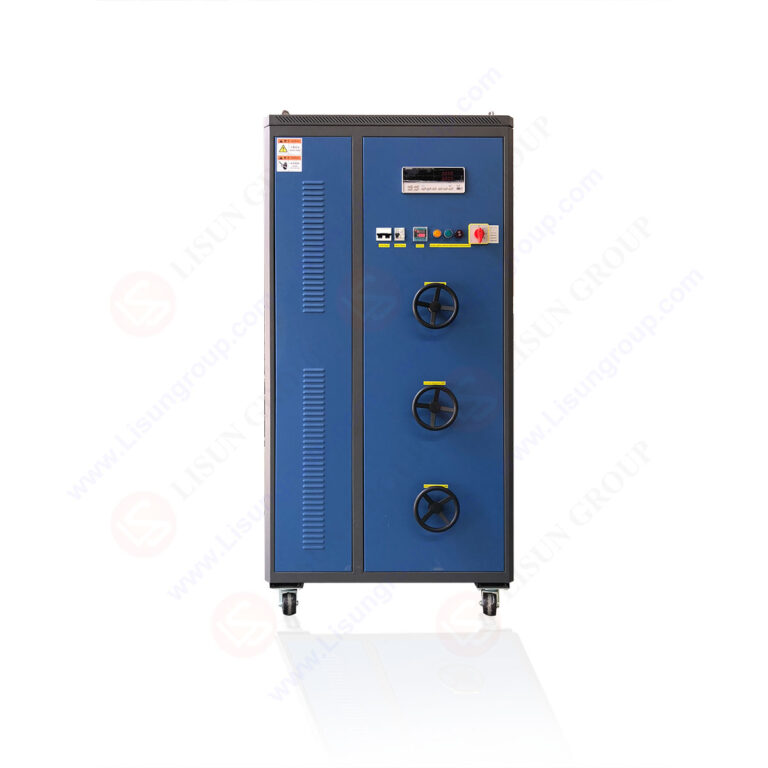



IPX1 Water Drip Test Explained: A Foundational Assessment for Vertical Drip Protection
Within the rigorous framework of product environmental testing, ingress protection (IP) codes serve as a globally recognized language defining a product’s resilience against solid particulates and liquids. The IPX1 rating, representing the most elementary level of water protection, is a critical and mandatory verification for a vast array of equipment. This article provides a comprehensive technical examination of the IPX1 water drip test, detailing its procedural methodology, governing standards, application across industries, and the instrumentation required for its precise execution, with a specific focus on the LISUN JL-8 Drip Waterproof Test Chamber.
Defining the Scope and Intent of IPX1 Certification
The IP code, as standardized by the International Electrotechnical Commission (IEC) under standard 60529, is structured as IPXY, where ‘X’ denotes protection against solids and ‘Y’ against liquids. An ‘X’ replaced by a ‘0’ indicates no specific protection, while a ‘Y’ of ‘1’ defines protection against vertically falling water drops. The primary intent of the IPX1 test is not to simulate monsoon conditions or direct hose-downs, but to verify that an enclosure will not allow harmful water ingress when exposed to condensation, light rain, or incidental dripping in a controlled environment. It is a test of basic sealing integrity under a low-energy water exposure scenario.
This certification is foundational. For many electrical and electronic products, achieving IPX1 or a higher rating is a prerequisite for market准入, ensuring a baseline of safety and operational reliability. It confirms that water dripping vertically onto the enclosure will not penetrate in a manner that could lead to short circuits, corrosion of live parts, or failure of internal components. The test is particularly relevant for products not intended for wet environments but which must withstand the humidity and occasional condensation present in many indoor settings.
Deconstructing the IPX1 Test Methodology and Parameters
The test procedure is meticulously defined to ensure reproducibility and consistency across testing laboratories worldwide. The core principle involves subjecting the device under test (DUT) to simulated rainfall consisting of vertically falling drops. The key parameters, as per IEC 60529 and its national derivatives (e.g., EN 60529, GB 4208), are as follows:
- Water Output: Dripping water is generated at a rate of 1.0 ±0.5 mm per minute. This equates to approximately 0.017–0.025 liters per minute per designated test area, a carefully calibrated flow that represents light precipitation.
- Test Duration: The DUT is exposed to the dripping water for a continuous period of 10 minutes. This duration is calculated based on the surface area of the DUT, requiring a minimum of 1 mm of rainfall per minute over the entire exposed surface.
- Droplet Calibration: The test standard specifies that the surface area of individual water drops must be between 0.2–0.5 cm². This controls the impact energy and dispersion characteristics of the water.
- Test Apparatus Geometry: The DUT is placed on a turntable (for non-symmetrical products) or in a fixed position, ensuring its top surface is horizontal. The drip apparatus, typically a “drip box” or “shower head” with a grid of nozzles, is positioned to create a uniform drip pattern over an area extending at least 50–100 mm beyond the DUT’s footprint. The distance between the drip nozzles and the top of the DUT is 200 mm.
- Tilt of the DUT: A critical and often misunderstood requirement is that the DUT is tested in its normal operating position. For IPX1, this is strictly 0° from vertical—the housing is not tilted. This distinguishes IPX1 from IPX2 (15° tilt test), emphasizing its scope as a pure vertical drip assessment.
Post-test evaluation involves a thorough visual inspection and functional check. The DUT is examined internally for any traces of water ingress. For electrical products, a dielectric strength test or insulation resistance measurement is often performed to confirm that no moisture has compromised electrical safety. The acceptance criterion is clear: no water must have entered the enclosure in a quantity that could interfere with normal operation or impair safety.
Industries and Applications Mandating IPX1 Verification
The IPX1 rating is ubiquitous, applying to a broader range of products than often assumed. It is a fundamental design requirement across these sectors:
- Electrical and Electronic Equipment / Industrial Control Systems: Control cabinets, PLC housings, terminal blocks, and motor drives installed in indoor industrial environments where overhead pipe condensation or incidental dripping is possible.
- Household Appliances: Refrigerators, ovens, microwave ovens, and laundry machines often require IPX1 or better for their control panels to withstand kitchen humidity and cleaning splashes.
- Lighting Fixtures: While wet-rated fixtures demand higher IP codes, many indoor commercial and residential luminaires (e.g., recessed downlights, office troffers) carry an IPX1 or IPX2 rating to protect against dust and condensation in ceiling voids.
- Automotive Electronics: Interior electronic control units (ECUs), infotainment systems, and dashboard instrumentation are routinely tested to IPX1 to ensure reliability against cabin condensation.
- Telecommunications Equipment: Indoor networking gear, such as routers, switches, and baseband units housed in telecom rooms, require protection from ambient moisture.
- Office Equipment & Consumer Electronics: Printers, desktop computers, audio amplifiers, and set-top boxes may specify IPX1 to guarantee longevity in typical office or home environments.
- Electrical Components: Switches, sockets, and circuit breakers designed for indoor use frequently hold an IPX1 rating as part of their safety certification (e.g., IEC 60669, IEC 60884).
- Medical Devices: Equipment for general indoor hospital use, such as patient monitors or diagnostic consoles, may specify IPX1 to protect against accidental spills from adjacent surfaces.
Instrumentation for Compliance: The LISUN JL-8 Drip Waterproof Test Chamber
Accurate and repeatable IPX1 testing necessitates specialized equipment that conforms strictly to the dimensional and flow-rate stipulations of the standard. The LISUN JL-8 Drip Waterproof Test Chamber is engineered to meet these requirements with precision, serving as a benchmark instrument for quality assurance laboratories.
Testing Principles and Chamber Design:
The JL-8 operates on the principle of controlled, calibrated dripping. It features a stainless steel water tank with a temperature control system (typically adjustable from 0–60°C, allowing for testing under varying water temperatures as some standards require). A precision pump circulates water through a filtration system to a drip plate mounted at the fixed 200mm height. This drip plate contains an array of nozzles designed to produce the standard-compliant droplet size and distribution. The DUT is placed on an adjustable sample table below. For IPX1, the table remains perfectly level (0°). The entire test chamber is constructed from corrosion-resistant materials (SUS 304 stainless steel) to ensure long-term reliability and prevent contamination of the test water.
Key Technical Specifications of the LISUN JL-8:
| Parameter | Specification |
| :— | :— |
| Drip Plate Diameter | Customizable, commonly ≥ Φ800mm |
| Distance from Drip Plate to Sample | 200 mm (fixed for IPX1) |
| Water Flow Rate (IPX1) | 1.0 ±0.5 mm/min (electronically adjustable) |
| Test Water Temperature Range | RT +5 ~ 60°C (with optional cooling: 0°C) |
| Sample Table Rotation Speed | 1~5 rpm (programmable, for even exposure) |
| Test Duration Timer | 0 ~ 9999 minutes (digital programmable) |
| Control System | Touch-screen PLC with data logging |
| Compliance Standards | IEC 60529, GB 4208, ISO 20653, etc. |
Competitive Advantages in Industrial Application:
The JL-8 differentiates itself through several critical features. Its programmable logic controller (PLC) and touch-screen interface allow for the storage of preset test protocols (IPX1 through IPX6), reducing operator error and ensuring traceability. The precision flow control valve and calibrated nozzles guarantee the exact ±0.5 mm/min tolerance is consistently met, a factor where cheaper systems often fail. The inclusion of a water temperature control system is vital for testing to automotive (ISO 20653) or other standards that specify water temperature differentials to test for thermal shock and condensation. Furthermore, its robust stainless-steel construction and modular design facilitate easy maintenance and adaptation for testing larger or irregularly shaped components, such as automotive ECUs or sections of cable harness systems.
Interpreting Results and the Path to Higher IP Ratings
A successful IPX1 pass is a positive indicator of basic enclosure integrity. However, it is merely the first step on the ingress protection ladder. Engineers must carefully interpret this result within the product’s intended use case. It does not qualify a product for use in damp, humid, or outdoor environments where angled water exposure (IPX2, IPX3) or jets (IPX5, IPX6) are present.
The transition from IPX1 to higher ratings involves significantly more demanding test apparatus and procedures. For example, the IPX3 oscillating tube or spray nozzle test exposes the DUT to water sprayed at angles up to 60° from vertical. The IPX4 splashing test requires omnidirectional water exposure. These tests assess not just static seals but dynamic sealing effectiveness under varying pressure and impact energies. Therefore, while the JL-8 chamber can be configured for IPX1 and IPX2 tests, higher IP liquid tests require dedicated spray and jet equipment, such as the LISUN JL-9K1L series comprehensive test chambers.
Frequently Asked Questions (FAQ)
Q1: Can a product that passes IPX1 be considered “waterproof”?
No. The term “waterproof” is ambiguous and generally not used in technical specifications. IPX1 only certifies protection against vertically falling drips. It offers no guarantee against water sprayed from angles, under pressure, or during immersion. Products requiring true water resistance must achieve higher IP ratings, such as IPX5 (water jets), IPX7 (temporary immersion), or IPX8 (continuous immersion).
Q2: Why is controlling the water temperature important in an IPX1 test?
While the core IEC 60529 standard for IPX1 does not mandate a specific water temperature, other industry-specific standards do. For instance, automotive testing (ISO 20653) often requires testing with cold water on a warmed device to simulate thermal shock and the potential for induced condensation inside the enclosure. The temperature control system in chambers like the LISUN JL-8 provides this necessary versatility.
Q3: Our product has gaskets and is well-sealed. Is formal IPX1 testing necessary, or can we self-certify?
While internal validation is part of good design practice, formal certification by an accredited testing laboratory, using calibrated equipment like the JL-8, is typically required for regulatory compliance, safety approvals (e.g., UL, CE), and customer contracts. Self-certification without standardized equipment carries legal and liability risks and may not be recognized by supply chain partners or authorities.
Q4: How does the IPX1 test differ from a simple “water drip” check performed on a bench?
Ad-hoc bench tests lack the controlled, quantifiable parameters mandated by the standard. The precise flow rate (1.0±0.5 mm/min), droplet size, 200mm fall height, and defined test duration are critical to achieving a reproducible result that can be compared across the industry. Informal testing cannot guarantee this consistency and is not auditable.
Q5: Can the LISUN JL-8 chamber be used for testing other IP codes?
Yes, the JL-8 is specifically designed as a drip test chamber for IPX1 and IPX2 ratings. Its adjustable sample table can be tilted to the required 15° for the IPX2 test. For higher IP ratings (IPX3-IPX6), which involve oscillating sprays, jets, and higher water pressures, a different category of equipment, such as a spray nozzle test chamber or a comprehensive cabinet combining multiple test functions, is required.