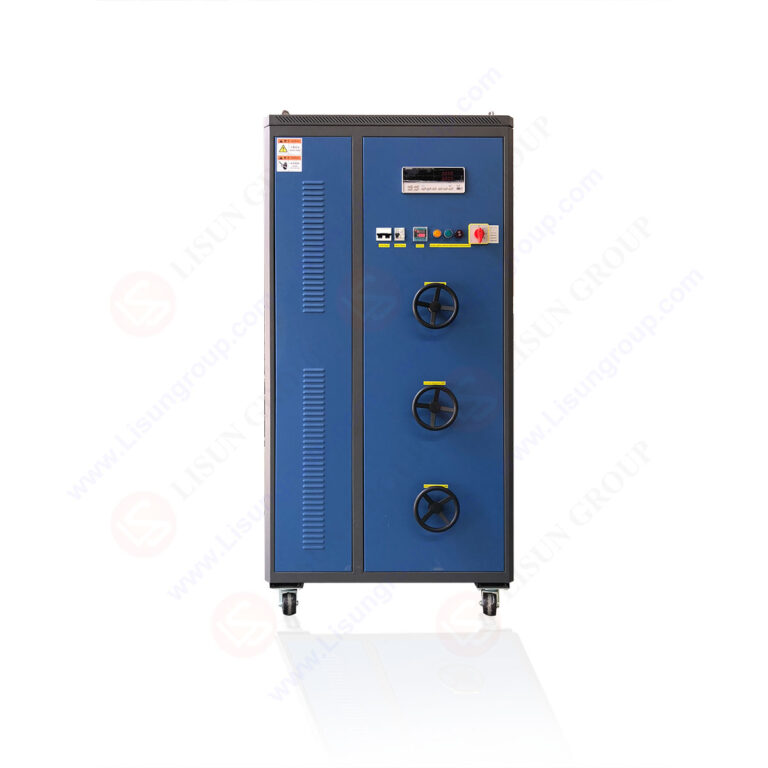



IP Test Chamber Guide: Understanding Ingress Protection Ratings for Product Durability
Introduction to Ingress Protection and Its Role in Product Validation
In the engineering and manufacturing of modern devices, the ability to withstand environmental ingress is a non-negotiable determinant of reliability, safety, and operational lifespan. The Ingress Protection (IP) rating system, codified by the International Electrotechnical Commission (IEC) under standard IEC 60529, provides a globally recognized and objective classification for the degree of protection offered by enclosures against the intrusion of solid foreign objects and liquids. This classification is not merely a marketing specification but a critical performance parameter validated through rigorous, repeatable laboratory testing. The integrity of this validation process hinges upon the precision and capability of specialized equipment: IP test chambers. These chambers simulate a spectrum of environmental challenges, from dust-laden atmospheres to high-pressure water jets, enabling manufacturers to quantify product durability against standardized criteria before deployment in field conditions. For industries ranging from automotive electronics to medical devices, the data derived from such testing directly informs design iterations, material selection, warranty terms, and compliance with regional safety regulations.
Deciphering the IP Code: A Structural Analysis of Rating Digits
The IP code is an alphanumeric designation following the format IPXY, where ‘X’ denotes the level of protection against solids and ‘Y’ indicates the level of protection against liquids. A comprehensive understanding of each digit is paramount for specifying product requirements and interpreting test results.
The first characteristic numeral (X) ranges from 0 to 6. A rating of 0 (or X, indicating no testing) offers no special protection. Progressively, ratings of 1 and 2 protect against large body parts and smaller fingers, respectively. Ratings of 3, 4, and 5 guard against tools, wires, and most wires (>1mm diameter). The highest solid ingress rating, 6, denotes complete protection against dust ingress under sustained test conditions, often referred to as “dust-tight.”
The second characteristic numeral (Y) spans from 0 to 9K, with increasing severity. Ratings IPX1 through IPX4 cover protection against vertically falling drops, dripping water at 15° angles, spraying water, and splashing water from all directions. IPX5 and IPX6 involve protection against low-pressure (12.5 L/min at 30 kPa) and high-pressure (100 L/min at 100 kPa) water jets, respectively. IPX7 and IPX8 define protection against temporary (30 minutes at 1-meter depth) and continuous immersion under conditions specified by the manufacturer. The rating IPX9K, detailed in DIN 40050-9, represents protection against close-range, high-temperature, high-pressure water jets (80°C, 80-100 bar, 14-16 L/min), a critical requirement for automotive and industrial cleaning processes.
It is crucial to note that ratings are not cumulative; a product rated IP67 must independently pass tests for dust ingress (6) and temporary immersion (7), but is not necessarily validated against jetting water (5 or 6). Separate testing for each relevant exposure is required.
The Engineering Principles Behind IP Test Chamber Operation
IP test chambers are engineered to create controlled, reproducible environmental conditions that align precisely with the parameters outlined in IEC 60529 and related standards. Their operation is founded on several core engineering principles.
For solid particle testing (IP5X and IP6X), a chamber creates a controlled dust atmosphere using talcum powder or similar test dust. A vacuum pump inside the test specimen enclosure generates a negative pressure differential, drawing the dust-laden air through any potential ingress paths. The test assesses whether harmful quantities of dust penetrate the enclosure, which could interfere with safe operation or degrade internal components.
Liquid ingress testing employs a variety of nozzles, spray bars, and immersion tanks. The principle involves delivering water at specified flow rates, pressures, durations, and angles. For example, an IPX4 oscillating tube test uses a sprinkler head with calibrated holes to simulate rain from all directions, while an IPX5/IPX6 test utilizes a standardized nozzle held at a precise distance to deliver a concentrated jet. IPX7 and IPX8 tests require submersion tanks where the unit is immersed at a specified depth and for a defined duration, monitoring for water penetration. The IPX9K test is particularly demanding, employing a specialized nozzle that rotates at a fixed distance from the specimen, delivering near-scalding water at extreme pressure to simulate high-impact cleaning in industrial or vehicular settings.
The JL-XC Series: A Modular Platform for Comprehensive IP Validation
Within the landscape of test equipment, the LISUN JL-XC Series waterproof test chambers represent a modular, high-precision solution designed to address the full spectrum of IP testing requirements, from basic drip tests to the rigorous IPX9K validation. This series exemplifies the integration of robust mechanical design with precise electronic control to meet the stringent demands of international standards.
The JL-XC Series typically comprises a stainless-steel test chamber, a precision water temperature control system, a high-pressure pump assembly, a turntable for uniform exposure, and an intelligent programmable logic controller (PLC) with a touch-screen Human-Machine Interface (HMI). Its modularity allows it to be configured for specific test regimens. For instance, a single chamber can be equipped with interchangeable nozzles and fixtures to conduct IPX1 through IPX6, IPX9K, and with auxiliary tanks, IPX7 and IPX8 tests. This consolidates multiple validation processes into one platform, optimizing laboratory space and capital expenditure.
Key Specifications and Testing Principles of the JL-XC Series:
- Pressure Range: Capable of generating water pressures from 30 kPa for IPX5 up to 10,000 kPa (100 bar) for IPX9K testing, with stable regulation.
- Flow Control: Integrated flowmeters and regulators ensure precise adherence to standard-mandated flow rates (e.g., 12.5 L/min for IPX5, 14-16 L/min for IPX9K).
- Temperature Control: For IPX9K tests, the water heater and circulation system maintain water at 80°C ±5°C, as per DIN/IEC 60529 requirements.
- Turntable System: A motorized turntable rotates the test sample at 1-3 rpm or 5 rpm (for IPX9K), ensuring all surfaces are exposed uniformly to the water spray.
- Nozzle Configuration: The system includes a complete set of standardized nozzles (e.g., IPX5/IPX6 jet nozzle, IPX9K 0-degree fan nozzle) mounted on adjustable, motorized oscillating arms for automated testing cycles.
- Compliance: The design and calibration adhere to IEC 60529, ISO 20653, GB 4208, and other equivalent national standards.
Industry-Specific Applications and Validation Scenarios
The application of IP testing and equipment like the JL-XC Series is ubiquitous across technology-driven sectors.
- Automotive Electronics: Components such as electronic control units (ECUs), sensors, lighting assemblies (headlights, taillights), and charging ports must withstand road spray (IPX5/6), occasional flooding (IPX7), and high-pressure underbody washing (IPX9K). The JL-XC Series’ ability to perform IPX6 and IPX9K tests sequentially is vital for validating these components.
- Lighting Fixtures: Outdoor luminaires, street lights, and industrial high-bay lights require ratings of IP65 or IP66 to resist dust and heavy rain. Submersible pool lights mandate IP68. The chamber’s oscillating tube and jet nozzle fixtures are essential for certifying these products.
- Telecommunications Equipment: Outdoor 5G radios, fiber optic terminal enclosures, and submarine communication repeaters require high IP ratings (IP67/68) to protect sensitive electronics from humidity, rain, and dust. Testing ensures signal integrity and long-term reliability.
- Medical Devices: Portable diagnostic equipment, surgical tools with embedded electronics, and hospital bedside monitors may require IP ratings for cleaning resistance (IPX4/5) or protection against bodily fluid ingress (IP22/23). Precise, repeatable testing is critical for patient safety and regulatory approval (e.g., FDA, CE marking).
- Aerospace and Aviation Components: Avionics bay components, external sensors, and in-flight entertainment systems are tested for resistance to condensation, accidental spills, and pressurized fluids. While often governed by specific DO-160 standards, IP testing provides a foundational validation.
- Electrical Components & Industrial Control Systems: Switches, sockets, circuit breakers, and programmable logic controller (PLC) housings in factories are exposed to conductive dust and coolant spray. Ratings of IP54, IP65, or IP66 are common, validated using dust and water spray modules.
Competitive Advantages of Integrated Testing Solutions
The JL-XC Series offers distinct advantages over disparate, single-function test setups. Its primary benefit is consolidation and efficiency. By integrating multiple test capabilities into one programmable platform, it reduces equipment footprint, minimizes sample handling between tests, and streamlines the validation workflow. This leads to faster time-to-market for new products.
Secondly, its precision and repeatability are enhanced by digital controls. The PLC ensures exact control over pressure, flow, temperature, turntable speed, and test duration, eliminating human error from manual adjustments and guaranteeing that test results are consistent and auditable—a key requirement for ISO 17025 accredited laboratories.
Finally, its modularity and scalability provide a future-proof investment. As product requirements evolve or new standards emerge, the chamber can often be upgraded with additional modules rather than requiring complete replacement. This flexibility makes it suitable for both dedicated quality assurance labs and third-party testing facilities serving multiple industries.
Interpreting Test Results and Correlating to Field Performance
A successful IP test, where no harmful ingress occurs as defined by the standard, allows the product to bear the corresponding IP rating. However, engineering judgment is required to correlate laboratory results with real-world performance. A laboratory test is a controlled, accelerated simulation; field conditions involve variable factors like water chemistry, temperature cycling, UV exposure, and mechanical vibration acting in concert. Therefore, an IP rating should be viewed as a necessary but not always sufficient condition for durability. It is often part of a broader testing regimen including thermal cycling, vibration, and corrosion tests. The data from a JL-XC Series test provides a quantitative baseline. For example, knowing a connector survived a 30-minute, 1-meter immersion (IPX7) allows designers to specify it for specific outdoor applications with confidence, but they must also consider long-term gasket degradation or the effects of salt spray if used in marine environments.
Frequently Asked Questions (FAQ)
Q1: Can the JL-XC Series test for both IP66 and IP68 ratings on the same unit?
A1: Yes, the modular design of the JL-XC Series typically allows for this. The chamber itself, with its jet nozzles and oscillating mechanisms, is used for the IP66 (dust and powerful water jet) testing. For the IP68 (continuous immersion) test, an auxiliary pressurized immersion tank is used. The same control system can often manage both test sequences, though the physical configuration changes.
Q2: How is “harmful ingress” defined during a water test, particularly for electrical products?
A2: The standard defines criteria for acceptance. After testing, the enclosure is opened and inspected. For most electrical equipment, harmful ingress is defined as the presence of water that has entered in such quantity as to interfere with normal operation or impair safety. This includes water on live parts, on insulated parts intended to be dry, or pooled in areas that could cause corrosion or short circuits. Some standards may also include a functional check of the device post-test.
Q3: What is the significance of the water temperature in the IPX9K test, and how does the JL-XC Series maintain it?
A3: The 80°C ±5°C temperature specified in DIN 40050-9 and IEC 60529 simulates the high-temperature wash-downs common in industrial food processing, automotive, and agricultural settings. It tests not only for water ingress under pressure but also the material’s resistance to thermal shock and the potential for seal deformation. The JL-XC Series employs an integrated electric heater and a closed-loop circulation system with insulation to maintain this temperature accurately throughout the test duration.
Q4: For a product destined for global markets, which standards should the test chamber comply with?
A4: A comprehensive test chamber should be designed to meet the core international standard, IEC 60529. Additionally, compliance with widely adopted regional derivations is essential: ISO 20653 (automotive, international), GB 4208 (China), JIS C 0920 (Japan), and NEMA 250 (often correlated in North America). The JL-XC Series is engineered to meet this multi-standard requirement, facilitating global product certification.