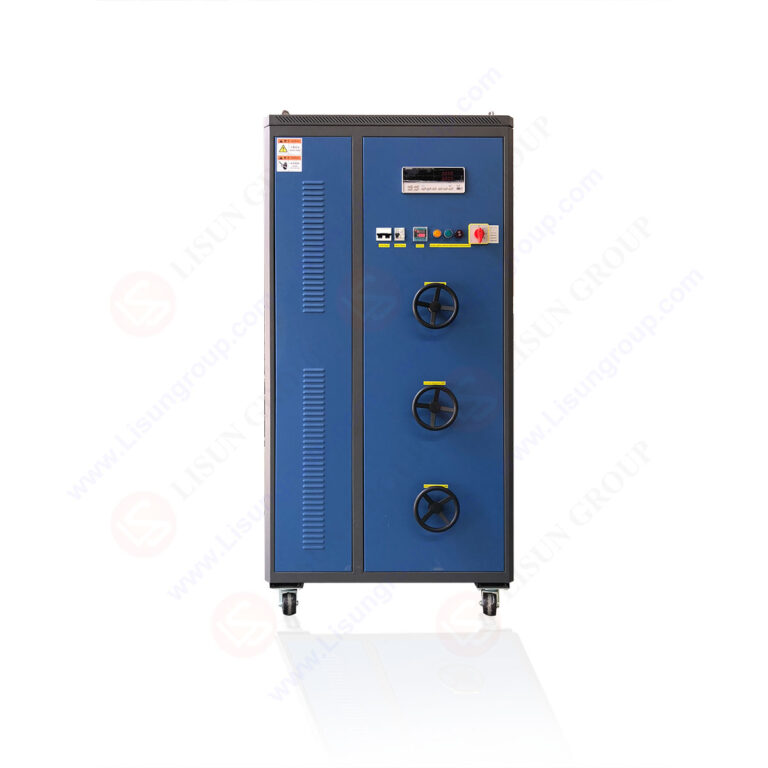



A Methodological Framework for Assessing Fire Hazard Resistance in Electrical and Electronic Components
The proliferation of complex electrical and electronic equipment across diverse sectors has precipitated an intensified focus on fire safety as a non-negotiable pillar of product compliance. Within the comprehensive landscape of safety testing, the evaluation of a component’s resistance to ignition from small, localized sources represents a critical, though often understated, line of defense. This technical examination delves into the principles, methodologies, and applications of needle flame testing, a standardized procedure designed to simulate the effects of small, high-energy faults. The discourse will further analyze the implementation of this testing through advanced instrumentation, with specific reference to the operational paradigm and technical specifications of the LISUN ZY-3 Needle Flame Test Apparatus.
The Underlying Rationale for Simulated Fault Ignition Testing
Product safety standards are predicated on a hierarchy of hazard mitigation, encompassing prevention, containment, and endurance. While comprehensive fault current protection and robust insulation systems form the primary barriers against catastrophic failure, the reality of operational environments necessitates contingency planning for aberrant conditions. These may include overheating due to poor contact in a terminal block, arcing within a degraded switch, or the failure of a miniature transformer in a power supply. Such events can generate small but intense ignition sources with temperatures exceeding 1000°C, yet with limited energy and duration.
Traditional flame tests utilizing large-scale Bunsen burners or high-wattage glow-wire apparatus are designed to assess resistance to more severe or prolonged thermal stress. The needle flame test, conversely, addresses a specific vulnerability: the propensity of non-metallic materials—used extensively in enclosures, connectors, bobbins, cable sheathing, and structural supports—to ignite, propagate flame, or produce hazardous burning droplets when exposed to these small, pinpoint flames. The objective is not to prove incombustibility, but to evaluate the material’s behavior under a defined, replicable insult, ensuring that any combustion is self-extinguishing within a safe period and does not create secondary ignition risks through dripping.
Deconstructing the Needle Flame Test Protocol: Principles and Parameters
The test methodology is rigorously codified in international standards, most notably IEC 60695-11-5, which outlines the apparatus, calibration, and procedure. The core of the test involves a specified flame produced by a burner fed with a prescribed fuel (typically 99% purity methane or propane). The burner tip is a hypodermic needle with a nominal bore of 0.5 mm ± 0.1 mm, producing a stable flame with a calibrated height of 12 mm ± 1 mm. The test sample, which can be a complete end-product, a sub-assembly, or a representative material plaque, is mounted in a controlled configuration.
The flame is applied to the predetermined test surface, or to a specified point on the product, for a programmed duration (commonly 30 seconds, though other durations like 10s or 120s may be specified by the end-product standard). Following flame application, the test apparatus automatically retracts the burner, and observation commences. Critical parameters measured include:
- tf (Flame Application Time): The precise duration of impingement.
- ti (Ignition Time): The time from initial flame application to sustained ignition of the specimen.
- te (Flame Extinction Time): The time from removal of the test flame to self-extinguishment of the specimen.
- tc (Combustion Duration): The total time the specimen is aflame (ti + te).
The test also requires meticulous documentation of whether flaming droplets occur, and if they ignite a specified layer of surgical cotton placed beneath the specimen—a direct assessment of secondary fire hazard.
Pass/fail criteria are strictly defined within the overarching product family standard (e.g., IEC 62368-1 for AV/IT equipment, IEC 60335-1 for household appliances, ISO 20653 for automotive electronics). Generally, compliance requires that combustion duration (tc) does not exceed a stipulated limit (often 30 seconds), and that no ignition of the indicator cotton occurs from droplets or particles.
Instrumentation for Precision: The LISUN ZY-3 Needle Flame Test Apparatus
The reliability and repeatability of compliance testing are intrinsically linked to the precision and control offered by the test equipment. The LISUN ZY-3 Needle Flame Test Apparatus embodies a fully integrated system engineered to execute the IEC 60695-11-5 protocol with a high degree of automation and measurement accuracy. Its design mitigates operator variance and ensures environmental consistency, which are common sources of inter-laboratory discrepancy in flame-based testing.
The apparatus comprises several key subsystems:
- Combustion System: A precision needle burner connected to a high-purity gas supply, integrated with fine-adjustment flow meters and pressure regulators. A solenoid valve provides instantaneous and repeatable gas shut-off.
- Motion Control System: A programmable, motor-driven mechanism that positions the burner at the correct angle (typically 45°) and advances it to the exact test point with consistent velocity and positioning accuracy. This eliminates manual handling errors.
- Timing and Ignition Detection System: An electronic timing circuit, often linked to photoelectric sensors or thermocouples, automatically records tf, ti, and te. The detection of flame on the specimen is objective and sensor-based.
- Test Chamber: A ventilated, stainless-steel enclosure with a viewing window, providing a draft-free environment of consistent dimensions as mandated by the standard. It includes a specimen holder and a standardized platform for the surgical cotton indicator.
- Safety and Exhaust System: Integrated flame arrestors, gas leak detection safeguards, and an active exhaust fume extraction system to maintain operator safety and chamber air quality.
Technical Specifications of the LISUN ZY-3:
- Flame Height Adjustment: 12mm ± 1mm, with calibrated gauge.
- Burner Angle: Fixed at 45° (conforms to standard).
- Timing Range: 0 ~ 99.99 seconds, digital display with 0.01s resolution.
- Flame Application Time (tf): Programmable from 0 ~ 99.99s.
- Positioning Accuracy: < ±0.5mm.
- Test Chamber Volume: Compliant with IEC 60695-11-5 dimensional requirements.
- Gas Type: High-purity Methane or Propane (99% minimum).
- Control Interface: Microprocessor-based digital controller with start/stop/reset functions and real-time parameter display.
The competitive advantage of such a system lies in its synthesis of automated operation, metrological precision, and safety integration. By removing manual timing and flame application, it enhances repeatability. Its digital data logging supports rigorous quality audit trails, essential for certification bodies and internal quality management systems.
Cross-Industry Application Scenarios and Material Assessment
The universality of the fire hazard addressed by this test ensures its relevance across a vast spectrum of industries. In each case, the test is applied to components where a small, high-temperature fault is a plausible risk scenario.
- Household Appliances & Consumer Electronics: Test subjects include internal wiring harness sheathing, PCB substrates near switching components, connector housings in power supplies, and decorative grilles on heaters or hair dryers. A failed test could indicate risk from a failed capacitor igniting its plastic casing.
- Automotive Electronics & Aerospace Components: Under-hood electronic control unit (ECU) housings, sensor connectors, wiring conduit, and insulation materials within cabin entertainment systems are evaluated. The test simulates a short-circuit event in a densely packed wiring loom.
- Lighting Fixtures: Plastic components in LED driver housings, diffuser materials in close proximity to LED arrays (which can experience thermal runaway), and socket bodies in compact luminaires are common test items.
- Industrial Control & Telecommunications: Terminal blocks, relay housings, fiber-optic cable jacketing, and server rack components are assessed to prevent fire spread in control panels or data centers from a single point of failure.
- Medical Devices & Office Equipment: External casings of bedside monitors, internal components of imaging devices, and plastic parts within printers or photocopiers near power units are tested to ensure safety in often unattended operation.
Correlation with Broader Material Flammability Standards
The needle flame test does not exist in isolation. It is one node in a network of complementary flammability assessments. Its results often inform material selection early in the design phase. For instance, a plastic that performs poorly in the needle flame test may be substituted or reformulated with flame-retardant additives before being subjected to more comprehensive tests like the Glow-Wire Ignition Temperature (GWIT) or Horizontal/Vertical Flame tests (UL 94). The data provides a comparative metric for quality control in incoming material inspection, ensuring batch-to-batch consistency for critical components.
Table 1: Comparative Overview of Key Small-Scale Fire Hazard Tests
| Test Method | Standard | Simulated Hazard | Typical Application | Key Measurement |
| :— | :— | :— | :— | :— |
| Needle Flame | IEC 60695-11-5 | Small, high-temp fault (e.g., bad contact, arcing) | Electronic components, enclosures, connectors | Combustion duration (tc), flaming droplets |
| Glow-Wire | IEC 60695-2-10/11/12 | Overheated or glowing elements (e.g., overloaded resistor) | Support materials, insulating parts | Ignition temperature (GWIT), flame persistence |
| Horizontal/Vertical Burning | UL 94 | General material flammability propensity | Material pre-selection, comparative ranking | Burning rate, self-extinguishing time |
Integrating Needle Flame Testing into a Holistic Compliance Strategy
For product development and certification engineers, the pathway to compliance is iterative. Needle flame testing is strategically deployed at multiple stages:
- Design Validation: Prototype components are tested to vet material choices and geometric designs (e.g., wall thickness, ribbing) that may affect flame spread or drip formation.
- Type Testing for Certification: As a mandatory test required by many end-product safety standards, it is performed on final production samples submitted to a Nationally Recognized Testing Laboratory (NRTL) such as UL, TÜV, or Intertek.
- Production Surveillance: Manufacturers may use the test as part of factory production control (FPC) audits to ensure continued conformity of mass-produced items, especially if material suppliers change.
The integration of automated equipment like the LISUN ZY-3 into this workflow streamlines data collection, reduces test cycle time, and provides unambiguous, digitally recorded evidence for technical construction files.
Conclusion: The Critical Role of Defined Impulse Testing
In the rigorous domain of product safety, the needle flame test serves as a vital, targeted assessment of a product’s resilience against a specific, credible threat. Its value is not in assessing conflagration resistance, but in quantifying the response to a miniature, high-energy insult—a scenario emblematic of incipient electrical fault conditions. The deployment of precise, automated apparatus is paramount to generating consistent, reliable, and defensible data that meets the exacting requirements of global safety standards. As material science advances and electronic systems grow ever more integrated and miniaturized, the principles underpinning this test will remain a cornerstone of responsible design, ensuring that the first line of defense against fire propagation is robust, validated, and embedded within the product itself.
Frequently Asked Questions (FAQ)
Q1: How does the needle flame test differ from a standard UL 94 V-0 test?
The tests address different scenarios. UL 94 is a material classification system primarily assessing the burning behavior of a plastic strip after exposure to a Bunsen burner flame in vertical or horizontal orientation. It ranks materials (e.g., V-0, V-1, HB) based on extinguishing time and dripping. The needle flame test is an equipment safety test applied to a finished product or part in its actual use configuration. It simulates a specific fault condition (a small, high-temperature source) and assesses not just burning duration, but crucially, the hazard from flaming droplets. A material with a good UL 94 rating may still fail a needle flame test if its geometry promotes dripping.
Q2: What is the significance of the 45-degree burner angle in the test?
The 45-degree angle is specified in the standard (IEC 60695-11-5) to simulate a realistic impingement geometry. A small, energetic fault (like an arc) is unlikely to present itself as a perfectly vertical or horizontal flame relative to the component surface. The angled application also influences the behavior of potential molten droplets and the heat flux profile on the test specimen, creating a more representative and severe challenge than a purely tangential flame.
Q3: Can the LISUN ZY-3 be used for testing other standards beyond IEC 60695-11-5?
The ZY-3 is specifically designed and calibrated to meet the exact requirements of IEC 60695-11-5. This standard is harmonized and referenced by numerous other end-product standards globally (e.g., IEC 62368-1, IEC 60335-1). Therefore, by complying with the foundational standard, the apparatus is suitable for testing products governed by these derivative standards. It is not designed for completely different test methods, such as glow-wire or horizontal flame tests, which require distinct apparatus geometries and heat sources.
Q4: What are the critical calibration and maintenance procedures for ensuring the apparatus’s accuracy?
Regular calibration is essential. Key procedures include: verifying and adjusting the gas flow rate to achieve the precise 12mm flame height using the supplied calibration gauge; checking the cleanliness and integrity of the 0.5mm needle orifice to prevent clogging or erosion; validating the accuracy of the electronic timer against a traceable reference; and ensuring the mechanical positioning system moves to the correct repeatable point. The test chamber and exhaust system should be kept clean of residue from previous tests to prevent draft interference.
Q5: For a complex assembled product, how is the test location determined?
The determination of the “worst-case” test point is a critical engineering judgment, often defined in the applicable end-product standard. Engineers analyze the product’s construction, identifying areas where a small, high-temperature fault is most likely to occur (e.g., near current-carrying connections, overload protection devices, or thermally stressed components) and where the effects would be most severe. If the standard does not prescribe a specific point, testing is typically performed on the external enclosure and on internal parts that could be exposed to a fault, applying the flame to surfaces that would be most susceptible to ignition.