


An Analysis of the IPX4 Splash Protection Rating: Methodology, Applications, and Validation
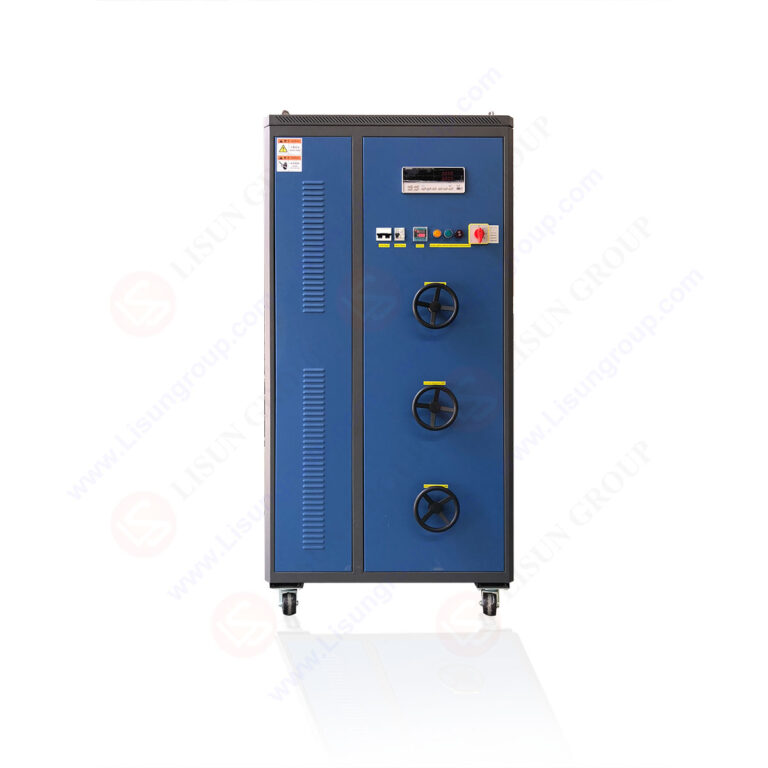
The ingress protection (IP) rating system, codified by the International Electrotechnical Commission (IEC) under standard 60529, provides a globally recognized framework for classifying the degree of protection offered by enclosures against the intrusion of solid foreign objects and water. Within this taxonomy, the IPX4 rating occupies a critical position, defining a product’s resilience against water splashes from any direction. This article provides a technical exposition of the IPX4 test protocol, its engineering significance, and the instrumentation required for its precise validation, with a specific focus on the LISUN JL-34 Series Waterproof Test Chamber as a representative solution for compliant testing.
Deciphering the IP Code: Contextualizing the IPX4 Rating
The IP code follows a structured format: IP [first numeral] [second numeral] [optional letters]. The first numeral (0-6) denotes protection against solids, while the second numeral (0-9K) specifies protection against liquids. The ‘X’ placeholder indicates that protection against solids is not specified or not required for the assessment. Consequently, IPX4 explicitly addresses liquid ingress only. The numeral ‘4’ is defined as protection against “water splashed from any direction.” It is imperative to distinguish this from higher ratings; IPX4 does not certify protection against direct high-pressure jets (IPX5/IPX6), powerful jets (IPX9K), or immersion (IPX7/IPX8). Its domain is the incidental, omnidirectional splash—a common environmental stressor across numerous application fields.
The IPX4 Test Protocol: A Specification of Simulated Rainfall
The IEC 60529 standard prescribes a rigorous and repeatable methodology for verifying compliance with the IPX4 rating. The core apparatus is a sprinkler nozzle or an oscillating tube designed to produce a controlled spray over a specified test area. The key parameters are meticulously defined:
- Water Output: The test equipment must deliver a flow rate of 0.07 liters per minute, plus or minus 5%, for every square decimeter of the test sample’s surface area calculated from its overall dimensions. This calibration ensures a consistent intensity of exposure relative to the device’s size.
- Spray Distribution: The nozzle is designed to distribute water evenly. The test sample is placed on a turntable, which rotates at approximately 1 revolution per 12 seconds (5 rpm). If the sample is too large for a turntable, the spray nozzle itself must be maneuvered to simulate the same omnidirectional exposure.
- Test Duration: The standard mandates a minimum exposure period of 10 minutes. For enclosures intended for installation in multiple orientations (e.g., a portable device), the test must be conducted in four fixed positions, rotating the sample 90° between each 2.5-minute spray period, culminating in a total of 10 minutes of exposure.
- Post-Test Evaluation: Following the spray test, the enclosure is inspected for water ingress. The acceptance criterion is strict: no water entering the enclosure shall have harmful effects. This is typically verified by a visual inspection for moisture on live parts, current-carrying components, or insulating linings, and may be supplemented by a dielectric strength test or insulation resistance measurement per relevant product safety standards.
Engineering Implications of IPX4 Compliance
Achieving an IPX4 rating necessitates deliberate design considerations. Engineers must address sealing integrity at enclosure joints, button interfaces, connector ports, and ventilation apertures. Gaskets, O-rings, labyrinth seals, and hydrophobic membranes become critical components. The rating validates that these elements can withstand not a sustained deluge, but the sporadic splashing encountered in real-world scenarios such as a kitchen countertop, a light outdoor drizzle, or humidity condensation within an automotive door panel. It represents a baseline for durability that prevents short-circuit failures, corrosion initiation, and functional degradation due to incidental moisture contact.
Instrumentation for Validated Compliance: The LISUN JL-34 Series
Accurate and standards-compliant testing requires specialized equipment that can replicate the IEC 60529 parameters with high fidelity. The LISUN JL-34 Series Waterproof Test Chamber is engineered specifically for this purpose, facilitating testing from IPX1 through IPX6 ratings.
Testing Principle and Chamber Design:
The JL-34 employs a closed-loop system. A submerged pump draws water from a reservoir tank and pressurizes it to a regulated system. This pressurized water is fed to a bank of calibrated spray nozzles, each designed for a specific IP rating (e.g., the IPX4 nozzle). The sample is mounted on a motorized turntable within the test chamber. The system’s programmable logic controller (PLC) automates the test sequence, managing turntable rotation speed, test duration, and water flow rate. The enclosure is constructed of stainless steel to resist corrosion, with a large viewing window for observational integrity.
Key Specifications of the LISUN JL-34 Series:
- Test Range: Covers IPX1 (dripping water) to IPX6 (powerful water jets).
- Turntable: Diameter typically ≥ Ø300mm, with adjustable rotation speed (1-5 rpm standard, configurable for the 5 rpm required for IPX4).
- Spray Nozzles: Interchangeable, precision-machined nozzles compliant with IEC 60529 dimensional and flow-rate specifications.
- Water Flow Control: Precision flow meter and regulator to maintain the mandated 0.07 L/min per dm² for IPX4.
- Control System: Touch-screen PLC interface allowing for programmable test cycles, including complex multi-position tests.
- Safety & Drainage: Integrated water recovery and filtration system, emergency stop, and overflow protection.
Industry Use Cases and Application Examples:
The JL-34 is deployed in R&D and quality assurance laboratories across industries where IPX4 is a common requirement or benchmark:
- Automotive Electronics: Testing control modules, sensor housings, interior lighting, and infotainment systems exposed to cabin humidity or wheel-well splash.
- Lighting Fixtures: Validating outdoor wall sconces, garden lights, and indoor damp-location luminaires against rain and sprinkler splash.
- Consumer Electronics & Household Appliances: Verifying the resilience of smart speakers, kitchen blenders, coffee makers, and outdoor WiFi routers.
- Electrical Components: Assessing waterproof switches, socket covers, and junction boxes for outdoor or industrial use.
- Telecommunications Equipment: Testing housings for outdoor antennas, fiber optic terminal enclosures, and street cabinet components.
Competitive Advantages in Validation Testing:
The JL-34 Series provides several distinct advantages for a production or certification laboratory environment. Its fully integrated design eliminates the need for makeshift test setups, ensuring repeatability and auditability. The programmability of the PLC reduces operator error and allows for the storage of complex test profiles for different product lines. The use of standardized, interchangeable nozzles guarantees that the test conditions align precisely with the geometric and flow specifications of IEC 60529, a critical factor for achieving recognized test reports from accredited bodies. Furthermore, its robust construction ensures long-term reliability and minimal maintenance, even under continuous testing schedules.
Cross-Industry Relevance of the IPX4 Benchmark
The IPX4 rating serves as a fundamental design and marketing specification across diverse sectors:
- Medical Devices: Hand-held monitors, dental equipment, and physiotherapy devices that may be used in clean but not sterile wet environments.
- Aerospace and Aviation: Components within cabin galley areas or lavatories where spillage is possible.
- Industrial Control Systems: Human-machine interface (HMI) panels, push-button stations, and sensor enclosures in factories where washdowns are not required but ambient moisture is present.
- Office Equipment: Projectors, printers, and teleconferencing systems that may be subjected to accidental liquid spills.
- Cable and Wiring Systems: Connectors and gland entries specified for outdoor or industrial applications where they are not directly sprayed but remain exposed to atmospheric conditions.
Beyond the Rating: Integrating IPX4 into a Broader Testing Regime
It is crucial to understand that IPX4 testing is seldom performed in isolation. It is often one element in a suite of environmental stress tests. A product might sequentially undergo IP5X dust testing, IPX4 splash testing, and then temperature cycling or vibration testing to simulate a complete lifecycle of environmental exposure. The sequence of tests is also significant; a vibration test following an IPX4 test can reveal whether mechanical stress compromises sealing integrity. Advanced chambers like the LISUN JL-34 facilitate this integration by providing a reliable, standalone module for the liquid ingress portion of a broader qualification program.
Frequently Asked Questions (FAQ)
Q1: Can the LISUN JL-34 Series test for both IPX4 and IPX5/6 ratings?
A1: Yes. The JL-34 is designed as a comprehensive solution for IPX1 through IPX6 testing. It includes a suite of interchangeable, calibrated nozzles. The IPX4 test uses a specific sprinkler nozzle with controlled flow, while the IPX5 and IPX6 tests utilize separate nozzles capable of delivering higher-pressure water jets at 12.5 L/min and 100 L/min respectively, from a distance of 2.5-3 meters. The chamber and control system are engineered to accommodate these different requirements.
Q2: How is the required water flow rate for an irregularly shaped product calculated during an IPX4 test?
A2: The standard mandates calculating the surface area based on the smallest rectangular parallelepiped (a box) that completely encloses the specimen. The overall dimensions of this imaginary box (height, width, depth) are used to calculate its total surface area. The flow rate is then set to 0.07 L/min for every square decimeter of that calculated box area, not the product’s actual contoured surface area. This provides a consistent and conservative testing metric.
Q3: What constitutes a “harmful effect” of water ingress post-IPX4 testing?
A3: A harmful effect is any ingress that compromises the safety or essential performance of the equipment. This typically includes water contact with live electrical parts, accumulation on insulating barriers that could create leakage current paths, or penetration into areas that could cause corrosion of critical components. The final determination is often made with reference to a product’s end-use safety standard (e.g., IEC 60335 for household appliances, IEC 60601 for medical equipment), which may prescribe specific post-test electrical checks.
Q4: For a product that will be fixed in one orientation (e.g., a wall-mounted light), is the turntable rotation still necessary?
A4: The standard requires that the splash is applied from all directions. For a fixed-installation product, the test may be performed in its mounted orientation, but the spray nozzle must be moved to ensure coverage from all relevant angles (typically every 90° around the sample). The turntable automates this process. If using a chamber like the JL-34, the product can be secured to the turntable to simulate this omnidirectional exposure efficiently, even if its final installation is static.
Q5: How often should the nozzles and flow meters on a test chamber like the JL-34 be calibrated?
A5: To maintain testing integrity and compliance with quality management systems (e.g., ISO/IEC 17025), critical components affecting test parameters should undergo regular calibration. The flow meter and pressure gauge should be calibrated annually, or per the laboratory’s quality schedule. Nozzles should be inspected periodically for wear or blockage, as their internal geometry directly dictates spray pattern and flow distribution. Using certified calibration fluids and traceable standards is essential for audit-ready laboratories.