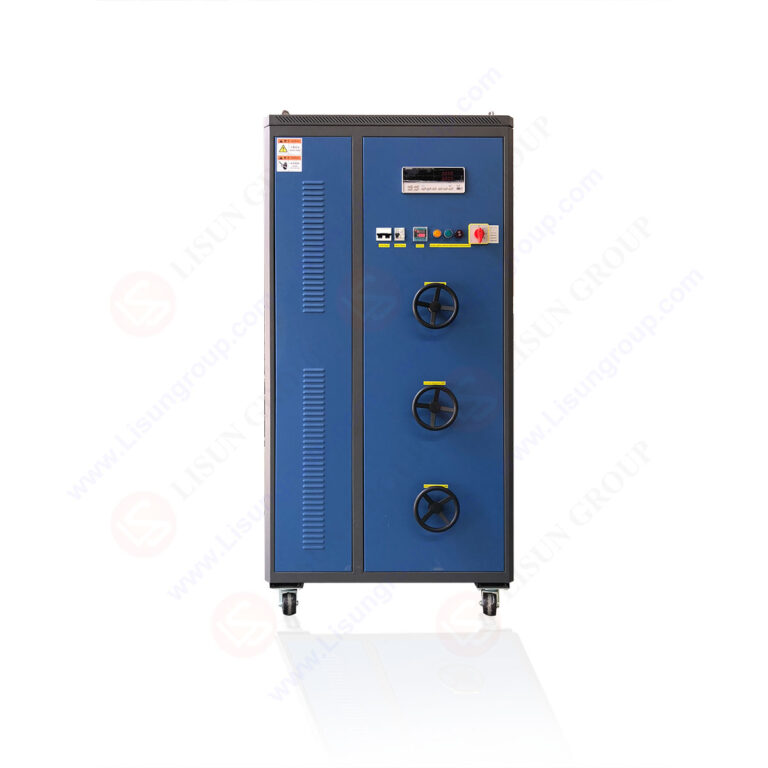



Evaluating Enclosure Integrity: The Role and Refinement of the UL Water Spray Test Device
The relentless drive towards miniaturization, increased functionality, and deployment in harsh environments has placed unprecedented demands on the protective capabilities of product enclosures. For manufacturers across a spectrum of industries—from automotive electronics to medical devices—ensuring that sensitive internal components remain impervious to water ingress is not merely a quality objective but a fundamental safety and reliability imperative. This verification process is rigorously standardized, with the UL Water Spray Test Device serving as a critical apparatus for validating the ingress protection (IP) ratings of enclosures against vertically falling or low-pressure sprayed water, as defined by standards such as IEC 60529 and its UL/ANSI counterparts. This technical examination delves into the operational principles, design considerations, and application-specific nuances of these test systems, with a focused analysis on a representative commercial implementation.
Fundamental Principles of Spray-Based Ingress Protection Testing
The underlying objective of water spray testing is to simulate specific environmental conditions under which water may come into contact with an enclosure. Unlike high-pressure jet or immersion tests, the spray test addresses scenarios like rainfall, condensation drip, or light splashing. The test’s efficacy hinges on the controlled generation of a water curtain with defined characteristics. Key parameters include nozzle geometry, water flow rate, pressure at the nozzle orifice, and the spatial distribution of droplets. The standard IEC 60529 specifies a dedicated sprinkler nozzle with 120 holes of 0.5 mm diameter, arranged to produce a conical spray pattern. The device must deliver a flow rate of 1.0 ±0.05 mm/min per square decimeter of test surface area, calculated based on the projected horizontal area of the specimen under test. This calibration ensures a consistent and reproducible “rainfall” intensity.
The test procedure involves mounting the specimen on a turntable, typically rotating at approximately 1-5 rpm to ensure uniform exposure, and subjecting it to the spray for a duration stipulated by the relevant product standard—often 10 minutes per orientation. The post-test evaluation involves a meticulous internal inspection for traces of water, followed by verification of dielectric strength and functional operation if required. The absence of harmful water ingress qualifies the enclosure for ratings such as IPX1 (vertically falling drops), IPX2 (dripping water at a tilted angle), IPX3 (spraying water at up to 60° from vertical), and IPX4 (splashing water from any direction), depending on the test configuration and severity.
Architectural Components of a Modern Water Spray Test System
A contemporary UL Water Spray Test Device is an integrated system far more sophisticated than a simple nozzle and water supply. Its architecture is designed for precision, repeatability, and operational efficiency.
The water conditioning and delivery system is paramount. It comprises a reservoir, a pump capable of maintaining constant pressure (typically low-pressure, in the range of 80-100 kPa for standard IPX3/X4 tests), precision pressure regulators and gauges, and a filtration unit. Water quality is often specified to be clean and of drinking quality to prevent nozzle clogging. Temperature control may be integrated for tests requiring water at specific temperatures relative to the specimen.
The nozzle assembly and motion system forms the core of the apparatus. The standardized sprinkler nozzle is mounted on a maneuverable arm or gantry. For IPX3 and IPX4 testing, this arm must be capable of oscillating through specified arcs (up to ±60° or ±180° respectively) at a controlled angular velocity. The motion is driven by servo or stepper motors to ensure smooth, programmable movement.
The specimen staging and rotation unit typically consists of a motorized turntable with adjustable height and secure mounting fixtures. The turntable’s rotation must be independent and synchronous with the nozzle oscillation to achieve comprehensive coverage. For larger or irregularly shaped specimens, such as automotive electronic control units (ECUs) or industrial control cabinets, the staging area must be robust and adaptable.
The control and monitoring interface is the system’s brain. A programmable logic controller (PLC) or industrial computer manages all test parameters: test duration, turntable speed, oscillation angle and speed, water flow, and pressure. Modern systems feature human-machine interface (HMI) touchscreens for intuitive programming, real-time data logging, and storage of test recipes for different standards.
Industry-Specific Applications and Testing Challenges
The universality of the water spray test belies the unique challenges posed by different product categories.
In Automotive Electronics, components like sensor clusters, lighting assemblies (headlamps, tail lights), and external ECUs must withstand road spray, car wash conditions, and heavy rainfall. Testing often extends beyond basic IPX4 to include oscillating spray tests that simulate dynamic vehicle movement. The fixture design must accommodate complex geometries and mounting orientations representative of actual installation.
For Lighting Fixtures, both indoor and outdoor, the test verifies protection against moisture that could cause short circuits, corrosion, or optical degradation. Outdoor luminaires for street lighting or architectural accents are prime candidates for IPX3/X4 testing. The evaluation post-test is particularly sensitive, as even minor condensation inside a lens can be deemed a failure.
Telecommunications Equipment, such as outdoor antennas, junction boxes, and fiber optic terminal enclosures, are deployed in exposed locations. Ingress protection ensures signal integrity and prevents corrosion of connectors. These tests may be combined with thermal cycling to assess performance under real-world temperature and humidity variations.
Medical Devices, especially those used in surgical settings or portable monitors, may require protection against accidental spills or cleaning fluids. While not always requiring full IPX4, the principles of controlled spray testing are applied to validate design seals and gaskets.
Aerospace and Aviation Components face extreme conditions, including pressurization cycles and temperature extremes. Water spray testing for avionics bay components or external sensors, often referenced in standards like RTCA DO-160, must be precisely controlled to ensure no ingress occurs that could freeze at altitude or cause electrical failure.
The LISUN JL-3/4 Series: A Case Study in Integrated Test Solution Design
As a representative example of a commercial system that addresses these multifaceted requirements, the LISUN JL-3/4 Series Waterproof Test Equipment provides a pertinent case study. This series is engineered to perform a comprehensive range of water ingress tests, including the IPX1 to IPX4 spray tests central to this discussion.
The system’s design emphasizes precision and compliance. It incorporates the IEC 60529-specified sprinkler nozzle precisely machined to ensure the correct hole diameter and pattern. The water delivery system utilizes a precision pump and digital flow meter to maintain the required flow rate of 1.0 mm/min ±5%, a critical factor for test validity. Pressure is stabilized using a combination of a regulator and a buffer tank, minimizing pulsation that could affect spray uniformity.
A key feature is its programmable multi-axis motion control. The JL-3/4 Series employs a servo-driven oscillating mechanism for the spray arm, allowing users to set any angle between 0° and ±180° with precise speed control, covering IPX2 (tilting drip), IPX3 (60° oscillation), and IPX4 (180° oscillation) within a single setup. The companion turntable offers variable speed control from 1 to 5 rpm, ensuring even exposure for specimens of various sizes.
From an operational standpoint, the system offers enhanced usability and data integrity. The integrated HMI allows for the direct input of test parameters—duration, oscillation angle, speed, turntable rotation—and stores numerous test programs for different product lines. Real-time monitoring of flow rate, water pressure, and test time is displayed and logged, providing an auditable trail for quality assurance and certification purposes.
Technical Specifications Overview (Representative of JL-3/4 Series):
| Parameter | Specification |
| :— | :— |
| Applicable Standards | IEC 60529, GB/T 4208, ISO 20653, UL, etc. |
| Test Grades | IPX1, IPX2, IPX3, IPX4 |
| Spray Nozzle | Standardized 120-hole sprinkler (0.5mm holes) |
| Water Flow Rate | 1.0 ±0.05 mm/min (adjustable, digitally monitored) |
| Oscillation Angle | 0 – ±180° programmable |
| Oscillation Speed | Adjustable (e.g., 4°/sec for IPX3) |
| Turntable Diameter | Typically Ø300-400mm (varies by model) |
| Turntable Speed | 1 – 5 rpm adjustable |
| Test Duration | 1-999,999s programmable |
| Control Interface | 7″ Touchscreen HMI with data logging |
The competitive advantage of such a system lies in its integrated turnkey design. Rather than sourcing and calibrating individual components—nozzle, pump, timer, oscillators—manufacturers obtain a pre-validated system that reduces setup time, minimizes calibration drift, and ensures consistent adherence to standard requirements. This is crucial for laboratories serving multiple industries, such as third-party certification bodies or large OEMs producing everything from household appliances to electrical components.
Calibration, Maintenance, and Ensuring Long-Term Metrological Integrity
The scientific validity of any test rests on the traceable accuracy of its instruments. Regular calibration of the water spray test device is non-negotiable. Key calibration foci include the verification of flow rate using a calibrated collection vessel and stopwatch, the accuracy of the pressure gauge at the nozzle inlet, the dimensional accuracy of the nozzle holes (to prevent clogging or erosion from altering spray characteristics), and the angular accuracy and speed of the oscillating mechanism.
Preventive maintenance routines involve periodic cleaning and inspection of the nozzle to remove mineral deposits, checking filter elements in the water line, verifying pump performance, and ensuring all mechanical movements remain smooth and free of play. Environmental factors, such as ambient temperature affecting water viscosity, should also be considered in high-precision testing scenarios. A well-maintained system not only guarantees reliable results but also extends equipment service life, protecting the manufacturer’s capital investment and quality assurance infrastructure.
Conclusion: The Critical Role in Product Validation Ecosystems
The UL Water Spray Test Device is far more than a simple compliance tool; it is a fundamental instrument in the product development and validation cycle. By providing a controlled, reproducible simulation of real-world water exposure, it enables engineers to identify design flaws in seals, gaskets, vents, and assembly interfaces before mass production. In an era where product reliability directly correlates with brand reputation and safety liability, the data generated by these tests inform critical design decisions. Implementing a robust, precise, and well-maintained test system, as exemplified by integrated solutions like the LISUN JL-3/4 Series, is an essential strategy for manufacturers committed to delivering durable, safe, and market-compliant products across the electrical, electronic, and industrial landscapes.
Frequently Asked Questions (FAQ)
Q1: What is the key difference between IPX3 and IPX4 testing on a device like the JL-3/4 Series?
The primary difference is the oscillation angle of the spray. IPX3 testing simulates spraying water at an angle up to 60° from vertical. The device’s oscillating arm is typically set to swing ±60° (or 120° total arc). IPX4 testing simulates water splashing from any direction, requiring the oscillating arm to cover a full ±90° (or 180° total arc), often combined with the turntable rotation to ensure all enclosure faces are exposed. The JL-3/4 Series allows direct programming of these specific angles.
Q2: Can a single water spray test system be used for testing very small components (e.g., electrical sockets) and large assemblies (e.g., industrial control cabinets)?
While the core spray principle remains the same, practical limitations exist. The test standard requires the water flow to be calibrated based on the specimen’s projected area. A system designed for a small turntable may not physically accommodate a large cabinet. Furthermore, achieving the specified flow rate per unit area over a very large surface may require a higher-capacity water delivery system. Some manufacturers offer different chamber sizes or modular staging areas within a product series to accommodate this range.
Q3: How often should the calibrated sprinkler nozzle be inspected or replaced?
Inspection should be part of a routine pre-test check. Visual inspection for clogging or damage is recommended before each testing session. A more thorough quantitative inspection, measuring flow rate output against a standard, should be performed during regular periodic calibration—typically every 6 to 12 months, or as dictated by the laboratory’s quality procedures. Nozzles showing significant erosion or permanent clogging that affects flow distribution must be replaced.
Q4: Is using tap water acceptable for testing, or is purified water required?
Most standards, including IEC 60529, specify water of “drinking quality.” While distilled or deionized water is ideal to prevent mineral buildup, clean tap water is generally acceptable. However, in areas with very hard water, filtration or softening is strongly advised to prevent rapid limescale deposition in the nozzle holes and internal plumbing, which would alter spray characteristics and necessitate frequent cleaning.
Q5: After a successful IPX4 test, is the product guaranteed to be waterproof in all real-world conditions?
No. An IP rating is a standardized laboratory test under controlled conditions. IPX4 specifically validates protection against water splashing from any direction. It does not guarantee protection against prolonged immersion, high-pressure jets (IPX5/IPX6), or water ingress during mechanical stress like vibration or impact that may compromise seals. The rating must be interpreted within the context of its defined test parameters and the product’s intended use environment.