


A Comprehensive Framework for Flammability Assessment in Consumer Electronics
The proliferation of consumer electronics into every facet of modern life necessitates an unwavering commitment to product safety. Among the most critical safety parameters is the resistance of materials and components to ignition and flame propagation. Flammability testing, therefore, constitutes a non-negotiable pillar of the design, validation, and regulatory compliance process for electronic goods. This article delineates the technical rationale, standardized methodologies, and instrumental requirements for rigorous flammability evaluation, with a specific examination of glow-wire testing as a preeminent simulation of thermal stress faults.
The Imperative of Simulating Real-World Thermal Fault Conditions
Traditional flame application tests, while valuable, do not encompass the full spectrum of fire hazard origins in electronic assemblies. A significant proportion of electrical fires originate from localized overheating due to abnormal operational conditions—poor connections, overloaded components, broken conductors, or failed insulation. These faults generate high temperatures at specific points, potentially acting as ignition sources for adjacent polymeric materials. The glow-wire test was developed to replicate precisely these conditions. It evaluates the propensity of an insulating material or a finished product part to ignite when subjected to a heated element, and its ability to self-extinguish once the heat source is removed. This provides a more clinically relevant assessment of fire risk under fault conditions than direct flame impingement alone.
Decoding the Glow-Wire Test: Principles and Standardization
The core principle of the glow-wire test involves pressing a electrically heated wire of specified dimensions (the “glow-wire”) against a test specimen with a defined force for a predetermined period. The wire is heated to a precise temperature, which is maintained prior to and during application. The test apparatus measures and records several key phenomena: the time to ignition (if any), the duration of any subsequent flames, the presence of molten or burning droplets that could propagate fire, and the extent of material damage. The test is conducted at progressively higher temperatures to determine the Glow-Wire Ignition Temperature (GWIT) and the Glow-Wire Flammability Index (GWFI), which are critical material classification metrics.
This methodology is codified in an international suite of standards, primarily the IEC 60695-2 series. Key standards include:
- IEC 60695-2-10: Establishes the glow-wire apparatus and common test procedure.
- IEC 60695-2-11: Details the method for determining the Glow-Wire Flammability Index (GWFI) for materials.
- IEC 60695-2-12: Details the method for determining the Glow-Wire Ignition Temperature (GWIT) for materials.
- IEC 60695-2-13: Covers the glow-wire test for finished products (end-product testing).
Compliance with these standards is often a prerequisite for broader safety certifications such as UL, CSA, and ENEC, and is directly referenced in the IEC 60335 series for household appliances, IEC 60598 for lighting, and IEC 60950 for IT equipment, among many others.
Instrumentation for Precision: The LISUN ZRS-3H Glow-Wire Test Apparatus
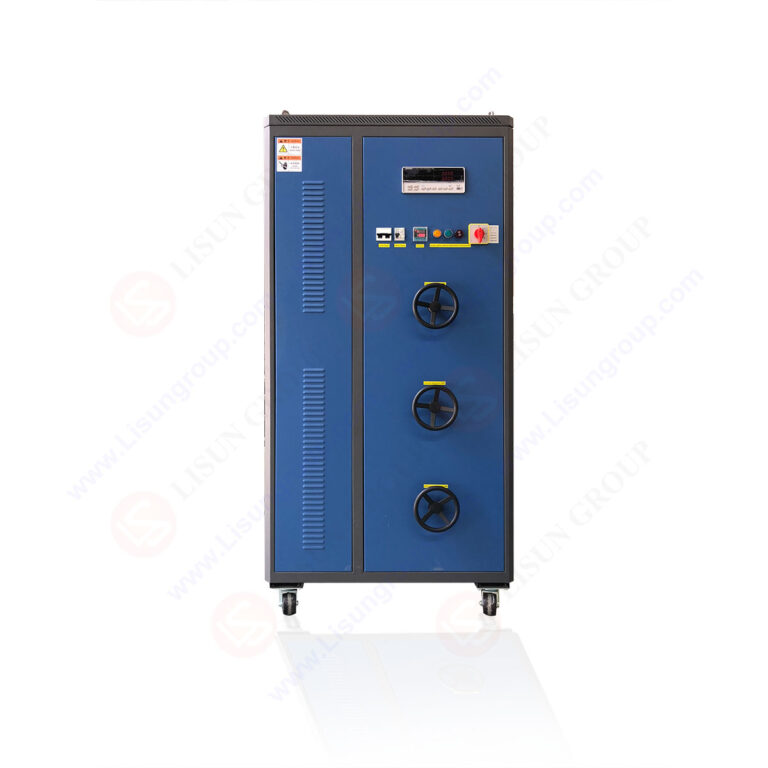
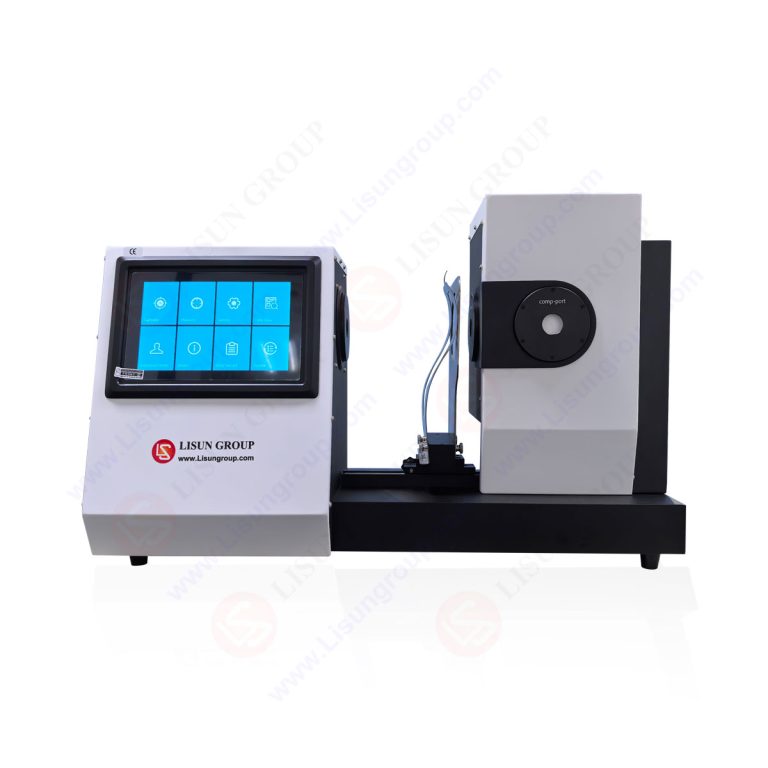
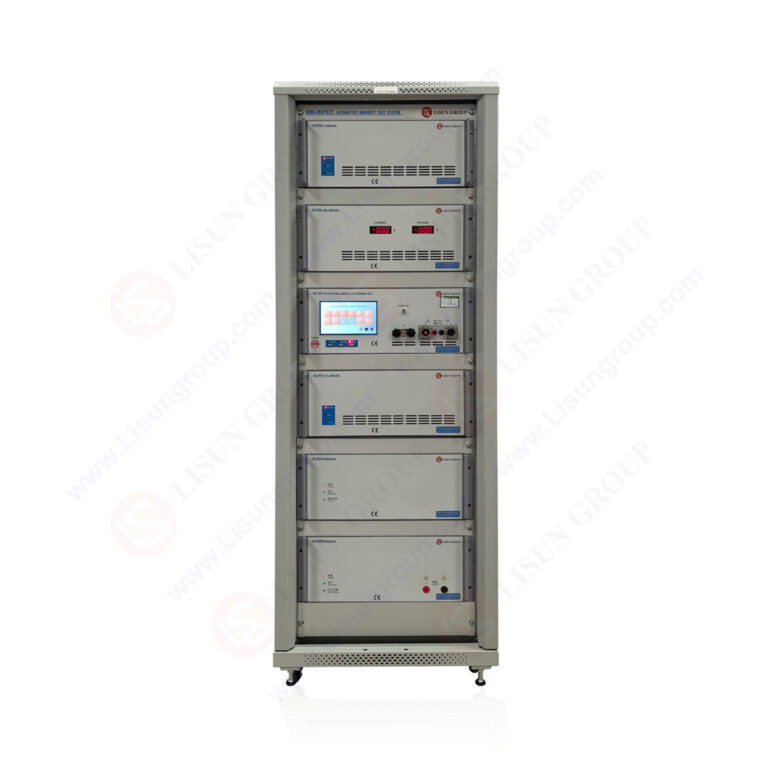
Accurate, repeatable, and standards-compliant testing demands instrumentation of the highest caliber. The LISUN ZRS-3H Glow-Wire Test Apparatus represents a fully integrated system engineered to meet the exacting requirements of IEC 60695-2-10 through -13, as well as analogous national standards.
The apparatus operates on a fundamental yet precisely controlled mechanism. A U-shaped glow-wire, fabricated from a nickel/chromium alloy with a nominal diameter of 4.0mm, is mounted on a carriage. This carriage is advanced to press the apex of the wire against the test specimen with a reproducible force of 1.0 N ± 0.2 N. The wire is heated by a low-voltage, high-current power supply, with its temperature monitored by a pre-calibrated type K (chromel-alumel) thermocouple inserted into a blind hole at the tip of the wire. A sophisticated digital temperature controller maintains the setpoint temperature with minimal deviation.
Technical Specifications of the LISUN ZRS-3H Apparatus:
| Parameter | Specification |
| :— | :— |
| Glow-wire Temperature Range | 500 °C to 1000 °C (continuously adjustable) |
| Temperature Stability | ± 2 °C at 960 °C |
| Temperature Measurement | Type K thermocouple, 1.0mm diameter |
| Application Force | 1.0 N ± 0.2 N (mechanically applied and verified) |
| Application Time | 0 to 999.9s (digital timer, adjustable) |
| Timing Functions | Automatic recording of ti (ignition time) and te (flame extinction time) via optional flame detector |
| Test Chamber Dimensions | Approximately 0.5 m³, with controlled ventilation and observation window |
| Power Supply | 220V AC, 50/60Hz (or specified) |
| Control System | Microprocessor-based PID temperature controller with digital display |
The competitive advantage of the ZRS-3H lies in its integration and fidelity. The mechanical application system ensures consistent, operator-independent force. The high-stability temperature control loop guarantees that the thermal insult applied to the specimen is exactly as prescribed by the standard. Furthermore, the inclusion of timing functions linked to flame detection automates data collection, reducing subjective error and enhancing test report reliability.
Cross-Industry Application Scenarios for Glow-Wire Compliance
The universality of electrical fault conditions makes glow-wire testing applicable across a vast spectrum of industries. The following examples illustrate its critical role:
- Household Appliances & Consumer Electronics: Testing thermoplastic enclosures for televisions, external power supplies, router casings, and kitchen appliance housings (e.g., food processors, coffee makers) to ensure a faulty internal transformer or motor cannot ignite the outer shell.
- Electrical Components: Evaluating terminal blocks, switch housings, socket faces, and connector bodies. A loose connection in a terminal block can generate sustained heat, making GWIT a key selection parameter for component engineers.
- Automotive Electronics: Assessing materials used for fuse box housings, sensor connectors, and infotainment system components within the passenger compartment, where safety margins are paramount.
- Lighting Fixtures: Testing the plastic components of LED driver housings, lamp holders, and diffusers, especially in enclosed fixtures where heat dissipation is limited.
- Medical Devices & Aerospace Components: Validating the material selection for non-metallic parts in patient monitors, imaging equipment, or aircraft cabin control panels, where failure modes must be exhaustively understood and mitigated.
- Cable and Wiring Systems: While cables undergo extensive flame propagation tests, glow-wire testing is relevant for cable glands, markers, and management systems like cable ties or ducting in control panels.
Interpreting Test Outcomes: From Raw Data to Material Classification
The output of a glow-wire test is not merely a pass/fail result at a single temperature. It is a systematic characterization of material behavior. The GWFI is the highest temperature at which a material satisfies three criteria: it does not ignite, or if it does, flames extinguish within 30 seconds after glow-wire removal and no dripping particles ignite a tissue paper layer below. The GWIT is defined as the temperature 25°C above the maximum test temperature at which the material does not ignite for a duration of more than 5 seconds.
These indices allow for precise material specification. For instance, a designer of an industrial control system’s enclosure might specify a material with a GWFI of 850°C for components near power supplies, while a material with a GWFI of 750°C may be deemed sufficient for a remote sensor housing. This data-driven approach enables optimal balancing of safety, cost, and manufacturability.
Integrating Glow-Wire Data into a Holistic Safety Engineering Strategy
Flammability assessment must never exist in a vacuum. Glow-wire test data is one critical input into a Failure Mode and Effects Analysis (FMEA) or a Hazard and Risk Assessment. It informs decisions on component spacing, the use of thermal barriers, the design of ventilation apertures, and the selection of alternative materials. When correlated with other test data—such as comparative tracking index (CTI), hot wire ignition (HWI), or flame retardancy ratings (UL94)—it builds a comprehensive profile of a material’s performance under electrical stress.
Furthermore, end-product testing per IEC 60695-2-13 on a complete assembly, such as a switch or a socket, validates not just the material, but the design itself. It confirms that the assembly, with its specific geometry, wall thicknesses, and internal air gaps, meets the required safety thresholds.
Conclusion
The relentless drive for miniaturization, increased functionality, and higher power density in consumer electronics elevates the importance of rigorous flammability testing. The glow-wire test, as a sophisticated simulation of real-world thermal fault conditions, provides indispensable data for material selection and product design. Employing precision instrumentation like the LISUN ZRS-3H Glow-wire Test Apparatus ensures the generation of accurate, reproducible, and standards-compliant data. This, in turn, forms the bedrock of a defensible safety engineering strategy, mitigating fire risk and ensuring regulatory compliance across the global electronics landscape.
Frequently Asked Questions (FAQ)
Q1: What is the fundamental difference between the Glow-Wire Ignition Temperature (GWIT) and the Glow-Wire Flammability Index (GWFI)?
A: GWIT and GWFI are complementary but distinct material classifications. The GWIT is a temperature-based index representing the temperature 25°C above the maximum test temperature at which the material does not ignite sustainedly (≥5s). It indicates the ignition resistance of the material itself. The GWFI is a performance-based index representing the highest temperature at which the material either does not ignite or, if it does, meets strict criteria for self-extinguishment and absence of incendiary droplets. GWFI thus assesses the material’s behavior post-ignition.
Q2: For end-product testing, how is the test temperature selected?
A: For finished product testing per IEC 60695-2-13, the test temperature is not arbitrary. It is derived from a risk assessment based on the product’s intended use and potential fault conditions. Standards governing specific product families (e.g., IEC 60335-1 for appliances) often prescribe minimum test temperatures, such as 550°C, 650°C, 750°C, or 850°C. The selection is tied to the simulated severity of the overload or fault condition the product part is expected to withstand.
Q3: Why is the mechanical application force (1.0 N ± 0.2 N) in the glow-wire test so strictly controlled?
A: The application force directly influences the thermal contact resistance between the glow-wire and the test specimen. A variable force would lead to inconsistent heat transfer, altering the thermal insult delivered to the material. This would introduce significant variability in test results, compromising reproducibility and making comparative material assessments unreliable. The mechanically applied force in apparatuses like the ZRS-3H eliminates this operator-dependent variable.
Q4: Can the LISUN ZRS-3H be used for testing other similar standards, such as the needle-flame test?
A: The ZRS-3H is a dedicated glow-wire apparatus. The needle-flame test (IEC 60695-2-2) uses a small, defined flame from a butane burner as the ignition source, simulating a different hazard scenario (small flames from faulty components). While both assess fire hazard, they require fundamentally different test equipment. Laboratories typically employ separate, purpose-built apparatuses for glow-wire and needle-flame testing to ensure full compliance with each standard’s specific setup and calibration requirements.