


The Role of Calibrated Mechanical Probes in IP Code Verification: Principles, Applications, and Technological Implementation
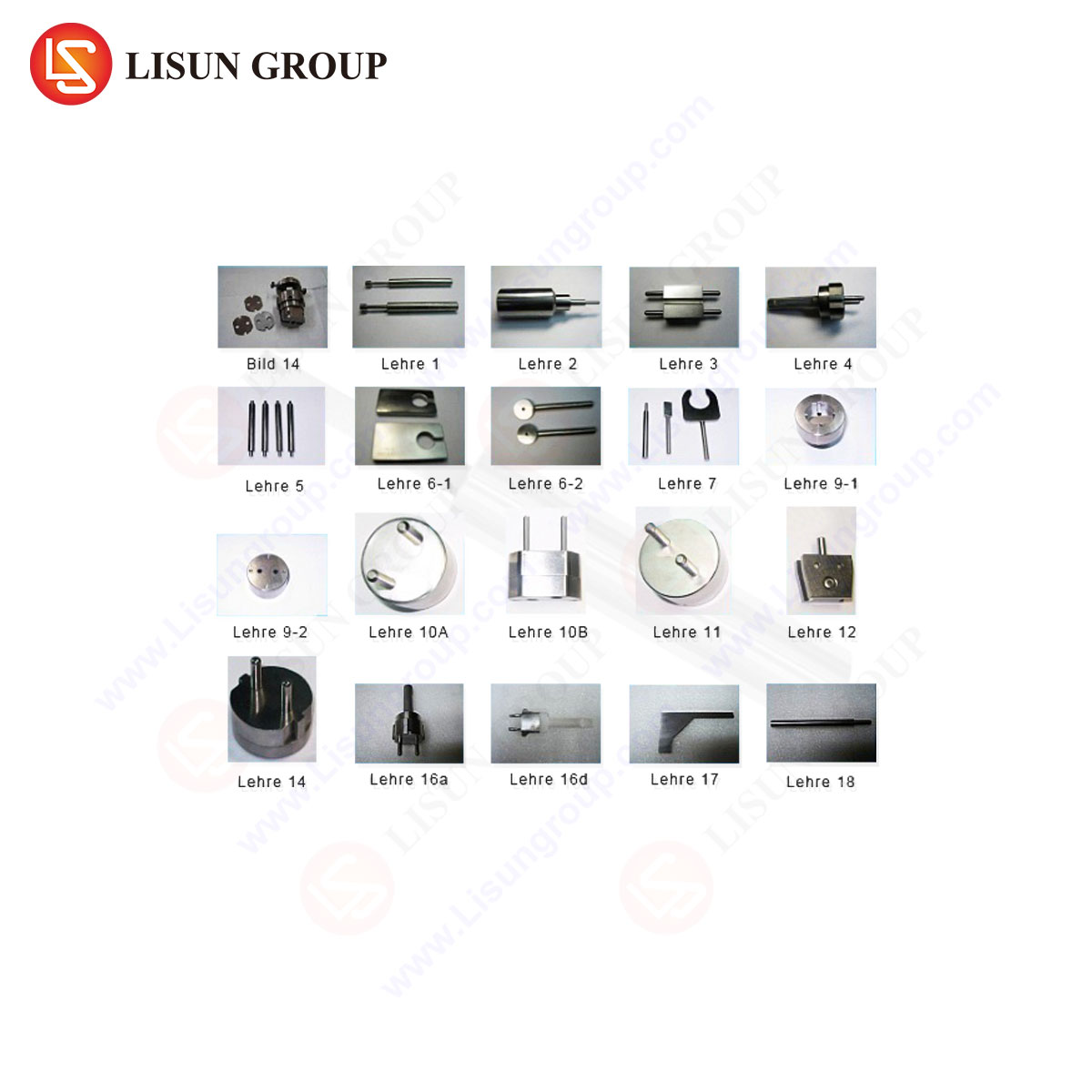
The Ingress Protection (IP) Code, as defined by international standards such as IEC 60529, provides a systematic classification for the degree of protection offered by enclosures against the intrusion of solid foreign objects and water. This classification is not merely a descriptive label but a critical safety and reliability benchmark across a vast spectrum of industries. The verification of these ratings, particularly against solid object ingress (the first numeral of the IP code), relies upon a deceptively simple yet precisely engineered tool: the IP Code test probe. The integrity of this testing process is fundamentally contingent upon the geometric accuracy, mechanical consistency, and standardized application of these probes. This article examines the technical specifications, operational principles, and broad industrial application of these essential verification instruments, with specific reference to the implementation exemplified by the LISUN series of test fingers, probes, and pins.
Fundamental Principles of Solid Object Ingress Testing
The first characteristic numeral of the IP code, ranging from 0 to 6, specifies protection against access to hazardous parts and the ingress of solid objects. Testing for these ratings involves two distinct but related objectives: probing for accessibility to live parts or moving components (typically IP1X to IP4X) and verifying the exclusion of specified particulate matter (IP5X and IP6X). The test probes for the former are designed to simulate parts of the human body, such as a finger, a tool, or a wire, to ensure that under defined forces and angles, contact with hazardous parts is prevented.
The underlying principle is one of simulated intrusion under standardized conditions. A probe of defined dimensions and geometry is applied to every potential access point of an enclosure with a specified force, typically 10N ± 1N for accessibility probes and 1N ± 0.1N for dust probes. The test is considered failed if the probe contacts a hazardous live part or a moving component like a fan blade, or, in the case of IP5X/6X, if it fully penetrates the enclosure’s protective barriers. The repeatability and validity of this test are entirely dependent on the probe’s adherence to the strict dimensional tolerances mandated by the standard. A probe even marginally out of specification can yield false positives or, more dangerously, false negatives, compromising product safety.
Anatomizing the Test Probe Family: Specifications and Functional Divergence
The family of test probes is not monolithic but a suite of tools, each engineered for a specific IP digit. The LISUN product range provides a clear exemplar of this specialization, with each implement crafted to meet exacting standard requirements.
The Jointed Test Finger (IP2X Simulant): This probe, often the most recognizable, is designed to simulate a human finger. According to IEC 60529, it must possess specific jointed segments with defined radii (e.g., 12mm and 20mm) and a stop face to limit penetration. The LISUN test finger is typically manufactured from heat-treated aluminum alloy or stainless steel, ensuring durability and resistance to deformation under the 10N application force. Its purpose is to verify that openings are not accessible to a finger, thereby preventing electric shock or physical injury. In products like household appliance casings, office equipment housings, or the external interfaces of telecommunications equipment, this test is foundational.
The Sphere and Strip Probes (IP3X & IP4X): For higher levels of protection, the probes simulate tools and wires. The IP3X test probe is a rigid 2.5mm diameter steel sphere attached to a handle, applied with 3N ± 0.3N. The IP4X probe is a rigid 1.0mm diameter steel wire, also applied with 1N ± 0.1N. These LISUN probes are precision-ground to ensure diameter consistency along their entire length, as any taper could invalidate the test. They are critical for evaluating enclosures of industrial control systems, automotive electronic control units (ECUs), and electrical components like switches and sockets, where smaller tools or stray wiring could pose a risk.
The Test Pin for Aperture Gauging (IP1X): While sometimes conflated with higher-digit probes, the IP1X test is unique. It uses a 50mm long, 12mm diameter cylindrical pin with a hemispherical end. Its primary function is not to probe for live parts but to act as a simple “go/no-go” gauge. If this pin cannot enter an enclosure, the product meets IP1X. This is frequently applied to large enclosures for cable and wiring systems or certain lighting fixture housings.
The Dust Test Probe (IP5X & IP6X Verification): This represents a different paradigm. For IP5X (dust-protected) and IP6X (dust-tight), the test involves creating a partial vacuum inside the enclosure and measuring any pressure change or inspecting for dust ingress. However, the integrity of the enclosure’s seals against probing is still assessed. A specialized probe, such as a 1mm diameter wire with a defined force, may be used to gently attempt to bypass gaskets without damaging them, ensuring they are properly seated and functional—a critical check for medical device housings and aerospace components where particulate contamination is catastrophic.
Metrological Integrity and Calibration Traceability
The manufacturing of a test probe is an exercise in precision metrology. The competitive advantage of a supplier like LISUN lies not only in material selection but in a documented chain of calibration traceable to national standards. For instance, the radius of the jointed test finger’s segments, the diameter of the sphere and wire probes, and the straightness of the pin must all be verified with equipment of known and superior accuracy.
A typical calibration certificate for a LISUN test probe set will reference standards like ISO/IEC 17025 and provide actual measured values with associated uncertainties for each critical dimension. This traceability is non-negotiable for certified testing laboratories and quality assurance departments, as it underpins the legal and regulatory defensibility of the IP rating claimed on a product’s datasheet. Without it, the entire testing regimen is suspect.
Cross-Industry Application Scenarios and Use Cases
The application of IP probe testing permeates modern engineering. Below is a non-exhaustive overview of its critical role.
- Electrical and Electronic Equipment & Industrial Control Systems: Here, probes verify that cabinet doors, cable gland entries, and ventilation louvres prevent operator contact with busbars, contactors, and PLC terminals. The IP2X finger test is a mandatory safety check.
- Household Appliances and Consumer Electronics: From kitchen blenders to gaming consoles, test fingers ensure that children cannot insert fingers into charging ports, ventilation slots, or seams and contact internal circuitry.
- Automotive Electronics: Under-hood ECUs, battery management systems, and sensor housings are subjected to IP3X and IP4X testing to ensure they are immune to intrusion from wiring harness debris, tools, or environmental contaminants during servicing or operation.
- Lighting Fixtures: Both indoor and outdoor fixtures are tested. A streetlight enclosure must withstand IP3X probing to prevent insect ingress and potential short circuits, while a high-bay industrial light may require IP6X verification against conductive dust.
- Medical Devices and Aerospace Components: For portable monitors, surgical tools, or avionics boxes, the exclusion of particulate matter is vital. Probe testing of gaskets and seals for IP5X/6X is part of a holistic sealing strategy, ensuring functionality in sterile environments or at altitude.
- Toy and Children’s Products Industry: This sector has particularly stringent requirements. Test probes defined by toy safety standards (like ISO 8124), which are often similar to but distinct from IEC probes, are used to ensure battery compartments and other openings cannot be accessed by small parts, preventing choking hazards and electrical risks.
The Consequences of Non-Conformance and Testing Fallibility
Reliance on non-conformant or poorly maintained test probes carries significant risk. A probe worn beyond its tolerance limits may fail to penetrate an opening it should, incorrectly passing a product that is unsafe. Conversely, a burr or imperfection on a probe could damage a seal during testing, causing a functional product to fail. This not only leads to unnecessary manufacturing waste but can also obscure genuine design flaws.
Furthermore, the human factor in application—the angle of approach, the consistent application of force—is mitigated by training and, ideally, the use of calibrated force gauges and fixtures. The LISUN system often includes or is compatible with such accessories, promoting standardized methodology. The economic and reputational cost of a product recall due to an ingress-related failure—be it a short-circuited appliance, a corrupted automotive sensor, or a contaminated medical device—far outweighs the investment in precise, traceable test equipment.
Integration within a Broader Compliance Ecosystem
It is crucial to position mechanical probe testing within the full IP Code verification suite. It is often the first, and sometimes sufficient, test for lower IP ratings. However, for comprehensive ratings (e.g., IP65), it is followed by water spray, jet, or immersion tests. The probe test ensures the basic structural integrity of the enclosure before subjecting it to hydrodynamic stresses. In this context, the test probe is the foundational gatekeeper of the compliance process.
Table 1: Summary of Key IP Code Test Probes and Their Primary Applications
| IP Digit (1st) | Probe Type | Typical Dimensions (IEC 60529) | Applied Force | Primary Simulation | Example Industry Application |
| :— | :— | :— | :— | :— | :— |
| 1 | Test Pin | Ø12mm, hemispherical end | N/A (Go/No-Go) | Large solid object | Large electrical enclosures, junction boxes |
| 2 | Jointed Test Finger | Defined radii (e.g., 12mm, 20mm) | 10N ± 1N | Human finger | Household appliances, office equipment, consumer electronics |
| 3 | Steel Sphere | Ø2.5mm sphere | 3N ± 0.3N | Tool or thick wire | Industrial controls, automotive ECUs, lighting fixtures |
| 4 | Steel Wire | Ø1.0mm wire | 1N ± 0.1N | Thin wire or strip | Telecomm equipment,精密 medical devices, electronic components |
| 5/6 | Dust Seal Probe | Ø1.0mm wire (example) | 1N ± 0.1N | Fine probing of seals | Aerospace, medical, industrial devices in dusty environments |
Note: IP5X/6X primarily uses a dust chamber; probe testing supplements seal integrity checks.
Frequently Asked Questions (FAQ)
Q1: How often should IP test probes be recalibrated?
A1: Calibration intervals depend on usage frequency, material wear, and quality system requirements (e.g., ISO 9001). For active testing laboratories, an annual calibration is typical. Probes should also be inspected visually for damage before each use. Manufacturers like LISUN provide recommended intervals based on material wear characteristics.
Q2: Can a single probe be used to test for multiple IP ratings?
A2: No. Each first digit (1-4) has a uniquely specified probe geometry. Using an IP2X finger to test for IP4X compliance would be invalid and unsafe. A complete set, such as the LISUN LP series, contains all distinct probes necessary for comprehensive testing.
Q3: Are IP test probes universally standardized?
A3: While IEC 60529 is the global reference, certain regional or industry-specific standards (e.g., UL, GB, or toy safety standards) may have subtle dimensional or procedural differences. It is imperative to use probes certified to the specific standard under which the product is being evaluated.
Q4: What is the consequence of applying incorrect force during a probe test?
A4: Applying excessive force can cause a well-designed enclosure to fail by deforming components or damaging seals. Insufficient force may allow a hazardous opening to be incorrectly passed. The use of a calibrated force gauge is essential to maintain the 10N, 3N, or 1N forces as required by the standard.
Q5: How does probe testing relate to the “dust-tight” claim of IP6X?
A5: The IP6X rating is primarily determined by an 8-hour test in a vacuum-driven dust chamber. However, mechanical probe testing of seals and gaskets with a fine wire (per the standard’s specifications) is a critical supplementary check to verify that the sealing mechanism itself cannot be easily compromised by a slender object, ensuring the robustness of the design prior to the chamber test.