


A Comprehensive Framework for Plug Pin Test Procedures: Ensuring Safety, Compliance, and Interoperability
Introduction to Plug Pin Integrity Assessment
The global proliferation of electrical devices necessitates a robust and universally applicable framework for evaluating the safety and performance of their primary interface: the plug and socket. At the core of this interface lie the plug pins, components whose mechanical, dimensional, and electrical properties directly influence user safety, equipment longevity, and system reliability. Comprehensive plug pin test procedures are therefore not merely a regulatory formality but a critical engineering discipline. These procedures, grounded in international standards such as IEC 60884-1, GB 2099.1, and UL 498, provide a systematic methodology for verifying that plug pins can withstand the mechanical stresses of insertion, withdrawal, and long-term use, while maintaining secure electrical contact and preventing hazards such as overheating or electric shock. This article delineates a formalized approach to these test procedures, emphasizing the role of precision measurement instrumentation in generating reliable, repeatable, and standards-compliant data.
Dimensional Verification: The Foundation of Mechanical Compatibility
The initial and most fundamental phase of plug pin assessment is dimensional verification. A plug pin’s geometry—its length, diameter, profile, and the spacing between pins—must conform precisely to national and international specifications to ensure correct insertion depth, contact pressure, and polarization. Deviations, even on the order of tenths of a millimeter, can lead to inadequate contact, arcing, overheating, or the dangerous possibility of partial insertion where live pins remain accessible.
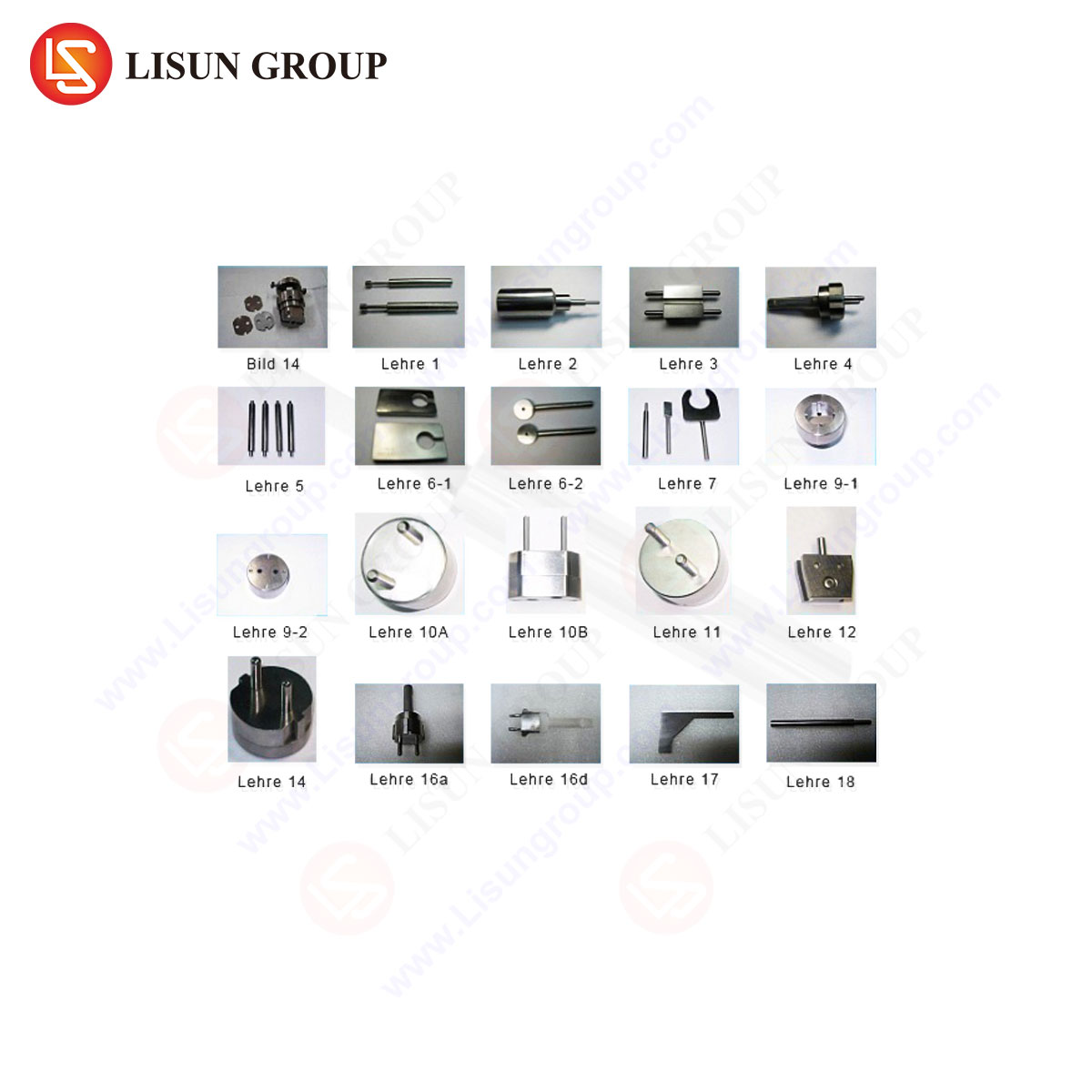
This verification process employs specialized gauges designed to assess “go” and “no-go” conditions. For instance, a plug must freely enter a “go” gauge, confirming minimum spacing and maximum pin dimensions are not exceeded. Conversely, it must not enter a “no-go” gauge, which checks for minimum pin dimensions and spacing to prevent loose, hazardous connections. The LISUN Gauges for Plugs and Sockets product line exemplifies instrumentation engineered for this purpose. These gauges, manufactured from hardened tool steel or other durable materials with precisely machined tolerances, are calibrated to specific standards (e.g., BS 1363 for UK plugs, AS/NZS 3112 for Australian plugs). Their use provides a binary, unambiguous pass/fail assessment for critical dimensional parameters, forming the first defensive layer in quality control.
Evaluating Mechanical Strength via Pin Withdrawal Force
Following dimensional confirmation, the mechanical integrity of the pin-socket engagement is quantified through pin withdrawal force testing. This procedure measures the axial force required to extract a pin from a standardized, calibrated test socket. The test serves a dual purpose: it ensures sufficient retention force to prevent accidental disconnection under normal load, and it verifies that the insertion force does not exceed ergonomic limits for users.
The test is performed using a motorized or pneumatic test apparatus that clamps the plug body and smoothly withdraws the pin at a specified speed, typically 1-5 mm/s, while a load cell records the force profile. Standards define minimum withdrawal force values; for example, IEC 60884-1 stipulates a minimum of 1.5 N per pin for standard plugs. A force profile that shows a sharp peak followed by a rapid decline may indicate brittle or poorly designed pin retention features, whereas a stable, consistent force suggests robust design. The LISUN pin gauges system often integrates with such tensile testers, where the calibrated test socket—a core component of the gauge set—ensures the withdrawal force is measured against a consistent, standards-defined interface, eliminating variability from worn or non-compliant sockets.
Thermal Stress Endurance and Heat Aging Resistance
Plug pins are subject to cyclic thermal stresses during their operational lifecycle. Current flow through contact resistance generates heat, which can cause material annealing, oxidation of contact surfaces, and degradation of insulating materials. Accelerated heat aging tests simulate long-term thermal effects by subjecting plugs and pins to elevated temperatures in a controlled aging oven for extended periods, often 168 hours at 70°C or 100°C as per standard requirements.
Post-aging, pins undergo critical reassessment. Dimensional checks are repeated to detect warping or deformation. More importantly, pin withdrawal force is re-measured. A significant drop in retention force after aging indicates a loss of spring temper in the pin material, a primary failure mode that leads to loose connections and increased fire risk. This test sequence validates the thermal stability of the pin alloy and the effectiveness of any surface platings (e.g., nickel or tin) in preventing oxidative degradation at high temperatures.
Assessing Resistance to Impact and Deformation
The operational environment for plugs often involves incidental impact, bending, and crushing forces. Impact tests evaluate a plug’s ability to withstand such abuse without creating a safety hazard. A standard test involves mounting a plug in a fixture and subjecting it to a prescribed impact energy from a pendulum or falling mass at strategic points. Following impact, the plug must not exhibit accessible live parts, and the pins must not be deformed to the extent that they violate the dimensional “no-go” gauges. Furthermore, an earth pin, if present, must not be damaged in a way that would compromise the protective earthing function prior to the phase pins making contact during insertion.
Electrical Performance Validation: Contact Resistance and Temperature Rise
While mechanical integrity is paramount, the ultimate function of a plug pin is to conduct electrical current efficiently and safely. Two key electrical tests are directly dependent on pin quality: contact resistance measurement and temperature rise evaluation.
Contact resistance, measured in micro-ohms (µΩ) using a Kelvin (4-wire) method, quantifies the electrical efficiency of the pin-to-socket junction. High resistance, caused by poor surface finish, contamination, or insufficient contact force, leads to power loss and localized heating. Temperature rise testing, conducted by passing the plug’s rated current through it while mounted in a test socket within a draft-free enclosure, provides a holistic assessment. Using thermocouples attached to the pin bases, the temperature increase over ambient is recorded. Standards like IEC 60884-1 impose strict limits (e.g., 52°K rise for certain materials). A compliant pin, when paired with a compliant socket, will exhibit a stable, low temperature rise, confirming adequate current-carrying capacity and heat dissipation.
The Critical Role of Specialized Gauge Systems in Standardized Testing
The reliability of the aforementioned tests hinges on the accuracy and traceability of the measurement tools. Universal gauge systems, such as those developed by LISUN, consolidate multiple test functions into a coherent toolkit. A typical LISUN gauge set for a specific plug standard includes:
- Dimensional Gauges: “Go/No-Go” gauges for pin thickness, width, length, and spacing.
- Calibrated Test Sockets: Precisely machined sockets for withdrawal force and temperature rise tests, ensuring repeatability across laboratories.
- Impact Test Fixtures: Alignment fixtures for consistent application of impact tests.
- Gauge Blocks: For verifying pin profile and configuration.
The competitive advantage of such integrated systems lies in their traceability to national metrology institutes, material durability to resist wear from thousands of test cycles, and comprehensive coverage of a given standard’s requirements. For manufacturers and third-party testing laboratories, this eliminates the need to source disparate gauges from multiple suppliers, reducing calibration complexity and enhancing test reproducibility.
Industry Application: From Manufacturing QC to Certification Body Audits
The application of formal plug pin test procedures spans the product lifecycle. In manufacturing quality control, statistical sampling and testing using gauge systems provide real-time feedback on production tooling wear and assembly consistency. For product development engineers, these tests validate design choices in pin material, geometry, and plating. The most rigorous application occurs within accredited testing laboratories, where full compliance testing to a standard is conducted for certification marks (e.g., UL, CE, CCC). Here, every clause related to pin integrity is executed with documented evidence, and the precision of the gauges used is paramount to defensible test reports.
Conclusion: Synthesizing Test Data for a Safety-Critical Conclusion
A comprehensive plug pin test procedure is a synthesis of interdependent mechanical, thermal, and electrical evaluations. No single test in isolation can guarantee safety; rather, it is the confluence of passing results across all domains that yields a validated product. Dimensional accuracy ensures fit, mechanical tests ensure durability, thermal tests ensure longevity, and electrical tests ensure efficient operation. Precision instrumentation, epitomized by dedicated gauge systems, provides the objective, quantitative data upon which these pass/fail judgments are—and must be—based. As plug and socket designs evolve to accommodate higher power densities, smart functionalities, and global market demands, the underlying principles of rigorous pin testing will remain the unchanging foundation of electrical safety.
FAQ Section
Q1: How often should the gauges in a LISUN plug and socket test set be recalibrated?
A: Calibration intervals depend on usage frequency, material hardness, and accreditation body requirements. For intensive use in a commercial testing laboratory, an annual calibration cycle is typical. Gauges used for internal QC may follow a 12-24 month cycle. It is critical to maintain a documented calibration trail traceable to national standards to ensure the validity of all test results.
Q2: Can one universal gauge set be used for testing plugs from different countries?
A: No. Plug pin geometry and spacing are defined by national and regional standards. A LISUN gauge set is specifically machined for a single standard (e.g., BS 1363, IEC Type C, NEMA 5-15). Laboratories testing multiple plug types must possess a dedicated, calibrated gauge set for each distinct standard to ensure accurate compliance assessment.
Q3: What is the most common plug pin failure mode detected during withdrawal force testing after heat aging?
A: The most prevalent failure is a significant reduction in withdrawal force, often exceeding 20-30% of the initial value. This indicates the loss of spring temper (annealing) in the copper alloy pin material due to thermal exposure. A plug with pins that have annealed will not maintain sufficient contact pressure in a socket, leading to increased contact resistance, overheating, and potential fire hazard.
Q4: In temperature rise testing, why is the test conducted in a draft-free enclosure?
A: A draft-free environment eliminates convective cooling from external air movement, creating a consistent and repeatable worst-case thermal scenario. This ensures the measured temperature rise is attributable solely to the heat generated by the plug and socket combination under test, allowing for a standardized comparison against the limits prescribed in safety standards.