


Evaluating Accessibility Hazards: The UL Unjointed Finger Probe Test for Hazardous Energy Sources
The imperative to safeguard users from inadvertent contact with hazardous live parts or dangerous moving components is a foundational principle in product safety engineering. This objective necessitates rigorous evaluation during the design and certification phases, employing standardized test probes that simulate human interaction. Among these critical tools, the Unjointed Finger Probe Test, as delineated in standards such as UL 60950-1, IEC 61032, and their successors, serves as a benchmark for assessing accessibility to energy hazards. This article provides a technical examination of the test’s methodology, its application across diverse industries, and the instrumental role of precision-engineered test equipment, with specific focus on the LISUN Test Finger, Test Probe, and Test Pin product suite.
Anthropomorphic Simulation in Safety Compliance
The genesis of the unjointed finger probe lies in the need to model the probing actions of a young child’s finger. Unlike articulated jointed probes that simulate adult manipulation, the unjointed probe represents a simpler, more rigid exploratory action capable of accessing openings in enclosures. Its primary function is to verify that hazardous parts—be they electrically live conductors exceeding safety extra-low voltage (SELV) limits, hot surfaces, or unguarded mechanical components—remain inaccessible under defined test conditions. The probe is applied without substantial force, typically a maximum of 30 N, to every potential access point on an enclosure. If the probe can enter and contact a hazardous part, the design fails this fundamental safety requirement. This test is often a prerequisite for more severe assessments, such as those involving articulated probes or applied force.
Dimensional Tolerances and Material Specifications of the Standard Probe
The test probe is defined by precise geometric and material parameters to ensure consistent, reproducible results across testing laboratories globally. The standard unjointed test finger is modeled after a child’s finger, with a diameter of 12 mm, a length of 80 mm, and a hemispherical end of radius 3 mm. It is constructed from rigid, non-conductive material, typically a hardened insulating polymer, to prevent electrical bridging during testing. A crucial feature is the addition of a “stop face” or shoulder that limits insertion depth and simulates the constraint of the hand. The probe must also incorporate a “joint” for the articulated version, but for the unjointed test, it remains fixed. The exact dimensions are codified in standards like IEC 61032 (Test Probe B) and are referenced by numerous sector-specific standards, including UL, EN, and GB regulations.
The LISUN Test Finger System: Precision for Conformity Assessment
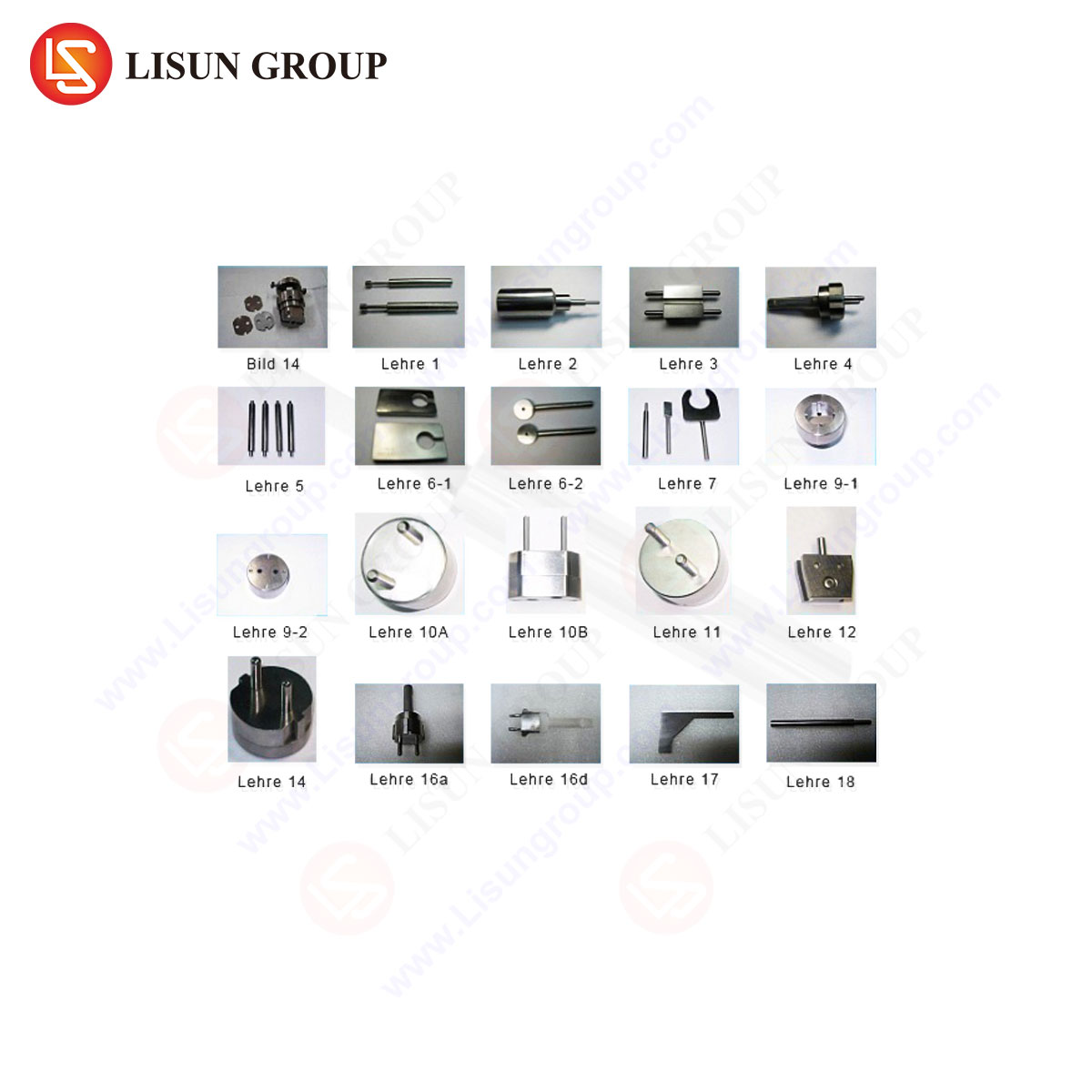
To execute these tests with the requisite accuracy, laboratories and manufacturers rely on calibrated, standard-compliant tooling. The LISUN Test Finger, Test Probe, and Test Pin system is engineered to meet these exacting specifications. This product line encompasses the full range of probes mandated by international safety standards, including the unjointed finger probe (IEC 61032 Probe B), the articulated jointed finger probe (IEC 61032 Probe 11), and various test pins (e.g., IEC 61032 Probe 13) for evaluating openings.
Key specifications of the LISUN system include:
- Material: High-strength, insulating polymers or composites with excellent dimensional stability and surface finish, ensuring no deformation during application and preventing false electrical contact.
- Dimensional Accuracy: Manufactured to tolerances often exceeding those required by the standard, typically within ±0.05 mm for critical features, to guarantee testing integrity.
- Calibration: Each probe can be supplied with traceable calibration certification, verifying its compliance with the referenced standard’s dimensional requirements.
- Ergonomics: Designed with an integrated handle or attachment point for standardized test apparatus, facilitating consistent application of the specified force and angle.
The competitive advantage of the LISUN system lies in its metrological rigor and durability. In a compliance testing environment, where a single millimeter can delineate pass from fail, the assurance of geometric precision is paramount. Furthermore, the robust construction resists wear from repeated use, maintaining calibration over time and reducing long-term costs for testing facilities.
Application Across Industrial Sectors: A Hazard Mitigation Imperative
The UL Unjointed Finger Probe Test is not an abstract exercise but a applied safety check pervasive in product development. Its application spans industries where user-accessible enclosures are present.
Electrical and Electronic Equipment & Industrial Control Systems: Here, the probe assesses cabinet doors, ventilation slots, and cable entry points on programmable logic controller (PLC) enclosures, motor drives, and power supplies. The goal is to ensure that mains terminals, bus bars, and capacitor banks remain inaccessible without the use of a tool.
Household Appliances and Consumer Electronics: From the slots in a toaster or food processor to the vents on a gaming console or power adapter, the probe evaluates the potential for a child’s finger to contact live parts or fan blades. The test directly informs the design of internal barriers and baffles.
Lighting Fixtures: Recessed lighting, track lighting heads, and portable lamps must be designed so that, when installed, the unjointed probe cannot touch live lamp pins or conductive parts within the lampholder through any opening.
Automotive Electronics & Aerospace Components: While the end-user may not directly service these components, the probe test is vital for assessing serviceability and accidental contact during maintenance. It applies to infotainment system housings, under-hood electronic control units (ECUs), and in-flight entertainment system access panels.
Telecommunications Equipment & Office Equipment: Network switches, routers, modems, and photocopiers contain multiple ventilation openings. The probe test validates that these thermal management features do not compromise electrical safety.
Medical Devices: For patient-connected equipment or devices used in home healthcare settings, preventing access to hazardous energy is critical. The probe tests enclosures of monitors, infusion pumps, and diagnostic equipment.
Electrical Components: The test is fundamental for devices like switches, sockets, and connectors. It verifies that live contacts cannot be touched when a plug is partially inserted or when exploring the perimeter of a mounted socket.
Cable and Wiring Systems: For cable glands or conduit entries, the probe may be used to ensure that internal wiring, even if displaced, cannot be contacted through the entry point.
Toy and Children’s Products Industry: This sector has particularly stringent requirements. The probe is used to ensure battery compartments cannot expose terminals, and that any functional openings in electronic toys do not conceal energy hazards.
Interpreting Test Outcomes and Design Remediation
A successful test outcome, where the probe cannot contact a hazardous part, validates the enclosure’s design. A failure necessitates redesign. Common remediation strategies include:
- Reducing Openings: Designing ventilation grilles with baffled or honeycomb structures that meet the standard’s dimensional requirements for “finger-proof” openings.
- Adding Internal Barriers: Installing fixed insulating shrouds or shields behind openings to maintain a sufficient creepage and clearance distance from live parts, even if the probe enters.
- Increasing Clearance: Re-layouting internal components to ensure a >100 mm distance from any opening, effectively placing them out of reach of the probe’s length.
- Using Reinforced Insulation: Ensuring that any part the probe might contact is either safely grounded or protected by insulation that can withstand the relevant electric strength test.
Integration with a Broader Safety Testing Protocol
The Unjointed Finger Probe Test is rarely performed in isolation. It is part of a sequential testing protocol. Typically, it is the first accessibility check, followed by the articulated jointed finger test (simulating deliberate probing), and then tests with smaller probes (like the LISUN Test Pin) for openings intended to be “tool-proof.” Furthermore, if the probe can enter, the contacted part may then be subjected to temperature measurement, electric strength testing, or hazard analysis to fully evaluate the risk. This layered approach ensures a comprehensive safety assessment.
Scientific and Regulatory Framework
The test is grounded in anthropometric data and hazard analysis. The 12 mm diameter approximates the 95th percentile of a young child’s finger. The 30 N force is derived from studies of casual, non-deliberate pushing action. Standards such as UL 62368-1 (the hazard-based standard replacing UL 60950-1 and 60065) formally incorporate these probes into their “energy source” classification system, defining safeguards against accessibility based on the class of hazard. Compliance is not merely about following a procedure; it is about substantiating that a product’s safeguards are effective against predictable human behavior.
Table 1: Common Standards Referencing the Unjointed Finger Probe Test
| Standard Number | Title | Primary Application Scope |
| :— | :— | :— |
| IEC/UL 62368-1 | Audio/Video, Information and Communication Technology Equipment | ICT, AV, Office Equipment |
| IEC/UL 61010-1 | Safety Requirements for Electrical Equipment for Measurement, Control, and Laboratory Use | Industrial Control, Lab Equipment |
| IEC/UL 60335-1 | Household and Similar Electrical Appliances | Household Appliances |
| IEC 60598-1 | Luminaires | Lighting Fixtures |
| IEC 60601-1 | Medical Electrical Equipment | Medical Devices |
| UL 1439 | Standard for Tests for Sharpness of Edges on Equipment | (References probe for accessibility checks) |
Frequently Asked Questions (FAQ)
Q1: What is the critical difference between the unjointed finger probe and the jointed finger probe?
The unjointed finger probe (e.g., IEC 61032 Probe B) is a rigid, straight probe simulating the casual poking of a child’s finger. It tests for basic accessibility. The jointed finger probe (e.g., IEC 61032 Probe 11) is articulated, simulating the deliberate probing and hooking action of an adult or child’s finger, representing a more severe test of an enclosure’s security.
Q2: Can a product pass if the unjointed probe enters an opening but does not touch a live part?
Yes, the pass/fail criterion is based on contact with a hazardous part, not merely entry. However, if the probe enters deeply, it may trigger requirements for the internal parts to be evaluated for other hazards (e.g., temperature, mechanical pinch points). Furthermore, excessive entry may lead to failure under the jointed probe test.
Q3: Why is the material of the test probe, such as the LISUN Test Finger, required to be insulating?
An insulating material prevents the probe itself from creating an electrical bridge between two live parts or from grounding a live part during the test, which could cause a misleading result or even damage the equipment under test. It ensures the test solely evaluates physical accessibility.
Q4: How often should a test probe like the LISUN system be calibrated or verified?
While the standard may not specify a recalibration interval, best practice in accredited testing laboratories is to perform periodic verification, typically annually, against the dimensional requirements of the standard. This ensures wear or accidental damage has not compromised its geometry. Calibration certificates should be maintained as part of the lab’s quality records.
Q5: Are there industry-specific variations of the finger probe test?
The core principle is consistent, but applied force, probe type precedence, and interpretation can vary. For instance, toy standards may apply the test with different forces or in specific orientations relevant to child interaction. Medical device standards may consider the probe in both normal use and single-fault conditions. Always consult the specific end-product standard for the exact test sequence and criteria.