









Abstract
As we approach 2026, the demand for precise, reliable, and standardized environmental testing equipment is surging across multiple high-stakes industries. This article provides a technical analysis of the key industries for environmental testing equipment in 2026, with a specialized focus on LED photometric and colorimetric reliability. Drawing from 15+ years of expertise at LISUN, we will explore how advanced systems like the LEDLM-80PL and LEDLM-84PL, which integrate Arrhenius Model-based software and support critical standards like IES LM-80 and TM-21, are essential for validating product longevity. We will detail the technical requirements in sectors from automotive lighting to aerospace, emphasizing the role of data-driven lumen maintenance testing (e.g., L70/L50 metrics from 6000-hour tests) in mitigating risk and ensuring compliance in an increasingly quality-conscious global market.
1.1 IESNA and CIE: The Cornerstones of Quantifiable Reliability
The Illuminating Engineering Society of North America (IESNA) and the International Commission on Illumination (CIE) provide the essential frameworks that transform subjective product claims into quantifiable, comparable data. For LED-based systems, predicting long-term performance from accelerated testing is paramount. Standards such as IES LM-80 (measuring lumen depreciation of LED light sources) and IES TM-21 (providing the methodology for extrapolating LM-80 data to estimate useful life) are non-negotiable for credible product development. Similarly, IES LM-84 and TM-28 extend these principles to complete luminaires. Complementary CIE standards like CIE 127:2007 for LED intensity measurements and CIE 084:1989 for luminous flux definitions ensure global methodological consistency. In 2026, compliance with these standards is the primary driver for investment in sophisticated environmental testing equipment.
1.2 From Raw Data to Predictive Insight: The Arrhenius Model in Practice
Modern testing transcends simple data logging; it requires predictive analytics. The core of lifespan estimation lies in understanding the thermal acceleration of failure mechanisms. The Arrhenius Model, which describes the temperature dependence of reaction rates, is mathematically integrated into advanced testing software. Systems like LISUN’s LED Optical Aging Test Instruments utilize this model to correlate accelerated stress conditions at elevated temperatures (e.g., 55°C, 85°C, 105°C as per LM-80) with real-world operational life. This allows for the extrapolation of a 6000-hour test dataset to project L70 (70% lumen maintenance) or L50 life to tens of thousands of hours, providing invaluable R&D and marketing intelligence.
2.1 Validation of LED-Based ADAS and Signaling Systems
The automotive industry’s shift towards full LED lighting, encompassing adaptive driving beams (ADB), daytime running lights (DRLs), and interior ambient lighting, creates a critical need for environmental validation. These components are integral to safety and aesthetics, operating in environments with extreme thermal cycling, vibration, and humidity. Testing equipment must validate that LED luminous flux and chromaticity coordinates remain within strict specifications over the vehicle’s lifespan, often 15+ years. The ability to test components per IES LM-80 and then validate complete headlamp or tail-light assemblies per LM-84/TM-28 protocols is essential for Tier 1 suppliers and OEMs to meet UNECE and SAE regulations.
2.2 Chamber Synchronization for Real-World Stress Simulation
Automotive testing often requires simulating complex environmental profiles. Advanced testing systems support synchronized control of multiple environmental chambers. For instance, a configuration supporting up to 3 connected temperature/humidity chambers allows an engineer to test different LED batches or components at various stress levels (e.g., 85°C, 105°C, and 125°C) simultaneously under continuous photometric monitoring. This parallel testing drastically reduces time-to-data, enabling rapid design iteration and failure analysis for electronics destined for under-hood or exterior applications.
3.1 Certifying Lighting for Harsh and Critical Environments
Aerospace and defense applications represent the apex of reliability requirements. Cockpit displays, cabin lighting, navigation lights, and military vehicle illumination must perform flawlessly under intense vibration, rapid pressure changes, and extreme temperatures. Environmental testing equipment for this sector must offer unparalleled precision and robustness. The focus extends beyond lumen maintenance to include precise color stability (critical for cockpit instrument readability) and performance under operational shock. Compliance with standards like IES LM-79-19 (for electrical and photometric measurements) provides the baseline characterization data that is then subjected to accelerated life testing.
3.2 Customizable Hardware for Unique Form Factors
Off-the-shelf solutions are often insufficient for aerospace components, which may have unusual geometries or integrated sensor systems. The need for customizable hardware configurations in testing systems becomes critical. This includes tailored fixture boards, specialized optical adapters, and integration with proprietary communication buses (like MIL-STD-1553 or ARINC 429) to power and monitor units under test. Equipment must be adaptable to secure a device within an environmental chamber while ensuring accurate, repeatable optical measurements via integrating spheres or goniophotometers.
4.1 Streamlining Production Batch Validation and Quality Assurance
For LED package, module, and luminaire manufacturers, environmental testing is a routine part of both R&D and quality assurance. The key industries for environmental testing equipment in 2026 still heavily include this traditional sector, now demanding higher throughput and automation. The dual-system approach, exemplified by instruments like the LEDLM-80PL (for LM-80/TM-21 on LEDs) and the LEDLM-84PL (for LM-84/TM-28 on luminaires), allows labs to cover the entire product lifecycle. Automated systems can run the mandated 6000-hour tests with minimal intervention, tracking L70/L50 metrics in real-time and flagging any batch that shows anomalous depreciation curves early in the process.
4.2 Technical Comparison: LM-80 vs. LM-84 Focused Systems
The choice between LED-focused and luminaire-focused testing systems is fundamental. The table below outlines the core technical distinctions aligned with different phases of the manufacturing workflow.
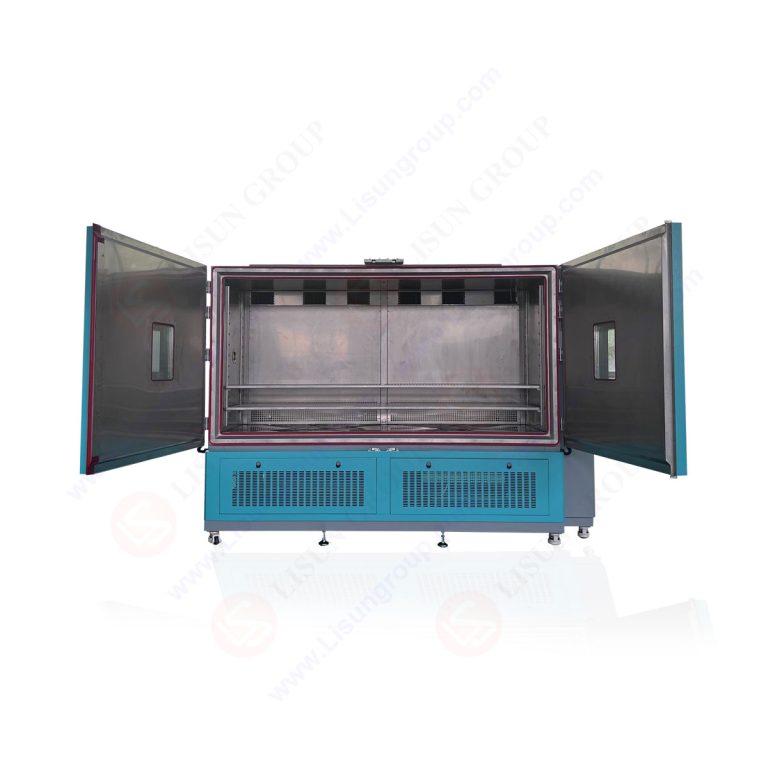
Table 1: System Comparison for LED vs. Luminaire Life Testing
| Feature | LEDLM-80PL (LED Package/Module Focus) | LEDLM-84PL (Complete Luminaire Focus) |
| :— | :— | :— |
| Primary Standard | IES LM-80, IES TM-21 | IES LM-84, IES TM-28 |
| Test Sample Type | LED components on custom boards | Full, powered luminaires |
| Key Metric | Lumen maintenance of LED source | Luminous flux & color maintenance of system |
| Typical Test Duration | Minimum 6000 hours per LM-80 | Minimum 6000 hours per LM-84 |
| Control Complexity | Constant current source control | Constant voltage/power supply, may include dimming control |
| Data Output | Depreciation curves for extrapolation to Lp (L70, L50) | System efficacy depreciation and TM-28 reports |
5.1 Ensuring Backlight and Indicator Longevity
The proliferation of high-resolution displays in smartphones, tablets, laptops, and TVs makes LED backlight unit (BLU) reliability a major concern. Consumers expect no visible dimming or color shift over the device’s life. Environmental testing equipment is used to validate the LED arrays within BLUs, often requiring high-density, multi-channel monitoring to track hundreds of individual LEDs or zones simultaneously. Testing validates performance against internal corporate lifespan specifications, which are frequently more stringent than general lighting requirements, with a strong emphasis on color point stability as defined by CIE 70 and other chromaticity standards.
5.2 Mini/Micro-LED and Emerging Display Technologies
The advent of Mini-LED and Micro-LED display technologies introduces new testing challenges. These devices feature thousands to millions of discrete LEDs, where failure of even a small percentage can be visibly detrimental. Testing equipment must evolve to provide statistical lifetime data on these dense arrays, requiring high-speed, high-resolution optical measurement systems capable of detecting minute changes in individual emitter output within a controlled environmental chamber. This pushes the key industries for environmental testing equipment in 2026 towards even more advanced, data-intensive solutions.
6.1 The Business Case for Versatile, Accredited Test Systems
Independent testing labs serve as critical validators for all aforementioned industries. Their business depends on equipment that is versatile, fully compliant with latest standards, and capable of producing audit-ready data. A single lab may need to test automotive LED modules one week and consumer luminaires the next. Therefore, systems that offer dual testing modes—supporting both constant current (for LEDs) and constant voltage/power (for luminaires)—are highly valuable. Accreditation to ISO/IEC 17025 requires demonstrated competence, traceable calibration (often traceable to CIE 084 and CIE 127), and robust, tamper-evident data logging, all features embedded in professional-grade environmental test instruments.
6.2 Generating Certified Reports for Global Market Access
The end product for a testing lab is a certified report that allows a manufacturer to access global markets. Software is as important as hardware. The ability to automatically generate TM-21 or TM-28 projection reports, complete with confidence intervals and graphs that directly reference the executed test conditions and measured data, is a core requirement. This software must seamlessly integrate Arrhenius-based calculations and allow for customizable report templates to meet specific client or regulatory body requirements.
7.1 Validating Outdoor Luminaire Resilience
The smart city revolution relies on vast networks of outdoor LED lighting—streetlights, architectural facades, and traffic signals. These installations are capital-intensive and expected to last 10-20 years with minimal maintenance. Environmental testing for this sector must validate resilience against prolonged moisture ingress (IP rating validation), thermal cycling from day/night and seasonal shifts, and pollution. LM-84/TM-28 testing provides the foundational lifespan data, but it is often combined with cyclic stress tests that go beyond the standard’s steady-state conditions to better simulate a decade of outdoor exposure in an accelerated timeframe.
7.2 Supporting IoT and Sensor Integration
Modern outdoor luminaires are sensor hubs, integrating motion detectors, cameras, and communication modules. Environmental testing must therefore consider the thermal and electrical impact of these additional loads on the LED driver and the overall system’s photometric performance. Testing equipment needs to not only power the LED light engine but also potentially power and communicate with the integrated IoT devices, monitoring system-level power consumption and thermal performance throughout the accelerated aging process.
The key industries for environmental testing equipment in 2026 are united by a non-negotiable demand for data-driven product reliability and longevity assurance. From the vibration-heavy automotive sector to the longevity-critical aerospace field and the high-volume general lighting market, the technical mandates are clear: rigorous compliance with IES and CIE standards, predictive analytics via the Arrhenius Model, and flexible hardware capable of adapting to diverse product form factors. LISUN’s solutions, such as the configurable LEDLM-80PL and LEDLM-84PL systems, address these needs by providing standardized, yet customizable, platforms for executing 6000-hour LM-80/LM-84 tests, generating TM-21/TM-28 life projections, and synchronizing with multiple environmental chambers. For engineers and technicians across these industries, investing in such advanced, standards-aligned equipment is not merely a cost of compliance but a strategic tool for mitigating warranty risk, accelerating innovation, and securing a competitive advantage in markets where proven reliability is the ultimate currency.
Q1: What is the practical difference between testing per IES LM-80 versus IES LM-84, and how do I choose the right standard for my product?
A: The choice is fundamentally defined by your “test article.” IES LM-80 applies to LED packages, arrays, and modules—the discrete light-producing components. It requires testing at a minimum of three case temperatures (e.g., 55°C, 85°C, 105°C) under constant current drive. IES LM-84, in contrast, is for integrated luminaires—the complete, powered lighting fixture. It tests the system’s performance in an operational state, including the LED source, driver, optics, and housing. Use LM-80 for component-level qualification and sourcing. Use LM-84 for finished product validation and to generate the TM-28 report that provides a more accurate, system-level lifetime projection for your end-users. LISUN’s dedicated LEDLM-80PL and LEDLM-84PL systems are engineered for these distinct protocols.
Q2: How does the Arrhenius Model software actually reduce required testing time for life projection?
A: The Arrhenius Model quantifies how chemical degradation processes (like phosphor thermal quenching or epoxy yellowing) accelerate with temperature. The software in instruments like LISUN’s LEDLM series uses this principle by conducting accelerated tests at elevated, controlled temperatures (e.g., 105°C instead of a typical 55°C operating temperature). It meticulously measures the rate of lumen depreciation at these high-stress conditions. The model then mathematically relates this accelerated failure rate back to the expected rate at normal use temperatures. This allows for the extrapolation of a 6000-hour test data set to project an L70 life that may be 30,000+ hours, providing a scientifically valid prediction without waiting for a real-time decade-long test.
Q3: Can a single environmental testing system handle both constant current (LED) and constant voltage/power (luminaire) testing modes?
A: Yes, advanced systems are designed with this dual-mode capability to maximize laboratory flexibility and ROI. This is a critical feature for labs serving multiple key industries for environmental testing equipment in 2026. The system will incorporate switchable or programmable power supplies. For LM-80 testing on LED components, it operates in precision constant current (CC) mode. For LM-84 testing on complete luminaires, it switches to constant voltage (CV) or constant power (CP) mode to simulate real-world AC or DC input conditions. The software interface allows the operator to define the test mode, set points, and monitoring parameters specific to each standard, ensuring correct and compliant execution for both sample types.