









Abstract
Ensuring the long-term reliability and safety of electrical connection components requires rigorous, standardized durability testing. This article provides a comprehensive technical analysis of automated life cycle testing for plugs, sockets, and switches, with a focus on the methodologies and equipment necessary for compliance verification. The CZKS-3 Plug Socket Switch Life Tester from LISUN serves as a central case study, illustrating how modern automated systems perform precise electrical durability and mechanical endurance tests. We will explore its operational principles, alignment with critical international standards, and its application in validating the breaking capacity and mechanical life of components used in household, industrial, and automotive electronics, ensuring they meet stringent safety and performance benchmarks before market release.
1.1 The Critical Role of Life Cycle Testing
Electrical durability testing simulates years of normal operation and stress conditions within a controlled laboratory environment. For components like plugs, sockets, and switches, failure is not merely an inconvenience but a potential source of fire, electric shock, or equipment damage. Electrical durability testing aims to precipitate and identify failure modes such as contact welding, excessive temperature rise, insulation degradation, and mechanical wear before products reach consumers. This proactive validation is a cornerstone of product safety, reliability engineering, and regulatory compliance for manufacturers worldwide.
1.2 Core Failure Modes in Connectors and Switches
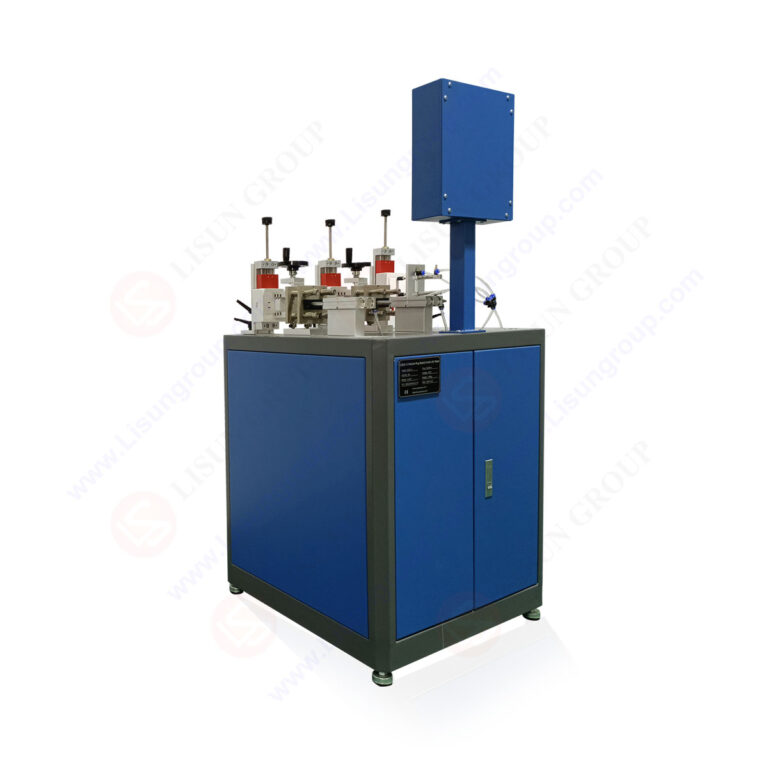
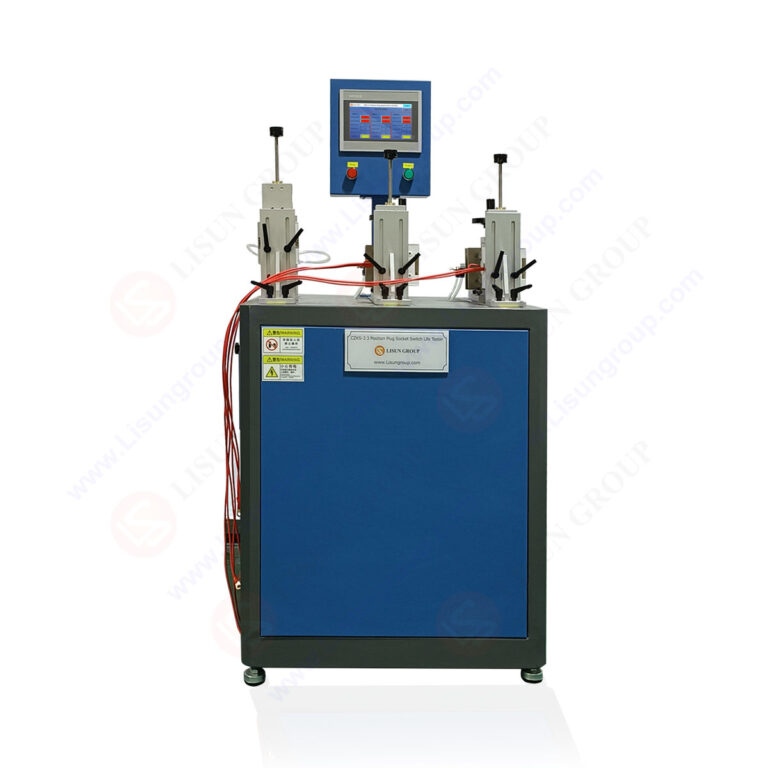
Understanding the targeted failure modes is essential for designing an effective test regimen. Primary failure mechanisms include contact adhesion or welding due to inrush currents, increased contact resistance leading to overheating, plastic deformation or fracture of mechanical parts, and loss of insulating properties. The LISUN CZKS-3 Plug Socket Switch Life Tester is engineered to apply controlled electrical loads and precise mechanical actuation to systematically induce and monitor these failures, providing quantifiable data on a component’s lifespan and breaking capacity under defined conditions.
2.1 Mechanical Actuation and Fixturing
The mechanical subsystem is responsible for the precise, repeatable insertion, withdrawal, and toggling of test samples. The LISUN CZKS-3 series typically employs pneumatic cylinder-driven actuators, offering high-speed, programmable force and stroke control. Customizable test fixtures are critical, allowing the secure mounting of various plug/socket types (e.g., Schuko, BS, NEMA) and switch forms. This modularity ensures the CZKS-3 Plug Socket Switch Life Tester can accommodate a wide range of product geometries and test standards without compromising actuation accuracy.
2.2 Electrical Load and Monitoring Systems
The electrical subsystem applies the specified load (resistive, inductive, or motor load) to the contacts during operation. It precisely controls test voltage, current, power factor, and switching timing. Integrated sensors continuously monitor key parameters, including actual test current, contact voltage drop, and housing temperature. This real-time data acquisition allows the system to detect failures instantaneously—such as a failure to break the circuit (welding) or an unacceptable voltage drop—and log the exact cycle count at which the failure occurred.
2.3 Programmable Logic Controller (PLC) and HMI
At the core of the LISUN CZKS-3 is a Programmable Logic Controller (PLC) that automates the entire test sequence. The PLC coordinates the timing between mechanical actuation and electrical load application, manages safety interlocks, and records all test data. A user-friendly Human-Machine Interface (HMI) touchscreen allows engineers to configure complex test profiles, set pass/fail criteria, and visualize real-time trends and final reports, minimizing operator intervention and ensuring test consistency.
3.1 Key Standards for Plugs, Sockets, and Switches
The test parameters and methodologies for the LISUN CZKS-3 Plug Socket Switch Life Tester are derived from major international and national standards. Compliance with these standards is non-negotiable for global market access. The system is explicitly designed to verify requirements outlined in:
- IEC 60884-1: Plugs and socket-outlets for household and similar purposes – Part 1: General requirements. Clause 20 specifically details the durability test procedures.
- IEC 60669-1: Switches for household and similar fixed-electrical installations – Part 1: General requirements. Clause 19 covers mechanical and electrical endurance.
- IEC 61058-1: Switches for appliances – Part 1: General requirements. Clause 17 outlines the life cycle testing methodology.
- GB/T 2099.1: The Chinese national standard harmonized with IEC 60884-1, including identical durability clauses.
3.2 Standard-Specific Test Parameter Configuration
Each standard prescribes specific test conditions. For example, IEC 60884-1 requires a set number of insertion/withdrawal cycles under a defined resistive load, while IEC 61058-1 may require tests under different load types (resistive, inductive, lamp load) at various fractions of the rated current. The programmability of the LISUN CZKS-3A variant is crucial here, allowing labs to pre-configure and recall test profiles that match the exact voltage, current, cycle count, and timing mandated by the target standard for the device under test.
4.1 Core Test Parameter Ranges
The LISUN CZKS-3 series is designed to cover a broad spectrum of testing needs. Its core capabilities include a wide range of electrical and mechanical parameters to suit components from low-power signal switches to high-current industrial connectors.
| Parameter | CZKS-3 | CZKS-3P | CZKS-3S | CZKS-3A |
|---|---|---|---|---|
| Test Current Range | 0.5A – 40A AC | 0.5A – 60A AC | 0.5A – 100A AC | 0.5A – 40A AC/DC |
| Test Voltage Range | 90V – 290V AC | 90V – 290V AC | 90V – 290V AC | 5V – 60V DC / 90V-290V AC |
| Max. Mechanical Cycles | 99,999 | 999,999 | 999,999 | 99,999 |
| Load Type | Resistive | Resistive / Inductive | Resistive / Inductive | Resistive, Inductive, Motor, Lamp |
| Primary Control | Microcontroller | PLC | PLC | Advanced PLC with PC Software |
4.2 Variant Differentiation and Application
- CZKS-3 (Base Model): Suitable for standard durability testing of common household plugs, sockets, and switches per IEC 60884-1 and IEC 60669-1.
- CZKS-3P (Programmable): Features enhanced PLC control and higher cycle counters for more demanding endurance requirements and complex sequence programming.
- CZKS-3S (High-Capacity): Designed for testing high-current industrial connectors and switches, with a robust electrical load system capable of handling up to 100A.
- CZKS-3A (Appliance Switch Tester): Optimized for testing switches used in appliances per IEC 61058-1, supporting DC testing and a wider variety of load simulations including motor and lamp loads.
5.1 Plug and Socket Breaking Capacity & Durability
This application assesses a socket-outlet’s ability to make and break load current without deterioration. The CZKS-3 Plug Socket Switch Life Tester automates the process: a standardized test plug is inserted into the mounted socket, the prescribed electrical load is applied, the plug is withdrawn under load (testing breaking capacity), and then re-inserted. This cycle repeats thousands of times. The system monitors for electrical flashover, contact welding, and measures the permanent deformation of the socket contacts to verify compliance with the breaking capacity and durability clauses of IEC 60884-1.
5.2 Mechanical and Electrical Endurance of Switches
For wall switches or appliance switches, the test evaluates both mechanical wear and electrical contact integrity. The tester’s actuator toggles the switch mechanism while the electrical load is applied at the precise moment of contact make/break. Parameters like operating force, speed, and over-travel are adjustable. The LISUN CZKS-3A is particularly adept at this, as it can simulate the inrush currents of lamp loads or the inductive kickback from motor loads, providing a realistic assessment of contact life and potential welding risk under real-world conditions.
5.3 Automotive Connector Durability Validation
While not exclusively for household use, the principles apply directly to automotive electrical components. Connectors, power sockets (e.g., 12V/24V DC), and switchgear must endure extreme vibration and temperature cycles. The durability testing performed by a CZKS-3 system provides foundational data on contact system wear and current-carrying reliability over repeated mating cycles, often as a precursor or complement to environmental stress testing.
6.1 Laboratory Certification and Audit Readiness
For testing laboratories seeking or maintaining accreditation (e.g., to ISO/IEC 17025), the use of calibrated, traceable, and standards-compliant equipment is mandatory. The LISUN CZKS-3 series, with its documented calibration procedures, detailed test reports, and direct alignment with standard test methods, provides the necessary evidence for audit trails. Its automated operation reduces human error, a critical factor in generating reproducible and defensible test data for certification bodies like UL, TUV, and Intertek.
6.2 Production Line Sampling and Reliability Monitoring
Beyond R&D and type-testing, manufacturers implement the CZKS-3 Plug Socket Switch Life Tester for ongoing quality surveillance. Regular sampling from production lines for accelerated life testing provides a statistical process control metric. A sudden drop in the mean cycles to failure can indicate a material, plating, or assembly process issue, triggering corrective action before non-conforming products are shipped in volume.
7.1 Real-Time Monitoring and Failure Diagnostics
Modern testers transcend simple cycle counting. The system’s sensors provide oscilloscope-like functionality, graphing contact voltage and current waveforms in real-time. This allows engineers to diagnose subtle failure precursors, such as contact bounce or arcing duration extension, which precede complete failure. Immediate logging of the failure cycle and type (e.g., “Cycle 12,457: Contact Welding on Phase L1”) enables precise root cause analysis.
7.2 Report Generation and Data Export
Comprehensive reporting is a key output. Upon test completion, the LISUN CZKS-3P and CZKS-3A models can generate detailed reports including a summary of test parameters, graphical trends of monitored values, a log of all events, and a final pass/fail determination. Data can typically be exported in common formats (CSV, PDF) for integration into Laboratory Information Management Systems (LIMS) or for inclusion in formal compliance documentation submitted to clients and regulators.
The validation of electrical connection components through rigorous life cycle testing is an indispensable pillar of product safety and reliability engineering. As detailed throughout this analysis, automated test systems like the LISUN CZKS-3 Plug Socket Switch Life Tester provide the precision, repeatability, and standards alignment required to execute these critical evaluations effectively. By simulating years of mechanical operation and electrical stress, the CZKS-3 series enables manufacturers and testing laboratories to identify potential failure modes, verify compliance with international standards such as IEC 60884-1 and IEC 61058-1, and ultimately ensure that products entering the market are safe and durable. From its modular mechanical fixturing and programmable electrical loads to its advanced PLC control and diagnostic capabilities, the system represents a comprehensive solution for durability verification across household, industrial, and automotive applications, forming a core asset in any serious quality assurance or compliance testing program.
Q1: What is the primary difference between testing for “breaking capacity” and “mechanical durability” for a socket-outlet using the CZKS-3?
A: Breaking capacity testing is a specific, more severe subset of durability testing. It evaluates the socket’s ability to safely interrupt a fault current or a loaded circuit without hazardous arcing or contact welding. Using the CZKS-3 Plug Socket Switch Life Tester, this is performed by withdrawing the test plug while the full rated load current is flowing. Mechanical durability, on the other hand, assesses long-term wear from repeated insertions and withdrawals, often performed with no load or a minimal monitoring current. While both tests use similar mechanical actuation, the breaking capacity test focuses on the electrical stress at the moment of contact separation, whereas mechanical durability focuses on physical wear over a high cycle count.
Q2: Can the LISUN CZKS-3A tester simulate the inrush current of a tungsten lamp load, and why is this important for switch testing?
A: Yes, the LISUN CZKS-3A variant is specifically designed to simulate various load types, including the high inrush current characteristic of tungsten lamp loads, which can be 10-15 times the steady-state current. This is critically important per standards like IEC 61058-1 for appliance switches. The cold filament’s low resistance causes a massive initial current surge when the switch closes, placing extreme thermal and mechanical stress on the contacts. A tester that only applies a steady resistive load would not accurately replicate this real-world stress, potentially missing failure modes like contact welding that are specifically likely to occur during lamp switch-on.
Q3: How does the system detect a contact welding failure during an automated test cycle?
A: The CZKS-3 tester employs continuous electrical monitoring to detect welding. After the switch is commanded to the “OFF” position or the plug is withdrawn, the system immediately checks for continuity across the contacts. If a current path still exists when it should be open circuit, the system identifies a welded contact failure. This detection occurs within milliseconds, and the test is halted automatically. The cycle counter is frozen at the failure point, and the event is logged with a timestamp and channel identifier, providing precise data for the failure analysis report.
Q4: Is the CZKS-3 suitable for testing DC connectors and switches, such as those used in low-voltage automotive or PV applications?
A: The standard CZKS-3, 3P, and 3S models are configured for AC testing as required by the primary plug and socket standards. However, the CZKS-3A variant includes capabilities for DC testing, with a voltage range typically from 5V to 60V DC. This makes the CZKS-3A suitable for validating the durability of DC connectors, automotive power sockets (e.g., 12V/24V cigarette lighter sockets), and switches used in direct current applications like photovoltaic systems or automotive interior controls, applying the same principles of mechanical cycling under electrical load.