









Abstract
In the rigorous world of electrical accessory compliance, accurate load simulation is paramount. The DFX-20 Fluorescent Lamp Test Load Cabinet serves as a critical instrument for manufacturers and testing laboratories, enabling precise verification of switches, sockets, and other accessories under real-world conditions. This specialized apparatus simulates the complex electrical characteristics of ballasted fluorescent lamp loads, a mandatory requirement per international safety standards. Its core capabilities include programmable power factor adjustment, high-precision measurement, and automated cyclic testing, delivering unparalleled value by ensuring product durability, safety, and regulatory compliance for target users in quality control and certification.
1.1 The Critical Role of Realistic Load Simulation
Electrical accessories like switches, sockets, and connectors are not tested with simple resistive loads in real applications. They frequently control inductive loads, such as those presented by fluorescent lighting circuits containing ballasts. These ballasts introduce power factor shifts, inrush currents, and complex impedance characteristics. A load test cabinet must accurately replicate these conditions to assess contact endurance, temperature rise, and dielectric strength under realistic stress, preventing field failures and ensuring long-term safety.
1.2 Compliance Drivers: IEC and GB Standards
Testing with ballasted lamp loads is not optional but a codified requirement in major international and national standards. Key standards mandating such tests include IEC 60669-1 (switches for household and similar purposes) Clause 19.2, which specifies the test circuit and load for normal operation. Similarly, IEC 60884-1 (plugs and socket-outlets) Clause 20 outlines the requirements for temperature rise tests under specified load conditions, often requiring non-resistive loads. Alignment with GB standards, which are largely harmonized with IEC, such as GB 16915.1 and GB 2099.1, is equally critical for market access, making the DFX series an essential tool for global compliance.
2.1 Core Functional Principle
The LISUN DFX series operates as an advanced, programmable electrical accessory load tester. At its heart is a precision power metering circuit and a configurable load network. It does not simply switch a fixed load but dynamically simulates the impedance profile of a fluorescent lamp circuit with its external magnetic or electronic ballast. Users can set the desired output current, power factor (lagging or leading), and test cycle parameters. The cabinet then draws this specified current from the Device Under Test (DUT), while its internal sensors measure true RMS voltage, current, power, and power factor with high accuracy.
2.2 Key System Components and Specifications
The cabinet integrates several key subsystems: a high-stability programmable AC power supply, a precision measurement unit, a reactive load bank (combining inductive and capacitive elements), and a robust industrial controller. Critical technical specifications include a wide current output range, typically from 0.5A to the model’s maximum (e.g., 20A for DFX-20). Power factor adjustment is finely tunable from 0.3 lagging to 0.3 leading with a resolution of 0.01. Measurement accuracy for power parameters is typically within ±0.5%, ensuring reliable data for compliance reports. The load capacitance values are carefully calibrated to match standard test requirements.
3.1 DFX Series Portfolio Overview
LISUN offers the DFX series in multiple configurations to suit different laboratory throughput and testing requirements. The base DFX-20 model provides a single-channel solution for sequential testing. The DFX-20-3CH variant offers three independent channels, allowing simultaneous testing of multiple samples, drastically improving efficiency. For higher current applications, models like the DFX-40, DFX-60, and DFX-80 are available, supporting testing of accessories rated for 40A, 60A, and 80A respectively, which are common in industrial and commercial-grade products.
3.2 Specification Comparison Table
Selecting the correct model depends on the maximum rated current of the accessories under test and desired testing throughput. The following table compares key specifications across the series:
| Model | Max. Output Current per Channel | Number of Channels | Typical Input Voltage | Primary Application Scope |
|---|---|---|---|---|
| DFX-20 | 20 A | 1 | 220VAC / 110VAC | Standard household switches & sockets (16A) |
| DFX-20-3CH | 20 A | 3 | 220VAC / 110VAC | High-throughput lab testing of 16A accessories |
| DFX-40 | 40 A | 1 | 220VAC / 110VAC | Industrial plugs, socket-outlets, and connectors |
| DFX-60 | 60 A | 1 | 220VAC | Heavy-duty industrial accessories |
| DFX-80 | 80 A | 1 | 220VAC / 380VAC | High-current commercial and industrial devices |
4.1 Standard-Specific Test Setups
The DFX-20 Fluorescent Lamp Test Load Cabinet is engineered to facilitate direct compliance with specific test clauses. For IEC 60669-1 Clause 19.2 (mechanical and electrical endurance), the cabinet is configured to apply the specified ballasted lamp load for tens of thousands of cycles. For temperature rise tests per IEC 60884-1 Clause 20, it provides the stable, non-resistive load required to stress the accessory until thermal equilibrium is reached. It also supports tests under abnormal conditions as per IEC 61058-1, assessing performance with specified capacitive or inductive loads.
4.2 Automated Cyclic Endurance Testing
A primary application is the automation of tedious endurance tests. The user programs the test parameters: current (e.g., 1.1x rated current), power factor (e.g., 0.6 lagging), ON/OFF dwell times (e.g., 1.5s ON, 3.5s OFF), and total cycle count (e.g., 40,000 cycles). The DFX cabinet then executes the test unattended, accurately counting cycles and monitoring for failures. It can be configured to halt upon detecting a predefined failure mode, such as a contact weld (indicated by a sustained current flow during the OFF period) or a failure to make contact.
5.1 Synergy with Life Testers and Actuators
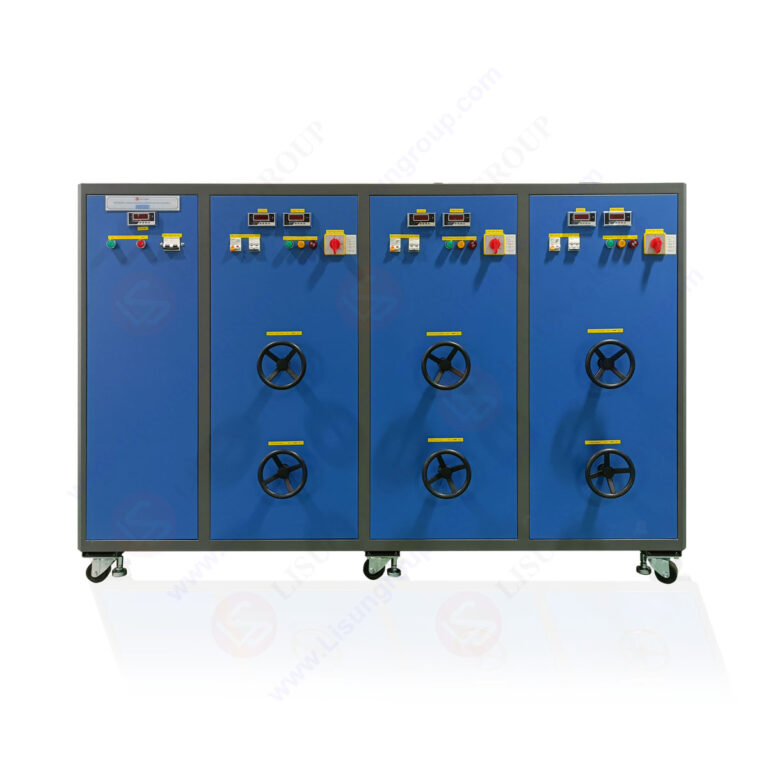
The DFX cabinet is designed as a load subsystem within a larger compliance ecosystem. Its control interface allows seamless integration with LISUN’s CZKS series life testers (mechanical actuation systems). In this setup, the CZKS actuator provides the standardized mechanical operation (e.g., flipping a switch, inserting/withdrawing a plug), while the DFX supplies and controls the electrical load. This integrated approach fully automates tests like IEC 60669-1 Clause 19, combining mechanical and electrical stress in one synchronized, repeatable workflow.
5.2 Complementary Equipment for Full Validation
Beyond life testing, a complete accessory validation lab may incorporate other LISUN equipment. The SW series bending testers (e.g., SW-6) evaluate the flexural endurance of flexible cords and their connection to accessories, often as a precondition before load testing. The DFX cabinet’s measurements can also be logged alongside data from climate chambers or temperature recorders when performing combined environment and load tests. This interoperability underscores its role as a core component in a comprehensive quality assurance infrastructure.
6.1 High-Precision Measurement and Diagnostics
The integrated measurement system provides more than just load application. It offers real-time monitoring of True RMS voltage, current, active power, apparent power, and power factor at the load. This data is crucial for diagnostics; for instance, a gradual increase in contact resistance during a cyclic test will manifest as a rising voltage drop across the DUT. This allows engineers to identify degrading performance before catastrophic failure, providing valuable insight into product design and material selection.
6.2 Programmable Load Profiles and Safety
Operational flexibility is a key advantage. Engineers can program complex load profiles, including step changes in current or power factor to simulate real-world usage scenarios beyond the standard tests. Safety features are integral: the system includes over-current, over-voltage, and short-circuit protection for both the DUT and the tester itself. Emergency stop controls and clear status indicators (normal, fault, test-in-progress) ensure safe operation in a laboratory environment.
7.1 Calibration and Alignment with Standards
For compliance data to be authoritative, measurement traceability is non-negotiable. The DFX series is designed to be calibrated against higher-order standards. Its measurement core aligns with the accuracy requirements stipulated in instrumentation standards like IEC 61000-4-30 for power quality measurement. Regular calibration of the current shunts, voltage dividers, and power analysis circuitry ensures that every test result is reliable and defensible in audits by certification bodies such as UL, TÜV, or CNAS-accredited laboratories.
7.2 Performance vs. Minimum Requirements
While standards define minimum test conditions, the DFX cabinet often exceeds these requirements in controllability and precision. The following table illustrates this enhancement:
| Test Parameter | Typical Standard Minimum Requirement | DFX-20 Cabinet Capability | Benefit |
|---|---|---|---|
| Load Type | Specified ballasted lamp load circuit | Programmable RLC simulation with PF 0.3 lag to 0.3 lead | Covers broader range of standards & real-world loads. |
| Current Control | Fixed tap on a reference ballast/transformer | Digitally programmable, 0.5A to 20.0A, ±1% setting accuracy | Enables testing at multiple current points precisely. |
| Cycle Counting | Manual or external counter | Integrated, high-reliability electronic counter with fault detection | Eliminates human error, automates test termination. |
| Measurement | Often not specified; separate meters may be used. | Integrated 0.5% accuracy power analyzer. | Provides built-in, synchronized data for test reports. |
The LISUN DFX series Fluorescent Lamp Test Load Cabinet represents a sophisticated and essential solution for validating the safety and durability of electrical accessories. By providing precise, programmable simulation of ballasted lamp loads, it directly addresses the core requirements of critical IEC and GB standards such as IEC 60669-1 and IEC 60884-1. Its technical capabilities—from high-accuracy measurement and wide power factor adjustment to automated cyclic testing—transform a mandatory compliance hurdle into a source of reliable, actionable engineering data. For manufacturers, the cabinet mitigates risk by identifying design weaknesses early. For third-party laboratories, it ensures efficient, repeatable, and auditable test execution. Ultimately, integration with systems like the CZKS life testers creates a complete, automated workflow, underscoring the DFX series’ practical value in driving product quality, ensuring regulatory compliance, and building market trust for electrical accessories worldwide.
Q1: What is the fundamental difference between testing with a resistive load and using a ballasted lamp load simulator like the DFX-20?
A: The difference is critical and standards-mandated. A resistive load (pure resistance) presents a unity power factor, where voltage and current are in phase. A fluorescent lamp circuit with a magnetic ballast is highly inductive, causing current to lag voltage (low power factor, e.g., 0.5). This inductive characteristic affects arc suppression during contact breaking, increases stress on contacts, and influences temperature rise. Testing with only a resistive load fails to replicate this real-world stress, potentially allowing a product to pass that would fail in actual use. The DFX-20 Fluorescent Lamp Test Load Cabinet accurately simulates this inductive lagging power factor, typically adjustable from 0.3 to 0.9, ensuring the accessory is tested under the conditions specified in standards like IEC 60669-1 Clause 19.2.
Q2: Can the DFX cabinet be used for testing accessories intended for LED driver loads, or is it strictly for fluorescent ballasts?
A: While designed to meet the specific test circuits for fluorescent ballasts in standards, the DFX cabinet’s programmable load simulation capability makes it highly adaptable. Many modern LED drivers present a capacitive input characteristic (leading power factor). The DFX series can simulate capacitive loads by setting a leading power factor (e.g., 0.3 lead). Furthermore, standards like IEC 61058-1 (switches for appliances) require testing under specified capacitive loads. Therefore, by programming the appropriate current and power factor (leading), the DFX can effectively simulate the inrush and steady-state conditions of LED driver loads, making it a versatile tool for testing accessories used with both legacy and modern lighting technologies.
Q3: How does the three-channel DFX-20-3CH model improve laboratory testing efficiency compared to the single-channel version?
A: The DFX-20-3CH provides a substantial efficiency gain through parallel testing. A standard endurance test can run for tens of thousands of cycles, taking days. With a single-channel unit, only one sample is tested at a time. The three-channel model allows three identical samples (e.g., three switches from the same production batch) to be tested simultaneously under the same programmed conditions (current, PF, cycle timing). This triples the throughput for sample qualification, design verification, or production batch testing. It is particularly valuable for third-party labs handling high volumes or for manufacturers conducting rigorous Design of Experiments (DOE) where multiple design variants need comparative testing under identical, repeatable load conditions.
Q4: What are the key calibration points and maintenance requirements for the DFX series to ensure ongoing accuracy?
A: To maintain traceable accuracy, the DFX cabinet should be calibrated annually or per the laboratory’s quality procedure. Key calibration points include the current measurement accuracy across its full range (e.g., at 1A, 10A, 20A for the DFX-20), voltage measurement accuracy, and power factor generation/measurement accuracy at representative points (e.g., 0.6 lag, 1.0, 0.8 lead). The calibration is performed using a reference-grade power analyzer and calibrated current shunts. Routine maintenance primarily involves keeping the unit clean and well-ventilated, checking terminal connections for tightness, and verifying the operation of cooling fans. The internal reactive load banks are stable components with no moving parts, requiring minimal upkeep under normal laboratory conditions.