









Abstract
In the demanding fields of optical material characterization, precise quantification of haze and spectral transmittance is paramount for ensuring product quality, performance, and regulatory compliance. The LISUN HM-700 Haze Meter and Spectrophotometer represents a sophisticated, all-in-one solution engineered to meet these rigorous demands. This instrument integrates advanced 0/d geometry, multi-light source spectral analysis, and CIE-standard spectral response to deliver unparalleled accuracy in measuring haze, total/diffuse transmittance, and colorimetric parameters. Tailored for industries such as automotive electronics, plastics, and display manufacturing, the HM-700 streamlines quality control, enhances R&D precision, and ensures adherence to global standards like ASTM D1003 and ISO 13468. This article provides a comprehensive technical exploration of its capabilities, applications, and operational advantages for professionals in optical testing.
1.1 Defining Haze and Spectral Transmittance
Haze is defined as the percentage of transmitted light that deviates from the incident beam by more than 2.5 degrees due to forward scattering within or on the surface of a material. It is a critical indicator of material clarity, directly impacting visual quality. Spectral transmittance, measured as a function of wavelength, quantifies the fraction of incident light that passes through a material. Together, these metrics provide a complete optical profile, essential for evaluating materials like polycarbonate sheets, optical films, and laminated glass where both clarity and color fidelity are controlled.
1.2 The Critical Role of 0/d Measurement Geometry
The HM-700 employs a precise 0/d (zero-degree illumination / diffuse reception) integrating sphere geometry, which is the foundation for accurate haze measurement per ASTM D1003. In this configuration, a collimated light beam illuminates the sample at 0° (normal incidence). The transmitted light is then collected by an integrating sphere. A specular light trap at the sphere’s opposite port captures the regularly transmitted beam, allowing the sphere’s detector to measure only the diffusely transmitted light. This physical separation is crucial for calculating haze as the ratio of diffuse to total transmittance, eliminating geometric errors inherent in simpler systems.
1.3 CIE Standard Observer and Spectral Response Matching
For accurate colorimetric data (CIE Lab, LCh, Yellowness Index), the instrument’s spectral response must precisely match the CIE Standard Observer functions (CIE No.15). The HM-700 achieves this through a high-resolution spectrophotometer with a calibrated silicon photodiode array detector. Its optical system is designed to conform to the CIE-recommended measurement conditions, ensuring that color and transmittance values are not only repeatable but also internationally comparable. This fidelity is non-negotiable for applications in display manufacturing and automotive interiors, where color consistency across supply chains is mandatory.
2.1 Integrated Optical System Design
The HM-700’s core innovation is its fully integrated dual-beam optical path. It combines a stable halogen light source for haze measurement with a pulsed xenon lamp for high-speed spectral analysis within a single, optimized chassis. This design eliminates the need for separate instruments and manual sample transfer, reducing measurement uncertainty. The system automatically switches between light sources based on the selected test mode, ensuring optimal signal-to-noise ratio for each parameter, from precise haze values to full spectral transmittance curves from 360nm to 740nm.
2.2 Advanced Transmittance Compensation Algorithms
To deliver laboratory-grade accuracy, the HM-700 implements sophisticated software algorithms for real-time compensation. These algorithms account for factors such as sphere wall reflectance, detector nonlinearity, and stray light. Most importantly, they perform automatic baseline correction for both total and diffuse transmittance measurements before each sample test. This process negates the influence of environmental drift and sphere aging, guaranteeing that every measurement datum is traceable and reliable, which is critical for long-term quality control trending and audit compliance.
2.3 Multi-Light Source Spectral Analysis
The instrument leverages its dual-light-source architecture for comprehensive analysis. The stable halogen source provides consistent illumination for the demanding haze measurement. Simultaneously, the pulsed xenon lamp, with its broad spectral output and high UV component, enables rapid, accurate capture of the full visible spectrum for color analysis. This capability allows the HM-700 to report not just haze and total transmittance, but also key color indices like Yellowness Index (YI) and Haze Factor, which are vital for assessing polymer degradation and additive effects.
3.1 Adherence to Key ASTM and ISO Standards
The HM-700 is engineered to comply with the most stringent international test methods. Its primary design reference is ASTM D1003 – “Standard Test Method for Haze and Luminous Transmittance of Transparent Plastics.” It also conforms to ISO 13468-1 & -2, which detail the determination of total luminous transmittance. Compliance with these standards validates the instrument’s geometric configuration, calibration procedures, and reporting formats, ensuring test reports are accepted by global customers and regulatory bodies in the plastics and automotive sectors.
3.2 Meeting JIS and CIE Specifications
For Asian markets and specific industry segments, adherence to JIS K 7105 (Testing methods for optical properties of plastics) and JIS K 7373 (Plastics – Determination of total luminous transmittance and haze) is essential. The HM-700’s design incorporates the requirements of these Japanese Industrial Standards. Furthermore, its color measurement engine is built upon the principles outlined in CIE No.15: Colorimetry, guaranteeing that its tristimulus value calculations and derived color spaces (CIELAB, CIELCh) are internationally standardized and reproducible.
4.1 Quantifiable Accuracy and Repeatability
The performance of the HM-700 is defined by its exceptional precision. Haze measurement repeatability is specified at ≤0.05% for standard haze values, with an absolute accuracy of ±0.5% for transmittance. The spectrophotometer offers a wavelength accuracy of ±0.3nm. These metrics are achieved through temperature-stabilized detectors, precision-machined integrating spheres with high-reflectance coatings, and rigorous factory calibration against NIST-traceable reference standards. Such precision enables reliable detection of minute batch-to-batch variations in material production.
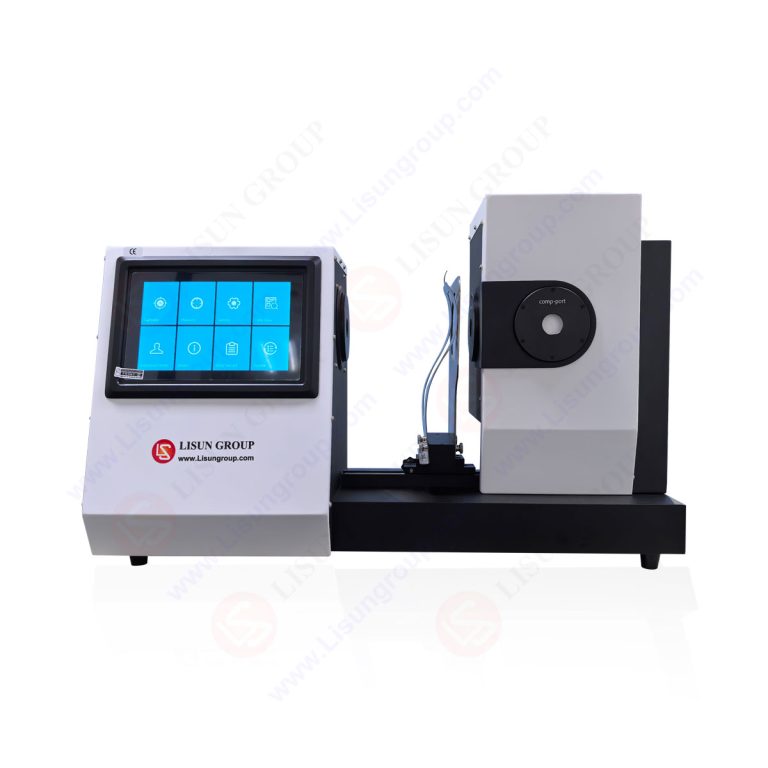
4.2 Technical Comparison with Industry Benchmarks
The following table contrasts the HM-700’s capabilities against typical requirements and alternative solution approaches.
| Performance Parameter | LISUN HM-700 Specification | Typical Industry Requirement | Key Advantage |
|---|---|---|---|
| Haze Repeatability | ≤ 0.05% | ≤ 0.1% | Superior detection of subtle clarity changes |
| Transmittance Accuracy | ± 0.5% | ± 1.0% | Enhanced confidence in material grading |
| Supported Light Sources | Halogen & Pulsed Xenon | Single Source (Halogen or LED) | Optimized source for each measurement type |
| Compliance Standards | ASTM D1003, ISO 13468, JIS K7105, CIE No.15 | ASTM D1003 or equivalent | Global market acceptance |
| Data Storage Capacity | 1000 sets of spectral data + results | Typically 100-200 sets | Supports high-throughput lab environments |
| Measurement Geometry | Precise 0/d Integrating Sphere | Simplified d/0 or 0/d approximations | True standard-compliant haze measurement |
5.1 Automotive Electronics and Interior Components
In automotive manufacturing, the HM-700 is indispensable for testing transparent and translucent polymers used in instrument panel covers, touchscreen overlays, and interior lighting lenses. It ensures that haze levels are minimized for optimal display readability and that color consistency is maintained across all plastic trim components. Furthermore, measuring the Yellowness Index is critical for predicting and preventing the UV-induced degradation of polymers exposed to sunlight, a key factor in vehicle longevity and warranty compliance.
5.2 Plastics, Films, and Packaging Materials
For producers of optical films (e.g., brightness enhancement, diffusion), PET sheets, and food packaging, the HM-700 provides critical QC data. It quantifies the diffuse transmittance that governs a film’s light-spreading efficiency and measures the clarity of packaging materials that affect product visibility. The instrument’s rapid measurement cycle supports 100% inspection lines for high-volume film production, ensuring every roll meets specified optical properties for downstream customers in display and printing industries.
5.3 Glass Production and Display Manufacturing
In flat glass and display cover glass production, the instrument assesses the effectiveness of anti-glare and anti-reflective coatings by measuring haze and spectral transmittance. For display modules, it characterizes the transmittance of polarizers, color filters, and touch sensor layers. The HM-700’s ability to measure both clear and highly diffuse materials makes it equally suitable for evaluating the uniformity of frosted glass and the light output efficiency of LED light guide panels.
6.1 Streamlined Measurement Procedure
The HM-700 features an intuitive touchscreen interface that guides the operator through a simplified workflow: calibration with provided standard plaques, sample placement, and test initiation. The system can be configured for single-parameter tests (e.g., haze only) or full material characterization with a single click. Automatic specimen detection and motorized sample positioning (on certain models) further reduce operator influence and enhance repeatability, making it suitable for both skilled technicians and production line personnel.
6.2 Comprehensive Software and Connectivity
The included PC software transforms the HM-700 into a powerful data management station. It allows for detailed analysis of spectral curves, batch comparison with pass/fail limits, and generation of customizable test reports. Direct connectivity via USB or Ethernet enables seamless integration into Laboratory Information Management Systems (LIMS) and smart factory networks. This facilitates real-time SPC (Statistical Process Control) charting, traceability, and centralized quality data archiving for audit trails.
7.1 Ensuring Long-Term Measurement Traceability
Maintaining the HM-700’s accuracy requires adherence to a regular calibration schedule using a set of master calibration standards, typically including a zero haze (air), a high haze, and a transmittance standard. The instrument’s software manages calibration due dates and prompts the user. Best practices involve maintaining a stable laboratory environment (controlled temperature and humidity), handling samples with clean gloves to avoid fingerprints, and regularly cleaning the integrating sphere port and calibration standards with recommended materials.
7.2 Troubleshooting Common Measurement Artifacts
Understanding potential error sources is key. Inconsistent haze readings can often be traced to sample issues: surface scratches, dust, or improper positioning that creates an air gap. Non-uniform materials may yield different results based on measurement location, necessitating multiple tests. The HM-700’s software includes diagnostic functions to check light source stability and sphere condition, aiding technicians in distinguishing between instrument drift and genuine material variation.
The LISUN HM-700 Haze Meter and Spectrophotometer stands as a pinnacle of integrated optical testing technology, addressing the complex needs of modern material science and quality assurance. By mastering the fundamental 0/d geometry and integrating dual-light-source spectral analysis, it delivers uncompromising accuracy in haze, transmittance, and color measurement, fully compliant with ASTM, ISO, JIS, and CIE standards. Its value is realized across a spectrum of industries—from ensuring the clarity of automotive displays to guaranteeing the consistency of optical films and packaging materials. For quality control managers and R&D engineers, the HM-700 is more than an instrument; it is a critical partner in driving product excellence, reducing waste, and securing compliance in a globally competitive marketplace. Its robust data management and streamlined operation further cement its role as an essential tool for precision testing laboratories and high-volume production environments alike.
Q1: How does the HM-700 ensure accurate haze measurement on highly transparent or very low-haze samples?
A: The HM-700’s precision for low-haze samples is achieved through its high-stability optical system and advanced signal processing. The dual-beam design with a dedicated halogen source provides a consistent, low-noise signal. The instrument’s high-resolution detector and sophisticated algorithms can resolve minute differences between the total and diffuse transmittance signals, which is the basis of the haze calculation. Furthermore, its stringent repeatability specification (≤0.05%) means it can reliably detect sub-percentage changes in haze, which is critical for quality control of optical-grade polymers and glass where acceptable haze levels are often below 1%.
Q2: Can the HM-700 measure the optical properties of non-planar or curved samples, such as lenses or molded plastic parts?
A: The standard HM-700 integrating sphere and sample holder are designed for flat, sheet-like specimens. Accurate measurement per ASTM D1003 requires the sample to be flush against the sphere’s entrance port to prevent light loss and geometric errors. For curved samples like simple lenses, specialized fixture accessories may be required to present a flat, representative surface to the instrument, though this may introduce small measurement uncertainties. For complex 3D parts, alternative goniophotometric methods are more appropriate. It is recommended to consult with LISUN application engineers for testing non-standard sample geometries.
Q3: What is the practical importance of measuring both haze and yellowness index (YI) on the same instrument for plastic manufacturers?
A: Measuring haze and YI concurrently on the HM-700 provides a comprehensive picture of both the physical and chemical optical quality of a polymer. Haze indicates scattering from crystallinity, filler particles, or surface imperfections. Yellowness Index quantifies the color shift towards yellow, often caused by polymer degradation (thermal or UV), oxidation, or interactions with additives. For a quality manager, a simultaneous increase in both haze and YI in a production batch is a strong indicator of a compounding or processing issue, enabling rapid root-cause analysis. This integrated data is vital for industries like automotive and packaging, where both clarity and color stability are critical product attributes.