









Abstract
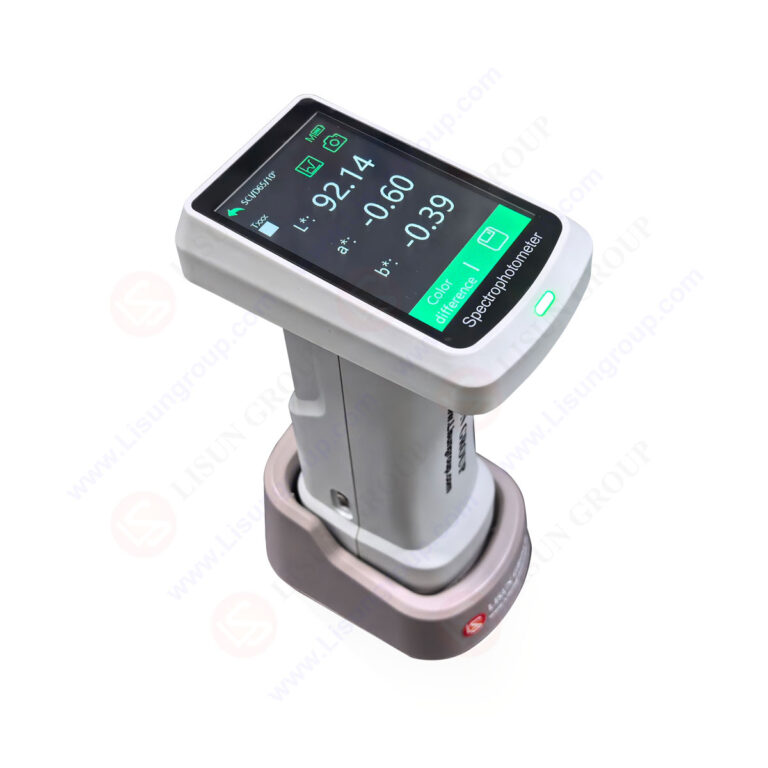
In modern manufacturing, precise color measurement is a critical component of quality control and product development. The LISUN HSCD-860 Portable Spectrophotometer provides a high-accuracy, versatile solution for professionals who require reliable color data across diverse environments. This instrument is engineered to deliver laboratory-grade performance in a portable format, enabling rigorous quality assurance on the production floor, in the R&D lab, or at supplier facilities. Its core value lies in exceptional measurement repeatability, compliance with international standards, and a robust design that streamlines color management workflows. For QC managers and engineers, the HSCD-860 translates complex spectral data into actionable insights for maintaining color consistency and accelerating time-to-market.
1.1 The Critical Role of Color Measurement
Color is a fundamental quality attribute that directly influences consumer perception, brand identity, and product compliance. In industries from automotive coatings to food packaging, consistent color is non-negotiable. Modern spectrophotometry moves beyond subjective visual assessment to provide objective, numerical color data. This data is essential for quantifying color differences (dE*ab), detecting metamerism, and ensuring that materials match specified standards regardless of production batch or geographic location. Implementing a robust color measurement protocol is therefore a cornerstone of effective quality management systems and a key driver for reducing waste and customer returns.
1.2 Advantages of Portable Instrumentation
While benchtop spectrophotometers remain vital for laboratory analysis, portable devices like the LISUN HSCD series bring the lab to the sample. This mobility is indispensable for measuring large, fixed, or irregularly shaped objects that cannot be brought to an instrument, such as vehicle body panels, architectural finishes, or assembled appliances. Portable units facilitate real-time, at-line quality checks, allowing for immediate corrective action during production. They are equally crucial for third-party testing professionals and auditors who require a self-contained, certified tool for supplier evaluations and incoming material inspections across multiple sites.
2.1 Grating Spectroscopy and Dual-Beam Architecture
The measurement engine of the LISUN HSCD series is built upon high-precision grating spectroscopy. This technology disperses light into its constituent wavelengths with exceptional resolution, enabling the instrument to capture a complete spectral reflectance curve from 400nm to 700nm (visible spectrum) or 360nm to 780nm (extended range in specific models). The dual-beam optical design is a critical performance feature. It utilizes two light paths: one for the sample and one for an internal reference. This configuration actively compensates for fluctuations in the light source intensity and detector sensitivity in real-time, ensuring stable and repeatable measurements that are resilient to environmental changes and prolonged use.
2.2 Nano-Integrated Optical Devices and Zirconium Calibration
Advanced nano-integrated optical devices miniaturize the spectroscopic system without compromising optical performance, contributing to the instrument’s portable and rugged form factor. For long-term accuracy, the HSCD series employs a zirconium calibration whiteboard. Zirconium oxide provides a near-perfect, durable diffuse reflectance standard with excellent stability against yellowing, scratching, and chemical degradation. This superior calibration surface, compared to traditional materials, ensures the instrument’s baseline remains reliable over thousands of calibration cycles, upholding data integrity and reducing the frequency of master instrument recalibration.
3.1 Key Performance Parameters
The performance of a portable spectrophotometer is defined by several key parameters. Measurement repeatability, expressed as the mean deviation (ΔE*ab) on a white calibration tile, is paramount; the HSCD-860 achieves an exceptional value of ≤0.04, indicating superb instrument stability. Inter-instrument agreement (IIA) ensures different units of the same model produce consistent readings, which is critical for multi-location operations. The availability of multiple measurement apertures (e.g., MAV/SAV/LAV) allows users to select the optimal spot size for their sample, from small color chips to textured surfaces. These specifications collectively determine the instrument’s suitability for specific quality tolerances.
3.2 HSCD Series Comparative Analysis
The LISUN HSCD series offers a range of models to meet varying precision and application requirements. The following table provides a technical comparison of three core models:
| Feature / Model | HSCD-780 | HSCD-800 | HSCD-860 |
|---|---|---|---|
| *Measurement Repeatability (ΔEab)** | ≤ 0.08 | ≤ 0.06 | ≤ 0.04 |
| Standard Aperture | Φ8mm | Φ8mm | Φ8mm |
| Optional Apertures | Φ4mm | Φ4mm / Φ14mm | Φ4mm / Φ14mm |
| Light Source | LED | LED | Pulsed Xenon |
| Illumination Condition | D65 | D65 | D65 / D50 / C / A / F2 / F7 / F11 / F12 |
| Communication | USB / Bluetooth | USB / Bluetooth | USB / Bluetooth |
| Display | Color Touchscreen | Color Touchscreen | Color Touchscreen |
This comparison highlights the HSCD-860 as the flagship model, featuring the highest repeatability, a pulsed xenon light source that closely simulates daylight, and the widest selection of illumination conditions for complex color analysis.
4.1 Foundational Colorimetric Standards
The design and calibration of the LISUN HSCD spectrophotometers are rigorously aligned with international standards, ensuring global acceptance of measurement data. Compliance with CIE No.15 (Colorimetry) and ISO 7724-1 (Paints and varnishes – Colorimetry – Part 1: Principles) guarantees that the instruments calculate colorimetric values (L, a, b, C, h°) according to the universally recognized CIELAB system. Furthermore, adherence to ASTM E1164 (Standard Practice for Obtaining Spectrophotometric Data for Object-Color Evaluation) dictates the proper geometric and procedural methodology for capturing spectral data, forming a reliable foundation for all derived color indices.
4.2 Industry-Specific Standard Applications
Beyond foundational principles, the instruments support compliance with standards dictating specific product requirements. For safety signage and equipment, measurements can be evaluated against GB 2893 (Safety colors) and GB/T 18833 (Retroreflective sheeting for traffic control). In plastics and paints, indices like Yellowness Index (YI) and Whiteness Index (WI) are calculated per ASTM E313 and ASTM D1925, which are essential for monitoring polymer degradation and additive efficacy. This broad standards coverage makes the HSCD series a versatile tool for certifying products for regional and international markets.
5.1 Manufacturing Process Control
In plastics, coatings, and textile manufacturing, color consistency across batches is a primary QC challenge. The portable HSCD spectrophotometer enables at-line checks of raw pellets, liquid dyes, and finished products. For example, an R&D engineer can use the instrument to develop a master standard for a new automotive interior plastic. QC technicians on the injection molding floor can then routinely measure production parts, using pass/fail tolerances based on dE*ab to instantly identify and segregate batches drifting outside specification, preventing non-conforming material from proceeding down the assembly line.
5.2 Supply Chain and Laboratory Analysis
Third-party testing labs and large OEMs use portable spectrophotometers for supplier quality audits and incoming inspection. A lab technician can verify that a shipment of printing ink from a vendor matches the approved standard under multiple illuminants (D65, A) to check for metamerism, a critical issue for packaging viewed in both retail lighting and daylight. In the appliance industry, technicians can measure finished metal panels or plastic housings directly on the assembly line or in the warehouse, ensuring all components for a single product unit are a perfect visual match before shipment.
6.1 Measurement Modes and Color Indices
The HSCD series supports both Specular Component Included (SCI) and Specular Component Excluded (SCE) measurement modes. SCI (or “total reflectance”) includes the gloss component and is used for color formulation and absolute color analysis. SCE excludes gloss, mimicking how the human eye perceives color on glossy surfaces, and is ideal for quality control of finished goods. The instruments automatically calculate a comprehensive suite of indices including dEab (total color difference), dLdadb (component differences), metamerism index, and color strength, providing a complete diagnostic picture of color conformity.
6.2 Software Connectivity and Color Management
Data from the HSCD instruments is managed via dedicated PC software, which facilitates the creation of color libraries, standard databases, and detailed tolerance settings. Measurement data can be exported in common formats for integration into Enterprise Resource Planning (ERP) or Quality Management System (QMS) software, creating a digital thread for color quality. This connectivity allows for trend analysis, statistical process control (SPC) charting, and the generation of certified test reports, streamlining documentation and audit readiness for quality control managers.
7.1 Calibration and Routine Verification
Maintaining accuracy requires a disciplined calibration routine. The HSCD series features automatic calibration prompts. Users perform a zero calibration (black calibration) using the integrated light trap and a white calibration using the durable zirconium whiteboard. For highest confidence, regular verification with certified traceable calibration tiles is recommended. This process checks the instrument’s performance against a known physical standard, ensuring its readings remain within factory specifications. Proper calibration is the single most important practice for guaranteeing data reliability across the instrument’s lifecycle.
7.2 Best Practices for Sample Presentation
Instrument precision can only be realized with proper sample handling. For solid materials, a flat, uniform, and clean surface is essential. The instrument must be held perpendicular to the sample with consistent, firm pressure. For textured or fibrous materials like textiles, taking multiple measurements and averaging is necessary. Measuring liquids requires a consistent cell path length and avoidance of bubbles. Understanding the impact of sample opacity, translucency, and surface characteristics allows the operator to select the correct aperture and measurement mode, thereby optimizing the validity of the collected data.
The LISUN HSCD-860 portable spectrophotometer represents a convergence of high-precision optical engineering and practical industrial design. Its core value proposition lies in delivering laboratory-grade measurement repeatability and comprehensive standards compliance in a device that empowers professionals to make critical color decisions anywhere. From the R&D lab formulating a new coating to the QC manager auditing a supplier’s factory, the instrument provides the objective, numerical data required to enforce strict color tolerances, reduce material waste, and protect brand equity. By integrating advanced technologies like dual-beam optics and a zirconium calibration board, the HSCD-860 ensures long-term data integrity and reliability. For industries where color is a definitive quality attribute, investing in a robust, accurate, and portable color measurement system is not merely an operational improvement but a strategic necessity for maintaining competitiveness and customer satisfaction in a global market.
Q1: What is the practical difference between SCI and SCE measurement modes, and which should I use for QC?
A: SCI (Specular Component Included) measures total reflectance, including the specular (glossy) reflection. It is best for color formulation and analyzing the true color of a material, independent of surface texture. SCE (Specular Component Excluded) excludes the gloss component, measuring only the diffuse color. This often correlates better with visual assessment, especially for glossy surfaces, as it mimics how the eye discounts highlights. For most quality control applications, particularly for finished goods where overall appearance is key, SCE is the recommended mode. The LISUN HSCD series allows for easy switching between modes to suit the specific analysis need.
Q2: How does the pulsed xenon light source in the HSCD-860 benefit color measurement compared to an LED source?
A: A pulsed xenon light source provides a full, continuous spectrum that closely replicates natural daylight (D65 illuminant), which is the standard condition for color evaluation. It offers high intensity and excellent spectral consistency across pulses. While modern LEDs are improving, a well-calibrated xenon source typically provides superior color rendering index (CRI) and more accurate simulation of other standard illuminants (e.g., A, F series). This is crucial for detecting metamerism—where two colors match under one light source but not another. The xenon lamp in the HSCD-860 ensures the most reliable assessment of color under multiple lighting conditions, a key requirement for industries like automotive and textiles.
Q3: Can the HSCD spectrophotometer be used to measure the color of transparent liquids or granular powders?
A: Yes, but it requires appropriate accessories and technique. For transparent liquids, a transmission measurement accessory with a fixed path length cell is needed. The instrument measures the light passing through the liquid sample. For granular powders, they must be presented in a consistent manner, typically packed into a powder cell with a transparent glass window to create a uniform, opaque surface. It is critical to use the same cell type, packing pressure, and sample volume for all measurements to ensure comparability. The instrument’s high repeatability makes it suitable for these applications, provided the sample presentation is rigorously controlled.
Q4: What does inter-instrument agreement (IIA) mean, and why is it important for a global supply chain?
A: Inter-instrument agreement (IIA) quantifies how closely two or more instruments of the same model measure the same sample. It is typically expressed as a maximum ΔE*ab value. Excellent IIA is vital for a global supply chain because it ensures that a color standard measured on a spectrophotometer at a brand’s headquarters will yield the same numerical values when measured on an instrument at a supplier’s factory overseas. This eliminates instrument-to-instrument bias as a variable, so any measured color difference (dE) can be confidently attributed to the actual sample, not the tool. The HSCD series is engineered for tight IIA, facilitating unambiguous communication and quality enforcement across distributed manufacturing networks.