









Abstract
When an environmental test chamber not reaching temperature disrupts a critical LED lumen maintenance test, the consequences cascade from invalid data to delayed product certification. This comprehensive troubleshooting guide for engineers dissects the root causes—from refrigeration system failures and heater malfunctions to improper calibration and software integration errors—within the context of standards-driven reliability testing. Integrating insights from LISUN‘s LED Optical Aging Test Instrument platforms, such as the LEDLM-80PL for IES LM-80/TM-21 and the LEDLM-84PL for IES LM-84/TM-28, this article provides a systematic, technical approach to diagnosing and resolving temperature non-conformance, ensuring the integrity of long-term 6000-hour tests and accurate L70/L50 lifetime projections.
1.1 Temperature as the Primary Accelerating Stress Factor
In LED reliability testing, temperature is not merely an environmental condition; it is the primary accelerating stress factor governed by the Arrhenius Model. This empirical relationship describes how the rate of chemical degradation processes, such as phosphor thermal quenching and lumen depreciation, exponentially increases with temperature. Precise and stable temperature control within an environmental chamber is therefore non-negotiable for generating valid accelerated life test data. A chamber failing to reach its setpoint invalidates the fundamental acceleration equation, rendering subsequent data analysis, including TM-21 or TM-28 extrapolations, scientifically baseless and non-compliant with IES standards.
1.2 Direct Impact on Compliance with IES LM-80 and LM-84 Standards
The IES LM-80 standard for LED packages and arrays and the IES LM-84 standard for LED light sources mandate testing at multiple, precisely controlled temperature points (e.g., 55°C, 85°C, and a third case temperature). The inability of a chamber to achieve and maintain these specified temperatures constitutes a direct violation of the test method’s core requirements. For instance, testing intended for LM-80 compliance at a nominal 85°C that only reaches 75°C due to a chamber fault will produce a significantly slower observed depreciation rate, leading to an overly optimistic and non-compliant lifetime projection when processed through TM-21 software algorithms.
2.1 Initial Verification and Safety Protocols
Before delving into complex diagnostics, perform foundational checks. First, verify the setpoint on the chamber controller and the connected master software (e.g., LISUN’s Arrhenius Model-based software) match. Confirm the chamber is in the correct operating mode (e.g., constant temperature, not cycle or ramp). Ensure all chamber doors and ports are securely sealed, as even a minor breach can cause significant heat loss. Visually inspect for any obvious obstructions to airflow within the workspace. Always adhere to lock-out/tag-out (LOTO) procedures before inspecting electrical components to ensure engineer safety.
2.2 Diagnosing Refrigeration System Failures
The refrigeration compressor is critical for removing heat, especially when testing below ambient temperature or stabilizing high temperatures by countering internal heat loads from LED drivers. Listen for unusual noises or failure to start. Check condenser coils for excessive dust accumulation, which insulates and prevents heat dissipation, causing high-pressure faults and system shutdown. Verify refrigerant levels; low pressure indicates a potential leak. For cascade systems used in ultra-low temperature chambers, a failure in the primary or secondary circuit will prevent the chamber from reaching any setpoint.
2.3 Investigating Heater and Air Circulation Issues
If the chamber struggles to reach a high temperature setpoint, the heating system is the primary suspect. Use a multimeter to check for continuity in tubular heating elements; an open circuit indicates a failed heater. Inspect solid-state relays (SSRs) or contactors controlling the heaters; a faulty relay will not supply power. Additionally, a failed circulation fan will create severe temperature stratification—hot air stagnates at the heaters while the sample zone remains cool. Verify fan operation and ensure airflow pathways are not blocked by test fixtures or product samples.
3.1 The Pitfalls of Sensor Drift and Miscalibration
A chamber may appear to not reach temperature due to inaccurate sensor feedback. Platinum Resistance Temperature Detectors (RTDs) are standard but can drift over time or become contaminated. A miscalibrated sensor reporting a temperature 10°C higher than the actual chamber temperature will cause the controller to cut power prematurely. Regular metrological calibration against a NIST-traceable reference is essential. Cross-verify using a independent, calibrated thermal probe placed adjacent to the test samples, not just the chamber’s built-in sensor.
3.2 Tuning the PID Control Algorithm
Proportional-Integral-Derivative (PID) controller tuning is vital for stability. Poorly tuned parameters can cause significant overshoot or, more relevantly, a failure to reach setpoint (droop). If the proportional band is too wide or integral action too slow, the system will respond sluggishly and may stabilize several degrees below the target. Modern chambers allow PID tuning. After verifying mechanical health, a carefully executed autotune function or manual adjustment of the PID values can resolve a “soft” failure to reach setpoint.
4.1 Communication Errors with Master Monitoring Software
In integrated test systems like the LISUN LEDLM-80PL, where one software suite may control both the optical measurements and the environmental chamber, communication faults are a common culprit. A dropped RS-485, Ethernet, or GPIB connection can cause the master software to issue an incorrect command or fail to update the setpoint. Verify physical connections, communication port settings, and protocol configuration (e.g., Modbus address). Monitor the software’s alarm log for communication timeout errors.
4.2 Load and Configuration Mismatches
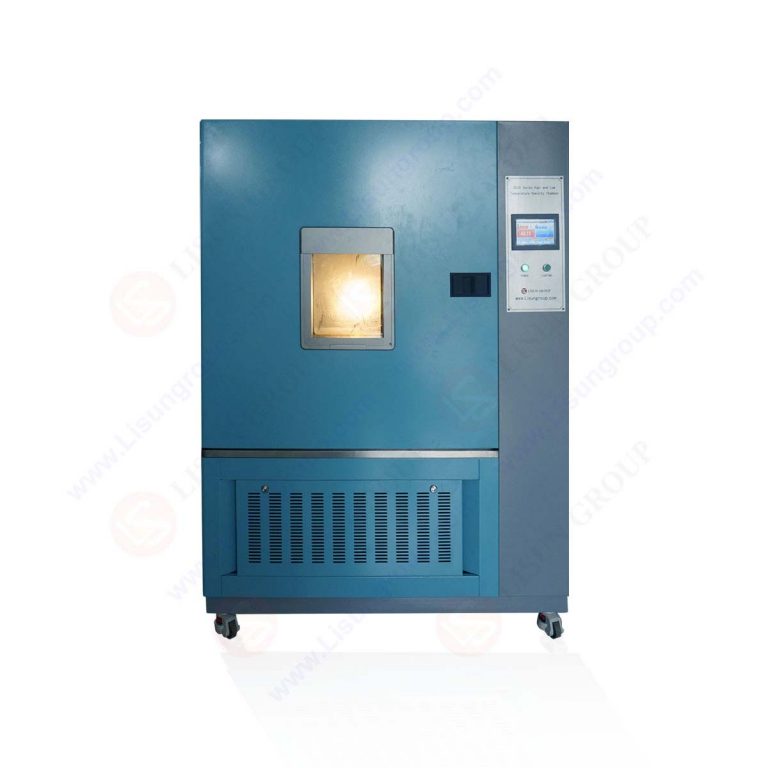
The thermal mass and power dissipation of the device under test (DUT) must be considered. A chamber calibrated for an empty workspace may struggle with a high-density array of LED drivers dissipating significant wattage. Conversely, a massive metallic test fixture can act as a heat sink, delaying temperature stabilization. Review the chamber’s rated heat load capacity versus the actual test configuration. LISUN systems support up to 3 connected temperature chambers, allowing for distributed loading, but each chamber’s individual capacity must not be exceeded.
Understanding the hardware configuration is key to targeted troubleshooting. The choice between systems like the LEDLM-80PL and LEDLM-84PL dictates the connected chamber’s role and potential failure impact.
Table 1: LISUN LED Aging Test System Configurations and Temperature-Related Fault Implications
| System Model | Primary Compliance Standard | Typical Chamber Role | Key Technical Spec | Potential Fault Impact from Chamber Non-Conformance |
| :— | :— | :— | :— | :— |
| LEDLM-80PL | IES LM-80 (LED packages) / TM-21 | Controls ambient temperature (Ta) of the package. | Supports up to 3 connected chambers for high-throughput testing. | Invalidates the controlled temperature stress factor, voiding TM-21 extrapolation for L70/L50. |
| LEDLM-84PL | IES LM-84 (Luminaires) / TM-28 | Controls the ambient temperature around the full luminaire. | Manages dual testing modes: Constant Current & Constant Power. | Alters thermal geometry of luminaire, affecting junction temperature (Tj) and real-world depreciation data. |
| Both Systems | IES LM-79-19 (Electrical & Photometric) | Pre-conditioning and temperature stabilization during photometry. | Integrated with 1.5m/2m integrating sphere (per CIE 70, CIE 127). | Causes spectral shift and inaccurate initial photometric data (per CIE 084), corrupting the baseline for aging analysis. |
5.1 Analysis of Fault Impacts by Test Mode
The system’s operational mode exacerbates specific faults. In Constant Current mode, a chamber failing to reach temperature may cause a slight increase in LED forward voltage, but power dissipation remains relatively stable. In Constant Power mode, which is critical for real-world simulation per LM-84, the same chamber fault forces the system to increase current to maintain power, inadvertently raising the LED junction temperature (Tj) beyond the test intent and creating a confounding variable that masks true product reliability.
6.1 Scheduled Preventive Maintenance Checklist
Prevent failure through disciplined maintenance. Quarterly tasks should include cleaning condenser coils, checking refrigerant pressures, and verifying door seal integrity. Semi-annually, perform electrical checks on heaters, contactors, and fans. Annually, conduct a full performance qualification (PQ) using a mapped array of sensors to verify uniformity and stability, and send the chamber’s RTD sensor for external calibration. This regimen is far less costly than a ruined 6000-hour LM-80 test.
6.2 Real-Time Monitoring and Data Logging for Early Detection
Leverage the data-logging capabilities of advanced systems. LISUN’s software provides continuous trend logs of chamber temperature versus setpoint. Engineers should monitor not just for setpoint deviation, but for increasing instability or a gradual “drift” in the control effort required to maintain temperature—often early indicators of a failing component, such as a heater beginning to lose resistance or a compressor losing efficiency.
7.1 Contingency Planning for Critical Long-Duration Tests
For mission-critical tests, such as a 6000-hour run for regulatory submission, have a contingency plan. This includes understanding the lead time for critical spare parts (e.g., heater assemblies, compressor modules) and having a service contract in place. If internal troubleshooting following this guide resolves nothing, promptly contact the chamber manufacturer’s technical support with detailed logs, error codes, and a description of steps already taken.
7.2 Validating Data After a Temperature Excursion
If a temperature excursion occurs and is subsequently corrected, the validity of the test data is compromised. The decision to continue or restart the test is complex. Short, minor excursions may be documented as a test anomaly. Significant deviations, especially during the critical early period of lumen depreciation, often necessitate a complete test restart to ensure data integrity for standards compliance and accurate lifetime prediction.
Resolving an environmental test chamber not reaching temperature requires a methodical approach that blends mechanical, electrical, and control systems expertise with a deep understanding of LED reliability science. As detailed in this guide, engineers must move from basic checks of seals and setpoints to advanced diagnostics of PID loops and software integration, always contextualizing the fault within the framework of stringent standards like IES LM-80, LM-84, and their associated TM projection methods. The integrated design of systems such as LISUN’s LEDLM-80PL and LEDLM-84PL underscores the necessity of viewing the chamber not as an isolated appliance but as a critical, sensor-rich component of the overall data acquisition system. By adopting the proactive maintenance and systematic troubleshooting protocols outlined here, testing professionals can safeguard the integrity of long-term aging data, ensure compliance, and generate the reliable L70/L50 metrics essential for product validation and market success.
Q1: How does a chamber’s failure to reach temperature specifically affect TM-21 lifetime extrapolation from an LM-80 test?
A: TM-21 extrapolation relies on the measured lumen depreciation rate at a specific, reported temperature. If a chamber stabilizes at 75°C instead of the intended 85°C, the observed depreciation rate will be slower. The TM-21 algorithm uses this slower rate and the assumed 85°C temperature to project lifetime, resulting in a significantly overstated and non-compliant L70/L50 prediction. This error invalidates the test for regulatory or quality assurance purposes, as the acceleration factor derived from the Arrhenius model is incorrectly applied.
Q2: In a multi-chamber setup like the LISUN LEDLM-80PL supporting three chambers, what should I check if only one chamber fails to reach its setpoint?
A: This isolation of the fault strongly points to issues local to that specific chamber, not the central control software. First, verify the communication link and assigned address for that individual chamber within the master software. Then, perform all hardware diagnostics—heater continuity, fan operation, refrigerant pressure, and condenser cleanliness—on that unit alone. Compare its sensor readings with a calibrated external probe. The problem is almost certainly within that chamber’s mechanical systems, control board, or dedicated power supply.
Q3: Can the data from a test be salvaged if a temperature excursion is discovered and corrected mid-way through a 6000-hour LM-80 test?
A: Salvaging data is highly situational and risks compliance. The IES LM-80 standard requires reporting of any deviations. A very short, minor excursion (e.g., ±2°C for less than an hour) may be documented as an anomaly. However, a significant or prolonged deviation compromises the controlled stress condition. The most conservative and defensible approach, especially for certification, is to restart the test. Continuing risks producing a non-linear depreciation curve that TM-21 cannot accurately model, yielding unreliable results.
Q4: How do Constant Current vs. Constant Power test modes (as in the LEDLM-84PL) change the troubleshooting priority for a chamber fault?
A: The priority shifts significantly. In Constant Current mode, the chamber fault primarily affects the ambient stress factor directly. In Constant Power mode, the fault triggers a secondary effect: the system increases current to maintain constant electrical power input, which raises the LED junction temperature (Tj) unpredictably. Therefore, troubleshooting must not only fix the chamber but also include verifying that the Tj (often estimated via measurement or thermal model) has not been artificially inflated during the fault period, which would require a test restart.
Q5: Why is regular calibration of the chamber’s temperature sensor against a NIST-traceable standard so critical, even if the chamber seems to be operating normally?
A: Sensor drift is often gradual and insidious. A sensor that has drifted +3°C over a year will cause all tests to run 3°C hotter than the setpoint, unknowingly accelerating degradation and producing pessimistic lifetime projections. Conversely, a negative drift causes optimistic, non-compliant data. Regular annual calibration ensures metrological traceability, a core requirement of ISO/IEC 17025 accredited testing laboratories. It is a fundamental quality control step to ensure the validity of all data generated by the chamber.