









Abstract
In the rigorous world of LED reliability testing, precise environmental control is non-negotiable. A common yet critical challenge that can compromise data integrity is an environmental test chamber not reaching humidity setpoints. This failure directly impacts accelerated aging tests for lumen maintenance, such as those defined by IES LM-80 and LM-84 standards, by altering the degradation kinetics of LED packages, modules, and luminaires. This article provides a comprehensive technical analysis of the root causes—from sensor calibration drift and steam generator issues to chamber load and software integration faults—and presents systematic solutions. Leveraging insights from LISUN‘s LED Optical Aging Test Instrument platforms (LEDLM-80PL and LEDLM-84PL), we detail how integrated system design and proactive maintenance ensure chamber performance aligns with the stringent requirements of standards like TM-21 and TM-28, safeguarding the validity of long-term L70/L50 predictions and product lifetime validations.
1.1 Humidity as a Key Stress Factor in Accelerated Aging
In accelerated life testing for LEDs, environmental chambers apply controlled stressors to induce and measure degradation within a practical timeframe. While temperature, driven by the Arrhenius Model, is the primary accelerator, humidity is a critical co-factor. It accelerates corrosion of metallic components, delamination of encapsulants, and the growth of conductive anodic filaments (CAF) within packages and PCBs. For tests compliant with IES LM-84-21 (luminaire testing) and IES LM-80-20 (package/module testing), maintaining specified humidity levels (often 85% RH or similar) is essential to accurately simulate real-world operating environments and ensure the failure modes observed are representative. An environmental test chamber not reaching humidity invalidates this simulation, leading to non-conservative lifetime estimates.
1.2 Impact on Lumen Maintenance and TM-21/TM-28 Extrapolation
The ultimate goal of LM-80/LM-84 testing is to collect lumen depreciation data for extrapolation via TM-21-11 or TM-28-21 to predict L70/L50 lifetimes. Humidity-induced failures often manifest as catastrophic or rapid depreciation, skewing the dataset. If a chamber fails to reach the target humidity, the test under-stresses the components, potentially masking these failure mechanisms. The resulting extrapolated lifetime, calculated using Arrhenius-based software like that in LISUN’s systems, would be inaccurately optimistic. This poses significant compliance and product liability risks, as products may fail prematurely in the field despite passing a compromised laboratory test.
2.1 Sensor and Calibration Failures
The most frequent culprit for humidity discrepancies is sensor inaccuracy. Hygrometers can drift over time, especially when exposed to cyclic high-humidity conditions. A chamber may appear to be struggling to reach a setpoint when, in reality, the sensor is reading erroneously high. Regular calibration against a NIST-traceable reference is mandatory. Furthermore, sensor placement is critical; a sensor located too close to the steam inlet or in a stagnant zone will not reflect the true chamber condition, leading to improper feedback control.
2.2 Steam Generation and Delivery System Issues
The humidification system itself is a common failure point. Key components to inspect include:
- Water Supply: Low water level, clogged inlet valves, or poor water quality (high mineral content) can limit or halt steam production.
- Boiler/Heater: Scale buildup on heating elements insulates them, reducing efficiency. A failed heating element will stop steam generation entirely.
- Steam Delivery: Blocked or kinked steam lines, malfunctioning solenoid valves, or a failed steam injector fan prevent generated moisture from effectively dispersing into the chamber workspace.
2.3 Chamber Integrity and Test Load Considerations
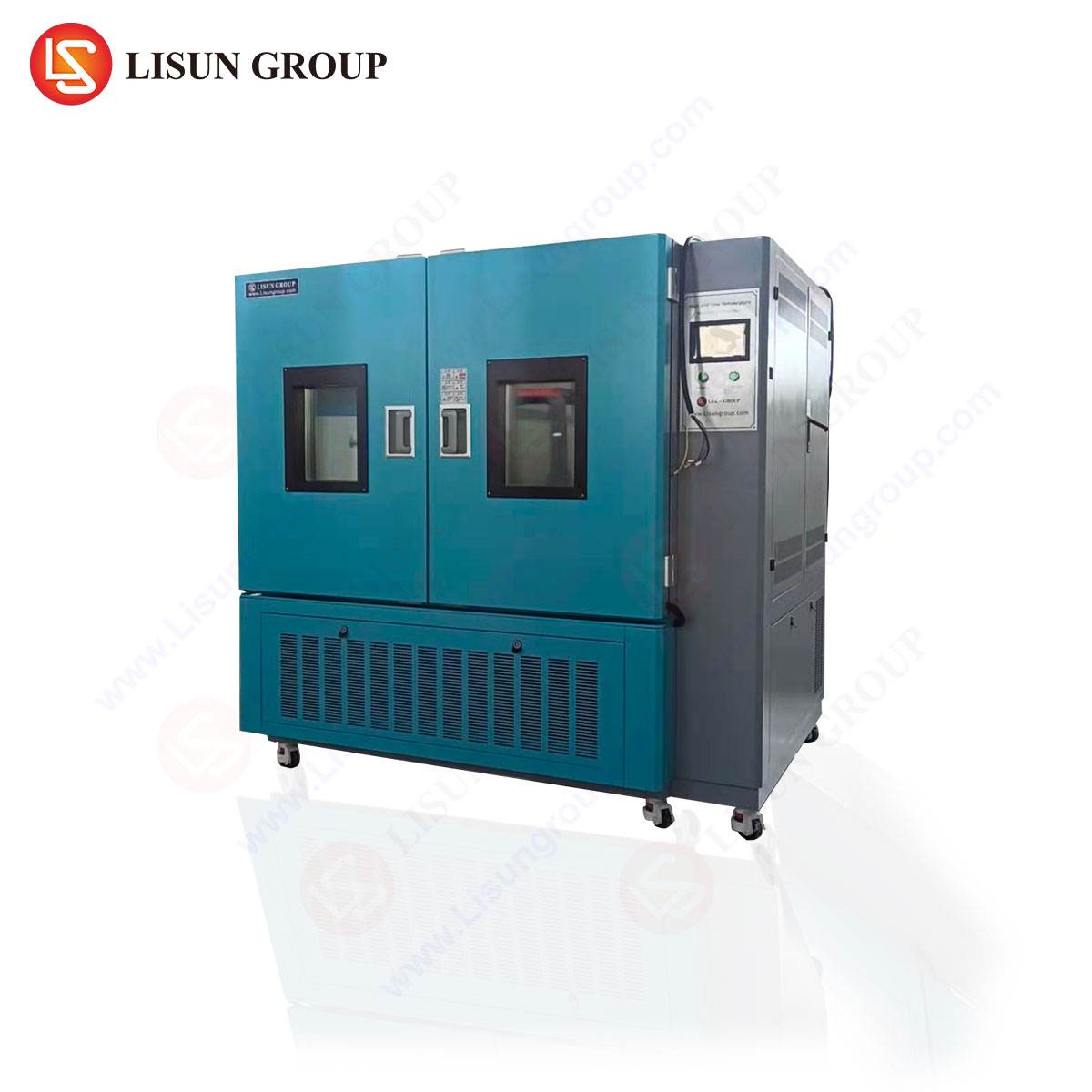
Chamber design and the test specimen load can significantly affect humidity uniformity and recovery. A degraded door seal allows moisture to escape, forcing the system to work continuously. Similarly, an excessive test load—such as a large array of LED luminaires undergoing IES LM-84 testing—can act as a heat and moisture sink. The thermal mass of the DUTs (Devices Under Test) can locally suppress RH, and porous materials may absorb moisture, delaying the chamber’s ability to reach equilibrium. Understanding the chamber’s capacity relative to the load is essential.
3.1 The LISUN LEDLM Platform Architecture
LISUN’s LED Optical Aging Test Instruments, the LEDLM-80PL (for LM-80/TM-21) and LEDLM-84PL (for LM-84/TM-28), are designed as integrated systems. They do not merely connect to a chamber but manage it as a core component of the test ecosystem. The software continuously monitors chamber parameters (temp, humidity) against the test profile. A persistent deviation, such as an environmental test chamber not reaching humidity, is flagged not just as a chamber fault but as a threat to the integrity of the entire 6000-hour test data set. This proactive monitoring is crucial for long-duration, unattended testing.
3.2 Multi-Chamber Synchronization and Data Correlation
For high-throughput labs, LISUN systems support controlling up to 3 connected temperature/humidity chambers simultaneously. This capability allows for parallel testing at different stress levels (e.g., 55°C/85%RH, 85°C/85%RH) as per LM-80 requirements. However, it multiplies the risk of a humidity fault. The centralized software must correlate optical measurement data from the integrating sphere (aligned with CIE 127:2007 and IES LM-79-19 for accurate photometry) with the environmental data from each chamber. A humidity failure in one chamber necessitates immediate isolation of its data stream to prevent corruption of the overall Arrhenius model analysis.
4.1 Corrective Actions for Common Humidity Faults
A structured troubleshooting approach is required:
- Verify with Independent Sensor: Use a calibrated handheld hygrometer to confirm the chamber’s internal reading.
- Inspect Humidification System: Check water levels, inspect heaters for scale, and ensure steam is visibly entering the chamber.
- Perform a Chamber Empty Test: Run a humidity profile without any test load to isolate whether the issue is system-related or load-related.
- Check for Latent Load: If the chamber was recently at a low temperature, residual condensation or frost on evaporator coils can absorb moisture, delaying RH rise.
4.2 Preventative Maintenance Schedule
Prevention is more cost-effective than correcting a ruined test. A rigorous PM schedule should include:
- Monthly: Visual inspection of seals, water lines, and drains.
- Quarterly: Cleaning of humidifier tank and heating elements to descale.
- Bi-Annually: Full functional performance verification using calibrated instruments.
- Annually: Professional calibration of all chamber sensors (temperature and humidity).
5.1 Protocol for Handling a Humidity Deviation During a Test
When a humidity fault is detected mid-test, a predefined protocol must be followed to assess data impact. The LISUN software’s data logging is key here. Engineers must:
- Mark the exact time of the deviation.
- Determine if the DUTs were exposed to uncontrolled conditions (e.g., low humidity while temperature remained high, creating a different stress vector).
- Consult the relevant standard (IES LM-80 or LM-84) for guidance on test interruptions. Significant deviations may require test suspension and specimen reconditioning before restart, or at minimum, clear annotation in the final test report.
5.2 Alignment with Industry Standard Tolerances
Industry standards define acceptable tolerances for environmental controls. For example, stable test conditions are required for valid data collection. Understanding that a chamber struggling at its limits may exhibit wider spatial variation or slower recovery times is crucial. The integrated monitoring in systems like the LEDLM-80PL ensures that not just the setpoint, but the stability required by TM-21 for data analysis, is continuously validated.
A key advantage of a purpose-built system like LISUN’s lies in its integration. The table below contrasts the approach to a critical parameter fault in different setups.
Table 1: System Response to Humidity Fault: Integrated Platform vs. Standalone Components
| Aspect | Integrated System (e.g., LISUN LEDLM-80PL/84PL) | Standalone Chamber + Separate Data Logger |
| :— | :— | :— |
| Fault Detection | Automated, real-time software alarms with deviation logging. | Reliant on manual chamber checks or post-hoc data review. |
| Data Correlation | Optical (lumen) data and environmental data are intrinsically synchronized and time-stamped. | Requires manual alignment of separate data files, prone to error. |
| Corrective Action | Software can trigger automatic safety protocols (e.g., hold temperature). | Entirely manual intervention. |
| Impact Assessment | Enables precise isolation of corrupted data segments within the long-term (e.g., 6000-hour) dataset. | Difficult to determine the exact onset and effect, potentially invalidating large data blocks. |
| Standard Compliance | Built-in workflows for LM-80, LM-84, TM-21, TM-28 simplify audit trails. | Compliance relies on rigorous, user-generated procedures and documentation. |
7.1 Utilizing System Software for Predictive Insights
Modern test platforms move beyond simple alarm logging. By analyzing trends in how long a chamber takes to reach setpoints or the duty cycle of the humidifier, the software can provide predictive maintenance alerts. For instance, a gradual increase in humidifier “on-time” to achieve the same RH% can indicate scaling or a failing element, allowing repair before a catastrophic failure during a critical test.
7.2 Configuring Hardware for Demanding Applications
The customizable hardware configurations of platforms like the LEDLM series allow labs to match the chamber capacity to their typical DUT load. For testing high-wattage LED luminaires per LM-84, specifying a chamber with sufficient humidity generation capacity and air circulation to handle the thermal and moisture mass is a proactive solution to prevent “environmental test chamber not reaching humidity” scenarios from the outset. This foresight during system procurement is a strategic investment in data quality.
The challenge of an environmental test chamber not reaching humidity is a significant technical risk in LED reliability validation, with direct consequences for the accuracy of lumen maintenance projections and standard compliance. As detailed, root causes range from sensor drift and mechanical failures to inappropriate chamber loading. Mitigating this risk requires a dual approach: diligent, science-based maintenance of the chamber hardware and the implementation of an integrated test platform that provides holistic monitoring and control. LISUN’s LEDLM-80PL and LEDLM-84PL systems exemplify this integrated philosophy, where environmental control is not an isolated function but a core, managed component of the test sequence. By ensuring seamless synchronization between the stringent environmental stress profiles mandated by IES LM-80 and LM-84 and the high-precision optical measurements aligned with CIE 127 and LM-79, these platforms protect the integrity of the entire data chain. This end-to-end control is what ultimately delivers the reliable, defensible L70/L50 lifetime data that lighting manufacturers, testing labs, and certification bodies depend on to drive quality and innovation in the global LED industry.
Q1: How does a humidity control failure specifically affect the Arrhenius Model calculations used in LED lifetime prediction?
A: The Arrhenius Model used in TM-21 and TM-28 extrapolation calculates an activation energy (Ea) based on degradation rates at different temperatures. Humidity is a key stressor that influences the chemical and physical degradation mechanisms (e.g., corrosion) contributing to lumen depreciation. If humidity is not at the specified level, the observed degradation rate at a given temperature does not reflect the intended combined stress. This leads to an inaccurate calculation of the effective Ea. Consequently, the extrapolated lifetime prediction (L70/L50) will be flawed, as the model is based on an incomplete or incorrect acceleration factor. The integrated software in LISUN’s systems helps flag such inconsistencies before flawed data is fed into the model.
Q2: We perform LM-80 testing on LED packages. Can a small, low-mass DUT really cause a chamber to struggle with humidity control?
A: While a single, small LED package has negligible mass, LM-80 testing often involves multiple samples or arrays to achieve statistical significance. The combined thermal load can be substantial. More critically, the test boards or fixtures holding the packages can act as a significant thermal and moisture mass. If these fixtures are not properly preconditioned (stabilized at test humidity), they will absorb moisture during the test’s initial ramp-up, causing a local humidity drop and slowing the chamber’s recovery. This is why verifying chamber performance with a representative load during qualification is essential, a practice supported by configurable LISUN test platforms.
Q3: What is the first step I should take if my chamber’s humidity reading is stable but consistently 5-10% RH below the setpoint during an ongoing LM-84 test?
A: The immediate first step is to verify the actual chamber condition independently. Use a recently calibrated, NIST-traceable handheld hygrometer placed near the DUTs (but not in direct steam flow) to take a manual reading. This will determine if the fault lies with the chamber’s control sensor or the humidification system itself. If the manual reading confirms the low humidity, consult your test standard (LM-84) and quality procedures for guidance on test interruptions. You may need to pause the test, address the chamber fault (e.g., check water supply, heater function), and then potentially re-condition the luminaires before resuming, carefully documenting all actions for your audit trail.
Q4: How does supporting up to 3 connected chambers, as with the LISUN systems, help manage the risk of humidity faults in high-volume testing?
A: Managing multiple chambers from a unified software platform centralizes monitoring and control, reducing the risk of an undetected fault in any single chamber. More importantly, it enables intelligent test management. If a humidity fault is detected in one chamber, the system can alert the operator while maintaining control of the others. This allows for the possibility of redistributing test samples if needed. Furthermore, having multiple chambers allows for running identical tests in parallel; if one chamber fails, the data from its twin chamber may still provide valuable insights, offering a layer of redundancy for critical validation projects.