









Abstract
For engineers and technicians in LED manufacturing and testing, achieving precise and compliant environmental test chamber temperature fluctuation standards is a cornerstone of reliable lumen maintenance and lifetime projection data. This comprehensive guide delves into the critical standards, including IES LM-80, LM-84, TM-21, and TM-28, that define permissible temperature tolerances and testing methodologies for LED components and systems. We will explore the technical implications of temperature control on accelerated aging tests, the importance of the Arrhenius model for lifetime extrapolation, and how advanced systems like the LISUN LEDLM series ensure compliance. The article provides actionable insights into configuring test chambers, interpreting standards, and leveraging integrated hardware-software solutions to generate defensible, standards-aligned data for product validation and certification.
1.1 Understanding Lumen Depreciation and the Arrhenius Model
LED reliability is fundamentally quantified by its lumen maintenance—the rate at which light output depreciates over time. This degradation is a thermally activated process, where elevated temperatures accelerate the failure mechanisms within the semiconductor and phosphor materials. The Arrhenius Model provides the mathematical foundation for this relationship, describing how the rate of a chemical reaction (like lumen depreciation) exponentially increases with temperature. In practice, this model allows engineers to conduct accelerated life testing at elevated temperatures (e.g., 55°C, 85°C, 105°C as per LM-80) and then extrapolate the results to predict long-term performance at normal operating conditions. Precise temperature control is therefore not merely a procedural requirement; it is the critical variable that determines the accuracy and validity of the entire lifetime projection.
1.2 Consequences of Temperature Fluctuation on Test Data Integrity
Deviations from the target test temperature, known as temperature fluctuation or uniformity error, introduce significant uncertainty into reliability data. A fluctuation of just a few degrees Celsius can alter the effective acceleration factor predicted by the Arrhenius equation, leading to either overly optimistic or unduly pessimistic lifetime projections (L70, L50). For instance, an uncontrolled temperature spike during a 6000-hour LM-80 test can invalidate the dataset for that specific temperature bin, wasting months of testing resources. Furthermore, inconsistent temperature profiles across different sample positions within a chamber can cause unacceptable variation between supposedly identical test units, compromising the statistical significance of the results. Compliance with strict environmental test chamber temperature fluctuation standards is essential to ensure data is reproducible, comparable between labs, and defensible for regulatory submissions.
2.1 IES LM-80 & TM-21: The Foundation for LED Components
The IES LM-80 standard, “Approved Method: Measuring Lumen Maintenance of LED Light Sources,” is the bedrock for LED component testing. It mandates testing at a minimum of three case temperatures (e.g., 55°C, 85°C, and a third temperature chosen by the manufacturer) for a duration of at least 6000 hours. Crucially, LM-80 specifies that the ambient temperature around the LED must be controlled within a tight tolerance, typically ±2°C or better, to ensure the reported case temperature is accurate and stable. The companion standard, IES TM-21, “Projecting Long Term Lumen Maintenance of LED Light Sources,” provides the mathematical procedures for extrapolating LM-80 data. TM-21’s projections are only as reliable as the underlying LM-80 data, making adherence to its temperature fluctuation standards during the initial test phase non-negotiable for generating valid Lp (lumen maintenance percentage) estimates.
2.2 IES LM-84 & TM-28: Extending to LED Luminaires and Systems
While LM-80 focuses on components, IES LM-84, “Measuring Lumen Maintenance of LED Luminaires,” addresses complete lighting systems. Testing full luminaires introduces greater thermal mass and more complex heat dissipation paths, making precise chamber temperature control even more challenging yet equally vital. LM-84 outlines procedures for monitoring the LED driver case temperature and the ambient temperature around the luminaire. The subsequent IES TM-28 standard, “Projecting Long-Term Lumen Maintenance of LED Luminaires,” uses LM-84 data for system-level lifetime projections. Compliance with both sets of standards requires an environmental test chamber capable of maintaining stable air temperature around a large, heat-emitting device, ensuring the recorded data accurately reflects real-world system performance.
2.3 Complementary Photometric Standards: IES LM-79 and CIE 127
Accurate lumen maintenance testing is predicated on precise initial and periodic photometric measurements. IES LM-79-19, “Electrical and Photometric Measurements of Solid-State Lighting Products,” governs the absolute photometric testing performed before and during aging tests. It requires the use of an integrating sphere or goniophotometer under controlled thermal conditions (typically 25°C ± 1°C) to establish the baseline lumen output. Similarly, CIE 127:2007, “Measurement of LEDs,” provides standardized procedures for measuring the luminous flux of LED packages. Consistent adherence to these measurement standards, facilitated by chambers that can bring devices to a stable thermal state before measurement, is essential for calculating accurate lumen depreciation percentages throughout the long-term environmental test chamber aging process.
3.1 Chamber Design and Airflow Uniformity
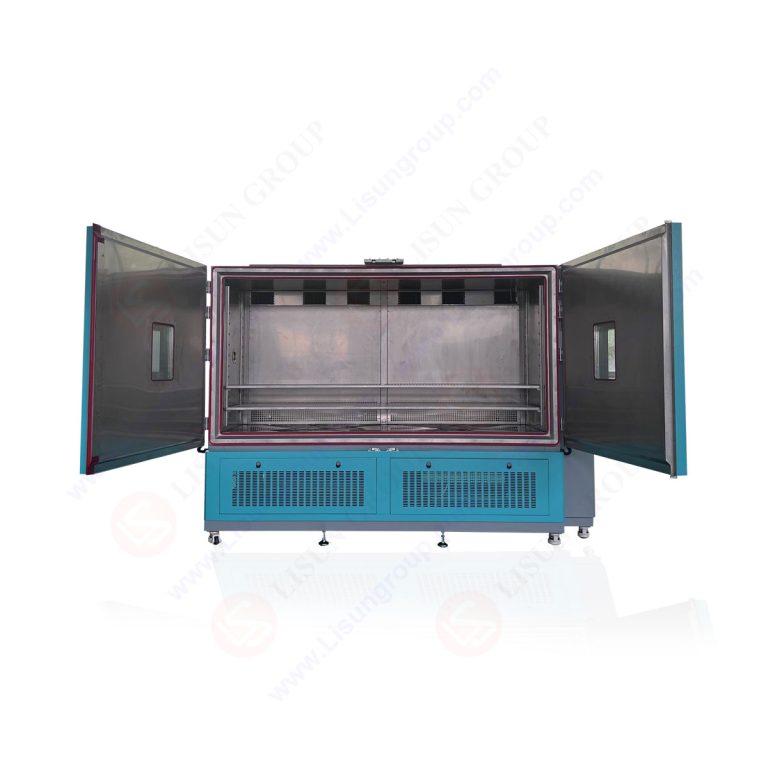
A compliant test chamber must achieve not only a setpoint temperature but also exceptional spatial uniformity. This is accomplished through advanced engineering of airflow patterns, using strategically placed baffles and high-performance fans to create a consistent thermal environment throughout the entire workspace. The chamber must be designed to handle the thermal load of operating LED samples, which act as heat sources themselves. For systems like the LISUN LEDLM-84PL designed for luminaires, the chamber volume and airflow capacity are scaled to accommodate larger, higher-wattage products without creating hot spots or excessive temperature gradients that violate LM-84 temperature fluctuation standards.
3.2 Multi-Chamber Synchronization for High-Throughput Testing
To efficiently test at multiple temperatures as required by LM-80 or to handle high sample volumes, the ability to synchronize multiple chambers is a key capability. Advanced systems support the connection and centralized control of up to three independent temperature chambers from a single software interface and photometric measurement core. This architecture allows for parallel testing—for example, running identical samples at 55°C, 85°C, and 105°C simultaneously—dramatically reducing total test time. Synchronization ensures that measurement cycles, data logging, and safety protocols are coordinated across all chambers, maintaining consistency and compliance across all data sets generated.
4.1 Automated Test Sequencing and Data Logging
Compliance is enforced through intelligent software that automates the entire test regimen. The software, such as that used in the LISUN LEDLM series, pre-programs the sequence of aging periods and measurement intervals. It automatically commands the chamber to stabilize at the target temperature, powers the LED samples, and then triggers the integrated spectroradiometer or photometer within the sphere to take measurements at defined points (e.g., every 1000 hours). All data—including temperature logs from multiple sensors, electrical parameters, and photometric readings—are time-stamped and stored in a unified database. This automation eliminates manual errors and creates a complete, auditable trail that demonstrates adherence to the prescribed environmental test chamber temperature fluctuation standards.
4.2 Direct TM-21/TM-28 Analysis and Reporting
The most advanced systems integrate projection software directly aligned with TM-21 and TM-28 methodologies. Once sufficient data is collected (e.g., at least 6000 hours), the software can automatically perform the Arrhenius-based analysis, calculate the decay rate constants, and generate L70/L50 lifetime projections in accordance with the standard’s rules (e.g., the projection limit is no more than 5x the test duration). This seamless integration from raw data collection to final projected lifetime report within a single platform ensures methodological purity, reduces post-processing time, and provides immediate, standards-compliant insights into product longevity.
5.1 Standard Mode vs. Fast Mode: Strategic Trade-offs
Test systems often offer multiple operational modes to balance speed with data resolution. Standard Mode follows the classic approach: samples are aged continuously in the chamber, with periodic cooling and transfer to a stable-temperature integrating sphere for measurement. This method is considered the reference, as it closely mimics real-world operation. Fast Mode utilizes a built-in mini-sphere at ambient temperature for more frequent, in-situ measurements without interrupting the aging cycle. While Fast Mode provides higher data point density for observing trends, the final compliance data for standards like LM-80 typically requires verification measurements in the main, stabilized sphere. Understanding this distinction is key for planning a test strategy that meets both technical insight and formal compliance needs.
5.2 Interpreting L70, L50, and Other Critical Lifetime Metrics
The ultimate output of a compliant test is a set of lifetime metrics. L70 represents the number of hours at which the LED’s lumen output depreciates to 70% of its initial value, a common benchmark for general lighting. L50 indicates the time to 50% lumen maintenance, often used for more tolerant applications. These metrics are always reported at a specific reference temperature (e.g., L70 @ 55°C Ta). The precision of these numbers is directly tied to the temperature stability maintained during the test. A robust system will provide clear reports detailing these metrics alongside the confidence intervals derived from the statistical analysis mandated by TM-21/TM-28, giving engineers a reliable basis for product claims and design decisions.
6.1 System Variants: LEDLM-80PL for Components and LEDLM-84PL for Luminaires
LISUN addresses the full spectrum of testing needs with two dedicated system variants. The LEDLM-80PL is engineered for compliance with IES LM-80 and TM-21, optimized for testing LED packages, modules, and arrays. It features precise temperature control for the smaller thermal masses of components. The LEDLM-84PL is designed for IES LM-84 and TM-28 compliance, built with a larger chamber and enhanced airflow management to handle the size and thermal output of complete LED luminaires and lamps. Both systems are built around the core mandate of upholding stringent environmental test chamber temperature fluctuation standards to generate unimpeachable data.
6.2 Customizable Hardware and Integrated Measurement Core
Recognizing that no two testing scenarios are identical, these systems offer significant customization. Options include different chamber sizes, higher temperature ranges, and various spectroradiometer grades (tied to CIE 70 and CIE 084 for colorimetric accuracy). The integrated measurement core, comprising a constant current source and a high-precision spectroradiometer or photometer, is calibrated to IES LM-79-19 and CIE 127, ensuring that every photometric measurement supporting the lumen maintenance calculation is itself standards-compliant. This end-to-end integration from power supply to temperature control to optical measurement is what defines a turnkey compliance solution.
Table: Comparison of LISUN LEDLM System Configurations for Key Standards
| Feature / Standard | LEDLM-80PL (LM-80 / TM-21 Focus) | LEDLM-84PL (LM-84 / TM-28 Focus) |
| :— | :— | :— |
| Primary Compliance | IES LM-80, IES TM-21 | IES LM-84, IES TM-28 |
| Test Sample Type | LED Packages, Modules, Arrays | Complete LED Luminaires, Lamps |
| Typical Chamber Volume | Optimized for component trays | Larger volume for full fixtures |
| Key Photometric Reference | IES LM-79-19, CIE 127 | IES LM-79-19, CIE 127 |
| Minimum Test Duration | 6000 hours (per LM-80) | 6000 hours (per LM-84) |
| Projection Software | Integrated TM-21 Algorithm | Integrated TM-28 Algorithm |
| Multi-Chamber Support | Yes, up to 3 synchronized chambers | Yes, up to 3 synchronized chambers |
7.1 Pre-Test Calibration and Chamber Validation
Before initiating any long-term test, a rigorous calibration and validation protocol is essential. This includes verifying the chamber’s temperature uniformity by mapping multiple points within the workspace with calibrated sensors to confirm it meets the required tolerance (e.g., ±2°C). The integrated spectroradiometer must be calibrated using NIST-traceable standards. The constant current source should be verified for accuracy. Documenting this pre-test validation provides the foundational evidence that the system was capable of compliant operation before the first sample was energized.
7.2 Ongoing Monitoring and Data Integrity Checks
Compliance is a continuous requirement throughout the 6000-hour test duration. The software should provide real-time dashboards and alarms for key parameters: chamber temperature deviation, sample forward voltage, and optical power drift. Scheduled manual audits, comparing logged chamber temperature against a independent reference thermometer, serve as an additional quality check. Any anomaly must be investigated, documented, and its impact on the data set assessed. This proactive monitoring ensures that any potential deviation from environmental test chamber temperature fluctuation standards is caught and addressed promptly, protecting the integrity of the entire long-term investment.
Adherence to precise environmental test chamber temperature fluctuation standards is the non-negotiable foundation for generating reliable, defensible LED lifetime data. As detailed through standards like IES LM-80, LM-84, TM-21, and TM-28, temperature control directly dictates the accuracy of the Arrhenius-based acceleration models that predict L70 and L50 lifetimes. Achieving this compliance requires more than a basic oven; it demands an integrated system that combines chamber hardware engineered for superior uniformity, intelligent software for automated sequencing and analysis, and a calibrated photometric core for accurate measurements. Solutions like the LISUN LEDLM series, with dedicated variants for components and luminaires, provide this turnkey capability. By implementing such a system within a rigorous workflow of validation and monitoring, LED manufacturers and testing laboratories can ensure their products meet market longevity claims, satisfy regulatory requirements, and ultimately, build trust in LED technology through data-driven reliability.
Q1: What is the typical allowable temperature fluctuation specified in IES LM-80 testing, and why is it so strict?
A: IES LM-80 typically requires the ambient temperature surrounding the LED test samples to be controlled within a tolerance of ±2.0°C or tighter. This strict limit is dictated by the exponential nature of the Arrhenius equation, which models the temperature dependence of lumen depreciation. A small fluctuation can cause a disproportionate change in the calculated acceleration factor. For example, a sustained +3°C error at an 85°C test point could significantly shorten the projected lifetime, leading to inaccurate and non-compliant TM-21 projections. The ±2°C benchmark ensures data is consistent, reproducible between laboratories, and suitable for the sensitive extrapolation calculations defined in TM-21.
Q2: How does testing a complete luminaire (per LM-84) differ from testing an LED component (per LM-80) in terms of chamber requirements?
A: Testing a luminaire per LM-84 presents greater thermal management challenges for the environmental test chamber. Unlike a component on a test board, a luminaire has a larger, irregular form factor and its own active thermal management (e.g., heat sinks). It acts as a significant point heat source, potentially creating localized hot spots and disrupting chamber uniformity. Therefore, an LM-84 compliant chamber, like the LISUN LEDLM-84PL, requires a larger workspace with more robust, high-volume airflow design to quickly dissipate this heat and maintain a stable ambient temperature around the entire unit. It also necessitates monitoring both the LED driver case temperature and the ambient temperature at defined points, adding complexity to the sensor and data logging setup.
Q3: Can I use data from a “Fast Mode” testing cycle for official LM-80 or LM-84 compliance reporting?
A: While “Fast Mode” is invaluable for rapid design validation and trend analysis, official compliance reports for LM-80 or LM-84 submissions should be based on measurements taken under standardized, stabilized conditions. Fast Mode typically uses an in-situ mini-sphere at ambient temperature for frequent checks. For final compliance, standards require photometric measurements in a properly conditioned and calibrated integrating sphere (as per LM-79-19) where the sample temperature has been stabilized. Best practice is to use Fast Mode for interim data and then perform periodic (e.g., every 1000 hours) measurements in the main “Standard Mode” configuration to generate the official dataset used for TM-21/TM-28 projections.
Q4: What are the key advantages of a system that supports multiple synchronized temperature chambers?
A: Synchronizing multiple chambers, often up to three, offers substantial efficiency and scientific rigor benefits. Primarily, it allows for parallel accelerated life testing at different temperature setpoints (e.g., 55°C, 85°C, 105°C) simultaneously using a single control station and photometric core. This drastically reduces the total calendar time required to collect the multi-temperature dataset mandated by LM-80. Secondly, it ensures perfect synchronization of measurement cycles and data logging protocols across all chambers, eliminating operational variables. This leads to more consistent, comparable data sets across temperature bins, which is critical for accurately fitting the Arrhenius model and generating reliable lifetime projections.