


Abstract
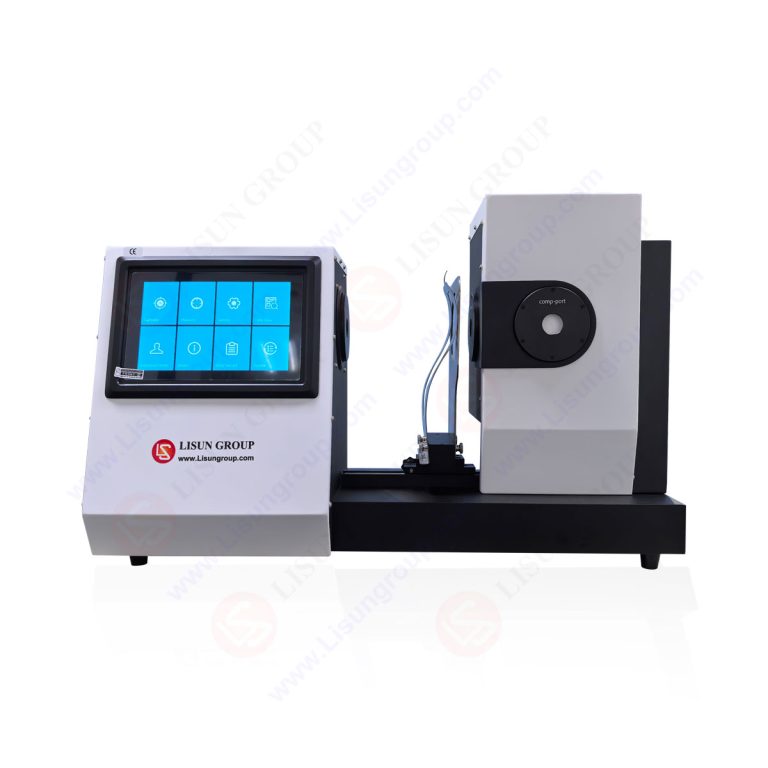
In the demanding fields of optical material characterization, precise measurement of haze and spectral transmittance is critical for quality control, product development, and regulatory compliance. The LISUN HM-700 Haze Meter and Spectrophotometer represents a sophisticated integration of dual-beam spectrophotometry and advanced optical geometry, delivering laboratory-grade accuracy for a wide spectrum of transparent and translucent materials. This article provides a comprehensive technical analysis of the HM-700, detailing its core measurement principles, compliance with international standards, and its pivotal role in industries such as automotive glazing, display manufacturing, and polymer film production. Readers will gain actionable insights into its operational advantages, application-specific configurations, and how its precision directly translates to enhanced product quality and streamlined compliance workflows.
1.1 Defining Optical Clarity: Haze vs. Transmittance
Haze and transmittance are distinct yet complementary metrics for optical materials. Total luminous transmittance (Tt) quantifies the percentage of incident light that passes directly through a specimen. In contrast, haze specifically measures the percentage of transmitted light that is scattered by more than 2.5 degrees from the incident beam, caused by surface imperfections or internal inhomogeneities. A material can have high transmittance (e.g., clear glass) with low haze (excellent clarity) or high transmittance with high haze (diffused, milky appearance). Precise, independent measurement of both parameters is essential for applications ranging from cockpit displays requiring minimal glare to decorative films relying on controlled diffusion.
1.2 The Critical Role of Precision in Industry Applications
In industrial quality control, subjective visual assessment is insufficient. Quantifiable, repeatable data is mandated. For automotive interiors, excessive haze on a touchscreen can impair visibility under sunlight. In packaging, specific transmittance can affect product shelf life by blocking UV radiation. Optical film manufacturers must tightly control haze to ensure consistent performance in LCD backlight units. Deviations beyond specified tolerances can lead to batch rejection, production delays, and non-compliance with stringent industry standards. Therefore, instrumentation like the HM-700, which provides traceable, high-precision data, becomes a cornerstone of robust quality assurance protocols and successful R&D iterations.
2.1 Advanced Optical Geometry: The 0/d Spherical Integrating Sphere
The HM-700 employs a CIE-compliant 0/d (zero-degree/diffuse) optical geometry. The sample is illuminated by a collimated light beam at near-zero-degree incidence. The transmitted light, comprising both the directly transmitted beam and the forward-scattered component, is collected by a large-diameter integrating sphere. This sphere, coated with a highly reflective and spectrally neutral material (e.g., BaSO₄ or PTFE), uniformly diffuses the collected light, which is then measured by a high-sensitivity silicon photodetector. This geometry is specified by standards like ASTM D1003 for measuring total transmittance and haze, ensuring measurements are independent of minor sample positioning errors and detector sensitivity profiles.
2.2 Dual-Beam Spectrophotometry and Spectral Analysis
A key to the HM-700’s stability and accuracy is its dual-beam optical system. The light source output is split into a sample beam and a reference beam. The reference beam monitors the source intensity in real-time, allowing the system to compensate for fluctuations in lamp output or electrical drift, a feature not present in less sophisticated single-beam systems. Coupled with a high-resolution grating monochromator or array spectrometer, this enables full spectral transmittance measurement across the visible spectrum (typically 380-780 nm). This spectral data is the foundation for calculating not only Tt and haze but also colorimetric values (CIE Lab*, YI, etc.) under various standard illuminants (D65, C, A).
2.3 Multi-Light Source Configuration and CIE Spectral Response
To achieve high accuracy for both haze and color measurements, the HM-700 integrates multiple light sources. A dedicated, stable CIE Standard Illuminant A (tungsten-halogen) source is used for haze and total transmittance measurements as per ASTM D1003. A separate pulsed xenon lamp or LED array serves as the source for spectral color analysis. Crucially, the system’s total spectral response—combining the source, monochromator, and detector—is meticulously calibrated to match the CIE standard photopic luminous efficiency function V(λ) and color-matching functions x̄(λ), ȳ(λ), z̄(λ). This ensures that all photometric and colorimetric readings are metrologically sound and internationally comparable.
3.1 Adherence to Key Material Testing Standards
The design and calibration of the HM-700 are explicitly engineered to meet or exceed the apparatus requirements of major international standards. Its primary function aligns with ASTM D1003 “Standard Test Method for Haze and Luminous Transmittance of Transparent Plastics,” which defines the 0/d method. It also complies with ISO 13468-1 (Plastics – Determination of the total luminous transmittance) and ISO 14782 (Plastics – Determination of haze). For industries following Japanese Industrial Standards, it meets JIS K 7105 and JIS K 7361-1. This multi-standard compliance makes it a versatile tool for global supply chains where materials may be certified to different regional specifications.
3.2 Colorimetric Standards and Instrument Performance Grades
Beyond haze, the HM-700 functions as a high-performance spectrophotometer. Its color measurement capability conforms to CIE No.15: Colorimetry, ensuring calculations for CIELAB, CIELCh, and yellowness/whiteness indices are performed correctly. The instrument’s performance in color mode can be validated against standards like ASTM E1164 (Obtaining Spectrophotometric Data) and ASTM E308 (Computing Colors). Regular calibration using traceable reference standards, such as NIST-certified white tiles and haze standards, is essential to maintain its performance grade, ensuring that reported uncertainties are within acceptable limits for critical color quality control applications in displays and automotive interiors.
4.1 Key Specifications and Measurement Performance
The HM-700 delivers high-precision measurements critical for laboratory and production environments. Its transmittance measurement range typically spans 0% to 100% with a resolution of 0.01%. Haze measurement for low-clarity materials (0-30%) boasts high resolution, often at 0.01%, while for higher haze values, it maintains excellent accuracy. The instrument’s repeatability—a vital metric for statistical process control—is exceptionally low, often with a standard deviation (σ) of less than 0.02% for transmittance and 0.05% for haze on stable reference standards. This level of repeatability ensures that measured variations are attributable to the sample, not the instrument.
4.2 Comparative Analysis with Industry Benchmarks
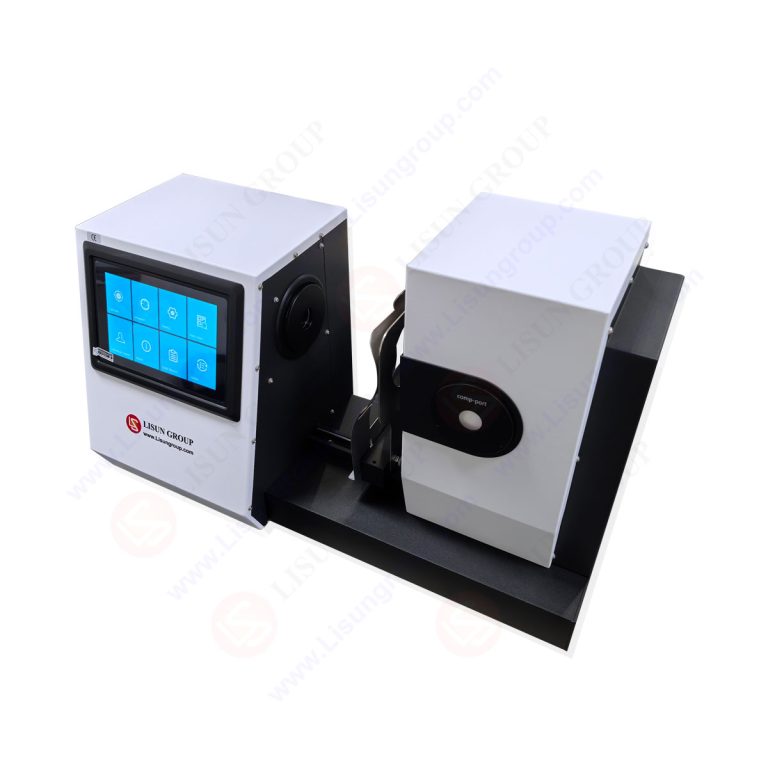
The following table compares the typical performance and features of the LISUN HM-700 against generic entry-level haze meters and high-end laboratory spectrophotometers, highlighting its balanced positioning.
| Feature / Metric | Entry-Level Haze Meter | LISUN HM-700 | High-End Lab Spectrophotometer |
|---|---|---|---|
| Measurement Principle | Single-beam, filtered photodetector | Dual-beam, scanning monochromator/array spectrometer | Dual-beam, high-res array spectrometer |
| Optical Geometry | Often simplified, may not be full 0/d | CIE-compliant 0/d integrating sphere | CIE-compliant 0/d or d/0 sphere |
| Haze Repeatability (σ) | ~0.1% or higher | < 0.05% | < 0.03% |
| Transmittance Accuracy | ±0.5% to ±1% | ±0.3% | ±0.1% |
| Color Measurement | Limited or none | Full CIELAB, YI, WI under multiple illuminants | Comprehensive color, including fluorescence |
| Standards Compliance | ASTM D1003 (basic) | ASTM D1003, ISO 13468/14782, JIS K7105, CIE No.15 | Full suite of ASTM, ISO, DIN, JIS |
| Primary Use Case | Basic pass/fail QC | High-accuracy QC, R&D, Compliance | Research, formulation, highest-tier QC |
5.1 Automotive Electronics and Glazing
In the automotive sector, the HM-700 is indispensable for testing polycarbonate or laminated glass used in heads-up displays (HUDs), instrument clusters, and touchscreen panels. Excessive haze can scatter light from ambient sources, critically reducing contrast and readability. The instrument verifies that haze levels are within OEM specifications (often below 1-2%). Furthermore, it measures the color and transmittance of tinted glass for windshields and windows, ensuring compliance with safety regulations for visible light transmission (VLT) and contributing to cabin comfort and UV protection.
5.2 Plastics, Films, and Packaging Materials
For manufacturers of optical films (diffuser, prism, reflective), PET sheets, and food packaging, the HM-700 provides essential quality data. It quantifies the precise haze level of diffusion films used in LCD monitors. It measures the transparency of clamshell packaging and the UV-blocking properties of protective films by analyzing spectral transmittance curves. For raw polymer pellets or extruded sheets, yellowness index (YI) measurement is crucial for assessing degradation or purity, directly impacting product grade and valuation.
5.3 Display Manufacturing and Glass Production
Display manufacturers use the HM-700 to test cover glass, optical adhesive (OCA), and polarizer films. Consistent transmittance across batches is vital for display brightness uniformity and power efficiency. In flat glass production, the instrument assesses the clarity of float glass, low-iron glass for solar panels, and anti-reflective coated glass. The ability to measure both clear and highly diffusive (e.g., frosted) glass makes it a versatile tool from raw material inspection to final product verification.
6.1 Sample Preparation and Measurement Protocol
Accurate results begin with proper sample preparation. Samples must be clean, free of fingerprints, and of appropriate size to completely cover the instrument’s sample port. For films, avoiding wrinkles or air gaps is critical. The standard protocol involves a three-step measurement cycle: a baseline calibration with no sample, a calibration with the light trap engaged for haze zero-setting, and finally, the sample measurement. The HM-700’s software typically guides users through this process, ensuring adherence to standard methods and minimizing operator error.
6.2 Software Features and Data Management
The accompanying PC software transforms the HM-700 into a powerful data management system. It controls the instrument, displays real-time spectral curves, and calculates all required parameters. Key features include tolerance setting for pass/fail judgments, batch reporting for statistical analysis (mean, standard deviation, Cp/Cpk), and data export to formats like CSV or PDF for integration into Laboratory Information Management Systems (LIMS). This digital workflow ensures traceability, simplifies audit preparation, and enables trend analysis for predictive maintenance of production lines.
7.1 Routine Calibration and Verification Procedures
To maintain specified accuracy, a structured calibration regimen is mandatory. Daily or weekly verification using a set of traceable reference standards—including a haze standard (e.g., ~5% haze), a white calibration tile, and a black light trap—is recommended. The instrument’s software stores calibration coefficients. Annual or biennial full calibration by accredited personnel, involving a complete check of spectral accuracy, photometric scale, and geometric conformity, ensures the instrument remains within its stated performance specifications and provides legally defensible data.
7.2 Troubleshooting Common Measurement Discrepancies
Understanding potential error sources improves confidence in results. High variance in repeat measurements can indicate a dirty sample, unstable sample positioning, or ambient light leakage. Readings drifting over time may signal lamp aging or temperature instability in the lab. If haze values seem anomalous, verifying the proper engagement and condition of the light trap used for the haze calibration step is essential. A systematic approach to troubleshooting, starting with sample preparation and environmental conditions, typically resolves most measurement issues.
The LISUN HM-700 Haze Meter and Spectrophotometer stands as a critical instrument at the intersection of material science and industrial quality control. Its engineering, rooted in CIE-compliant 0/d geometry and stabilized dual-beam spectrophotometry, provides the technical foundation for trustworthy measurements of haze, total transmittance, and color. By rigorously adhering to international standards such as ASTM D1003, ISO 13468, and CIE No.15, it delivers data that is both precise and globally recognized, facilitating compliance across diverse markets. For professionals in automotive, plastics, display, and glass industries, the HM-700 translates complex optical phenomena into actionable, quantitative data. This capability directly supports rigorous R&D, stringent incoming/outgoing QC, and the consistent manufacturing of high-performance materials. Ultimately, investing in such a capable measurement system is an investment in product integrity, reduced waste, and strengthened customer confidence.
Q1: What is the primary advantage of the HM-700’s dual-beam system over a single-beam design for haze measurement?
A: The primary advantage is superior long-term stability and accuracy. In a single-beam system, any fluctuation in the light source intensity directly translates into measurement error, as there is no real-time reference. The HM-700’s dual-beam design splits the source light, directing one beam through the sample and the other to a reference detector. This allows the system to continuously ratio the sample signal against the reference signal, automatically compensating for lamp output drift, voltage variations, or component warming. This results in more stable baselines, higher repeatability, and reliable data over extended periods, which is crucial for precise pass/fail judgments and trend analysis in quality control.
Q2: Can the HM-700 measure both very clear materials (like optical glass) and highly diffusive materials (like milky white films) accurately?
A: Yes, the HM-700 is designed to handle a wide dynamic range. For very clear materials with haze below 1%, its high-resolution detection system and stable baseline allow for precise differentiation. The use of a dedicated CIE Standard Illuminant A source for haze measurements ensures optimal signal-to-noise ratio for low-scatter samples. For highly diffusive, high-haze materials, the large integrating sphere and calibrated photometric scale ensure accurate collection of the widely scattered light without saturation. The key is to follow the correct calibration procedure, which includes a baseline with no sample and a haze calibration using the instrument’s light trap to define the 100% scattering reference point.
Q3: How does the HM-700 facilitate compliance with different regional standards (e.g., ASTM vs. ISO vs. JIS) in a global supply chain?
A: The HM-700’s hardware is built to the most stringent common requirements of these major standards—specifically, the 0/d integrating sphere geometry. Its software is the key differentiator. It contains built-in calculation modules programmed to follow the exact formulae and procedures specified in each standard. An operator can select the desired standard (e.g., ASTM D1003 or JIS K 7105) for a given test, and the software will automatically apply the correct data processing, including any specific calibration requirements or calculation nuances. This allows a single instrument in a central lab to generate certified test reports acceptable to customers or regulators in North America, Europe, and Asia, streamlining the compliance process for multinational operations.