









Abstract
For engineers conducting critical LED reliability testing, a non-cooling environmental test chamber is not merely an operational nuisance; it is a direct threat to data integrity, project timelines, and compliance with stringent industry standards. This comprehensive Environmental Test Chamber Not Cooling: Troubleshooting Guide for Engineers provides a systematic, technical approach to diagnosing and resolving cooling failures. By integrating insights from LISUN‘s LED Optical Aging Test Instrument platforms, such as the LEDLM-80PL and LEDLM-84PL, we connect hardware performance to the validation of standards like IES LM-80, LM-84, TM-21, and TM-28. The guide emphasizes how stable thermal conditions are foundational for accurate lumen maintenance analysis, Arrhenius Model-based lifetime extrapolation, and achieving reliable L70/L50 metrics over 6000-hour test durations.
1.1 Why Precise Temperature Control is Non-Negotiable in LM-80/LM-84 Testing
The IES LM-80 and LM-84 standards mandate testing LED packages, arrays, and modules at multiple, precisely controlled case or ambient temperatures—typically 55°C, 85°C, and a third temperature selected by the manufacturer. A chamber’s inability to reach or maintain these setpoints invalidates the test’s fundamental premise. The Arrhenius Model, central to lifetime extrapolation in TM-21 and TM-28, relies on accurate thermal acceleration data. A deviation of just a few degrees can exponentially skew the predicted L70 lifetime, rendering a 6000-hour test investment non-compliant and commercially useless. Stable cooling is therefore not an operational feature but a core data integrity requirement.
1.2 Direct Impact on LISUN System Performance and Test Modes
LISUN’s LED Optical Aging Test Instruments, such as the LEDLM-80PL for LM-80/TM-21 and the LEDLM-84PL for LM-84/TM-28, are designed to interface with one to three external environmental chambers. Their software automates data collection from the chamber and the integrating sphere photometer, correlating luminous flux degradation with thermal stress. A cooling failure disrupts this synchronized ecosystem. In Continuous Testing Mode, a temperature drift introduces uncontrolled variables. In Cyclic Testing Mode, which may involve thermal shock profiles, a cooling failure can halt the cycle, preventing the validation of performance under real-world operational stresses as envisioned by standards like IES LM-79-19 for electrical and photometric measurements.
2.1 Initial Diagnostics: Verifying User Inputs and Basic Operation
Before investigating complex mechanical faults, engineers must eliminate simple configuration errors. First, verify the chamber’s setpoint is correctly programmed below the ambient laboratory temperature. Confirm that the system is not in a “Soak” or “Hold” period within a complex test profile. Check for any active alarms (e.g., high temperature deviation) on the chamber controller. Validate that the chamber door is fully sealed and that air vents are not obstructed by test fixtures or product samples. For LISUN systems, ensure the communication link (e.g., RS-232, Ethernet) between the chamber controller and the LISUN software is active, allowing for correct temperature monitoring.
2.2 Mechanical and Electrical System Inspection Checklist
If basic checks pass, proceed to a structured hardware inspection. This process should follow a logical flow from power to the refrigerant circuit.
- Power & Compressor: Verify three-phase voltage (if applicable) is balanced and within specification. Listen for the compressor attempting to start; a hum followed by a click may indicate a failed start capacitor or a locked rotor.
- Condenser Unit: Inspect the condenser coil (typically located externally) for severe dust accumulation or debris, which acts as an insulator preventing heat rejection. Ensure the condenser fan motor is operating.
- Refrigerant Circuit: Check for signs of oil leakage at fittings, which often indicates a refrigerant leak. While gauges are needed for precise diagnosis, frost on the evaporator coil inside the chamber or on the suction line can indicate low refrigerant charge.
- Evaporator & Airflow: Inside the test space, ensure the evaporator coil is not frosted over completely (indicative of a defrost system failure or low charge). Confirm the internal circulation fan is running.
3.1 Analyzing Refrigeration System Pressure and Temperature Readings
A definitive diagnosis often requires connecting manifold gauges to the high- and low-pressure service ports. Low suction pressure coupled with low head pressure typically points to a refrigerant undercharge or a restriction before the compressor. High suction pressure with high head pressure often indicates an overcharge, non-condensable gases in the system, or condenser airflow problems (dirty coil, failed fan). Low suction pressure with high head pressure is a classic sign of a restriction in the liquid line, filter-drier, or expansion device. Correlating these pressures with ambient and setpoint temperatures is essential for professional troubleshooting.
3.2 Evaluating Control Systems and Safety Interlocks
Modern chambers utilize sophisticated PLC or microprocessor-based controllers. A cooling failure may stem from a control, not a mechanical, fault. Access the controller’s diagnostic menu to review error logs for historical faults like “High Pressure,” “Low Pressure,” or “Compressor Overload.” Verify the calibration of temperature sensors (RTDs or thermocouples) against a NIST-traceable reference; a drifted sensor can cause the controller to misread the chamber temperature and inhibit cooling. Check all safety interlocks, such as high-pressure switches, low-pressure switches, and compressor thermal overload protectors, which may have tripped and require a manual reset after the fault condition is resolved.
4.1 Implementing Contingency Plans for Active LED Aging Tests
When a cooling failure occurs during a critical long-term test—such as the 6000-hour duration required for LM-80—immediate action is required to preserve samples and data. If the chamber temperature begins to rise, the LISUN software’s alarm functions should trigger. The immediate contingency is to safely power down the LED drivers under test, if possible, to prevent overheating and catastrophic failure of the devices under test (DUTs). Document the exact time, chamber temperature, and test step at the moment of failure. This data is crucial for potentially segmenting the test data or providing a rationale for any data exclusion in the final report, maintaining transparency.
4.2 Data Validity Assessment and Corrective Action Reporting
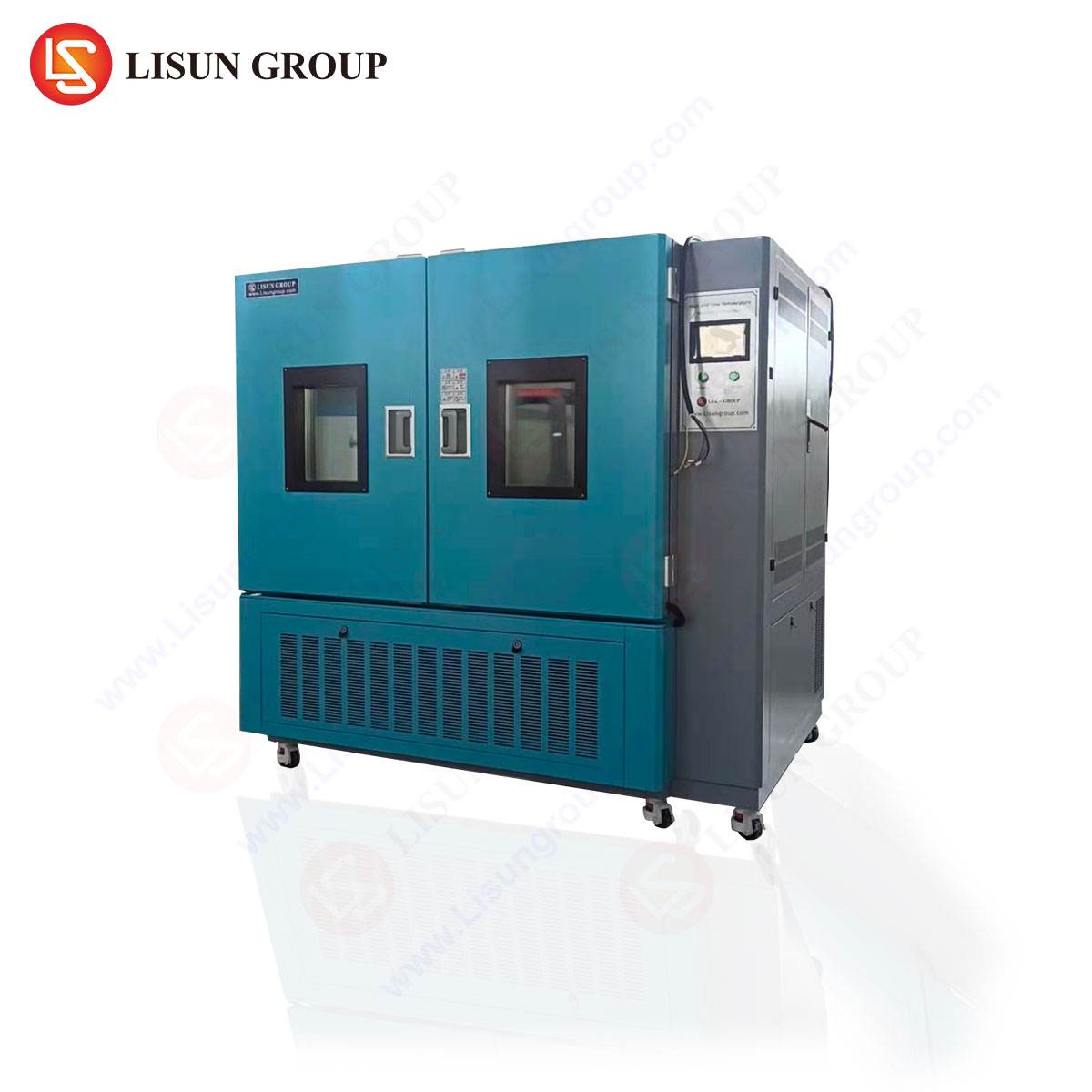
Once the chamber is repaired and stabilized, a formal assessment of the test’s validity must be conducted. Review the temperature log for the period of failure. If the temperature exceeded the allowable tolerance specified in the test standard (e.g., ±2°C for LM-80), the data for that period may be compromised. The decision to discard data, pause the test clock, or restart the test depends on the severity and duration of the excursion. This assessment and all corrective actions taken must be meticulously documented in the test report’s deviations section, which is critical for audit trails and compliance with quality management systems in testing laboratories.
5.1 Establishing a Proactive Maintenance Schedule
Prevention is the most cost-effective form of troubleshooting. A rigorous preventative maintenance (PM) schedule is essential for chambers supporting compliance testing.
- Monthly: Visually inspect condenser and evaporator coils for dirt. Clean filters on air-cooled condensers. Verify proper operation of all fans.
- Quarterly: Check and tighten electrical connections. Clean the interior chamber to prevent corrosion. Verify door seal integrity.
- Annually/Bi-Annually: Perform a comprehensive inspection by a qualified technician. This should include checking refrigerant charge via subcooling/superheat measurements, cleaning condenser coils thoroughly, checking oil levels, and calibrating all temperature sensors and controllers. Log all PM activities.
5.2 Spare Parts Strategy and Critical Component Inventory
For labs running near-continuous testing, downtime is prohibitively expensive. Developing a critical spare parts inventory minimizes repair time. Key components to consider include:
- Start capacitors and contactors for the compressor
- Condenser and evaporator fan motors
- Filter-driers
- Temperature sensors
- Fuses and relays specific to the chamber’s control board
Having these parts on-site allows for rapid replacement of common failure items, ensuring that multi-chamber setups, like the LISUN system supporting up to 3 temperature chambers, can maintain throughput.
Understanding the operational context of the chamber is key. The LISUN LED Optical Aging Test Instrument offers flexible configurations, each with specific demands on the environmental chamber’s reliability.
Table: LISUN LED Optical Aging Test Instrument Configurations and Chamber Demands
| Feature / Model | LEDLM-80PL (LM-80 / TM-21 Focus) | LEDLM-84PL (LM-84 / TM-28 Focus) | Impact on Chamber Requirements |
| :— | :— | :— | :— |
| Primary Standard | IES LM-80 (LED packages/arrays) | IES LM-84 (LED luminaires/light engines) | LM-84 may require larger chamber volume for full luminaires, impacting thermal load and cooling capacity. |
| Test Duration | Up to 10,000 hours (6,000h min for TM-21) | Up to 10,000 hours (6,000h min for TM-28) | Demands extreme chamber reliability over months of continuous operation. Cooling failures jeopardize entire datasets. |
| Key Metrics | L70, L50 lifetime extrapolation via TM-21 | L70, L50, CCT, CRI shift via TM-28 | Accurate temperature control is vital for the Arrhenius model used in both TM-21 and TM-28 extrapolations. |
| Testing Modes | Continuous, Cyclic | Continuous, Cyclic | Cyclic mode stresses the chamber’s compressor and controls with frequent temperature ramps, increasing wear. |
| Chamber Support | Supports up to 3 external temperature chambers | Supports up to 3 external temperature chambers | Enables high-throughput testing but multiplies the risk of a single point of failure disrupting multiple tests. |
6.1 Hardware Customization and Its Thermal Implications
LISUN systems are customizable, supporting various photometer spheres (e.g., compliant with CIE 127, CIE 70, CIE 084) and driver configurations. The thermal load placed on the environmental chamber is directly affected by this customization. A chamber containing dozens of high-power LED drivers and a large, densely packed integrating sphere will generate significant waste heat. The chamber’s cooling system must be sized to overcome this internal load while maintaining the setpoint temperature. An undersized or marginally performing chamber will struggle, leading to temperature drift and potential cooling failure under full load.
7.1 How Cooling Stability Upholds Standard-Specific Requirements
Each referenced standard implicitly requires stable environmental control. IES LM-80-20 explicitly states temperature control tolerances for the measurement environment. TM-21-11‘s lifetime projection formulas are sensitive to the input temperature data’s accuracy. CIE 084-1989 on the measurement of luminous flux, while not a weathering standard, assumes stable environmental conditions during photometric testing. A cooling failure violates the fundamental controlled-condition premise of all these documents, potentially leading to non-conformance reports during laboratory audits or the rejection of submitted data by certification bodies.
7.2 Building a Culture of Technical Rigor and Documentation
Ultimately, effective troubleshooting and prevention stem from a culture of technical rigor. This involves training engineers not just to operate the LISUN software and chamber, but to understand the interconnected system principles. Maintaining detailed logs—of chamber performance trends, maintenance actions, and any deviations—creates a valuable knowledge base. This proactive, documented approach ensures that LED reliability testing, from initial photometry per IES LM-79-19 to final TM-28 extrapolation, is built on a foundation of credible, repeatable, and standard-compliant data.
Resolving an Environmental Test Chamber Not Cooling issue requires a blend of systematic diagnostics, deep technical understanding of refrigeration systems, and a clear perspective on how chamber performance directly dictates the validity of LED reliability data. As detailed in this guide, engineers must progress from basic operational checks to advanced pressure analysis, always considering the impact on long-term tests like the 6000-hour sequences for IES LM-80 and LM-84 compliance. Integrating robust preventative maintenance and a strategic spare parts inventory is essential for labs utilizing high-throughput systems like LISUN’s configurable platforms, which support multiple chambers and complex test modes. By adhering to this structured approach, professionals can minimize downtime, protect valuable test samples, and, most importantly, safeguard the integrity of the lumen maintenance and lifetime extrapolation data that is critical for product validation, warranty forecasting, and meeting global lighting standards. The reliability of your test equipment is the foundation of the reliability data you generate.
Q1: During an LM-80 test, our chamber failed to cool for 8 hours, causing a temperature excursion to 100°C. Can we salvage the 3000 hours of data collected before the failure?
A: Salvaging data requires a careful, documented assessment per IES LM-80-20 guidelines. The standard allows for minor deviations, but an 8-hour excursion to 100°C (from a typical 85°C setpoint) is significant. You must first investigate if the LEDs suffered irreversible thermal damage, which would invalidate all subsequent data. If the samples are deemed intact, the data from the excursion period itself must be excluded. The pre-failure data may still be usable if it was collected under stable, in-spec conditions. The key is full transparency: the incident, its impact assessment, and any data exclusion must be explicitly detailed in the test report’s deviation section to maintain credibility and compliance.
Q2: How does the Arrhenius Model software in LISUN’s systems relate to chamber cooling performance?
A: The Arrhenius Model, implemented in LISUN’s software for TM-21 and TM-28 projections, calculates the acceleration factor of lumen depreciation based on temperature. It requires accurate temperature data (Ts) from at least two stress levels (e.g., 55°C and 85°C). If a chamber cooling failure causes temperature drift at one stress level, the calculated activation energy (Ea) and subsequent lifetime projection (e.g., L70) will be erroneous. The software automates data collection, but its output’s accuracy is entirely dependent on the precision and stability of the chamber’s thermal control. Garbage in, garbage out applies fundamentally here.
Q3: We are setting up a new lab for LM-84 testing of luminaires. What chamber specifications are most critical to pair with a system like the LEDLM-84PL to avoid cooling issues?
A: For LM-84 luminaire testing, prioritize chamber volume, cooling capacity, and uniformity. First, ensure the chamber’s internal workspace is large enough for your largest luminaire while allowing for adequate airflow. Critically, the chamber’s cooling capacity (in Watts or BTU/hr) must significantly exceed the total thermal load, which includes the heat dissipated by all powered luminaires and their external drivers if placed inside. Request data on temperature uniformity (e.g., ±0.5°C) across the workspace. An undersized chamber will run its compressor continuously at maximum duty cycle, leading to premature failure and an inability to maintain setpoint under full load, directly compromising TM-28 data.