









Abstract
In the rigorous landscape of product compliance, ensuring immunity to radio frequency (RF) disturbances conducted via power and signal cables is a fundamental requirement. The LISUN RFCI61000-6 series RF Conducted Immunity Test System provides a complete, integrated solution for validating electronic equipment against such threats. Engineered to meet and exceed international standards, this system enables precise injection of RF disturbances from 150 kHz to 230 MHz, directly onto an Equipment Under Test’s (EUT) ports. Its integrated architecture, featuring a signal source, power amplifier, and power meter, streamlines the testing workflow for industries like medical devices, industrial controls, and new energy. This article provides a technical deep dive into the system’s capabilities, compliance validation, and practical application for EMC professionals.
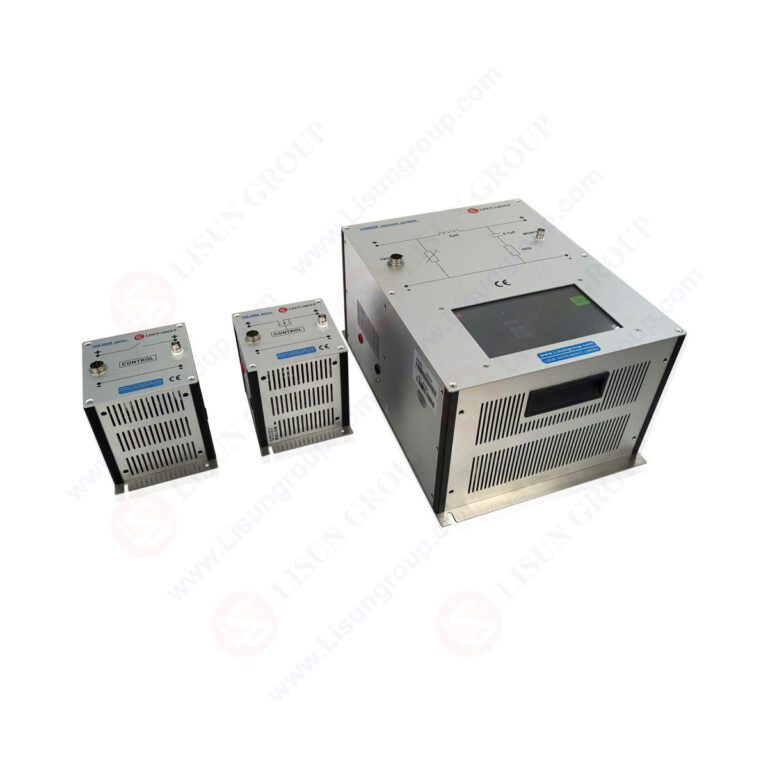
1.1 The Imperative of Conducted Disturbance Compliance
Modern electronic equipment operates in an environment saturated with electromagnetic energy. While radiated immunity addresses airborne interference, a significant vulnerability lies in the cables connecting a device to power, data networks, and peripherals. These cables act as efficient antennas, coupling ambient RF energy directly into the equipment’s internal circuitry. RF conducted immunity testing simulates this real-world threat by injecting controlled RF disturbances onto these cables to verify a product’s robustness. Failure to comply can lead to malfunctions, data corruption, or safety hazards in critical applications, making this test a non-negotiable checkpoint in the EMC validation process for a wide range of industries.
1.2 Core Principle of the Test Method
The fundamental principle of the RF conducted immunity test, as defined in standards like IEC 61000-4-6, involves superimposing a modulated RF test signal onto the EUT’s cables while monitoring the equipment for performance degradation or failure. The key challenge is to ensure the test signal is delivered to the EUT with known and repeatable amplitude, without inadvertently affecting auxiliary equipment or the test instrumentation itself. This is achieved through specialized coupling and decoupling networks (CDNs) or other injection devices. The LISUN RFCI61000-6 series implements this principle through a fully calibrated, closed-loop system that automatically manages signal generation, amplification, monitoring, and leveling, ensuring test accuracy and reproducibility.
2.1 Integrated Modular Design Philosophy
The LISUN RFCI61000-6 distinguishes itself through a fully integrated design that consolidates the signal source, power amplifier, directional coupler, power meter, and control software into a single, coherent instrument. This architecture eliminates the need for external RF cabling, combiners, and power meters between discrete units, which are common sources of measurement error due to impedance mismatches and connector losses. The integrated approach ensures optimal signal integrity from generation to injection point. The system is available in two primary power variants—the RFCI61000-6-35W and the RFCI61000-6-85W—catering to different test level requirements and EUT port impedances as stipulated by various standards.
2.2 Advanced Signal Generation and Modulation Capabilities
At the heart of the system is a high-stability synthesized signal source capable of generating RF signals across the entire 150 kHz to 230 MHz range with fine resolution. Crucially, the system supports the amplitude modulation (AM) required by standards such as IEC 61000-4-6, typically at 1 kHz with 80% depth, to simulate real-world interference characteristics. Furthermore, advanced models offer pulse modulation capabilities, which are essential for testing equipment against disturbances from switching transients found in industrial and power electronic environments. The integrated software allows for seamless creation, storage, and execution of complex test sequences involving frequency sweeps with defined dwell times and modulation profiles.
3.1 Output Power and Voltage Capability
The system’s ability to deliver the required test level is defined by its output power and the resulting voltage developed across the EUT’s port impedance. The two standard models are optimized for different applications. The 35W variant is typically sufficient for the majority of commercial and industrial equipment tests defined in basic standards. The 85W model provides the necessary headroom for testing equipment with lower impedance ports or for applications requiring higher test levels, such as certain industrial, medical, or automotive sub-assemblies. The system automatically levels the output to maintain a constant voltage at the injection point, compensating for impedance variations.
3.2 Technical Comparison Table: Model Variants
The following table compares the key performance metrics of the two primary LISUN RFCI61000-6 series models, highlighting their suitability for different testing scenarios.
| Performance Metric | RFCI61000-6-35W Model | RFCI61000-6-85W Model | Industry Relevance |
|---|---|---|---|
| Output Power | 35 Watts (min.) | 85 Watts (min.) | Higher power for low-impedance loads or severe levels. |
| Output Voltage (into 150Ω) | Up to 10 Vrms (140 dBμV) | Up to 15 Vrms (143.5 dBμV) | Directly relates to test levels per IEC 61000-4-6. |
| Frequency Range | 150 kHz – 230 MHz | 150 kHz – 230 MHz | Full coverage for conducted immunity standards. |
| VSWR (Voltage Standing Wave Ratio) | < 1.5:1 (typical) | < 1.5:1 (typical) | Low VSWR ensures efficient power transfer and system safety. |
| Typical Application | Consumer IT, LED drivers, basic industrial controls. | Medical devices, power equipment, industrial automation, charging stations. | Matches power to the immunity requirements of the target industry. |
4.1 Adherence to IEC/EN 61000-4-6
The LISUN RFCI61000-6 series is explicitly designed to satisfy the requirements of IEC 61000-4-6 and its regional derivative, EN 61000-4-6: “Electromagnetic compatibility (EMC) – Part 4-6: Testing and measurement techniques – Immunity to conducted disturbances, induced by radio-frequency fields.” The system’s calibration, modulation accuracy, output level stability, and frequency sweep capabilities are engineered to meet the performance criteria for test equipment outlined in Clause 6 of the standard. This ensures that test results generated are valid and recognized by compliance bodies worldwide, forming a reliable basis for CE, UKCA, or other global market certifications.
4.2 Support for GB/T 17626.6 and Other Regional Standards
Beyond the international IEC standards, product compliance often requires testing against national standards. The system fully supports GB/T 17626.6, the Chinese national standard technically equivalent to IEC 61000-4-6, which is mandatory for the China Compulsory Certification (CCC) mark in relevant product categories. Furthermore, the system’s flexible architecture allows it to be configured for other regional or industry-specific standards that reference the conducted RF injection method. This multi-standard capability makes the LISUN system a versatile tool for manufacturers targeting global markets, eliminating the need for multiple, disparate test setups.
5.1 Direct Injection via CDNs
The most common and reproducible method for RF conducted immunity testing is the use of Coupling-Decoupling Networks (CDNs). A CDN provides a defined coupling path for the test signal to the EUT port while simultaneously decoupling (blocking) the RF signal from flowing back onto the auxiliary equipment or power supply lines. The LISUN RFCI61000-6 system is designed for direct compatibility with a wide range of standard CDNs (e.g., CDN 116, CDN M3, etc.). Its software includes libraries of common CDN calibration factors (insertion loss), allowing for automatic correction of the forward power to achieve the desired test voltage at the EUT port, as mandated by the standards.
5.2 Alternative Injection Techniques: EM Clamp and Direct Injection
For cables that cannot be disconnected for CDN insertion, or for non-standardized ports, the standards define alternative methods. The system seamlessly integrates with electromagnetic (EM) clamps, which inductively and capacitively couple RF energy onto the cable bundle without physical contact. The LISUN software can manage the unique calibration factors for EM clamps. Additionally, the system supports the direct injection method with a defined impedance network (e.g., 150Ω) for situations where other methods are impractical. This multi-mode injection capability ensures that the LISUN RF Conducted Immunity Test System can handle virtually any EUT configuration encountered in a compliance laboratory.
6.1 Medical Devices and Industrial Automation
The medical device industry (governed by standards like IEC 60601-1-2) and industrial automation sectors (under IEC 61000-6-2) demand exceptionally high immunity performance due to safety-critical operations. An infusion pump or a programmable logic controller (PLC) must remain fully functional in the presence of RF interference from surgical diathermy equipment or variable frequency drives. The LISUN RFCI61000-6-85W system provides the necessary power to achieve the severe test levels often required, ensuring these devices do not malfunction when subjected to conducted RF disturbances on their power and communication lines in a noisy electromagnetic environment.
6.2 New Energy, Power Equipment, and LED Manufacturing
The proliferation of power conversion equipment in new energy applications like electric vehicle charging stations and solar inverters presents unique EMC challenges. These devices generate significant internal switching noise and must also be immune to external disturbances. Conducted immunity testing validates their resilience. Similarly, LED drivers and power supplies for lighting must comply with standards like IEC 61547. The LISUN system’s ability to test across a broad frequency range and at appropriate voltage levels is essential for certifying the reliability and compliance of these power-dense electronic products, preventing flicker or failure due to RF interference on the mains input.
7.1 Intuitive Touchscreen Interface and Automated Testing
The system features a user-friendly touchscreen interface that provides local control over all key parameters: frequency, level, modulation, and sweep settings. This allows for quick setup and spot-checking. For full compliance testing, the included PC software enables the creation of fully automated test sequences. Engineers can define frequency ranges, step sizes, dwell times, modulation states, and limit lines. The software executes the sweep, continuously monitors forward power, and adjusts the amplifier output in a closed loop to maintain the precise test level at the EUT, logging all data for generating formal test reports. This automation maximizes laboratory throughput and eliminates operator error.
7.2 Calibration, Safety, and System Integrity Features
Maintaining measurement traceability is paramount. The system incorporates a built-in power meter that is calibrated against national standards. Features like automatic level control (ALC) and continuous monitoring of Voltage Standing Wave Ratio (VSWR) are critical for both accuracy and equipment protection. A high VSWR indicates a poor impedance match (e.g., an unconnected cable), which can cause reflected power to damage the amplifier. The LISUN system monitors this in real-time and can be configured to automatically shut down or alarm if a dangerous VSWR threshold is exceeded, safeguarding a significant capital investment.
The LISUN RFCI61000-6 series represents a sophisticated, fully integrated solution for one of the core challenges in EMC compliance validation. By combining a precision signal source, robust power amplifier, and calibrated measurement circuitry into a single instrument, it delivers the accuracy, repeatability, and operational efficiency demanded by modern test laboratories. Its compliance with IEC 61000-4-6, EN 61000-4-6, and GB/T 17626.6, coupled with support for multiple injection methods and CDNs, makes it a versatile tool for a global manufacturer. For engineers in medical, industrial, power, and telecommunications sectors, this system provides the technical capability to confidently validate product immunity, mitigate risk, and streamline the path to market certification.
Q1: What is the primary difference between the 35W and 85W models, and how do I choose the right one for my lab?
A: The core difference is the available forward output power, which directly determines the maximum test voltage (e.g., into a 150Ω load) the system can generate. The 35W model is suitable for testing most commercial and industrial equipment to common test levels (e.g., 3Vrms, 10Vrms). The 85W model is necessary for applications requiring higher severity levels (e.g., 20-30Vrms into 150Ω) or when testing ports with lower impedance, such as some communication or DC power ports, where more current (and thus power) is needed to develop the required voltage. Selection should be based on the most stringent test level and lowest impedance port in your product portfolio, with consideration for future needs.
Q2: How does the system ensure accurate test levels when using different CDNs or injection devices, each with unique insertion loss?
A: The system software includes a comprehensive database of calibration factors for common commercial CDNs, EM clamps, and injection networks. These factors, representing the insertion loss between the amplifier output and the EUT port, are stored in the instrument. When a test plan is created, the operator selects the intended injection device from this database. During the test, the system’s closed-loop control uses the internal directional coupler and power meter to measure forward power and automatically adjusts the amplifier’s output to compensate for the device’s insertion loss. This ensures the specified test voltage is accurately delivered to the EUT, as required by Clause 7 of IEC 61000-4-6.
Q3: Can the LISUN RFCI61000-6 system be used for testing beyond the standard 150 kHz to 230 MHz range, such as for automotive or military standards?
A: The standard configuration of the RFCI61000-6 series is optimized for the frequency range specified in IEC 61000-4-6. Some automotive standards (e.g., ISO 11452-4) or military standards may require conducted immunity testing starting at lower frequencies (e.g., 10 kHz) or extending to higher frequencies (e.g., 400 MHz). While the core architecture is capable, such applications typically require customized system configurations, including different power amplifier modules and specialized CDNs. For these use cases, it is essential to consult with LISUN engineering to specify a system tailored to the exact frequency range and power requirements of the relevant standard.