


Abstract
When an environmental test chamber not heating disrupts a critical LED lumen maintenance test, it jeopardizes data integrity, compliance timelines, and project budgets. This technical article provides a systematic troubleshooting framework for heating failures, linking root causes—from faulty heating elements and sensor drift to software control issues—to their impact on LM-80 and LM-84 compliance. Crucially, we detail how LISUN‘s integrated Environmental Test Chamber Not Heating: Troubleshooting & LISUN Solutions approach, leveraging the advanced hardware and Arrhenius Model-based software of the LEDLM-80PL and LEDLM-84PL systems, not only resolves failures but prevents them through precise thermal management and multi-chamber support, ensuring uninterrupted, standards-compliant accelerated aging validation.
1.1 Thermal Stress as the Primary Accelerant in LED Aging
LED lumen depreciation is predominantly driven by thermal-mechanical stress on the package materials, solder joints, and phosphor layers. Accelerated life testing, as defined by standards like IES LM-80 and LM-84, relies on precisely controlled elevated temperatures to induce and measure this degradation within a practical timeframe. A stable thermal environment is non-negotiable; any deviation, especially a chamber not heating, halts the acceleration factor, invalidates the Arrhenius Model projections, and renders collected data useless for TM-21 or TM-28 extrapolation.
1.2 Consequences of Heating Failure on Compliance and Data Integrity
A heating failure during a 6000-hour LM-80 test represents a catastrophic event. Beyond the immediate downtime, it introduces uncontrolled variables. The test duration clock may continue while the LED junction temperature (Tj) falls, breaking the constant-stress condition required by the standard. This compromises the calculation of key lifetime metrics like L70 (time to 70% lumen maintenance) and L50, potentially leading to non-compliance reports. For LM-84 testing of luminaires, a chamber failure can skew spatial color uniformity data (per CIE 084) collected under unstable thermal conditions.
2.1 Initial Diagnostics: Power, Control, and Safety Circuits
The first step is a structured isolation process. Verify primary power input and chamber-specific circuit breakers. Inspect the main control system (PLC or PID controller) for error codes; a failed solid-state relay (SSR) controlling the heating element is a common culprit. Confirm that all safety interlocks, such as chamber door switches and over-temperature protectors, are properly engaged, as these will deliberately inhibit heating if triggered.
2.2 Component-Level Investigation: Heaters, Sensors, and Contactors
If controls appear functional, probe the hardware. Use a multimeter to check for continuity and resistance in the tubular heating elements; an open circuit indicates failure. Simultaneously, calibrate or verify the PT100 temperature sensors against a known standard. Sensor drift can cause the controller to misread the chamber temperature, falsely believing the setpoint has been reached. Also, inspect mechanical contactors for pitting or welding, which can prevent engagement.
3.1 Redundant Thermal Management and Robust Hardware Design
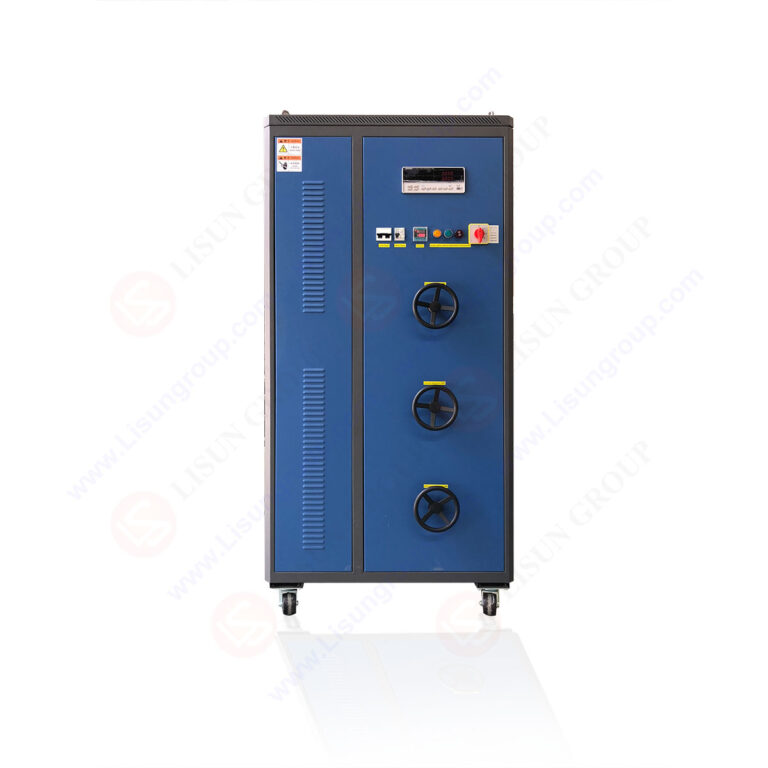
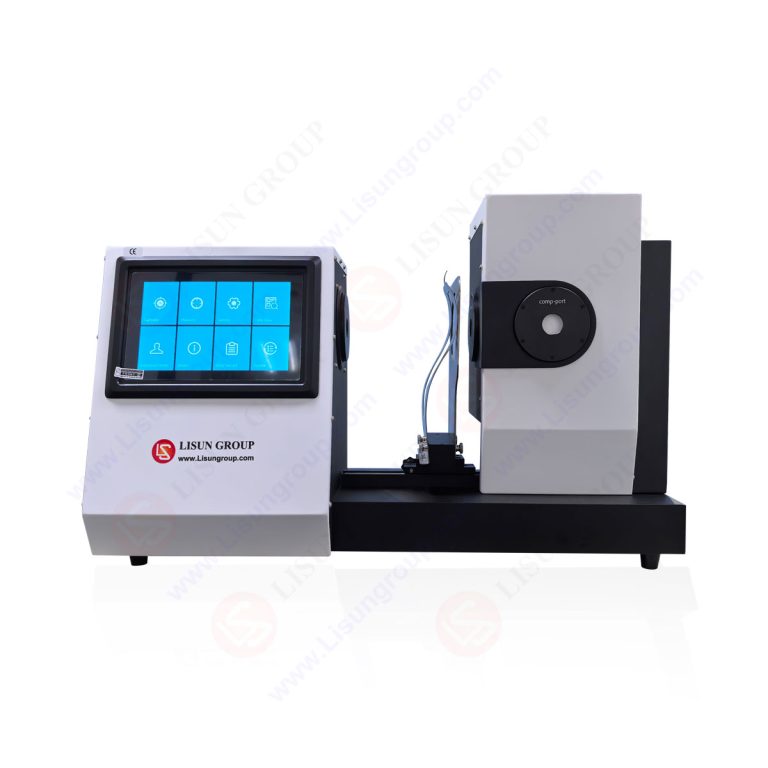
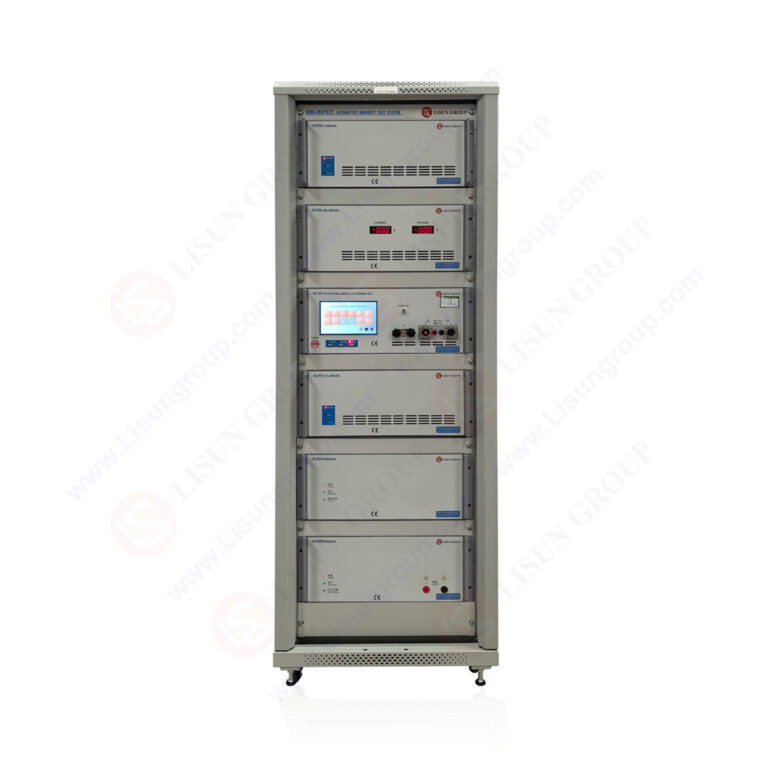
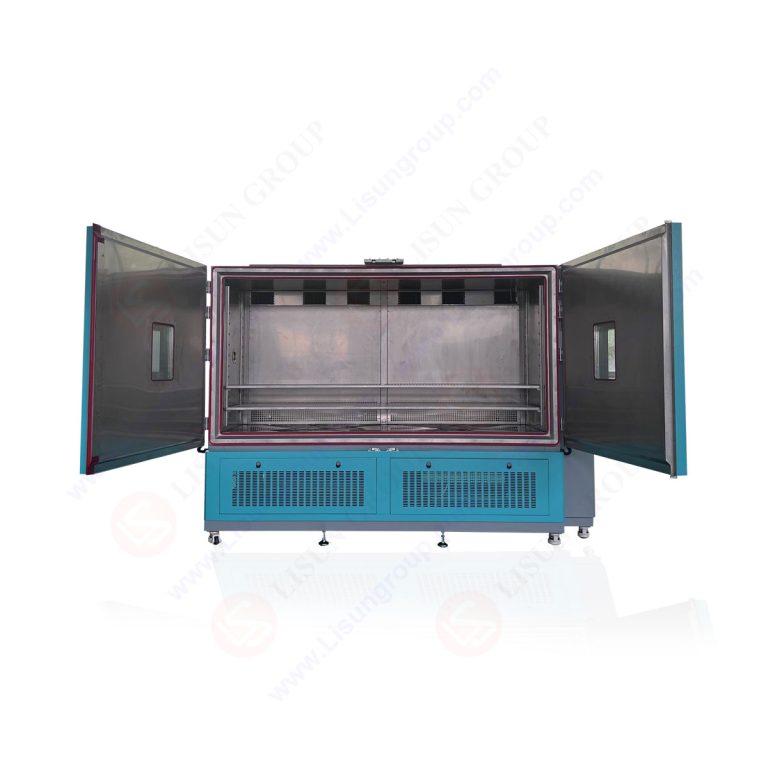
LISUN’s LED Optical Aging Test Instruments are engineered for relentless reliability. The systems support connection to up to 3 independent temperature chambers, providing inherent redundancy. If one chamber faults, tests can potentially be redistributed. The recommended chambers feature robust, industrial-grade heating elements and high-precision sensors with regular calibration prompts integrated into the LISUN software suite, minimizing the risk of the primary causes of an environmental test chamber not heating.
3.2 Integrated Software Monitoring and Predictive Alerts
The proprietary Arrhenius Model-based software does more than calculate lifetime projections. It provides continuous, real-time monitoring of chamber performance. Users can set tolerances for temperature deviation (±0.5°C is typical). The system logs all parameters and can trigger immediate email or SMS alerts upon detecting a heating fault or drift, allowing for rapid intervention before a minor issue invalidates weeks of testing, aligning with the data integrity requirements of IES LM-79-19 for electrical and photometric measurements.
4.1 Data Salvage and Test Continuity Assessment
When a heating failure occurs, the response determines data salvageability. The first action is to document the exact time, duration, and temperature profile of the failure using the system’s data logger. Following IES TM-21 guidelines, a minor deviation may be correctable with data analysis, but a prolonged failure often requires a judgment call. The test may need to be restarted from a known stable point or, in some cases, the chamber may be replaced, and the sample transferred per predefined protocols within the LISUN system’s dual testing modes.
4.2 Leveraging Dual Testing Modes for Risk Mitigation
LISUN’s dual testing modes (Normal and Expert) are pivotal for recovery. In Expert Mode, engineers have granular control. After a chamber repair, they can implement a stepped thermal recovery profile to gently reintroduce samples to the target temperature (e.g., 55°C, 85°C, or 105°C as per LM-80), minimizing thermal shock. This mode also allows for the re-baselining of photometric measurements using the integrated sphere (per CIE 127) to establish a new post-failure reference point before resuming the automated aging cycle.
The choice between the LEDLM-80PL (for LM-80/TM-21) and LEDLM-84PL (for LM-84/TM-28) systems influences failure resilience. Both share core reliability features but are optimized for different sample types.
Table: LISUN LED Aging Test System Specifications and Failure Resilience Features
| Feature | LEDLM-80PL System (LM-80/TM-21) | LEDLM-84PL System (LM-84/TM-28) | Relevance to Heating Failure Mitigation |
| :— | :— | :— | :— |
| Primary Standard | IES LM-80, IES TM-21 | IES LM-84, IES TM-28 | Defines required thermal stability and test durations (e.g., 6000h). |
| Test Sample | LED Packages, Arrays, Modules | Complete Luminaires | Luminaire tests are often longer; system reliability is more critical. |
| Max Connected Chambers | Up to 3 Temperature Chambers | Up to 3 Temperature Chambers | Provides hardware redundancy; tests can be moved if a chamber fails. |
| Key Metric Calculation | L70, L50, Lp based on Arrhenius | Full Luminaire Lumen Depreciation | Heating failure directly corrupts the long-term lumen maintenance curve. |
| Photometric Reference | CIE 127 (Averaged LED Intensity) | CIE 084 (Luminance Distribution), CIE 70 | Ensures photometric baselining is consistent pre- and post-recovery. |
| Customizable Control | Expert Mode for Thermal Profiling | Expert Mode for Thermal Profiling | Enables controlled thermal recovery of samples after a chamber repair. |
6.1 Meeting LM-80 and TM-21 Stringency During and After Failure
IES LM-80 mandates reporting of any deviations from the test conditions. A comprehensive environmental test chamber not heating troubleshooting log becomes part of the mandatory test report. The TM-21 extrapolation is highly sensitive to input data quality. LISUN’s software assists in this compliance by automatically flagging data periods with temperature excursions, allowing engineers to justify inclusion or exclusion of data points in the final lifetime projection analysis, maintaining the rigor expected by certification bodies.
6.2 Ensuring LM-84 and TM-28 Data Validity for Luminaires
For luminaire testing per LM-84, a heating failure is more complex due to the size and thermal mass of the unit. TM-28 calculations for luminaire lifetime rely on continuous, stable data. LISUN’s solution for luminaires includes protocols for safely removing and temporarily storing a luminaire if a chamber requires prolonged repair, and then re-installing it with minimal handling impact, all while documenting the process for audit trails to satisfy the stringent requirements of the standard.
7.1 From Reactive Troubleshooting to Predictive Maintenance
LISUN transforms chamber management from reactive to predictive. The software’s long-term trend analysis of heater performance and sensor data can indicate gradual degradation—such as a slowly drifting sensor or increasing time-to-setpoint—before a total failure occurs. This allows for scheduled maintenance during planned intervals, avoiding unexpected downtime during a critical 6000-hour test, a key component of the full Environmental Test Chamber Not Heating: Troubleshooting & LISUN Solutions value proposition.
7.2 Customizable Configurations for Specific Industry Needs
Whether testing automotive LED modules requiring high-temperature cycles or general lighting products at 55°C, LISUN systems are customizable. This includes specifying higher-grade heating elements for aggressive profiles or additional sensor points for better thermal mapping. This flexibility ensures the chamber is matched to the application’s stress level, reducing the likelihood of failures induced by operating at the edge of a standard chamber’s capability.
Resolving an environmental test chamber not heating issue extends beyond simple repair; it is a fundamental requirement for upholding the scientific and regulatory integrity of LED lifespan validation. A systematic approach—encompassing electrical diagnostics, component verification, and standardized recovery protocols—is essential. LISUN’s comprehensive Environmental Test Chamber Not Heating: Troubleshooting & LISUN Solutions framework, embedded within the LEDLM-80PL and LEDLM-84PL systems, provides the technical edge. By integrating robust, redundant hardware with intelligent, Arrhenius Model-based software that offers real-time monitoring and predictive alerts, LISUN empowers engineers to not only fix failures swiftly but to prevent them proactively. This ensures uninterrupted compliance with IES LM-80, LM-84, TM-21, and TM-28 standards, safeguarding the accuracy of L70/L50 projections and protecting valuable R&D investments against costly testing delays and data loss.
Q1: If our environmental chamber fails during an LM-80 test, can we simply pause the test and restart the chamber, or is the data compromised?
A: A pause and restart is not automatically valid under LM-80. The standard requires documented justification for any deviation. The first step is to use your system’s data logger (like LISUN’s software) to record the duration and temperature drop. A very short failure (e.g., minutes) with minimal temperature excursion may be analyzed as a minor deviation. However, a prolonged failure halting the thermal acceleration factor often requires discarding data from the unstable period or restarting the test. The LISUN system’s Expert Mode allows for a controlled thermal ramp-back to setpoint to minimize sample shock when resuming, but the data integrity decision must align with your compliance auditor’s expectations for TM-21 projections.
Q2: How does connecting multiple temperature chambers to a single LISUN system provide a solution for heating failure risks?
A: Supporting up to 3 connected chambers creates a critical redundancy strategy. In a configuration where multiple chambers are running identical or similar temperature profiles, if one chamber develops a heating fault, the affected LED samples can potentially be transferred to a spare chamber slot without compromising the controlled environment. This allows the core aging test to continue while the faulty chamber is serviced. This architecture, central to LISUN’s solution, effectively decouples hardware maintenance from test continuity, protecting long-duration investments like 6000-hour LM-80 tests and complex LM-84 luminaire evaluations.
Q3: Why is sensor calibration so frequently cited as a root cause of apparent heating problems, and how does LISUN address this?
A: A drifting PT100 temperature sensor can cause a “soft” heating failure. The controller receives an incorrect reading, believing the chamber is at, say, 85°C when it is actually at 75°C. It then reduces or cuts power to the heater, leading to an under-temperature condition that halts valid aging. Regular calibration is therefore paramount. LISUN’s ecosystem addresses this proactively: the software can schedule calibration reminders, and the system design emphasizes easy sensor access for verification. Furthermore, the real-time monitoring alerts can be set to flag when the heater’s duty cycle seems abnormal for a given setpoint, providing an early warning of potential sensor drift before it invalidates data.