









Abstract
In the rigorous world of electrical accessory compliance testing, accurately simulating real-world load conditions is paramount. The LISUN DFX series Externally Ballasted Fluorescent Lamp Test Load Cabinet serves as a critical instrument for manufacturers and testing laboratories, enabling precise verification of switch, socket, and connector performance under standardized load conditions. This specialized load cabinet provides a stable, adjustable, and compliant load simulation platform, specifically designed for tests mandated by international standards like IEC 60669-1 and IEC 60884-1. Its core value lies in ensuring product safety, reliability, and compliance by replicating the exacting electrical stresses of ballasted lamp loads, thereby mitigating the risk of field failures and non-conformities during certification audits.
1.1 The Critical Role of Load Simulation in Compliance
Electrical accessories such as switches, socket-outlets, and connectors are not merely mechanical devices; they are critical safety interfaces within an electrical installation. Their performance under load, particularly the challenging characteristics of inductive loads like fluorescent lamp ballasts, directly impacts safety. A dedicated load test cabinet is essential to verify that these accessories can handle inrush currents, maintain stable connections, and withstand thermal stresses without degradation over their operational life, as required by international safety standards.
1.2 Understanding the Ballasted Lamp Load Challenge
Externally ballasted fluorescent lamps present a complex load profile. The ballast, typically an inductive component, causes a phase shift between voltage and current, resulting in a non-unity power factor. During start-up, a high inrush current is drawn, which can be several times the steady-state operating current. This combination of inductive reactance and high inrush places significant electrical and thermal stress on switching contacts and connection terminals. Generic resistive loads cannot replicate these conditions, making a specialized simulator like the LISUN DFX series indispensable for accurate, standards-compliant testing.
2.1 Multi-Channel Independent Control System
The LISUN DFX series architecture is built around independent testing channels. Models like the DFX-20-3CH feature three fully isolated channels, allowing simultaneous, independent testing of multiple samples or different test parameters on a single sample. Each channel incorporates its own precision measurement circuitry, load switching networks, and control logic. This parallel testing capability dramatically increases laboratory throughput and efficiency, enabling comparative life testing or the simultaneous application of different load types as specified in complex test sequences.
2.2 Precision Load Synthesis and Measurement
At its heart, the cabinet synthesizes precise electrical loads. It utilizes high-stability, non-inductive power resistors and specially wound inductors to create adjustable resistive (R) and inductive (L) load components. A key feature is the independent adjustment of current and power factor (PF). Engineers can set the test current with high resolution (typically 0.01A steps) and independently adjust the power factor across a defined range (e.g., 0.3 to 1.0 lagging) to match the characteristics of specific lamp-ballast combinations, ensuring alignment with standard test clauses.
3.1 Alignment with Key IEC and GB Standards
The design and calibration of the LISUN DFX load cabinet are explicitly traceable to major international and national standards. It is the mandated equipment for performing normal operation, electrical endurance, and temperature rise tests on accessories intended to control fluorescent lamps. Its primary compliance targets include:
- IEC 60669-1 (Switches for household and similar fixed-electrical installations): Clause 19.2 (Temperature rise test) and Clause 20 (Normal operation test).
- IEC 60884-1 (Plugs and socket-outlets for household and similar purposes): Clause 20 (Temperature rise test) and Clause 21 (Normal operation test).
- GB/T 16915.1 & GB/T 2099.1: The Chinese national standards technically aligned with the aforementioned IEC standards.
3.2 Validating Test Parameters and Tolerances
The cabinet ensures tests are performed within the strict tolerances required by standards. For instance, IEC 60669-1 Clause 20 specifies the test circuit’s power factor must be (0.6 pm 0.05) lagging for fluorescent lamp load testing. The DFX series’ fine power factor adjustment allows users to set and maintain this parameter precisely. Similarly, the current stability and measurement accuracy (typically within ±1% of reading ±0.1% of full scale) guarantee that the specified test current (e.g., 1.25 times the rated current) is applied consistently throughout long-duration endurance tests.
4.1 Key Performance Parameters
The LISUN DFX series delivers laboratory-grade performance. Key specifications include a wide current output range, often from 0.10A to the model’s maximum (e.g., 20A), with high resolution. The power factor is adjustable, typically from 0.30 to 1.00 lagging. Measurement accuracy for current and voltage is better than ±1%. The equipment operates from a standard AC input (e.g., 220V ±10%, 50/60Hz) and features integrated load capacitors (e.g., 4.7µF, 7.5µF) for power factor correction verification, as needed in some test protocols.
4.2 DFX Series Model Selection Guide
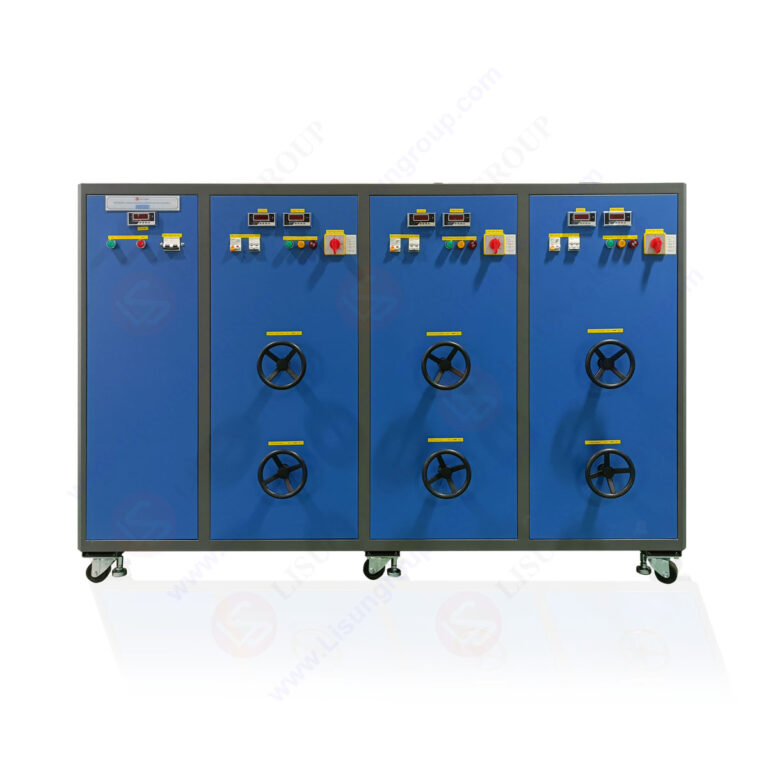
Selecting the correct model depends on the required current capacity and channel count. The following table provides a comparative overview of key LISUN DFX models:
| Model | Output Current per Channel | Number of Channels | Total Capacity | Primary Input | Key Application Focus |
|---|---|---|---|---|---|
| DFX-20 | 0.10 – 20.00 A | 1 | 20A | 220VAC, 50/60Hz | Single-sample or high-current testing. |
| DFX-20-3CH | 0.10 – 20.00 A | 3 | 60A (20A x 3) | 220VAC, 50/60Hz | High-throughput testing of multiple samples simultaneously. |
| DFX-40 | 0.10 – 40.00 A | 1 | 40A | 220VAC, 50/60Hz | Testing high-current rated accessories. |
| DFX-60 | 0.10 – 60.00 A | 1 | 60A | 220VAC, 50/60Hz | For heavy-duty commercial/industrial switches and connectors. |
| DFX-80 | 0.10 – 80.00 A | 1 | 80A | 220VAC, 50/60Hz | Maximum capacity for specialized, high-power applications. |
5.1 Synergy with LISUN Life Testers
The DFX load cabinet is a core component of an automated compliance testing station. It is designed for seamless integration with LISUN’s CZKS series electronic life testers. In this configuration, the CZKS tester provides the programmable mechanical actuation (ON/OFF cycling) of the switch or accessory under test, while the DFX cabinet supplies the standardized electrical load. This integration fully automates tests like the 10,000-operation endurance test, ensuring consistent cycle timing, accurate load application, and automatic test termination upon completion or failure detection.
5.2 Complementary Testing Equipment Ecosystem
Beyond life testing, a comprehensive accessory evaluation lab utilizes the DFX alongside other specialized LISUN apparatus. For example:
- SW-6 Bending Tester: Performs mechanical flexing tests on cords and cord assemblies before or after their connections are subjected to electrical load and temperature rise testing in the DFX cabinet.
- Multifunctional Test Controllers: Can sequence complex test profiles involving the DFX load, environmental chambers, and other stress factors.
This ecosystem approach allows laboratories to conduct end-to-end type testing per full standard requirements within a coherent, calibrated equipment framework.
6.1 Initial Configuration and Calibration Verification
Prior to testing, correct configuration is vital. The procedure involves: connecting the AC power input; wiring the output terminals to the sample under test; setting the desired test current and power factor using the front-panel controls or software interface; and verifying settings using a trusted external reference meter. Regular calibration against a traceable standard is mandatory to maintain the validity of compliance data. The cabinet’s internal measurement system should be verified annually or per the laboratory’s quality control schedule.
6.2 Executing Standardized Test Sequences
A typical test sequence, such as the temperature rise test per IEC 60669-1 Clause 19.2, involves: securing the accessory in a test enclosure; connecting thermocouples to critical parts; applying the specified load current (e.g., 1.25 x rated current) at the prescribed power factor via the DFX load cabinet; monitoring temperature rises until thermal stability is achieved; and recording the final temperature values. The stability and accuracy of the DFX ensure that the applied electrical stress is constant, making the measured temperature rise a reliable indicator of the product’s design quality.
7.1 Electrical Accessory Manufacturing QC
For manufacturers of switches, sockets, and connectors, the LISUN DFX series is a vital tool for in-house quality control and design validation. It enables R&D teams to prototype and stress-test new designs against standard requirements before certification. Production QC departments can use it for batch acceptance testing or failure analysis, ensuring that manufacturing processes consistently yield products capable of handling the real-world load of fluorescent lighting circuits.
7.2 Third-Party Certification and Testing Laboratories
Certification bodies (e.g., UL, TÜV, Intertek, CQC) and independent test labs rely on equipment like the DFX cabinet to generate authoritative, defensible test reports. Its traceable calibration and explicit compliance with IEC/GB test methods form the foundation for granting safety marks like CE, CB, or CCC. The multi-channel capability of models like the DFX-20-3CH allows these labs to optimize expensive chamber space and technician time, improving the efficiency of certification programs for their clients.
The LISUN DFX series Externally Ballasted Fluorescent Lamp Test Load Cabinet represents a specialized, precision solution for a critical niche in electrical safety testing. By providing a stable, adjustable, and fully compliant platform for simulating the unique demands of ballasted lamp loads, it addresses a fundamental requirement of international standards for electrical accessories. Its technical capabilities—from multi-channel independent control and precise power factor adjustment to seamless integration with automated life testers—deliver tangible value in the form of reliable compliance data, improved laboratory efficiency, and robust product validation. For engineers and technicians tasked with ensuring the safety and performance of switches, sockets, and connectors, the DFX series transforms a complex standard requirement into a controlled, repeatable, and efficient testing process, ultimately contributing to safer electrical installations worldwide.
Q1: What is the primary difference between the DFX-20 and the DFX-20-3CH models, and when should I choose the 3-channel version?
A: The core difference is channel count and total system capacity. The DFX-20 is a single-channel unit with a maximum output of 20A. The DFX-20-3CH provides three fully independent channels, each capable of 20A, for a total system capacity of 60A. Choose the DFX-20-3CH when your laboratory workflow requires testing multiple samples simultaneously—such as for batch quality checks or comparative life testing—to maximize throughput and optimize bench space. The single-channel DFX-20 is ideal for focused, high-current single-sample testing or for labs with lower volume needs where the premium for parallel testing is not justified.
Q2: Can the DFX load cabinet simulate loads for LED drivers or electronic transformers, not just magnetic ballast fluorescent lamps?
A: The DFX series is specifically optimized for the resistive-inductive (R-L) load profile characteristic of magnetic (inductive) ballasts for fluorescent lamps, as defined in standards like IEC 60669-1. While some electronic LED drivers or transformers may present a similar lagging power factor, they often have high-frequency switching components and non-sinusoidal current waveforms (high crest factor) that a passive R-L load simulator cannot accurately replicate. For testing accessories controlling modern electronic lighting, a specialized electronic load or a simulator designed for the specific waveform and crest factor outlined in the applicable standard (e.g., IEC 61094 for dimmers) is required.
Q3: How does the DFX cabinet ensure accuracy over long-duration endurance tests, such as the 10,000-operation test?
A: The DFX cabinet ensures long-term accuracy through several design features. It uses high-stability, non-inductive wire-wound power resistors and precision inductors with low temperature coefficients to minimize drift. The electronic measurement and control circuitry is designed for thermal stability. When integrated with a LISUN CZKS life tester, the system operates in a master-slave configuration where the CZKS controls the cycle count and timing, while the DFX consistently applies the pre-set load current and power factor for the exact duration of each “ON” period. This eliminates manual error and ensures each cycle is electrically identical, which is critical for a valid endurance test.