


Abstract
For quality control teams in LED manufacturing and testing, ensuring the accuracy and repeatability of accelerated aging tests is paramount. A critical, yet often overlooked, factor compromising this integrity is environmental test chamber humidity unevenness. This article provides a comprehensive technical analysis of the causes and impacts of non-uniform humidity distribution within test chambers, directly linking these issues to the validity of critical LED lumen maintenance data per standards like IES LM-80 and TM-21. We detail actionable solutions for QC teams, emphasizing how integrating advanced systems like the LISUN LEDLM series, with its precise environmental control and Arrhenius Model-based software, mitigates these risks, ensuring reliable L70/L50 predictions and robust product validation.
1.1 Humidity as a Key Stress Factor in Accelerated Aging
In LED reliability testing, elevated temperature is the primary acceleration factor, but humidity acts as a critical synergistic stressor. Moisture ingress can lead to corrosion of metal components, delamination of encapsulants, and electrochemical migration, all of which accelerate lumen depreciation and catastrophic failure. Standards like IES LM-80 and IES LM-84 mandate controlled environmental conditions during lumen maintenance testing. Non-uniform humidity creates a variable stress field across a test batch, meaning some devices are subjected to harsher damp-heat conditions than others. This invalidates the fundamental assumption of uniform stress in accelerated testing, leading to skewed data and unreliable extrapolations via TM-21 or TM-28 methodologies.
1.2 Consequences of Uneven Humidity on QC Data Integrity
For QC teams, data integrity is non-negotiable. Environmental test chamber humidity unevenness introduces systematic error that can mask true product performance. Devices in drier zones may exhibit artificially high lumen maintenance, while those in saturated zones fail prematurely. This results in high variance in reported L70/L50 lifetimes, making it impossible to distinguish between lot-to-lot variation and chamber-induced artifact. When such data is fed into Arrhenius-based prediction software, the output projections become statistically invalid. Consequently, QC may falsely accept a substandard product or reject a good one, leading to significant financial and reputational costs.
2.1 Inadequate Airflow Design and Chamber Geometry
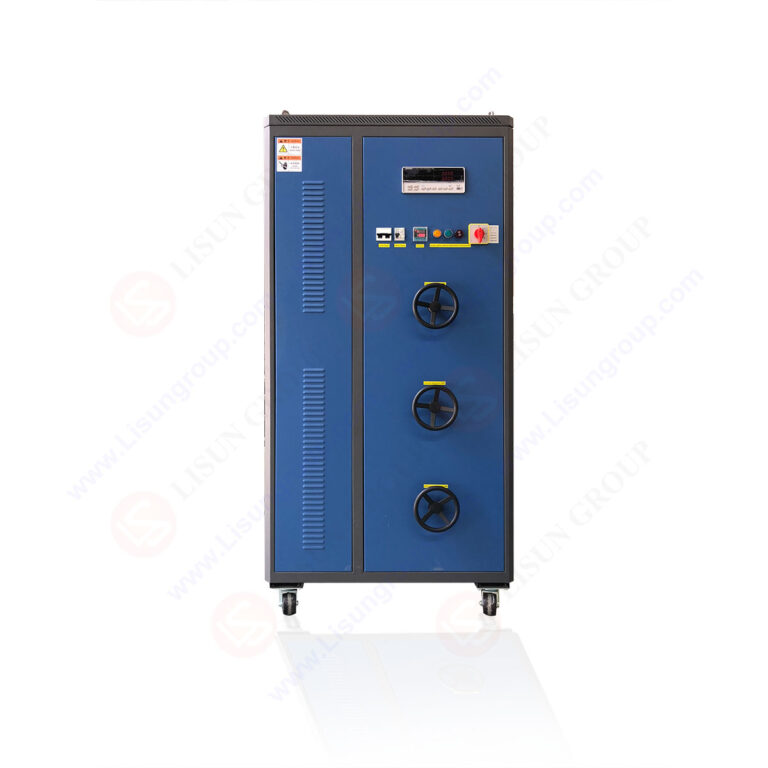
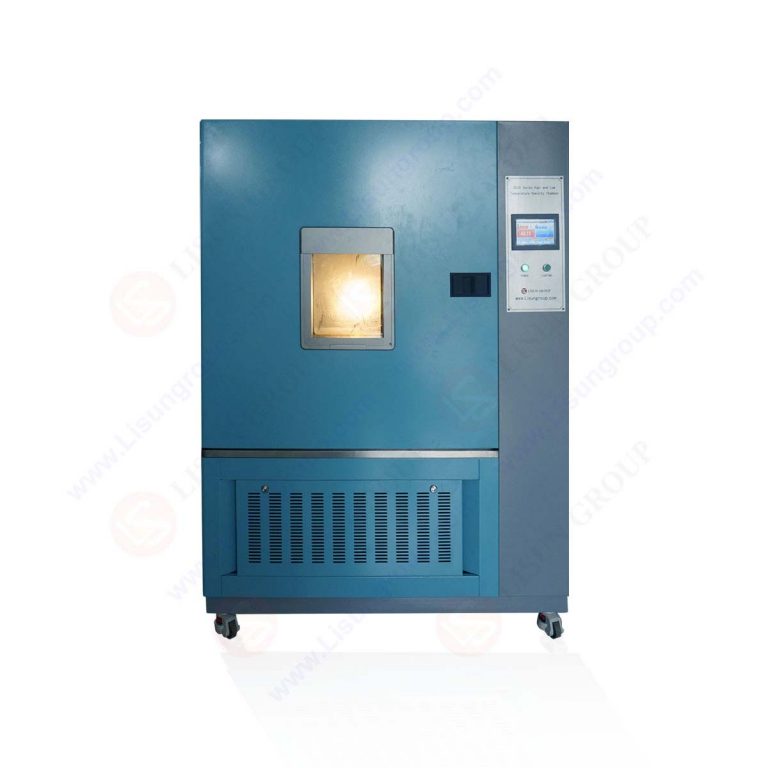
The primary mechanical cause of uneven humidity is poor airflow dynamics. Chambers with single-point steam injection or inadequate fan circulation create pockets of stagnant, high-humidity air and zones of insufficient moisture. The placement of samples, especially dense arrays like those in an LED Optical Aging Test Instrument, can further obstruct airflow. Large chambers supporting multiple temperature zones, such as configurations with up to 3 connected temperature chambers, magnify this challenge if the humidification system is not designed for distributed, uniform vapor delivery. Geometry matters; corners and dead zones are prone to condensation, creating localized extreme conditions.
2.2 Sensor Placement and Calibration Drift
Control depends on measurement. A single, poorly positioned humidity sensor cannot represent the chamber’s entire volume. If placed near the steam inlet or a cooling coil, it provides a false reading, causing the system to over or under-compensate. Furthermore, humidity sensors are prone to drift and contamination over time, especially in harsh test environments involving thermal cycling. Uncalibrated sensors are a leading cause of chronic environmental test chamber humidity unevenness that goes undetected until a test failure audit. Regular metrology, traceable to standards like those referenced in CIE 70 for photometric detector characteristics, is equally crucial for environmental sensors.
3.1 Chamber Validation and Mapping Protocols
QC teams must implement a rigorous chamber validation protocol beyond simple setpoint verification. This involves performing a humidity uniformity mapping study: placing multiple calibrated data loggers throughout the chamber’s working volume, including at product locations, and running a profile mimicking actual test conditions (e.g., 85°C/85%RH). The data, analyzed for standard deviation and max-min differential, provides a quantitative map of environmental test chamber humidity unevenness. This mapping should be repeated periodically and after any major maintenance. Acceptance criteria should be defined, referencing the tolerance requirements implied in IES LM-84 for environmental control during integrated system testing.
3.2 Optimized Sample Loading and Maintenance Routines
Uniformity is compromised by poor loading practices. QC teams should establish loading diagrams that ensure consistent airflow around all samples. Using racks that promote vertical air passage is essential. Preventative maintenance is a solution, not a cost: regular cleaning of humidifier tanks to prevent mineral buildup, inspection and replacement of air circulation fans, and timely calibration of all sensors are mandatory. For chambers interfacing with advanced testers like the LISUN LEDLM-80PL, ensuring the interface seals are intact prevents ambient moisture from affecting the controlled chamber environment during measurements.
4.1 The Role of Dedicated LED Aging Systems in Environmental Control
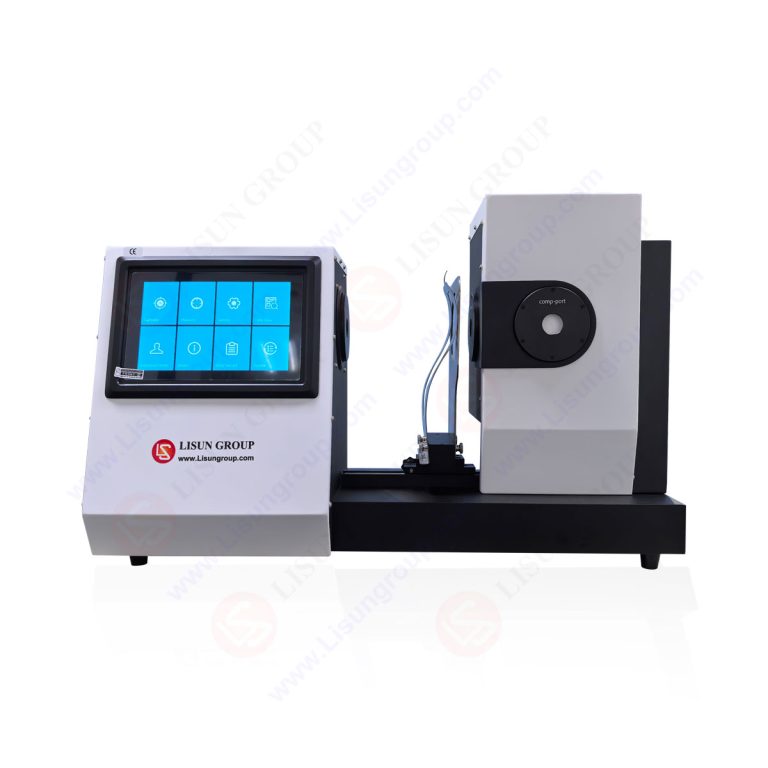
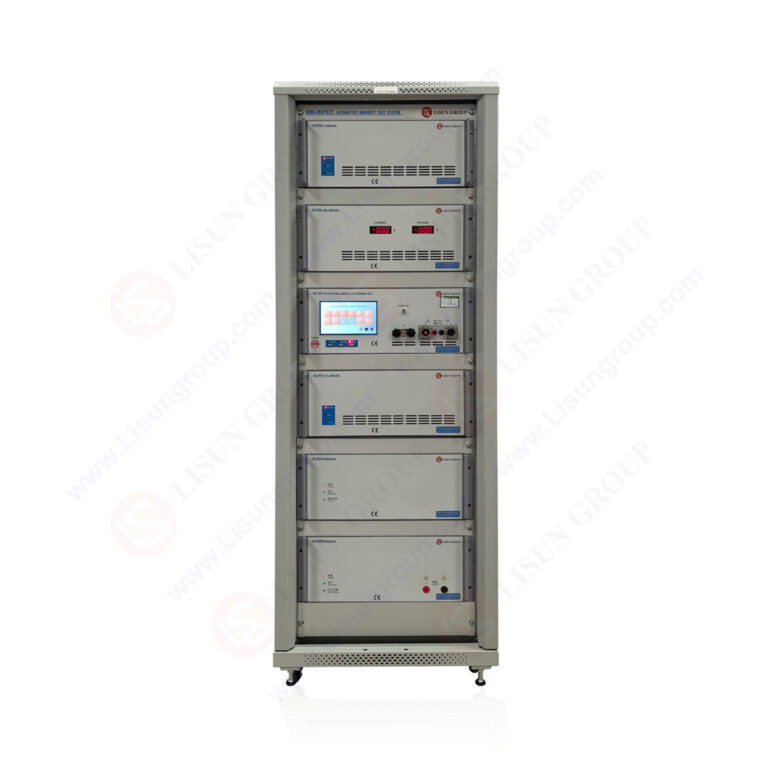
Purpose-built systems like the LISUN LEDLM series are engineered to minimize environmental variables. While they often interface with external temperature/humidity chambers, their design philosophy prioritizes measurement stability. The LEDLM-80PL (for LM-80/TM-21) and LEDLM-84PL (for LM-84/TM-28) systems feature precise optical measurement engines (aligned with CIE 127 and IES LM-79-19 for LED intensity and photometry) that operate independently of the chamber’s environmental stressors. This separation of function—precise measurement vs. environmental stress—allows each system to be optimized for its primary task, reducing cross-interference that can occur in all-in-one benchtop units.
4.2 Software-Driven Monitoring and Data Correlation
Advanced software transforms data management. LISUN’s Arrhenius Model-based software does not just perform lifetime extrapolation; it provides a continuous timeline of lumen output correlated with logged environmental data (T, RH). A QC engineer can visually inspect this correlation. A sudden lumen drop in a subset of samples coinciding with a recorded humidity spike in one chamber zone directly flags environmental test chamber humidity unevenness as the root cause. This capability turns data into a diagnostic tool, enabling proactive correction before a full 6000-hour test is invalidated. The software’s support for dual testing modes (continuous monitoring and interval testing) offers flexibility to capture transient events.
A core decision for QC teams is selecting the right instrument configuration for their compliance needs. The following table contrasts the two primary LISUN system variants and their alignment with key standards.
Table 1: LISUN LED Optical Aging Test Instrument Variants & Compliance
| Feature / Standard | LEDLM-80PL System | LEDLM-84PL System | Primary Application |
| :— | :— | :— | :— |
| Core Compliance | IES LM-80, TM-21 | IES LM-84, TM-28 | LED Package/Array Testing | Integrated Luminaire Testing |
| Test Duration Support | Standard 6000+ hours for LM-80 | Standard 6000+ hours for LM-84 | Long-term lumen maintenance | Long-term system efficacy maintenance |
| Key Metric Prediction | L70, L50 (Lumen Depreciation) | L70, L50, & System Efficacy Maintenance | End-of-life for light sources | Total system performance decay |
| Hardware Linkage | Supports up to 3 temp chambers | Supports up to 3 temp chambers | High-throughput batch testing | Complex luminaire environment testing |
| Optical Reference | CIE 127 (LED Measurement), CIE 084 (Luminance) | IES LM-79-19 (Electrical & Photometric), CIE 070 | Package/array photometry | Full luminaire photometry & colorimetry |
5.1 Choosing the Right System for Your QC Focus
The choice between the LEDLM-80PL and LEDLM-84PL hinges on the Device Under Test (DUT). For QC teams focused on upstream component reliability—LED packages, modules, and arrays—the 80PL is the direct path to IES LM-80 compliance and TM-21 extrapolation. Teams validating finished luminaires for the DOE Lighting Facts® or DLC requirements must use the 84PL to comply with IES LM-84 for in-situ temperature measurement and TM-28 for full-system lifetime projections. Both systems share the robust architecture to connect to multiple chambers, enabling parallel testing of components at different stress levels (e.g., 55°C, 85°C, 105°C) as required by LM-80.
6.1 Pre-Test Chamber Qualification
A proactive workflow starts before the first LED is powered. The mapped uniformity data (from Solution 3.1) becomes a baseline certificate for each chamber. This certificate should be part of the test record for every batch. Furthermore, a short-duration “dry run” with dummy loads can be performed to verify chamber stability at the desired setpoint before committing valuable samples. This step is crucial when utilizing the customizable hardware configurations of a LISUN system, ensuring the chamber interface is stable for the duration of the test, which may extend for months.
6.2 In-Test Monitoring and Data Triage
During the test, the software’s environmental data log is as important as the photometric data. QC teams should set automated alerts for humidity deviations exceeding a predefined threshold (e.g., ±5% RH). When an alert triggers, a triage process begins: first, check for simple causes like a depleted water reservoir; second, review sample data for correlated anomalies. This real-time monitoring, enabled by integrated systems, prevents the catastrophic loss of a long-term test. It transforms QC from a passive inspector of final results to an active guardian of test validity.
7.1 Financial and Reputational Risks
Ignoring environmental test chamber humidity unevenness carries severe consequences. A single invalidated 6000-hour test represents tens of thousands of dollars in direct costs (equipment, power, labor) and, more critically, 8-10 months of lost time-to-market. If non-representative data leads to a field failure, the costs escalate to recalls, warranty claims, and brand damage. In regulated industries like automotive electronics, it can result in failed qualification and lost contracts. Proactive investment in chamber validation and advanced instrumentation is a minor cost compared to these risks.
7.2 Compromised Standard Compliance and Certification
Ultimately, non-uniform humidity voids the fundamental principles of standardized testing. Audit trails from bodies like NVLAP or ISO/IEC 17025 accredited labs will include environmental monitoring records. Unexplained humidity excursions or a lack of uniformity validation can lead to a citation or loss of accreditation. Using instruments like the LISUN LEDLM series, with their inherent design for standard compliance and detailed data logging, provides the documented evidence needed to prove test integrity and uphold the credibility of the reported L70 lifetimes.
Environmental test chamber humidity unevenness is a pervasive technical challenge that directly undermines the accuracy and reliability of LED accelerated aging tests. For QC teams, understanding its root causes—from airflow design to sensor drift—is the first step toward mitigation. Implementing systematic solutions, such as chamber mapping, optimized loading, and rigorous maintenance, establishes a foundation for data integrity. The integration of dedicated, standards-compliant instrumentation like the LISUN LEDLM-80PL and LEDLM-84PL systems provides a critical technological advantage. Their precise measurement capabilities, coupled with Arrhenius-based software analytics, allow teams to isolate and diagnose environmental anomalies, ensuring that lumen maintenance data and lifetime projections for L70/L50 metrics are both accurate and defensible. By prioritizing humidity uniformity, QC professionals move from merely collecting data to generating truly actionable intelligence on product reliability, fully aligned with the rigorous demands of IES LM-80, LM-84, TM-21, and TM-28 standards.
Q1: How often should we perform humidity uniformity mapping on our environmental test chambers?
A: A full humidity uniformity mapping should be conducted at least annually for chambers in regular use. However, additional mappings are mandated after any significant repair or modification to the chamber’s airflow, humidification, or cooling systems. Furthermore, if you are qualifying a chamber for a new, critical test program (e.g., a new product line requiring LM-80 compliance), a pre-qualification map is essential. The process should follow a written procedure, using a sufficient number of calibrated data loggers (9+ for a medium chamber) placed at critical locations, including the geometric center and corners of the working volume, and at typical sample heights.
Q2: Can the LISUN LEDLM software correct for data collected in a chamber with known humidity unevenness?
A: No, the software cannot correct for fundamentally flawed environmental stress data. Its Arrhenius Model and extrapolation algorithms (TM-21/TM-28) assume uniform, controlled stress conditions. The software’s power lies in diagnosis and correlation. It can graphically correlate lumen depreciation curves from individual sample positions with the humidity log from specific chamber zones, clearly identifying the impact of the gradient. This evidence is used to invalidate the affected data set and prompt chamber corrective action. The solution is to fix the chamber uniformity issue, not to algorithmically compensate for it.
Q3: We test both LED components and full luminaires. Can one LISUN system handle both LM-80 and LM-84 compliance testing?
A: While the core hardware platform is similar, LM-80 and LM-84 testing require different optical configurations and standard-specific calculations. The LEDLM-80PL is configured with an integrating sphere for component-level measurement per CIE 127, while the LEDLM-84PL uses a goniophotometer or dedicated luminaire sphere per IES LM-79-19 for total luminous flux. It is typically not a simple conversion. For labs with both needs, LISUN’s customizable platform allows for efficient configuration of two dedicated systems that can share software and data management resources, ensuring each test type meets its distinct standard without compromise.