









Abstract
For manufacturers and testing laboratories of electrical accessories, ensuring product compliance with stringent international safety and performance standards is paramount. The LISUN DFX series Externally Ballasted Fluorescent Lamp Test Load Cabinet is engineered to provide a precise, stable, and programmable DC load simulation for rigorous compliance testing. This article explores the technical capabilities of the DFX-20-3CH model, a three-channel load cabinet designed to simulate the complex characteristics of fluorescent lamp ballasts, enabling accurate validation of switches, sockets, and other accessories against critical clauses in IEC and GB standards. By offering a reliable alternative to physical ballasts, this equipment streamlines testing workflows, enhances repeatability, and ensures robust product qualification.
1.1 The Critical Role of Load Simulation
Electrical accessories like switches, dimmers, and socket-outlets must be tested under conditions that mimic real-world operation. A key challenge is simulating the inrush current and steady-state load presented by fluorescent lamp ballasts, which are inductive, non-linear, and vary with lamp type. Traditional testing with physical ballasts and lamps is inconsistent, prone to lamp aging effects, and lacks precise controllability. A dedicated load test cabinet provides a standardized, repeatable, and programmable electronic load, essential for generating reliable compliance data.
1.2 Overview of the LISUN DFX Series
The LISUN DFX series addresses this need with a family of precision electronic load simulators. These cabinets generate a stable DC load that accurately replicates the electrical stress a ballast places on a control accessory. The series includes models with varying current capacities and channel configurations to suit different laboratory scales and testing throughput requirements, from single-product verification to multi-channel parallel life testing.
2.1 Electronic Load Simulation vs. Physical Ballasts
Unlike a physical inductive ballast, the DFX cabinet utilizes power electronic components to create a programmable constant-current sink. This electronic ballasted lamp load simulator offers superior stability, eliminating the variability caused by lamp electrode degradation, ambient temperature fluctuations, and magnetic core saturation. The load current is digitally set and maintained with high accuracy, ensuring every test cycle is identical to the last.
2.2 Functional Block Diagram and Key Components
The system architecture typically comprises a high-precision current sensing network, a fast-switching MOSFET or IGBT power stage, and a digital control unit with a microcontroller. The user-defined current setpoint is compared with the real-time measured current. The controller adjusts the power stage’s duty cycle to regulate the voltage drop across the device under test (DUT), thereby drawing the precise DC current required. This closed-loop control is the foundation of the cabinet’s precision.
3.1 Primary Electrical Performance Parameters
The DFX-20-3CH is a three-channel unit, allowing simultaneous testing of three independent devices. Each channel is independently controllable. Its core specifications define its application range and accuracy.
- Output Current Range: 0.10A to 20.00A per channel.
- Current Setting Resolution: 0.01A, enabling fine-grained load adjustment.
- Current Regulation Accuracy: ±(1% of reading + 0.1A), ensuring reliable and traceable measurements.
- Load Capacitance: 30µF ±10%, simulating the capacitive component present in some ballast circuits as per standard requirements.
- Power Factor Simulation: Adjustable via external resistive and inductive loads to meet specific test conditions (e.g., cos φ = 0.6, 0.8, 0.9).
3.2 Control, Interface, and Physical Specifications
- Control Interface: Front-panel digital keypad and display for local control of each channel’s current, cycle count, and status.
- Input Power: 220VAC ±10%, 50/60Hz.
- Communication: Optional RS485 or GPIB interfaces for remote control and integration into automated test stands.
- Cooling: Forced air cooling with internal fans to maintain thermal stability during high-current, long-duration life tests.
4.1 Key International and National Standards
The DFX series is explicitly designed to satisfy the load simulation requirements of major global standards for electrical accessories. Its parameters are derived from specific test clauses.
- IEC 60669-1 (Switches for Household & Similar Purposes): Clause 19.2, “Resistance to heat,” and Clause 19.3, “Breaking capacity,” require testing switches under specified lamp load conditions. The DFX cabinet provides the precise DC load equivalent.
- IEC 60884-1 (Plugs & Socket-Outlets): Clause 20, “Normal operation,” assesses durability through thousands of make-and-break cycles under load. The DFX simulates the standardized lamp load for this test.
- GB 16915.1 & GB 2099.1: These are the Chinese national standards technically aligned with IEC 60669-1 and IEC 60884-1, respectively. The DFX cabinet is fully applicable for CCC certification and other Chinese compliance testing.
- IEC 61058-1 (Switches for Appliances): Clause 17, “Endurance testing,” specifies electrical endurance tests under various load types, including specific lamp loads simulated by the DFX.
4.2 Mapping DFX Functions to Test Requirements
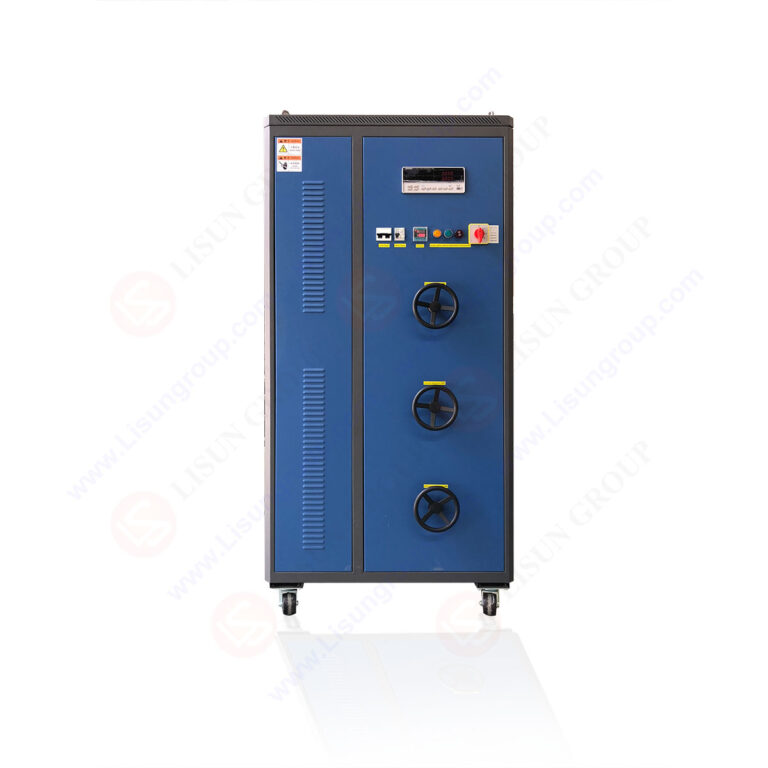
For a switch endurance test per IEC 60669-1 Clause 19.3, the standard may require 200 operation cycles at rated current with a power factor of 0.6. The engineer would configure the DFX-20-3CH to output the corresponding DC current value, connect appropriate external components to achieve the 0.6 power factor, and program the cycle counter. The cabinet then provides the consistent, measurable load for the duration of the test.
5.1 LISUN DFX Series Model Comparison
Selecting the appropriate model depends on the required current rating and desired testing parallelism.
| Model | Output Current Range (per channel) | Number of Channels | Typical Input Voltage | Key Application Focus |
|---|---|---|---|---|
| DFX-20 | 0.10A – 20.00A | 1 | 220VAC ±10% | Basic single-device testing, R&D validation. |
| DFX-20-3CH | 0.10A – 20.00A | 3 | 220VAC ±10% | High-throughput production line QC, multi-sample life testing. |
| DFX-40 | 0.10A – 40.00A | 1 | 220VAC ±10% | Testing accessories with higher current ratings. |
| DFX-60 | 0.10A – 60.00A | 1 | 220VAC ±10% | Heavy-duty commercial and industrial accessory testing. |
| DFX-80 | 0.10A – 80.00A | 1 | 220VAC ±10% | Maximum capacity for specialized high-current applications. |
5.2 Performance vs. Minimum Standard Mandates
The DFX series exceeds the basic requirements for a compliance load, adding precision, control, and reliability.
| Feature | Minimum Standard Requirement | LISUN DFX Series Capability | Benefit |
|---|---|---|---|
| Load Stability | Stable enough to perform test. | High-precision closed-loop regulation (±1% + 0.1A). | Eliminates data scatter, ensures test repeatability. |
| Current Setting | Fixed value based on test schedule. | Digitally programmable from 0.10A to model maximum. | One cabinet covers multiple product ratings, flexible for R&D. |
| Control & Monitoring | Manual operation possible. | Digital display, cycle counting, remote interface options. | Enables automation, reduces operator error, provides test logs. |
| Load Type | Simulate characteristics of ballasted lamp. | Pure DC + configurable PF via external components. | Meets standard definitions while being more robust than physical lamps. |
6.1 Synergy with LISUN Life Testers
The DFX load test cabinet is a core component in a comprehensive durability testing station. It is designed to work seamlessly with LISUN’s CZKS series life testers (mechanical cycling equipment). In this setup, the CZKS tester mechanically actuates the switch (DUT), while the DFX cabinet provides the synchronized electrical load. This integration allows for fully automated “normal operation” endurance tests per IEC 60884-1 Clause 20, running for tens of thousands of cycles unattended.
6.2 Complementary Test Equipment Ecosystem
Beyond life testers, the DFX cabinet fits into a broader compliance lab ecosystem:
- SW Series Bending Testers: Used for cord and connection tests. The DFX can serve as the load for associated electrical tests during or after bending cycles.
- Programmable Power Supplies: Used to provide the input voltage to the DUT, with the DFX acting as the programmable load, creating a complete source-and-sink test setup for performance validation under varying line conditions.
7.1 Calibration and Verification
To maintain traceability and accuracy, the DFX cabinet’s current measurement system should be calibrated at regular intervals using a precision digital multimeter and shunt resistor traceable to national standards. A routine verification check before critical tests involves setting a few key current points (e.g., 2A, 10A, 20A) and measuring the actual current with a calibrated external meter to confirm performance.
7.2 Thermal Management and Safety
Adequate ventilation is crucial. The cabinet should be operated in an environment with sufficient ambient airflow, and intake/exhaust vents must be kept clear. For long-duration, high-current tests, monitoring the cabinet’s internal temperature via its indicators (if available) is recommended. Always ensure the DUT is properly rated for the test current and that all high-current connections are tight to prevent overheating.
The LISUN DFX-20-3CH Externally Ballasted Fluorescent Lamp Test Load Cabinet represents a significant advancement in precision and reliability for electrical accessory compliance testing. By replacing unpredictable physical ballasts with a stable, programmable electronic load, it delivers the consistency required for generating defensible test data against rigorous standards like IEC 60669-1 and GB 2099.1. Its three-channel design specifically addresses the needs of quality control and high-volume testing laboratories, maximizing throughput without sacrificing accuracy. The cabinet’s ability to integrate with automated life testers and other equipment creates a streamlined, end-to-end validation workflow. For engineers and lab managers tasked with ensuring product safety and durability, the DFX series transforms a critical but variable test requirement into a controlled, measurable, and efficient process, ultimately reducing time-to-certification and enhancing product quality.
Q1: How does the DC load from the DFX cabinet accurately simulate an AC ballast lamp load for compliance testing?
A: The relevant standards (e.g., IEC 60669-1 Clause 19.3) specify test conditions using “lamp load” or “ballast load.” These clauses often define the test in terms of the power factor and the equivalent steady-state DC current that produces the same thermal stress on the contact. The DFX cabinet is engineered to provide this standardized DC current value with high precision. The reactive component (power factor) of the AC load is separately addressed by connecting specified external inductive or resistive boxes in series with the DFX’s DC output, as per the standard’s test circuit diagram. This method is explicitly accepted and provides more repeatable results than using actual, aging-sensitive fluorescent lamps.
Q2: What are the advantages of using a multi-channel model like the DFX-20-3CH over multiple single-channel units?
A: The DFX-20-3CH offers significant space, cost, and operational efficiency benefits. It consolidates three independent load channels into a single chassis, reducing bench space and requiring only one power connection. From a control perspective, it simplifies setup as parameters can often be mirrored or batch-set across channels. For production quality control or comparative testing of multiple samples, it ensures all devices are tested under identical environmental and line conditions, improving the fairness and comparability of results. It is inherently more efficient for parallel life testing protocols.
Q3: Can the LISUN DFX cabinet be used for testing accessories rated for LED drivers or electronic transformers, not just magnetic ballasts?
A: While primarily designed for the load profiles specified in standards for ballasted fluorescent lamps, the DFX’s programmable constant-current DC output is versatile. It can be used to simulate the resistive component of various loads, including those representative of some LED drivers, for basic endurance and temperature rise tests. However, for standards that specifically require a “electronic load” or a “capacitive load” characteristic of certain switch-mode power supplies, the purely DC nature of the DFX may not fully replicate the inrush current waveform. It is crucial to consult the specific test clause in standards like IEC 61058-1 to determine the appropriate simulation method.