




Evaluating Corrosion Resistance: The Role and Methodology of Salt Fog Testing
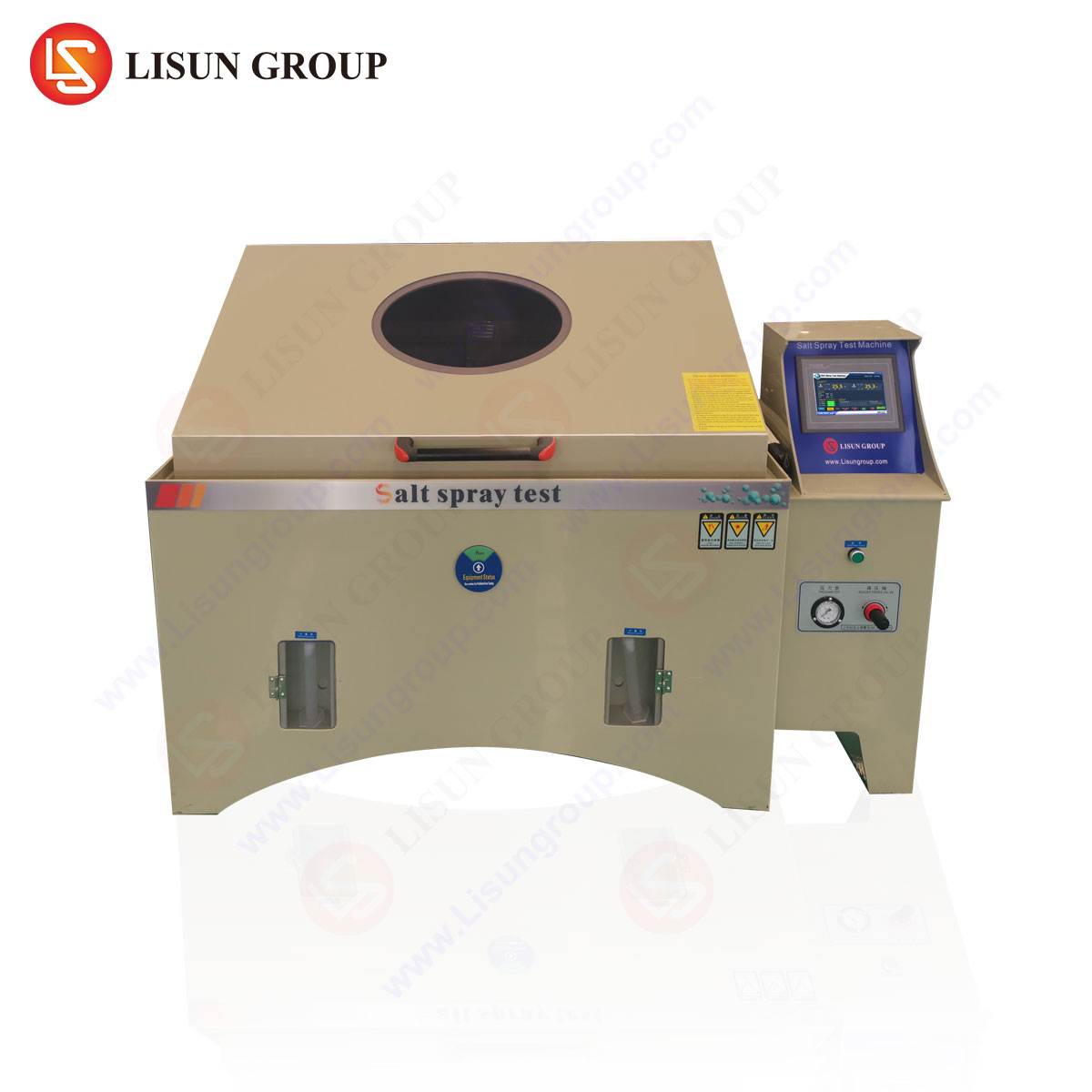
Corrosion remains one of the most pervasive and economically detrimental failure mechanisms for metallic components and protective coatings across global industries. The electrochemical degradation of materials, accelerated by environmental contaminants such as chloride ions, compromises structural integrity, electrical functionality, and product longevity. To predict and quantify material performance in aggressive atmospheres, standardized accelerated corrosion testing is indispensable. Among these methodologies, salt fog (salt spray) testing represents a cornerstone technique, providing a controlled, reproducible environment to assess corrosion resistance within a condensed timeframe. This article examines the technical principles, standardization, and application of salt fog testing, with a specific analysis of a modern testing apparatus, the LISUN YWX/Q-010X Salt Spray Test Chamber.
Fundamental Principles of Accelerated Salt Fog Corrosion
The salt fog test operates on the principle of creating an accelerated corrosive environment to simulate, in a compressed period, the effects of long-term exposure to marine or de-icing salt atmospheres. The core mechanism involves the atomization of a prepared sodium chloride (NaCl) solution into a fine fog within a sealed, temperature-controlled chamber. Test specimens, placed on inert racks, are continuously or intermittently exposed to this saturated saline atmosphere.
The primary corrosive agent is the chloride ion (Cl⁻), which is highly aggressive towards passive oxide layers on metals such as steel, aluminum, and zinc. Upon condensation on the specimen surface, the electrolyte film facilitates electrochemical reactions: anodic metal dissolution and cathodic oxygen reduction. The constant replenishment of the electrolyte via fresh fog prevents drying and mitigates the accumulation of corrosion products that might otherwise stifle further attack in natural environments, thereby ensuring a consistently aggressive condition. This “unnatural” persistence of a wet, chloride-rich film is precisely what enables the acceleration factor, which can range from 5:1 to 50:1 or higher compared to real-world service, depending on the material and environment simulated.
It is critical to recognize that salt fog testing is a comparative tool, not an absolute predictor of service life. Its value lies in providing a consistent baseline for quality control, comparative evaluation of different materials or coating systems, and detection of processing flaws such as inadequate coating thickness, poor adhesion, or presence of pores.
Architectural and Operational Parameters of a Modern Test Chamber
The reliability and reproducibility of salt fog testing are wholly dependent on the precision and stability of the testing apparatus. A contemporary chamber, such as the LISUN YWX/Q-010X, integrates several critical subsystems to maintain compliance with international standards like ASTM B117, ISO 9227, and JIS Z 2371.
The chamber is constructed from corrosion-resistant materials, typically thick, welded polyvinyl chloride (PVC) or polypropylene for the main tank, ensuring longevity against the saline environment. A key component is the atomization system, comprising a compressed air supply with precise pressure regulation, a saline solution reservoir, and a nozzle designed to generate fog of a specific droplet size and distribution. The compressed air must be conditioned—filtered, de-oiled, and humidified (saturated) to prevent crystallization at the nozzle and to maintain consistent solution salinity. The YWX/Q-010X, for instance, employs an air saturator tower that bubbles compressed air through heated deionized water, bringing it to near 100% relative humidity at the test temperature before it meets the brine.
Temperature control is paramount. The chamber interior and a separate saturated air barrel are maintained at a stable equilibrium, typically at +35°C ± 2°C for the neutral salt spray (NSS) test. Uniformity is achieved via a forced air circulation system with heaters and sensors. The chamber design also includes a condensate collection system with calibrated funnels to verify the sedimentation rate, which must fall within 1.0 to 2.0 ml per 80 cm² per hour, as per standard requirements.
The LISUN YWX/Q-010X: A Technical Specification Overview
The LISUN YWX/Q-010X Salt Spray Test Chamber exemplifies the integration of these operational parameters into a robust, user-oriented platform. Designed for continuous, high-reliability operation, its specifications cater to demanding laboratory environments.
Key Specifications:
- Chamber Volume: 1080 Liters (Customizable models available)
- Temperature Range: Ambient to +55°C
- Temperature Stability: ±0.5°C
- Test Chamber Temperature Uniformity: ±2.0°C
- Salt Spray Sedimentation Rate: 1.0~2.0 ml/80cm²/h (adjustable)
- pH of Collected Solution: 6.5~7.2 (NSS test)
- Atomization Method: Nozzle-based, with external mixing
- Construction: Reinforced PVC for chamber, PP for saturated barrel, composite insulation
- Control System: Digital PID controller with touchscreen HMI for programming test cycles, temperature, and spray functions.
- Standards Compliance: ASTM B117, ISO 9227, JIS Z 2371, DIN, MIL-STD, and other derivative standards.
The YWX/Q-010X differentiates itself through several engineered advantages. Its air pre-saturation system is independently temperature-controlled, ensuring precise adherence to the humidity requirement prior to atomization. The chamber utilizes a tower-style nozzle with a large bore diameter, significantly reducing the clogging incidents common with smaller nozzles, thereby enhancing operational continuity and reducing maintenance. Furthermore, its control system allows for programmable cyclic corrosion tests (CCT), where periods of salt spray, humidity, drying, and static soak can be sequenced, moving beyond traditional continuous spray to simulate more complex environmental cycles.
Industry-Specific Applications and Material Evaluation
The application of salt fog testing spans virtually every sector where metal components or electronic contacts are deployed. The test methodology, however, is tailored through specific standards and acceptance criteria relevant to each industry.
Automotive Electronics and Aerospace Components: In automotive applications, electronic control units (ECUs), sensor housings, connector terminals, and brake system components are subjected to tests like ISO 9227 (NSS) and more advanced cyclic tests such as SAE J2334. The goal is to assess the integrity of conformal coatings on printed circuit boards, the corrosion resistance of aluminum heat sinks, and the performance of plated contacts. Aerospace standards, including Airbus AITM and Boeing BSS, often specify extended duration tests with precise post-test electrical continuity checks for critical avionics enclosures and flight control system components.
Electrical & Electronic Equipment, Telecommunications, and Industrial Control: For industrial switchgear, server racks, telecommunications base station housings, and programmable logic controller (PLC) enclosures, corrosion can lead to catastrophic electrical failure or signal degradation. Testing per IEC 60068-2-11 evaluates the protective qualities of powder coatings, galvanization, and chromate conversion coatings on steel and aluminum enclosures. The YWX/Q-010X’s capacity accommodates full-sized panel sections or multiple smaller components like terminal blocks, relays, and sockets.
Lighting Fixtures and Outdoor Consumer Electronics: Marine lighting, streetlamp housings, and outdoor surveillance camera bodies are exposed to direct salt-laden atmospheres. Salt fog testing verifies the sealing effectiveness of gaskets (evaluating for creep corrosion) and the durability of anodized or painted finishes on aluminum extrusions. Failure manifests as cosmetic blistering, loss of ground continuity, or lens fogging.
Medical Devices and Electrical Components: While biocompatibility is primary, devices used in coastal areas or those requiring frequent sterilization (which can compromise coatings) must resist corrosion. Housings for portable diagnostic equipment, surgical tool casings, and the internal springs and contacts of switches are tested. For electrical components like circuit breakers and sockets, the test ensures that corrosion does not increase contact resistance or cause mechanical seizure, per standards like UL 746.
Cable and Wiring Systems: Connectors, cable glands, and the shielding braids of cables are vulnerable. Testing assesses the performance of nickel or tin plating on contacts versus more expensive gold plating, and the corrosion resistance of cable jacket materials when exposed to saline condensate.
Interpretation of Test Results and Limitations of the Methodology
Post-test evaluation is as critical as the test execution. Standard procedures involve careful removal of specimens, gentle rinsing to remove salt deposits, and drying prior to assessment. Evaluation criteria are predefined and can include:
- Time to First Corrosion: Recording the hours until white rust (zinc corrosion) or red rust (steel corrosion) appears.
- Extent of Corrosion: Assessed via standardized pictorial comparators (e.g., ISO 10289) or by measuring the percentage of surface area affected.
- Corrosion Creep: Measuring the undercutting of coatings from a deliberate scribe line, per ASTM D1654.
- Functional Testing: For electronic items, verifying operational status, insulation resistance, and contact resistance after exposure.
Acknowledging the limitations of the salt fog test is essential for proper data application. The continuous wetness and constant chloride deposition do not replicate outdoor cycles of wetting and drying, UV exposure, or pollution variations. It is poorly correlated with performance for some coating systems, like certain paints, which may perform better in the field than in the test. Consequently, the neutral salt spray (NSS) test is often considered a “first filter,” with cyclic corrosion tests (CCT) providing a more correlative, though more complex, assessment for many modern materials.
Advancements and the Evolution Towards Cyclic Corrosion Testing
The industry trend is moving decisively towards Cyclic Corrosion Testing (CCT). While the YWX/Q-010X proficiently handles traditional continuous spray, its programmability positions it for this evolution. A typical CCT cycle might involve: 1 hour of salt fog, 1 hour of air drying, 4 hours of high humidity (95% RH at 49°C), and 2 hours of ambient conditioning. These cycles better simulate diurnal environmental changes, including wet deposition from fog, drying by sun and wind, and nocturnal condensation.
CCT has demonstrated superior correlation with real-world performance for automotive coatings, aerospace alloys, and electronic assemblies. It allows for the introduction of other stressors, such as UV radiation (in combined chambers) or sub-zero freezing cycles. The move towards CCT represents a shift from a purely qualitative, pass/fail test towards a more sophisticated, performance-predictive tool.
Frequently Asked Questions (FAQ)
Q1: What is the required purity and concentration of the sodium chloride solution for ASTM B117 testing?
A1: The solution must be prepared using sodium chloride that is ≥95% sodium chloride by mass, with specific limits on impurities such as copper, nickel, and iodides. It is dissolved in deionized or distilled water to a concentration of 5% ± 1% by mass (50 g/L ± 10 g/L). The pH of the collected solution must be adjusted to between 6.5 and 7.2 when measured at +35°C.
Q2: How does the YWX/Q-010X handle the problem of nozzle clogging, a common issue in salt spray testing?
A2: The chamber employs an external-mixing, tower-style nozzle with a larger orifice diameter compared to traditional internal-mixing nozzles. This design reduces the likelihood of salt crystallization at the tip. Furthermore, the integrated air saturator ensures the compressed air is fully humidified at the test temperature, preventing premature evaporation of water from the brine at the nozzle, which is a primary cause of clog formation.
Q3: Can the chamber be used for tests other than the standard Neutral Salt Spray (NSS)?
A3: Yes. By modifying the test solution and chamber conditions, the apparatus can conduct Acidified Salt Spray (ASS, per ISO 9227) using acetic acid to achieve a pH of ~3.1-3.3, and Copper-Accelerated Acetic Acid Salt Spray (CASS, per ASTM B368) for rapid testing of decorative copper-nickel-chromium plating. Its programmable controller also enables basic cyclic tests involving spray, humidity, and dry-off periods.
Q4: What are the critical calibration and maintenance procedures to ensure test result validity?
A4: Essential procedures include: daily verification of chamber temperature and collection rate; weekly calibration of temperature sensors and checking of solution pH; monthly cleaning of the chamber, nozzles, and saturator tower to prevent biological growth and salt buildup; and an annual comprehensive calibration of all sensors and the air pressure regulator by a qualified technician. Maintaining a log of all checks is mandatory for audit and quality assurance purposes.
Q5: For testing electronic assemblies, what are the typical post-test evaluation steps beyond visual inspection?
A5: After rinsing and drying, functional testing is paramount. This includes powering up the unit to check for operational failures, measuring insulation resistance between isolated conductors, and verifying contact resistance of switches and connectors. For printed circuit board assemblies (PCBAs), microscopic inspection for dendrite growth (conductive anodic filaments) and corrosion of fine-pitch leads is necessary. Electrical testing should be performed before and after exposure to quantify degradation.