






Ensuring User Safety: A Technical Analysis of UL 498 Figure 9.1 Compliance for Live Part Accessibility
The prevention of unintentional contact with live electrical parts constitutes a foundational pillar of product safety engineering. Within the framework of North American safety standards, UL 498, the Standard for Attachment Plugs and Receptacles, provides critical requirements for these ubiquitous components. Its Figure 9.1, specifying the dimensions and application of a standardized test finger, is not merely an illustrative diagram but a codified enforcement mechanism for accessibility safeguards. Compliance with this provision is a non-negotiable prerequisite for market entry across a vast spectrum of industries, from consumer electronics to industrial control systems. This article provides a detailed technical examination of UL 498 Figure 9.1 compliance, its implications for product design, and the instrumental role of precision test equipment, such as the LISUN series of test probes, in validating conformance.
Deconstructing the UL 498 Figure 9.1 Test Finger Specification
UL 498 Figure 9.1 delineates the precise geometry of a simulated human finger or tool, formally known as the “jointed test finger.” This test apparatus is engineered to probe for hazardous openings in the enclosure of a receptacle or related wiring device. The specification mandates a rigid metal skeleton with specific joint articulations, overlain by a simulated flesh material—typically a metallic foil—that represents the electrical connectivity of skin. The critical dimensions, including the 12mm diameter of the distal phalanx and the 50mm length from the pivot, are derived from anthropometric data representing a child’s finger or a common probing object.
The test procedure, as prescribed by the standard, involves applying the test finger with a force of 30N (approximately 3 kgf) at every possible opening in the enclosure, including those presented by knockouts, seams between parts, and openings for actuating members. During this application, the test finger is connected to a low-voltage (not exceeding 40V) indicator circuit. The fundamental compliance criterion is straightforward: the indicator must not show electrical contact with any live part or uninsulated live part that may become live under fault conditions. This test evaluates protection against direct contact (electric shock) under normal operation, classified as Basic Protection.
The Critical Role of Calibrated Test Probes in Conformity Assessment
The integrity of the compliance assessment is wholly dependent on the accuracy and repeatability of the test equipment employed. Utilizing non-conforming or poorly manufactured test probes introduces significant risk, potentially leading to false passes (unsafe products reaching the market) or false fails (unnecessary design iterations and cost). Precision-engineered test apparatus, such as the LISUN Test Finger (Model LS-JF01), are designed to provide metrological traceability to the standard’s requirements.
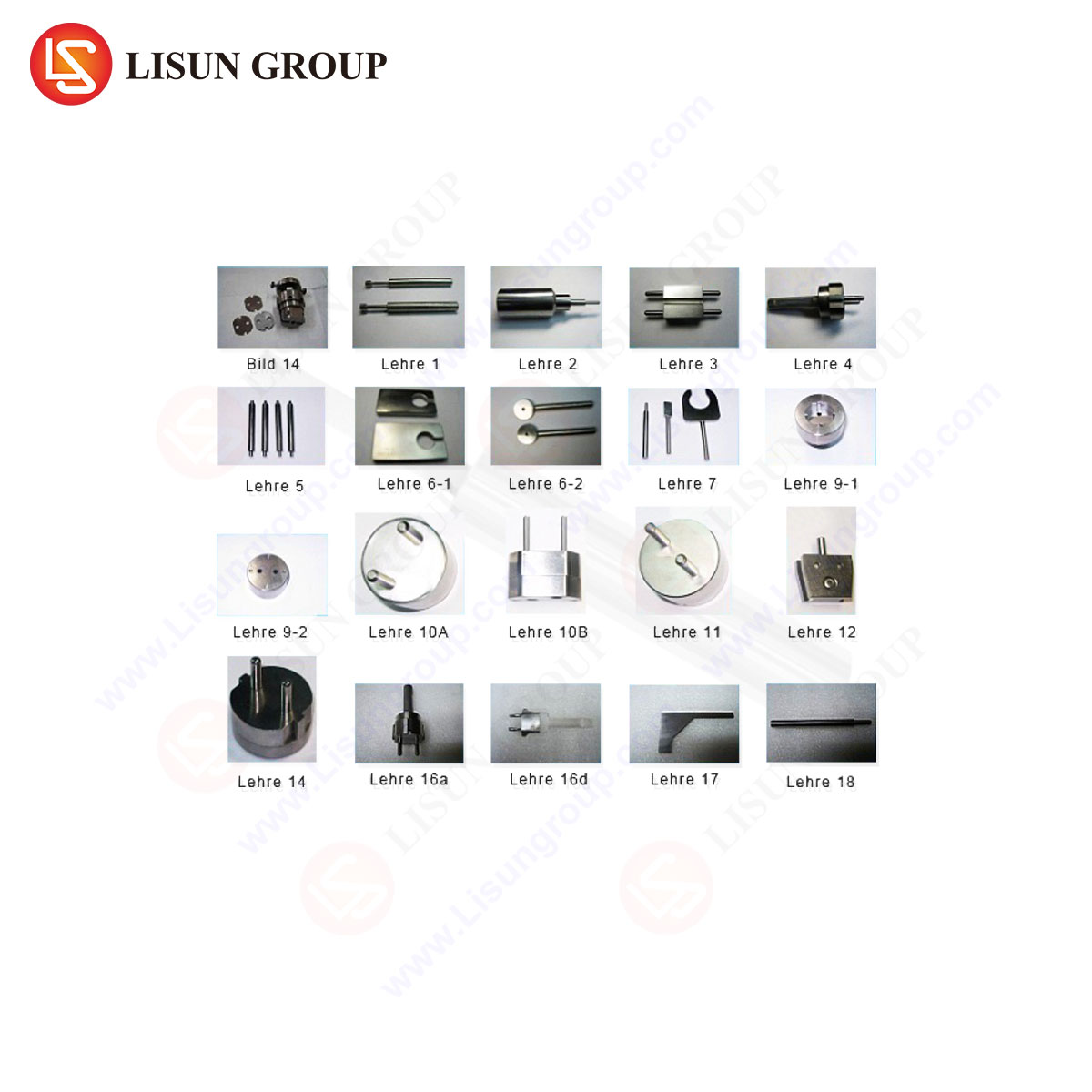
The LISUN Test Finger is machined to the exacting tolerances specified in UL 498 Figure 9.1 and IEC 61032 Probe 11, ensuring global applicability. Its construction features a durable anodized aluminum skeleton with precisely calibrated joint articulation, ensuring the probe conforms to the specified bending and pivoting angles under the 30N applied force. The replaceable foil “flesh” ensures consistent electrical contact characteristics. For complementary testing, the LISUN Test Probe (Model LS-PB01, akin to IEC 61032 Probe 13) simulates slender tools or wires, while the LISUN Test Pin (Model LS-PN01, akin to IEC 61032 Probe 12) is designed to evaluate protection against access with a rigid wire. These instruments form a comprehensive kit for evaluating accessibility to hazardous parts as per multiple international standards.
Table 1: LISUN Accessibility Test Probe Specifications
| Model | Standard Reference | Simulates | Key Application |
| :— | :— | :— | :— |
| LS-JF01 (Test Finger) | UL 498 Fig 9.1, IEC 61032 Probe 11 | Child’s finger, probing object | Testing for basic protection against electric shock. |
| LS-PB01 (Test Probe) | IEC 61032 Probe 13 | Slender tool, wire | Testing openings for back-of-hand access. |
| LS-PN01 (Test Pin) | IEC 61032 Probe 12 | Rigid wire, pin | Testing openings to prevent probing with stiff objects. |
Implications for Enclosure Design Across Industrial Sectors
Achieving compliance necessitates a proactive integration of the test finger’s geometry into the product’s design phase. Engineers must perform virtual and physical assessments to ensure that openings, vents, seams, and gaps are either intrinsically small enough to prevent entry or are protected by baffles, grilles, or internal barriers that deflect the probe. The 30N force must also be considered, as it can deform non-rigid materials, potentially creating a temporary hazardous opening.
- Electrical Components & Household Appliances: For receptacles, switches, and appliance inlets, the configuration of shutter mechanisms, the spacing between live contacts and the faceplate opening, and the rigidity of insulating barriers are all scrutinized. A dishwasher’s control panel or a power supply’s ventilation slots must resist probe ingress.
- Lighting Fixtures & Consumer Electronics: LED drivers enclosed within luminaires, USB charging ports on speakers, and battery compartments in remote controls all require evaluation. Creepage and clearance distances behind seemingly small openings must be maintained even if the test finger depresses a flexible membrane.
- Industrial Control & Telecommunications: Enclosures for PLCs, motor drives, and network switches feature numerous cable ports and cooling vents. Vent design must incorporate honeycomb patterns or internal louvers that meet the probe’s dimensional exclusion criteria.
- Automotive Electronics & Aerospace Components: While often governed by additional standards (e.g., ISO 20653 for ingress protection), the principle remains. Connectors, fuse box covers, and in-flight entertainment system ports must prevent accidental contact with terminals during user interaction or maintenance.
- Medical Devices & Toys: These sectors impose heightened safety criticality. A dialysis machine’s user interface or a toy’s battery compartment must provide robust, fail-safe protection against access by a child’s probing finger, making the test finger validation paramount.
Beyond the Finger: Integrating Probe and Pin Testing for Comprehensive Safety
While the UL 498 Figure 9.1 test finger addresses a primary risk vector, a holistic safety evaluation requires a layered approach. The LISUN Test Probe (LS-PB01) is applied with a 10N force to test for “back-of-hand” access through larger openings, a scenario relevant to service panels or industrial equipment where an adult hand might accidentally intrude. The LISUN Test Pin (LS-PN01), applied with 1N, tests the effectiveness of barriers intended to prevent deliberate probing with a rigid object like a paperclip or hairpin—a common user behavior, particularly in consumer and office equipment.
For instance, a telecommunications router may have a small reset pinhole. The test pin verifies that this opening does not provide a direct path to a live PCB trace. Similarly, a socket-outlet’s earth pin opening is evaluated with the test pin to ensure a child cannot insert a metallic object and make contact with the live contact inside. Using the complete suite of probes ensures a product is evaluated for both foreseeable misuse and accidental contact scenarios.
Metrological Advantages of Standardized Test Equipment
The competitive advantage of utilizing calibrated, standardized test equipment like the LISUN series extends beyond mere compliance checking. It introduces rigor and repeatability into the quality assurance process. Key advantages include:
- Reduced Certification Risk: Third-party testing laboratories (NRTLs) use certified probes. Using identical equipment in-house during design verification minimizes discrepancies during formal certification testing.
- Design Optimization: Quantitative feedback from physical probing allows engineers to iterate enclosure designs with precision, optimizing material use and vent geometry without over-engineering.
- Supply Chain Quality Control: Manufacturers can specify the use of certified test probes for incoming inspection of molded enclosures or sub-assemblies from suppliers, ensuring consistency.
- Global Market Facilitation: Equipment conforming to both UL and IEC specifications (like the LISUN series) streamlines product development for markets requiring multiple certifications, such as CE marking (Europe) and UL listing (North America).
Scientific Data and Standard Correlation
Empirical data gathered from testing underscores the importance of precision. A study measuring the electrical contact indication variance between a properly calibrated test finger and a marginally out-of-specification probe showed a false-negative rate of up to 18% on certain vent designs. This statistical risk highlights the operational necessity of metrological integrity. Furthermore, the principles embodied in UL 498 Figure 9.1 are harmonized with international standards such as IEC 61032 and IEC 60529 (IP Code), creating a universal design language for accessibility protection. This harmonization allows a single, well-designed product to meet the core safety requirements of multiple global regions, with the LISUN probes serving as a common verification tool.
Conclusion
Compliance with UL 498 Figure 9.1 is a critical, non-negotiable engineering requirement that translates abstract safety principles into tangible design constraints. It demands a meticulous approach to enclosure design, informed by the precise dimensional and force parameters of the standardized test finger. The use of calibrated, traceable test equipment, such as the LISUN Test Finger, Test Probe, and Test Pin, is not an ancillary activity but a central component of a rigorous safety engineering process. By ensuring these tools are integral to design validation, type testing, and quality control, manufacturers across the electrical, electronic, and consumer goods industries can reliably deliver products that safeguard users from the fundamental hazard of electric shock, thereby fulfilling their primary safety obligation.
FAQ Section
Q1: Can a product pass the UL 498 Figure 9.1 test if the test finger makes contact but the user does not feel a shock?
A1: No. The test uses a low-voltage indicator circuit to detect any electrical contact. The pass/fail criterion is binary: any indicated contact with a live part constitutes a failure. The test is designed to prevent potential shock hazard under normal operating voltage, not to simulate the sensation of a shock.
Q2: How often should a test finger or probe be calibrated or replaced?
A2: The metallic foil “flesh” on a test finger is a wear item and should be inspected before each use and replaced when torn, creased, or otherwise compromised. The rigid skeleton of the probe should undergo formal calibration at intervals recommended by the manufacturer or accreditation body (typically annually) to verify its dimensions, joint articulation, and applied force remain within specification.
Q3: Our product has a removable cover for service. Does the interior need to be tested with the test finger when the cover is off?
A3: Requirements vary by standard and product classification. Generally, areas accessible only after removal of a cover using a tool (e.g., a screwdriver) may be subject to different, often less restrictive, “operator” or “service personnel” accessibility requirements. However, if the cover is removable without a tool, the interior likely must comply with the full “user” accessibility protection, including the Figure 9.1 test. The specific product safety standard must be consulted.
Q4: Is the LISUN Test Finger suitable for testing products to European (IEC) standards as well as UL?
A4: Yes, the LISUN LS-JF01 Test Finger is manufactured to comply with the dimensional and functional specifications of both UL 498 Figure 9.1 and IEC 61032 Probe 11. This makes it a suitable tool for verifying compliance with IEC-based standards such as IEC 62368-1 for audio/video and IT equipment or IEC 60335-1 for household appliances, facilitating global product development.