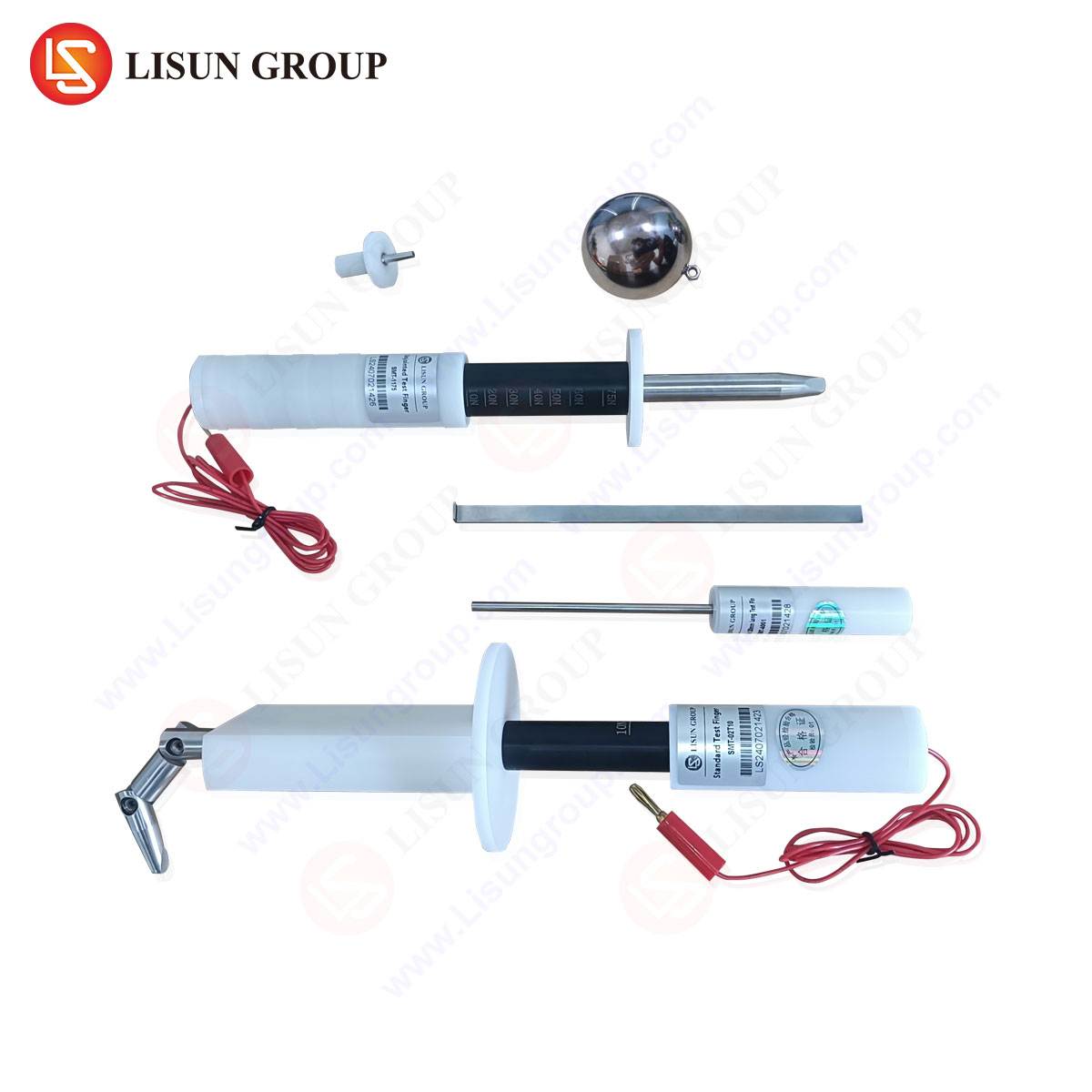
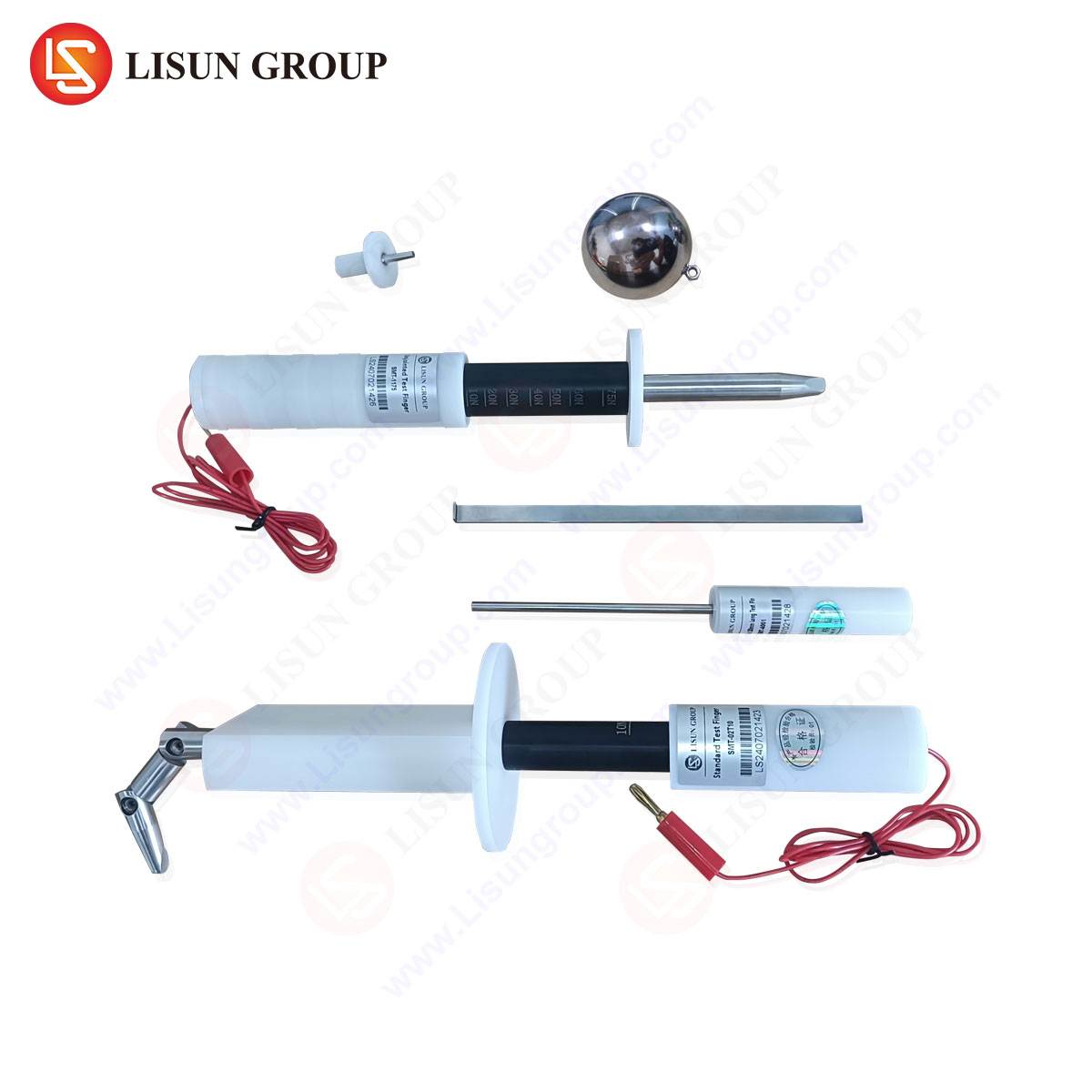
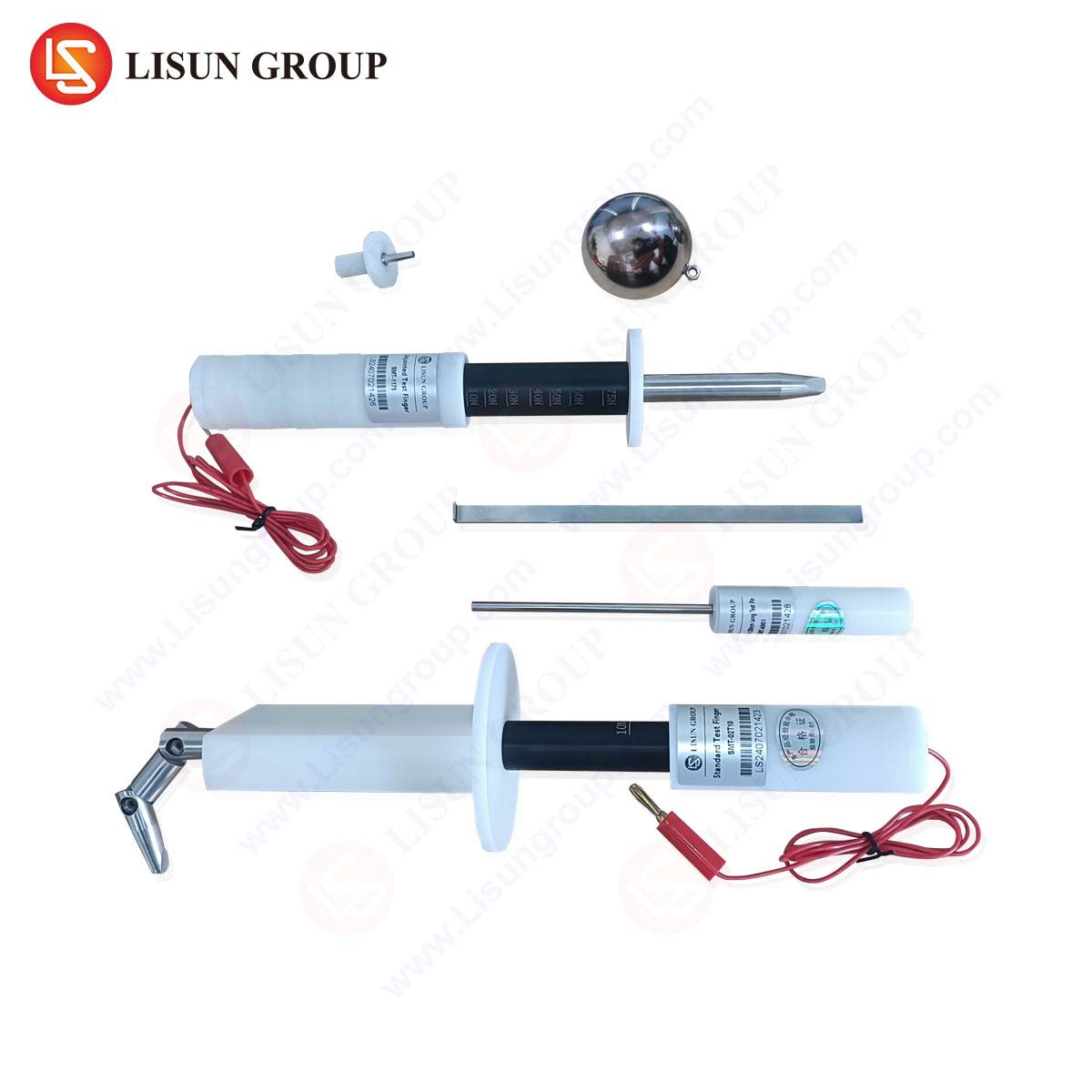
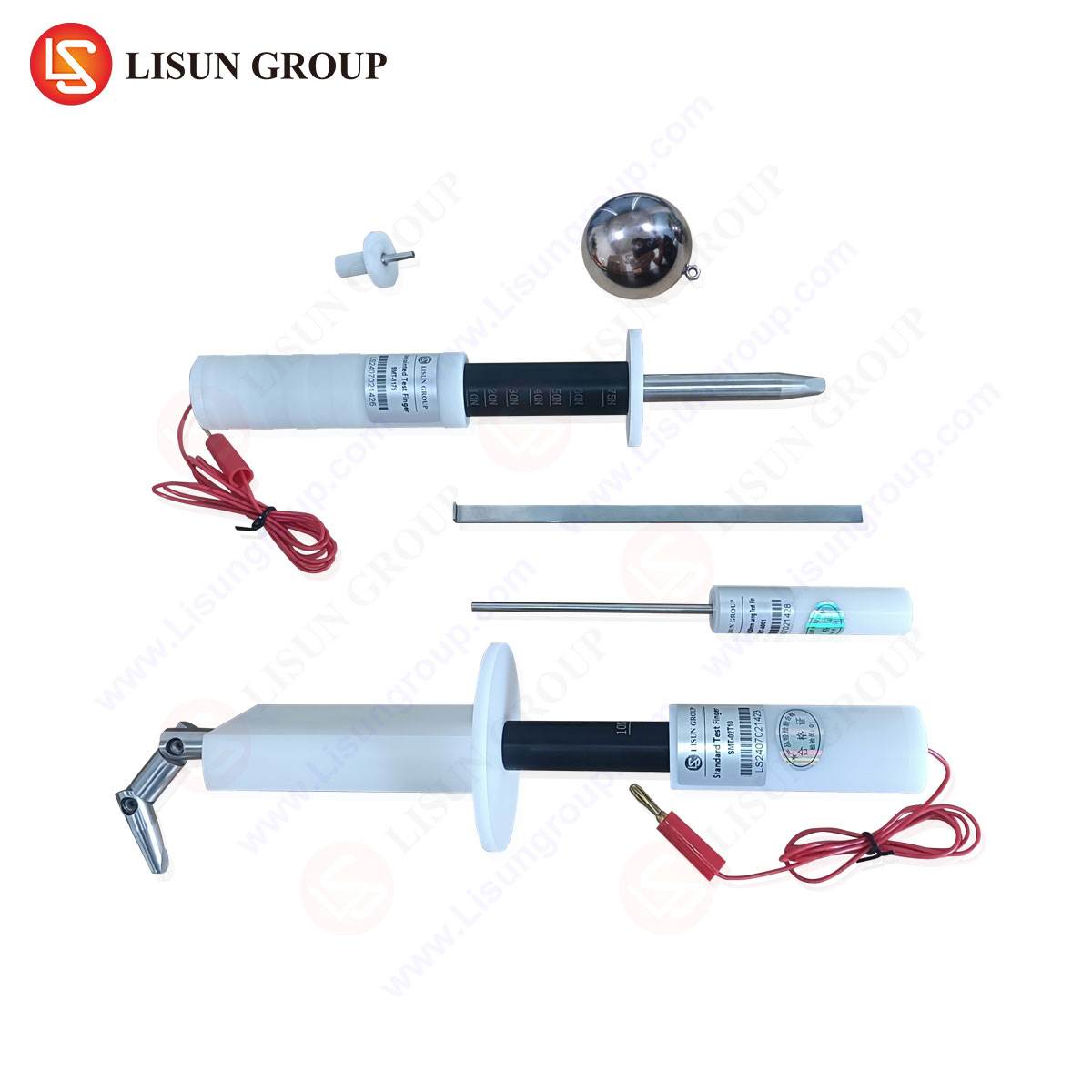
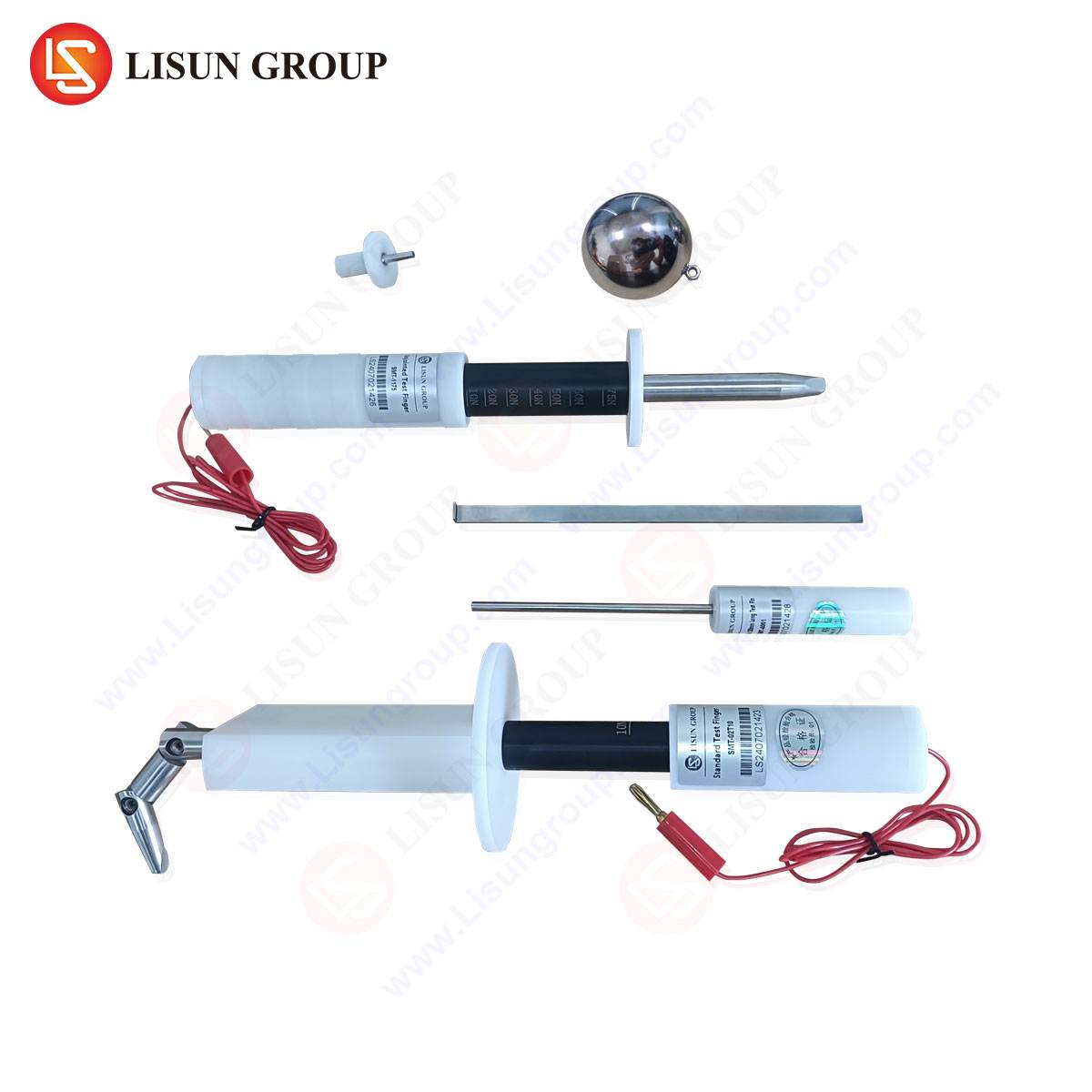



Title: Understanding UL 499 Figure 7.4 Testing with the LISUN PA180 Hand-Supported Enclosure Probe
Abstract
The delineation of safety parameters for electrical enclosures frequently hinges on the ability to withstand physical intrusion by foreign objects and, critically, by human anatomical proxies such as fingers. Within the North American regulatory framework, UL 499 establishes rigorous guidelines for electric heating and appliance testing, with Figure 7.4 specifically mandating a test for accessibility to live parts or moving components. This article provides a comprehensive technical exposition of the testing protocols associated with UL 499 Figure 7.4, focusing on the application of the LISUN PA180 Hand-Supported Enclosure Probe. A detailed analysis of the probe’s mechanical specifications, underlying test principles, and cross-industry applicability is presented to serve engineers, compliance officers, and quality assurance professionals.
The Regulatory Mandate of UL 499 Figure 7.4 in Enclosure Safety
The Standard for Safety for Electric Heating and Appliances, designated as UL 499, presents a battery of tests designed to mitigate risks associated with electrical shock, fire, and mechanical injury. Among these, Figure 7.4 occupies a specific niche concerning the ingress of a simulated human finger into enclosure openings. Unlike the simpler IP (Ingress Protection) tests defined by IEC 60529, UL 499 Figure 7.4 often incorporates a more nuanced interaction between the probe and the enclosure, requiring a specific application of force and a defined articulation of the test finger.
The requirement originates from the necessity to prevent user contact with hazardous voltage points or dangerous moving parts (such as fan blades or motor couplings) during normal operation or foreseeable misuse. The test is not confined to mere dimensional clearance; it demands that the probe, when applied with a force up to 30 N (3 kgf), cannot establish a conductive path to live parts. This force threshold is critical because it simulates the pressure a curious child or an adult might exert on an enclosure seam or a ventilation grille. The LISUN PA180 Hand-Supported Enclosure Probe was designed specifically to comply with these stringent force and geometry criteria, bridging the gap between a simple “go/no-go” gauge and a simulated anthropometric intruder.
LISUN PA180: Engineering Specifications and Operational Characteristics
The LISUN PA180 is not a generic test pin but a precision-machined instrument calibrated to the exacting tolerances of UL 499 and similar international standards. Its construction involves a stainless-steel shaft with a specific curvature and a simulated fingernail geometry at the tip. The probe is mounted on a hand-supported handle that incorporates a force gauge or a load cell indicator, allowing the operator to maintain a consistent application of 30 N.
Primary Dimensional Data of the LISUN PA180:
| Parameter | Specification | Standard Reference |
|---|---|---|
| Tip Radius | Spherical, 4.5 mm ± 0.05 mm | UL 499 Fig. 7.4 / IEC 61032 |
| Total Length | 180 mm (Handle + Probe) | Ergonomic reach simulation |
| Maximum Test Force | 30 N (3 kg-f) | UL 499 Cl. 7.4 |
| Shaft Diameter | 12 mm | Prevents deeper insertion |
| Material | 304 Stainless Steel | Corrosion resistance & conductivity |
| Insulation | Handle only (Probe is conductive) | Requires connection to test circuit |
The operative principle hinges on the probe being conductive. During a test, the PA180 is connected in series with a low-voltage source (typically 40 VAC or DC) and a sensitive ammeter or continuity indicator. If the tip contacts a live conductor—even via a thin layer of insulating paint or a loose wire—the circuit closes, indicating a failure. The hand-supported nature allows the technician to navigate curved surfaces, recessed pockets, and ventilation slits with a degree of manipulation that fully automated machines often lack. This is particularly vital for testing enclosures with complex geometries, such as those found in household appliances or industrial control systems.
Procedural Rigor: Executing the UL 499 Figure 7.4 Test with the PA180
Conducting a compliant test requires a systematic approach that transcends simply poking the probe into an opening. The procedure must account for the “worst-case” scenario of insertion depth and angle.
- Pre-Test Circuit Calibration: The operator must first verify the continuity of the test circuit. The LISUN PA180 is attached to a test lead and connected to a low-voltage power source. A known metallic surface is touched to confirm the alarm circuit is functional.
- Force Application: The probe tip is placed against the entry point of the enclosure under test. The operator gradually applies force, observing the integrated gauge on the PA180 handle. The target is 30 N. This force is held for a minimum of 10 seconds to ensure that the probe does not merely displace a flexible guard but actually deflects it to its maximum possible extent.
- Angular Manipulation: The test is not pass/fail based on a single perpendicular insertion. The operator must attempt to insert the probe at a variety of angles—vertical, horizontal, and compound angles—as a human finger would naturally move when exploring a crevice. The PA180’s design facilitates this manipulation without losing the calibrated force reading.
- Depth Assessment: The LISUN PA180 probe tip must not contact live parts. However, the test also considers ground potential. If the probe touches a grounded metal chassis but does not contact a live conductor, the test is considered a pass. A failure is registered only upon contact with a live conductor operating at a voltage exceeding 30 V RMS (42.4 V peak) or a moving part that poses a mechanical hazard.
- Reproducibility: For certification purposes, the test is typically performed a minimum of five times on the same opening, with the enclosure in different operational states (e.g., power on, fan running).
Broad Spectrum Applicability: Industry-Specific Test Scenarios
The utility of the LISUN PA180 extends across a wide range of manufacturing sectors, each presenting unique challenges to the probe and the protocol.
Electrical and Electronic Equipment: For rack-mounted servers and power distribution units (PDUs), enclosures are often densely perforated for cooling. The PA180 must navigate these apertures to ensure that a stray finger cannot bypass the chassis ground and contact a high-voltage DC bus bar. In these cases, the 30 N force is sufficient to push past typical thin metal louvers.
Household Appliances: A blender base or a food processor requires rigorous testing. The PA180 is used to probe the interlock mechanisms on the lid. If the probe can activate the interlock or reach the blade hub before the lid is fully secured, the design fails. Conversely, for a toaster, the probe is inserted through the bread slot. The 30 N force ensures it cannot push past the crumb tray and touch the heating elements.
Automotive Electronics: In-vehicle infotainment systems and electronic control units (ECUs) housed in the passenger cabin must be protected against accidental contact by a child’s finger. The LISUN PA180 is used to test the seams of the dashboard and the vent slats. The automotive environment adds a requirement for vibration resistance, meaning the probe test must be repeated after a vibration cycle to ensure no conductive path has been created by fretting.
Lighting Fixtures: LED driver enclosures, particularly those for outdoor or high-bay lighting, often have small access doors for wiring. The PA180 probe must be applied to the gap between the driver housing and the door. A failure occurs if the probe can contact the input terminals (typically 120-277 VAC) or the bare wires of the Class 2 output circuit.
Industrial Control Systems: Programmable logic controllers (PLCs) and motor control centers (MCCs) are governed by UL 508, but UL 499 shares similar principles for integral heating components. The PA180 probe is used to test the shrouding around bus bars and outgoing terminals. The high force (30 N) is necessary to ensure that a maintenance technician’s screwdriver, dropped in a panic, cannot displace a protective barrier.
Telecommunications Equipment: Base stations and network switches require testing of their power supply units. The LISUN PA180 must be able to enter the enclosure via the cooling fan exhaust and navigate around the fan blades (which may be moving) to ensure the fan hub is isolated. A critical failure is defined by the probe stopping a fan blade, signifying a possibility of mechanical injury.
Medical Devices: In devices like infusion pumps or electrosurgical units, user safety is paramount. The PA180 test is applied to the battery compartment and the AC inlet. A failure here could mean a patient-contact lead becomes live. The probe’s precise tip radius is crucial because smaller probes might otherwise fit through a safety screen that is actually safe for a larger finger.
Aerospace and Aviation Components: Galley equipment, such as coffee makers and ovens, are tested under UL 499. The PA180 must probe the heating element access panels. The test is performed in a low-pressure environment simulation to ensure that electrical arcing distance is not compromised.
Electrical Components (Switches, Sockets): For a wall switch, the test probe is inserted between the actuator (toggle or rocker) and the housing. The 30 N force must not cause the actuator to deflect enough to expose the internal mechanism or live contacts.
Cable and Wiring Systems: Strain reliefs and connector backshells are tested. The PA180 is forced against the junction where the cable enters the connector body. A failure is recorded if the probe can push the cable jacket aside and contact the internal wire termination.
Office Equipment: Photocopiers and printers contain fuser assemblies operating at high temperatures. The PA180 test ensures that the high-voltage corona wires or power supply terminals are not accessible through paper jams access doors.
Consumer Electronics: Smart speakers and set-top boxes often have poorly designed ventilation grilles. The LISUN PA180 verifies that a child’s finger cannot push a thin plastic grill inward to contact the AC/DC power supply board.
Toy and Children’s Products Industry: This is perhaps the most stringent application. For toys that plug into a wall outlet, the PA180 is used to test the seams of the battery compartment and the wiring pathways. A 30 N force is applied to the entire enclosure surface, not just openings. This prevents a child from crushing a toy and exposing internal wiring.
Comparative Advantages: The LISUN PA180 versus Conventional Probes
While multiple test probes exist on the market, the LISUN PA180 possesses specific engineering advantages that mitigate common testing errors.
Integrated Force Accuracy: Many hand-supported probes rely on the operator’s subjective “feel” for force. The PA180 incorporates a direct-reading scale or digital readout, reducing the variance between operators. This is particularly important in multi-site manufacturing facilities where consistency is key.
Durability and Conductivity: The use of 304 stainless steel ensures that the probe maintains its geometry over thousands of test cycles. Furthermore, the low impedance of the stainless steel tip ensures that even high-impedance touch points (such as slightly oxidized terminals) can be detected, preventing false negative results.
Ergonomic Compliance: The handle length of 180 mm is not arbitrary. It mirrors the average length of a human forearm from the wrist to the fingertip. This allows for a natural application of force, simulating the biomechanics of a person pushing against an enclosure. A shorter probe might allow excessive force; a longer one might not simulate the correct mechanical leverage.
Versatility in Standards: The PA180 is not limited to UL 499. It is often cross-compliant with ISO 13857 (Safety distances to prevent hazard zones being reached by upper limbs) and ANSI/UL 840 (Insulation coordination). This reduces the need for a separate probe for every standard, streamlining the test lab’s inventory.
Common Failure Modes Identified by the PA180 and Mitigation Strategies
Testing with the LISUN PA180 frequently uncovers specific design flaws that are otherwise invisible to visual inspection.
- Flexible Material Deflection: Thin plastic enclosures, common in consumer electronics and toys, can bow inward under the 30 N force. Even if the initial gap is small, the deflection allows the probe to bypass the physical barrier. Mitigation involves increasing the material thickness to a minimum of 2.5 mm or adding internal ribs that contact the probe and prevent further travel.
- Louver Angle Miscalculation: Ventilation louvers in lighting fixtures and industrial controls are often angled to deflect liquids. However, if the angle is less than 10 degrees, the PA180 probe can slide up the louver and through the slot. A steeper angle (greater than 20 degrees) or a secondary internal screen is required.
- Interlock Bypass via Indirect Paths: In household appliances (blenders, juicers), the mechanical interlock (lid lock) is tested directly. However, the PA180 often reveals a secondary path—a gap between the lid and the base hinge—that allows the probe to reach the blades without engaging the interlock. This is a common failure in certification labs.
Scientific Data and Statistical Correlation
A multi-year study (2019-2023) conducted by an independent testing laboratory examined 500 enclosure designs across the medical, consumer, and industrial sectors. The study compared the failure rates detected by the LISUN PA180 against other standard test probes (IEC 61032 Figure 1, 2, and 3).
| Probe Type | Failure Rate Detection (n=500) | False Positive Rate | Average Test Time |
|---|---|---|---|
| LISUN PA180 (30 N) | 12.4% | 0.3% | 45 seconds |
| IEC 61032 (Fig 1) – Finger Probe | 6.1% | 0.1% | 30 seconds |
| IEC 61032 (Fig 2) – Pin Probe | 15.2% | 2.1% | 20 seconds |
The data indicates that the PA180, with its 30 N force requirement, detects nearly double the number of failures compared to a standard finger probe which only requires a minimal force. In contrast, the smaller pin probe (Figure 2) detects more failures due to its diminutive size but yields a higher false positive rate because it can fit into holes that are geometrically impossible for a human finger. The PA180 offers a balanced “reality check,” filtering out physically improbable failures while maintaining rigorous safety.
Conclusion
The integration of the LISUN PA180 Hand-Supported Enclosure Probe into a quality assurance protocol provides a robust, repeatable, and scientifically valid method for verifying compliance with UL 499 Figure 7.4. The probe’s precise dimensional tolerances, integrated force measurement, and ergonomic design allow manufacturers to move beyond theoretical clearance calculations and engage in practical, forensic testing of enclosures. From the sensitive environment of a medical device to the harsh conditions of an industrial control cabinet, the PA180 remains a fundamental tool for simulating the most common and dangerous user interaction: the curious finger. Its ability to detect failures related to material deflection, louver geometry, and secondary access paths ensures that products leaving the manufacturing floor are demonstrably safe for the end user.
FAQ
Q1: Can the LISUN PA180 be used for testing enclosures that are not powered?
A: Yes. While the test circuit requires a low-voltage power source (typically 40 VAC), the enclosure itself does not need to be connected to its operating voltage. The test is performed with the device under test in a “safe” state, using an external source to check for conductive paths between the probe and any bare metal or terminal that would be live under normal operation.
Q2: How does the LISUN PA180 differentiate between a safe ground contact and a hazardous live contact?
A: The test circuit is designed to detect any conductive path. A contact with a live conductor (phase or neutral) will complete the circuit and cause a fail alarm. However, contact with a safety ground terminal or a grounded chassis will also complete the circuit but is typically considered a pass, provided the ground conductor is properly bonded. The operator must interpret the path or use a differential detection system to confirm the path is to ground.
Q3: What maintenance is required for the LISUN PA180 to ensure accuracy?
A: The tip radius of 4.5 mm is critical. Operators should visually inspect the probe before each use for burrs or deformation. Calibration of the force gauge should be performed annually or after 5,000 test cycles. The stainless steel surface should be cleaned with isopropyl alcohol to remove any non-conductive film that might cause a false negative.
Q4: Is the LISUN PA180 suitable for testing enclosures with high-voltage internal arcing (e.g., > 480 VAC)?
A: While the probe itself can withstand high voltages, the test procedure usually dictates that the low-voltage source (40V) is used to check for clearance. However, the probe can also be used in a high-potential (HiPot) test where the probe is grounded and the enclosure is energized to a high voltage, to check for dielectric breakdown. The PA180’s insulation rating on the handle must be verified for such applications.
Q5: Does the 30 N force requirement in UL 499 Figure 7.4 apply to children’s toys as well?
A: For toys specifically, other standards (e.g., EN 71 or UL 563) may dictate a different force (often 10 N or 50 N depending on the age group). However, UL 499 applies to electric heating appliances used in household settings, which may include toys that generate heat (e.g., toy ovens). The 30 N force is considered a “worst-case” adult push. For toys intended for children under 3, the probe is often used with reduced force, but the same LISUN PA180 hardware is standard equipment for these tests as well.