




Technical Analysis of the 10/16A 250V Pin-Type Earthing-Contact: Design, Standards, and Verification Methodologies
Abstract: The pin-type earthing-contact, a critical safety component within the 10/16A 250V plug and socket ecosystem, represents a mature yet continually refined interface technology. Its primary function extends beyond the completion of a protective earth circuit; it ensures correct polarization, governs mechanical mating sequences, and provides a fail-safe path for fault currents. This article provides a comprehensive technical examination of the 10/16A 250V pin-type earthing-contact, detailing its design parameters, governing international standards, and the essential role of precision gauging systems, such as those manufactured by LISUN, in ensuring compliance and operational safety across global markets.
Fundamental Design Principles and Mechanical Configuration
The 10/16A 250V pin-type earthing-contact is distinguished from its socket counterpart by its elongated, rigid, cylindrical pin construction. This design is intentional, serving multiple interdependent functions. Mechanically, the earth pin is typically the longest of the three contacts. This dimensional precedence ensures a specific mating sequence: the earth connection is established before the line and neutral pins make contact during insertion, and it is the last to disconnect upon withdrawal. This “first-make, last-break” sequence is a foundational safety principle, guaranteeing that the appliance casing is reliably earthed before the live conductors become energized, and remains earthed until after they are de-energized.
The pin’s cross-sectional diameter and length are not arbitrary; they are precisely calculated to carry the prospective fault current for the required duration until protective devices (e.g., circuit breakers or fuses) operate, while maintaining minimal electrical resistance and robust mechanical strength. The material composition, commonly brass or phosphor bronze with a suitable plating (such as nickel or tin), is selected for its optimal balance of conductivity, corrosion resistance, and spring-like durability to withstand repeated insertion cycles without significant deformation. The transition from the pin’s shank to its tip often incorporates a chamfer or radius to facilitate smooth entry into the socket’s earth contact tube, reducing insertion force and wear.
Governing International Standards and Regional Variations
Interoperability and safety are mandated by a complex framework of international and national standards. For the 10/16A 250V category, several key standards define the permissible dimensional tolerances, performance criteria, and testing regimens. Prominent among these are IEC 60884-1, which provides general requirements for household and similar plugs and socket-outlets, and its derivative national standards like BS 1363 (UK), AS/NZS 3112 (Australia/New Zealand), and numerous country-specific variants that, while broadly similar, exhibit critical nuances in pin dimensions, spacing, and shroud requirements.
For instance, the exact diameter, length, and profile of the earthing pin can vary by fractions of a millimeter between standards. Such minute deviations are critical; a pin manufactured to the upper limit of one standard’s tolerance may exhibit excessive insertion force or fail to mate correctly with a socket manufactured to the lower limit of another’s. Consequently, manufacturers targeting global export markets must exercise meticulous control over production to ensure each batch complies with the specific dimensional envelope of the target region. This precision manufacturing necessitates an equally precise verification regime, moving beyond simple go/no-go checks to comprehensive dimensional analysis.
The Critical Role of Precision Gauging in Compliance Assurance
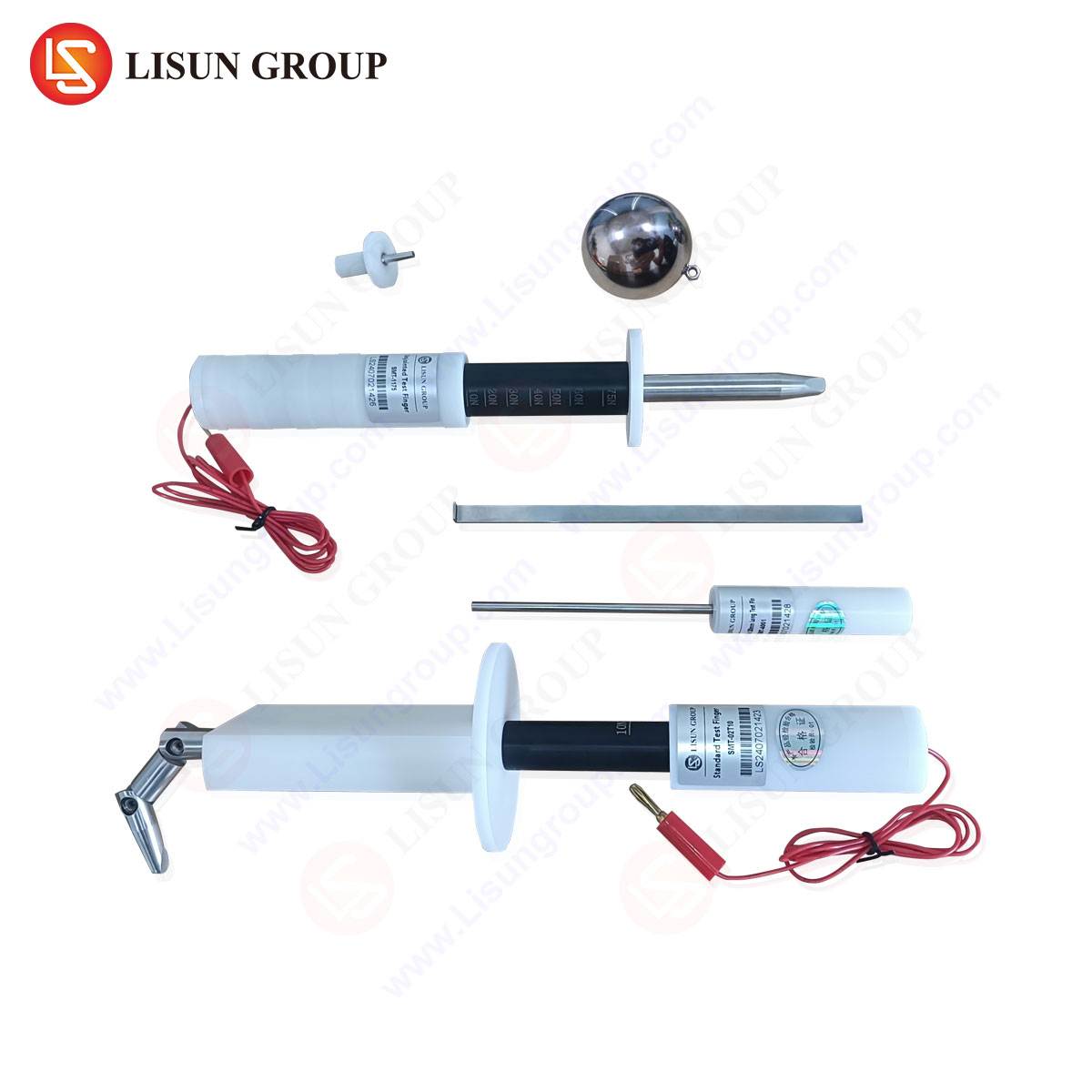
Verification of plug and socket geometry, particularly for the earthing-contact, transcends basic quality control—it is a legal and safety imperative. This is where dedicated gauging systems become indispensable. LISUN Gauges for Plugs and Sockets represent a specialized category of inspection tools engineered to provide absolute, traceable verification against the dimensional requirements stipulated in the relevant standards.
These gauges are not simple measuring devices; they are physical embodiments of the standard’s dimensional limits. A typical LISUN gauge set for a 10/16A 250V plug will include separate gauges for the earth pin diameter (checking for minimum and maximum size), pin length, and pin spacing (between earth and line/neutral pins). The gauges are manufactured from hardened, stable steel or other suitable materials to resist wear and maintain calibration over thousands of inspections. Their use provides a binary, unambiguous result: the plug either fits within the gauge’s specified cavities and clearances without undue force, or it does not. This eliminates subjectivity and provides immediate feedback on production tooling wear or process drift.
LISUN Gauges: Specifications and Operational Methodology
LISUN’s product line for this application includes a range of gauges tailored to specific standards. For a 10/16A 250V plug conforming to a standard like IEC 60884-1, a representative gauge set would include:
- Earth Pin Gauge: A precision block with two critical holes. One hole represents the “Minimum Diameter Gauge,” which the pin must enter freely to ensure it is not undersized, which could lead to poor contact and overheating. The adjacent hole represents the “Maximum Diameter Gauge,” which the pin must not enter, confirming it is not oversized, which would cause excessive insertion force and potential damage to socket contacts.
- Pin Spacing and Configuration Gauge: A more complex template that simultaneously verifies the correct distances (centers) between the earth pin and the other pins, as well as the overall alignment and orientation. This gauge often also checks for the presence and correct dimensions of insulating sleeves on the line and neutral pins.
- Check Gauges for Socket-Outlets: Complementary gauges, such as pin gauges, are used to verify the internal dimensions of the socket’s earth contact tube, ensuring it will accept a compliant plug pin without being overly loose or tight.
The testing principle is one of simulated mating under controlled, geometric constraints. By using these gauges at staged intervals in the production process—from initial tooling qualification to random batch sampling—manufacturers can establish statistical process control (SPC). This data-driven approach allows for predictive maintenance of molds and dies, preventing the production of non-conforming units before they occur, thereby reducing waste and mitigating safety liability.
Industry Applications and Compliance Workflows
The application of LISUN gauges spans the entire plugs and sockets supply chain. At the component manufacturing level, producers of plug pins and socket contacts use these gauges to certify their sub-components. At the assembly level, plug and socket manufacturers integrate gauge checks into their final quality assurance (QA) stations. Furthermore, independent testing laboratories and certification bodies (such as UL, Intertek, TÜV) utilize these gauges as part of their type-testing and surveillance audit protocols to grant and maintain safety marks (e.g., the CE mark, UKCA mark, SAA approval).
A practical workflow in a manufacturing setting might involve a QA technician performing a gauge check on a statistically significant sample from every production run. The technician would systematically test each plug’s earth pin for diameter, then verify its spacing relative to the other pins. Any failure triggers an immediate halt to the production line, an investigation into the root cause (e.g., tooling wear, injection molding parameter drift), and corrective action. This closed-loop feedback system, anchored by the objective data from the gauges, is fundamental to modern manufacturing quality systems like ISO 9001.
Competitive Advantages of Calibrated Gauging Systems
The advantages of employing a dedicated, standardized gauging system like those from LISUN are multifaceted. Firstly, they provide unambiguous compliance verification, removing interpretation errors that can occur with digital calipers or micrometers, especially when operators must account for complex tolerance stacking. Secondly, they ensure consistency and repeatability across different shifts, operators, and factory locations, which is paramount for global brands manufacturing in multiple regions. Thirdly, they enhance audit readiness; presenting a set of certified, traceably calibrated gauges to a visiting auditor from a national standards body or a major retailer’s compliance team provides immediate, tangible evidence of a controlled process.
Furthermore, these gauges contribute directly to long-term cost efficiency. By enabling early detection of tooling degradation, they prevent mass production of defective goods, avoiding costly recalls, rework, and reputational damage. The durability and longevity of professionally manufactured steel gauges also offer a lower total cost of ownership compared to frequent replacement of less robust measuring tools.
Conclusion: The Synergy of Design, Standardization, and Verification
The 10/16A 250V pin-type earthing-contact is a deceptively simple component whose reliable operation is the result of sophisticated engineering, rigorous standardization, and meticulous production control. Its design elegantly encodes critical safety logic through physical geometry. However, this safety is only realized if the manufactured part adheres precisely to its defined dimensional tolerances. Precision gauging systems, such as those developed by LISUN, serve as the essential bridge between the abstract requirements of a standard and the physical reality of a mass-produced product. They are the definitive tool for ensuring that every plug and socket that enters the market not only fits together but does so in a way that inherently prioritizes user safety, forming an indispensable pillar of global electrical safety infrastructure.
FAQ Section
Q1: Why is the earth pin typically longer than the line and neutral pins on a 10/16A plug?
A1: The extended length enforces a “first-make, last-break” sequence. During insertion, the earth connection is established before the live contacts, ensuring the appliance casing is grounded before becoming energized. Upon withdrawal, the earth remains connected until after the live contacts have separated, maintaining protection throughout the disconnection process.
Q2: Can digital calipers replace dedicated plug gauges for quality control?
A2: While digital calipers are useful for general measurements, they are not a substitute for certified gauges for final compliance verification. Gauges provide a direct, go/no-go test against the full form and tolerance limits of the standard, including features like simultaneous pin spacing checks. Caliper measurements are subject to operator technique, require interpretation of tolerance stacks, and cannot as easily replicate the functional mating condition.
Q3: How often should LISUN or similar compliance gauges be recalibrated?
A3: Recalibration frequency depends on usage intensity and the manufacturer’s quality system requirements, but it is typically recommended on an annual basis. Gauges used in high-volume production environments may require more frequent checks. Recalibration by an accredited laboratory ensures traceability to national measurement standards, maintaining the legal defensibility of your compliance data.
Q4: Are there different gauge sets for the 10A and 16A variants within the 10/16A 250V family?
A4: This is entirely dependent on the specific standard. Some standards, like certain versions of AS/NZS 3112, use identical pin dimensions for 10A and 15A plugs, differentiating them only via other features. Others may have subtle dimensional differences. It is crucial to use the gauge set explicitly designed for the amperage rating and standard (e.g., BS 1363, IEC Type I) you are manufacturing to.
Q5: What is checked on the socket-outlet side regarding the earth contact?
A5: Socket gauging typically involves using precision pin gauges to verify the internal diameter and depth of the earth contact tube. A “go” gauge of specified maximum size must insert to the full depth, confirming the socket is not too tight. A “no-go” gauge of specified minimum size must not insert beyond a shallow depth, confirming the socket is not too loose to provide adequate contact pressure.