






The 12mm Nodular Finger: A Critical Apparatus in Product Safety Compliance Testing
Introduction to Articulated Test Probes in Hazard Assessment
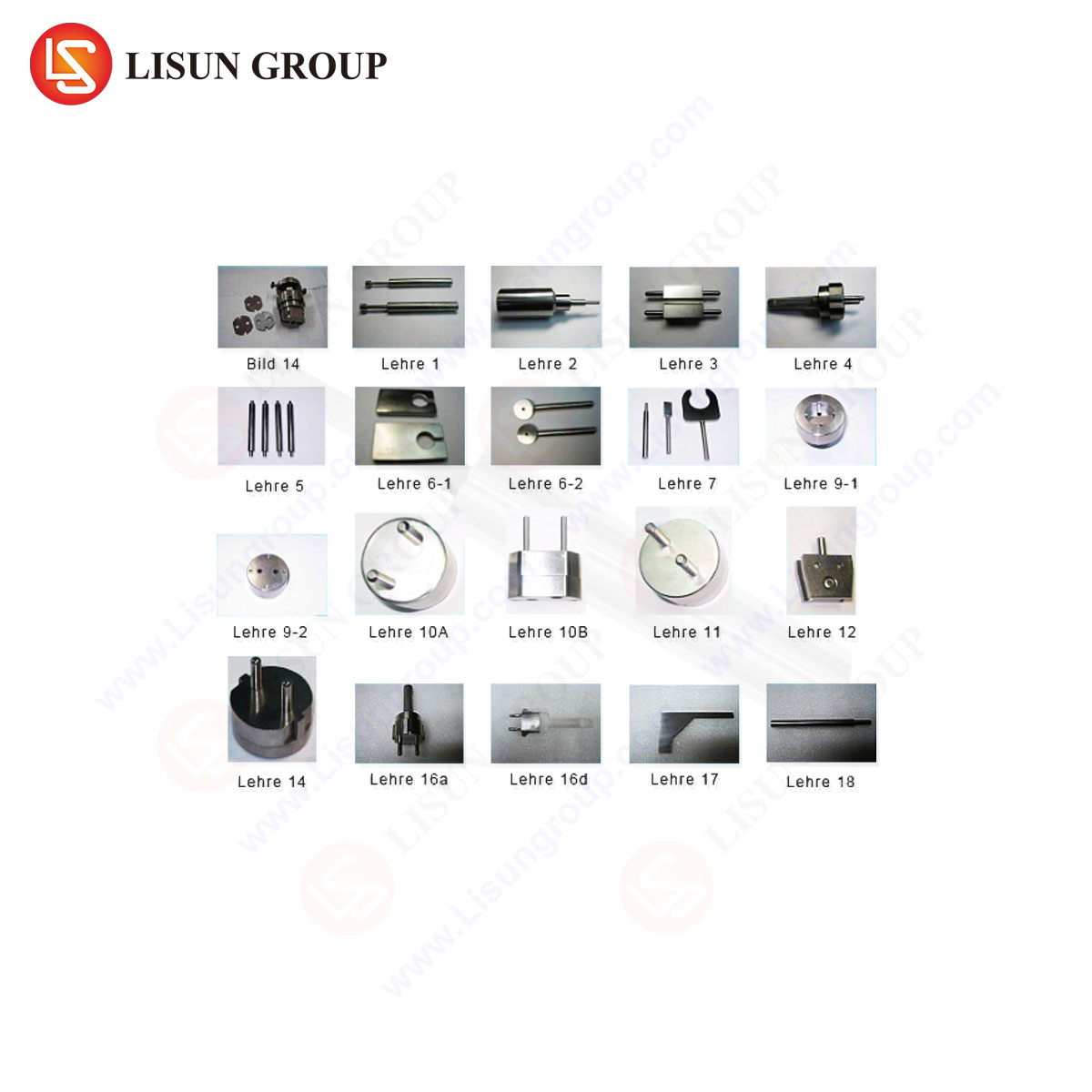
Within the rigorous framework of product safety evaluation, the simulation of human interaction with electrical and mechanical apparatus is paramount. Among the various standardized test tools employed, the 12mm Nodular Finger, formally categorized as a test probe or test finger, occupies a central role. This device is not a mere physical artifact but a precisely engineered instrument designed to verify compliance with international safety standards, primarily those addressing protection against access to hazardous live parts. Its application spans a vast spectrum of industries, from ubiquitous household appliances to sophisticated aerospace components, serving as a universal benchmark for evaluating the effectiveness of enclosures, openings, and protective barriers. The objective of this technical discourse is to elucidate the design, function, and critical implementation of the 12mm Nodular Finger, with particular attention to its embodiment in calibrated instruments such as the LISUN Test Finger, Test Probe, Test Pin.
Anthropomorphic Simulation and Standardized Geometries
The fundamental premise of the 12mm Nodular Finger is anthropomorphic simulation. It is engineered to replicate the dimensions and articulation of a human finger, specifically that of a child, which represents a worst-case scenario for unintended access. The “12mm” designation refers to the diameter of the finger’s spherical joints and the overall width of the probe, a dimension derived from extensive anthropometric data. Its articulated design, typically featuring two knuckles with a 90° ±5° articulation range, allows it to probe openings, slots, and gaps with a motion analogous to a curious finger attempting to explore an enclosure.
This geometry is not arbitrary but is codified in major international and national standards. The most prominent references include IEC 61032, “Protection of persons and equipment by enclosures – Probes for verification,” and its regional derivatives such as UL 60950-1 (ICT equipment), IEC 60335-1 (household appliances), and IEC 60598-1 (lighting fixtures). These standards meticulously define the probe’s physical attributes: a total length of approximately 80mm to 100mm, a pivot point simulating the knuckle, and a specified spring force (typically between 10N to 20N) applied during testing. The LISUN Test Finger is manufactured to these exacting tolerances, ensuring that its application yields consistent, repeatable, and internationally recognized test results.
Material Composition and Mechanical Fidelity
The integrity of test results is contingent upon the probe’s material properties and mechanical fidelity. A standard 12mm Nodular Finger is constructed from robust, non-conductive materials such as hardened thermoplastics or polyamide. This insulation is critical to prevent the probe itself from becoming a conductive pathway during electrical safety tests. The joints must move freely without binding, yet with minimal play, to accurately simulate the probing action. The handle is often ergonomically designed to allow the test operator to apply the standardized force consistently, sometimes incorporating a force gauge or a defined weight to ensure compliance.
The LISUN Test Probe exemplifies this construction philosophy, utilizing high-impact, flame-retardant polymers that resist deformation over repeated use. Its articulation mechanism is precision-machined to maintain the angular specifications and smooth operation, thereby eliminating a potential source of test variance. The inclusion of interchangeable tips or adaptors may also be featured to accommodate specific standard requirements, such as the test pin for assessing the accessibility of contacts in sockets or connectors.
Testing Principles and Procedural Application
The operational principle of the 12mm Nodular Finger is one of applied mechanical probing under defined conditions. The test procedure is systematic. The probe is inserted into every opening, gap, or flexible seam in an equipment enclosure with its articulated joints positioned to reach as far as possible. The standardized force is applied for a duration specified by the relevant product standard (e.g., 10 seconds). The test has two primary failure criteria:
- Electrical Failure: The probe contacts a hazardous live part, which is detected by a connection to a signal circuit (often a 40V-50V indicator). Contact triggers a visual or audible alarm.
- Mechanical Failure: The probe bypasses a protective barrier, interlock, or shielding, demonstrating that a finger could displace components and gain access to danger.
This process is agnostic to industry, applying universally. In Household Appliances, it checks blender lids, oven door seals, and washing machine hatches. For Automotive Electronics, it validates the integrity of infotainment system housings and wiring harness connectors within the passenger compartment. Lighting Fixture manufacturers use it to ensure LED driver compartments and lampholder openings are secure. In Medical Devices, it is crucial for verifying that battery compartments, control panel gaps, and sensor ports on devices like patient monitors or infusion pumps cannot be breached by a patient or attendant.
Industry-Specific Use Cases and Hazard Mitigation
The application of the 12mm Nodular Finger is a cross-industry imperative for hazard mitigation.
- Electrical Components & Industrial Control Systems: For switches, circuit breakers, and terminal blocks, the probe verifies that live terminals are not accessible when the component is in a ready-to-install state. In control panel enclosures (IP rating verification), it tests cable gland entries and ventilation louvers.
- Telecommunications & Office Equipment: It assesses data center rack panels, network switch ports, and the openings in printers or copiers to prevent access to internal power supplies or moving parts.
- Toy and Children’s Products: This is a critical application. The probe simulates a child’s finger, testing battery compartment closures, seams in electronic toys, and openings in ride-on vehicles to prevent electric shock or injury from moving components.
- Aerospace and Aviation: While subject to additional stringent standards (e.g., DO-160), the fundamental probe test applies to in-flight entertainment systems, cockpit control panels, and junction boxes to ensure no accidental contact can occur during turbulence or maintenance.
- Cable and Wiring Systems: The test pin variant of the probe is used to verify that socket-outlets, appliance couplers, and connectors are designed such that live contacts are not touchable before mating is complete.
The LISUN Test Finger: Specifications and Calibrated Assurance
The LISUN Test Finger, Test Probe, Test Pin system represents a professional-grade implementation of these testing requirements. Its design and manufacturing adhere strictly to the dimensional and force parameters outlined in IEC 61032 and related standards. Key specifications typically encompass:
- Probe Diameter: 12mm ±0.1mm.
- Joint Articulation: 90° ±5° with smooth, consistent movement.
- Applied Force: Configurable to standard requirements (e.g., 10N, 20N) via calibrated weights or an integrated force system.
- Material: High-strength, insulating polymer with defined flame retardancy (e.g., UL94 V-0 rating).
- Indicator Circuit: Integrated or compatible with a detection circuit (e.g., 40-50V, <0.5mA) with clear alarm indication.
The competitive advantage of a dedicated instrument like the LISUN system lies in its calibration traceability and repeatability. Unlike improvised tools, it provides documented evidence of compliance for quality assurance records and regulatory submissions. Its robust construction ensures longevity and consistent performance across thousands of test cycles, a necessity in high-volume manufacturing environments for Consumer Electronics and Electrical and Electronic Equipment.
Interpreting Results and Compliance Documentation
A successful test, where the probe does not contact hazardous parts or defeat protective measures, is documented as objective evidence of compliance with the relevant clause of the safety standard (e.g., Clause 8.1.1 of IEC 60335-1). This documentation is crucial for obtaining certification marks (CE, UL, CSA, etc.) and for liability mitigation. A failed test necessitates a redesign—often involving adding baffles, reducing gap sizes, improving enclosure rigidity, or relocating internal components. The quantitative nature of the test, using a standardized tool, turns a subjective safety assessment into an objective engineering metric.
Conclusion: An Indispensable Tool for Inherent Safety Design
The 12mm Nodular Finger transcends its simple physical form. It is a procedural embodiment of the principle of inherent safety by design. By mandating its use, international standards compel manufacturers to consider human interaction—both intended and unintended—at the earliest stages of product development. The utilization of a precision instrument such as the LISUN Test Finger, Test Probe, Test Pin ensures that this evaluation is performed with accuracy and legitimacy. As product ecosystems grow more complex and integrated across the Industrial Control, Medical Device, and Telecommunications sectors, the role of standardized, reliable safety verification tools only becomes more critical. They serve as the definitive arbiter between a potentially hazardous prototype and a market-ready product deemed safe for public and professional use.
Frequently Asked Questions (FAQ)
Q1: Can the 12mm Nodular Finger be used to test for IP (Ingress Protection) ratings?
A1: While related, the IP Code (IEC 60529) uses different, specific probes for testing against solid foreign objects (e.g., the IP1X finger probe is similar but has different dimensions and force). The 12mm Nodular Finger per IEC 61032 is primarily for protection against electric shock and hazardous moving parts. However, its application may be referenced in certain IP test sequences for accessible parts. Always consult the specific product standard for the mandated test probe.
Q2: How often should a test finger like the LISUN probe be calibrated or verified?
A2: While the probe itself may not have electronic components requiring periodic calibration, its critical physical dimensions (diameter, joint angle, applied force) should be verified at regular intervals, typically annually, or according to the laboratory’s quality control schedule. This ensures ongoing compliance with the standard’s specifications. Damage or wear from use necessitates immediate verification or replacement.
Q3: Our product is battery-operated and below 60V DC. Is the finger test still required?
A3: Voltage alone is not the sole determinant. Safety standards consider energy levels, accessible capacitance, and the application. Many toy standards, for example, require the test for battery compartments regardless of voltage to prevent ingestion or mechanical hazard. The specific end-product standard (e.g., for toys, appliances, or IT equipment) definitively states the requirements for probe testing.
Q4: What is the difference between the “Test Finger,” “Test Probe,” and “Test Pin” in the LISUN context?
A4: These terms often refer to variations of the same fundamental toolset. The “Test Finger” or “Test Probe” typically denotes the full 12mm articulated finger. The “Test Pin” is usually a smaller, non-articulated probe (e.g., 1mm diameter) defined in standards like IEC 61032 (Probe 13) to test openings in socket-outlets or to verify that live parts are recessed. A comprehensive kit may include multiple probes to address different clauses across various standards.
Q5: If our product passes the test in our lab, is that sufficient for certification?
A5: Self-testing is a vital part of design validation and quality control. However, for formal certification by a Nationally Recognized Testing Laboratory (NRTL) like UL, TÜV, or Intertek, the test will be performed again by the certifying body’s engineers using their own calibrated equipment. Using a reputable tool like the LISUN probe during your design phase significantly increases the likelihood of a smooth and successful certification audit.