





The Critical Role of the 16A 250V AC Test Gauge in Plug and Socket Safety Verification
Abstract
The global proliferation of electrical devices, coupled with the diverse and often divergent regulatory landscapes governing plug and socket interconnectivity, necessitates rigorous, standardized testing methodologies. At the core of safety and performance validation for these ubiquitous components lies the precise measurement of electrical parameters under simulated operational loads. This technical article examines the specialized instrumentation required for this task, focusing on the 16A 250V AC test gauge. We will delineate its operational principles, integral role in compliance testing against international standards, and its specific application within the ecosystem of plugs and sockets. A detailed analysis of a representative instrument, the LISUN Gauges for Plugs and Sockets, will serve to illustrate the implementation of these principles in a calibrated, industry-deployed system.
Fundamental Electrical Parameters and the Necessity for Specialized Gauging
The nominal rating of a plug and socket assembly—in this case, 16 Amperes at 250 Volts Alternating Current—represents its designed operational ceiling. However, the mere inscription of these values on a component’s housing is insufficient proof of its safety or durability. Verification requires subjecting the assembly to sustained electrical stress that accurately mimics real-world conditions, including continuous current flow, thermal cycling, and the mechanical wear inherent in mating and unmating cycles. A standard multimeter, while capable of point-in-time measurement, lacks the integrated load application, sustained monitoring, and safety isolation required for standardized type testing.
This is the domain of the dedicated test gauge. Such an instrument is not a simple meter; it is a system comprising a programmable load bank, precision current and voltage measurement circuits, timing controllers, and safety interlocks. Its primary function is to apply a precisely regulated 16A current at 250V AC across the plug and socket contacts for a duration specified by the relevant standard (e.g., 1 hour, 4 hours, or 1000 cycles), while continuously monitoring for deviations that indicate failure. Key failure modes detected include contact overheating (indicative of excessive resistance), insulation breakdown, and abnormal voltage drop across the connection point.
Deconstructing the Testing Principle: The Simulated Load Cycle
The testing principle for a 16A 250V AC plug and socket revolves around the application of a rated resistive load. The gauge system sources 250V AC from a stabilized supply and regulates the current flow through a high-power, non-inductive resistor bank to a steady 16.0A ±1%. The device under test (DUT)—the mated plug and socket—is inserted into this circuit. The voltage is measured directly at the input terminals of the socket (line side) and, critically, at the output terminals of the plug (load side). The differential between these two measurements constitutes the voltage drop across the contact interface.
This voltage drop is a paramount metric. According to Ohm’s Law (V = I x R), a sustained current of 16A flowing through even a small, unwanted contact resistance will generate a measurable voltage drop and, consequently, dissipate power as heat (P = I² x R). Standards such as IEC 60884-1 for plugs and socket-outlets for household and similar purposes stipulate maximum permissible temperature rises and voltage drops. For instance, a temperature rise on pin contacts exceeding 50 Kelvin or a voltage drop exceeding a few millivolts per ampere under test conditions would signify non-compliance, pointing to poor contact material, insufficient contact force, or geometric imperfections.
Architectural Overview of a Modern Test Gauge System: The LISUN Implementation
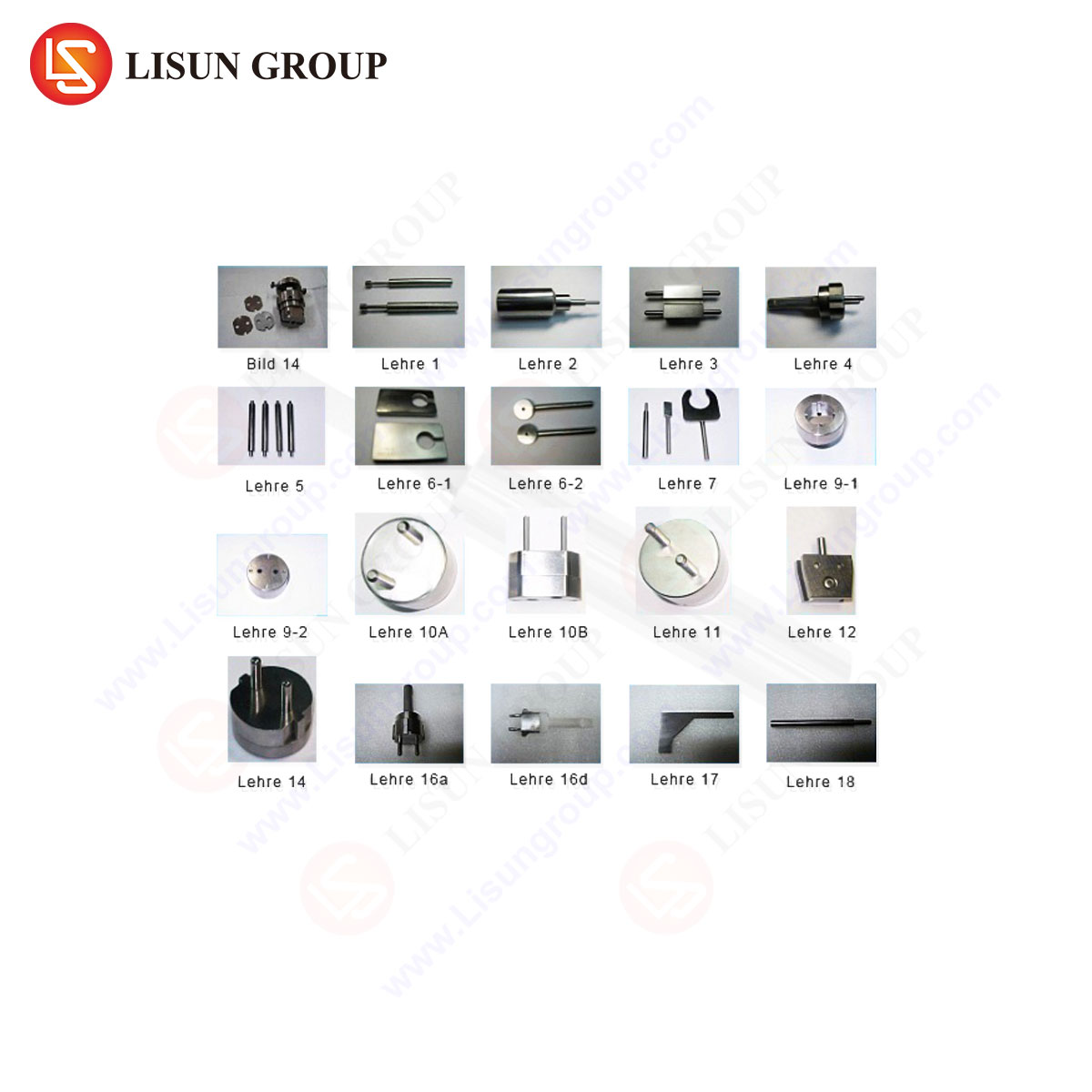
The LISUN Gauges for Plugs and Sockets product line embodies a fully integrated approach to this critical testing regimen. The system is engineered to provide not just measurement, but a controlled, repeatable, and documentable test environment.
- Core Specifications: The LISUN system is calibrated for precise output: a test current of 16.0A ±0.5% with a source voltage of 250V AC ±2%, 50/60Hz. Its measurement resolution for voltage drop is typically 0.1mV, with an accuracy class of 0.5 or better. It incorporates a digital timer with programmable duration from 1 second to 999 hours, automatically terminating the test upon completion or upon triggering a safety fault condition.
- Integrated Load and Measurement: Unlike cobbled-together solutions using separate transformers, rheostats, and meters, the LISUN gauge incorporates a stabilized electronic load. This ensures the current remains constant at 16A regardless of minor fluctuations in line voltage or the changing resistance of the DUT as it heats up, a feature crucial for test consistency.
- Thermal Monitoring: The system often includes auxiliary inputs for K-type thermocouples. These are physically attached to critical points on the plug pins and socket contacts during test setup, allowing for simultaneous, continuous logging of temperature rise alongside electrical parameters. This correlated data is vital for a holistic safety assessment.
- Safety and Control Architecture: Mains input isolation, overtemperature protection on internal components, and emergency stop circuits are mandatory. The LISUN design includes sequenced start-up: voltage is applied only after the load regulation circuit is stable, preventing inrush currents. Furthermore, its design often allows for remote operation and data logging via RS-232, USB, or GPIB interfaces, facilitating integration into automated test stands for high-volume production quality control.
Alignment with Global Standards and Certification Protocols
The value of a test gauge is intrinsically linked to its traceability and adherence to internationally recognized standards. Testing with a system like the LISUN gauge directly supports compliance with a suite of critical documents:
- IEC 60884-1: The foundational international standard. Clause 19 specifically addresses “Temperature rise of accessories and of their parts,” mandating the temperature rise test under rated current. The gauge is the instrument prescribed to perform this clause.
- BS 1363 (UK): The British standard for 13A plugs and sockets. Its stringent requirements for fuse-link performance and pin temperature are validated using similar gauge testing principles at 13A.
- AS/NZS 3112 (Australia/New Zealand) and NEMA WD-6 (North America): While voltage and current ratings differ, the fundamental test methodology—applying rated current and measuring temperature rise and voltage drop—is consistent. A calibrated 16A 250V AC gauge is essential for markets adhering to the 250V nominal voltage.
Certification bodies such as UL, Intertek (ETL), TÜV SÜD, and CSA rely on data generated by such calibrated gauge systems during product submission. The audit trail from the gauge’s own calibration certificate (traceable to national metrology institutes like NIST or NIM) to the test report on the plug and socket is a non-negotiable part of the certification dossier.
Industry Applications Beyond Basic Compliance
While type-testing for certification is a primary use case, the 16A 250V AC test gauge serves several other critical functions within the manufacturing and quality assurance lifecycle of plug and socket products.
- Incoming Component Validation: Manufacturers of finished socket assemblies must qualify the raw components, such as brass or phosphor bronze contact strips, from their suppliers. Batch testing samples using the gauge ensures the contact material and plating (e.g., nickel or silver) meet the required electrical conductivity and thermal performance before being committed to production.
- Process Control and Tooling Wear Monitoring: In high-speed stamping and assembly lines, progressive tool wear can subtly alter the geometry of plug pins or socket contact springs. Implementing periodic gauge tests on samples from the production line provides statistical process control (SPC) data. A gradual upward creep in average voltage drop or temperature rise can signal the need for tooling maintenance before non-conforming products are manufactured.
- Comparative Analysis and Competitive Benchmarking: Product development teams use test gauges to deconstruct competitor products. By quantitatively measuring the contact resistance and thermal performance of rival plug designs, engineers can benchmark their own designs and identify areas for material or geometric improvement.
- Failure Analysis and Durability Testing: For returned field failures or during accelerated life testing (e.g., after 5000 mating cycles per IEC 60884-1 clause 22), the gauge provides objective data. It can determine if a failure is due to degraded contact performance (high resistance) rather than, or in addition to, mechanical breakage.
Technical Advantages of an Integrated Gauge System
The choice between a purpose-built system and an assemblage of discrete components has significant technical implications. Integrated systems like the LISUN Gauges offer distinct advantages:
- Measurement Integrity: By having the current source and measurement circuits designed as a single unit, issues of ground loops, common-mode noise, and potential differences in reference grounds are minimized. This results in cleaner, more accurate voltage drop readings, especially at the millivolt level.
- Operational Safety and Reliability: The enclosed design with interlocked covers and managed heat dissipation from the load bank protects the operator. Built-in fault detection (open circuit, short circuit, over-temperature) immediately shuts down the test, protecting both the instrument and the DUT.
- Calibration and Traceability: A single instrument receives a unified calibration certificate covering its current output accuracy, voltage measurement accuracy, and timer function. This simplifies quality management system (QMS) audits compared to maintaining separate calibration records for a transformer, a shunt resistor, a voltmeter, and a timer.
- Test Repeatability and Efficiency: Automated operation and digital readouts eliminate operator interpretation errors associated with analog gauges. The ability to store test parameters and results streamlines testing of multiple identical samples, a common requirement in type-testing protocols which often specify testing a minimum number of units (e.g., three samples per clause).
Conclusion
The 16A 250V AC test gauge represents a critical nexus between theoretical electrical ratings and proven product safety. It transforms the abstract specifications printed on a plug or socket into quantifiable, repeatable, and standards-compliant performance data. In an industry where marginal failures can lead to fire risk, equipment damage, or personal injury, the precision and reliability offered by dedicated, integrated testing systems are not merely convenient but essential. As plug and socket designs evolve to accommodate higher power densities, smart functionalities, and new materials, the fundamental role of the load test gauge as the arbiter of electrical safety will remain constant, demanding continued precision, traceability, and integration in its design and application.
Frequently Asked Questions (FAQ)
Q1: What is the significance of the “voltage drop” measurement during a 16A test, and what does a high reading indicate?
A1: Voltage drop, measured in millivolts (mV) directly across the mated plug and socket contacts under 16A load, is a direct proxy for contact resistance. A higher-than-specified voltage drop (e.g., >15mV for a given design) indicates excessive resistance at the contact interface. This resistance causes power dissipation as heat (P = I²R), leading to temperature rise, oxidation of contacts, and a potential thermal runaway scenario that can degrade insulation and pose a fire hazard.
Q2: Can a single LISUN gauge system be used to test different plug types (e.g., Type G, Type I, Schuko) rated at 16A 250V?
A2: Yes, the core electrical test—applying 16A at 250V and measuring parameters—is universal. However, the system requires appropriate, standardized test fixtures or “adaptor boxes” that securely hold the specific plug and socket geometry during testing. These fixtures ensure proper alignment and mating force as per the standard. The LISUN system is typically designed to interface with these standardized mechanical fixtures.
Q3: How often should a test gauge like the LISUN system be recalibrated, and what does calibration involve?
A3: Calibration frequency is dictated by use intensity, quality system requirements (e.g., ISO 9001), and accreditation body rules. An annual cycle is common for active labs. Calibration involves a metrology lab verifying and adjusting (if necessary) the key parameters: the accuracy of the applied current (16A), the accuracy of the voltage measurement circuits (for both source voltage and voltage drop), the correctness of the temperature measurement channels (if equipped), and the precision of the timer. The lab provides a certificate of calibration with traceability to national standards.
Q4: In a production environment, is it necessary to test every single plug and socket unit with this gauge?
A4: No, 100% testing with a full-duration rated current test is impractical and unnecessary. The gauge is primarily used for type-testing (design validation) and periodic sampling for statistical process control (SPC). A quality plan may dictate testing a random sample from every production batch (e.g., 5 units per 10,000) to monitor for process drift. High-speed automated testers often perform a very brief, low-current continuity check on 100% of units, while the full 16A gauge test validates the design and monitors the manufacturing process integrity.
Q5: What are the key safety precautions when operating a 16A 250V AC test gauge?
A5: Essential precautions include: ensuring the instrument is properly grounded; using it in a dry, well-ventilated environment due to heat generated by the load; securing the DUT firmly in its fixture to prevent arcing from loose connections; never bypassing safety interlocks; allowing the system to cool between extended tests; and ensuring the operator is trained to understand the hazards of exposed live terminals at 250V and high-current, high-temperature components during and immediately after a test cycle.