







The Critical Role of 2 oz Ground Pin Compliance in Modern Electrical Safety and Connectivity
Abstract
The proliferation of high-current, high-reliability electrical devices across residential, commercial, and industrial sectors has necessitated a rigorous re-examination of component-level safety standards. Among these, the specification for ground pin mass in plugs and sockets—specifically the 2 oz (56.7g) minimum requirement—stands as a fundamental yet often under-analyzed pillar of electrical safety and mechanical integrity. This article provides a comprehensive technical analysis of 2 oz ground pin compliance, detailing its engineering rationale, the associated testing methodologies, and its critical implications for product longevity, user safety, and regulatory certification. A focused examination of specialized testing instrumentation, exemplified by the LISUN Gauges for Plugs and Sockets, will illustrate the practical application of these principles in a manufacturing and quality assurance context.
Foundational Principles of Ground Pin Mechanical Integrity
The primary function of the grounding pin in a plug-and-socket system extends beyond providing a path for fault current. It serves as the first point of mechanical engagement, ensuring correct polarization and preventing the insertion of a plug into an incompatible socket. A ground pin of insufficient mass and rigidity is susceptible to deformation under repeated insertion cycles or accidental impact. Such deformation can lead to a cascade of failure modes: high-resistance connections that impede proper grounding, difficulty in insertion or withdrawal that strains the socket contacts, and, in severe cases, the inability to establish a ground connection at all, thereby nullifying a core safety feature.
The 2 oz (56.7g) minimum mass specification, as codified in standards such as UL 498 (Standard for Safety for Attachment Plugs and Receptacles) and its international equivalents, is not an arbitrary figure. It is derived from empirical data correlating pin mass with structural resilience. A pin of this mass, when constructed from specified brass or phosphor bronze alloys, provides the necessary moment of inertia to resist bending forces. Furthermore, the mass contributes to the pin’s ability to maintain dimensional stability within the tight tolerances required for a secure, low-resistance fit with the socket’s grounding contact. This is particularly crucial for 15A and 20A, 125V/250V configurations common in North America, where physical plug robustness is paramount.
Material Science and Dimensional Tolerances in Pin Fabrication
Achieving compliance is not solely a matter of achieving a target weight. It is an exercise in precision engineering that balances material composition, thermal treatment, and geometric design. The predominant materials—free-cutting brass (C36000) and phosphor bronze (C51000/C52100)—are selected for their optimal blend of machinability, electrical conductivity, and spring properties. The specific gravity of these alloys (approximately 8.5 g/cm³ for brass) directly informs the required volume to achieve the 2 oz threshold.
Dimensional tolerances, typically governed by standard-specific gauging procedures, are inextricably linked to mass. A pin that meets all dimensional checkpoints (length, width, thickness, radii) but is manufactured from a lower-density alloy or contains internal voids will fail the mass requirement, indicating a potential compromise in material integrity. Conversely, a pin that meets the mass requirement but fails dimensional checks may not engage correctly. Therefore, compliance verification is a two-pronged process: dimensional conformance and mass verification. The relationship can be summarized in the following equation, where mass (M) is a function of material density (ρ) and the precise volume (V) defined by the permitted dimensional envelope:
M = ρ * V
A deviation from the specified M indicates a deviation in either ρ or V, both of which are grounds for non-compliance.
Systematic Failure Modes of Non-Compliant Ground Pins
Non-compliance with the 2 oz requirement precipitates identifiable and quantifiable failure modes. The most direct is mechanical fatigue. A lightweight, flexible pin will exhibit cyclical bending stress at its root during insertion and removal. Over time, this leads to work hardening and eventual fracture. A fractured ground pin renders the appliance unsafe, as the grounding path is physically severed.
Secondly, a compliant pin ensures consistent contact pressure within the socket. The socket’s ground contact is designed with a specific spring constant, expecting a pin of defined rigidity to deflect it appropriately. An under-mass pin may be too flexible, failing to properly engage the spring contact, resulting in a high-impedance connection. This increases the path resistance, which during a fault condition could prevent the circuit protective device from operating within its designed time-current parameters, creating a shock or fire hazard.
Thirdly, from a manufacturing and quality perspective, a consistent pin mass is a proxy for consistent production. Significant variance in pin mass within a production batch can indicate issues with raw material quality, tooling wear in stamping or machining processes, or improper plating thickness. Thus, mass testing serves as a rapid, non-destructive quality control checkpoint that can flag broader production line issues.
Instrumentation for Verification: The LISUN Gauges for Plugs and Sockets
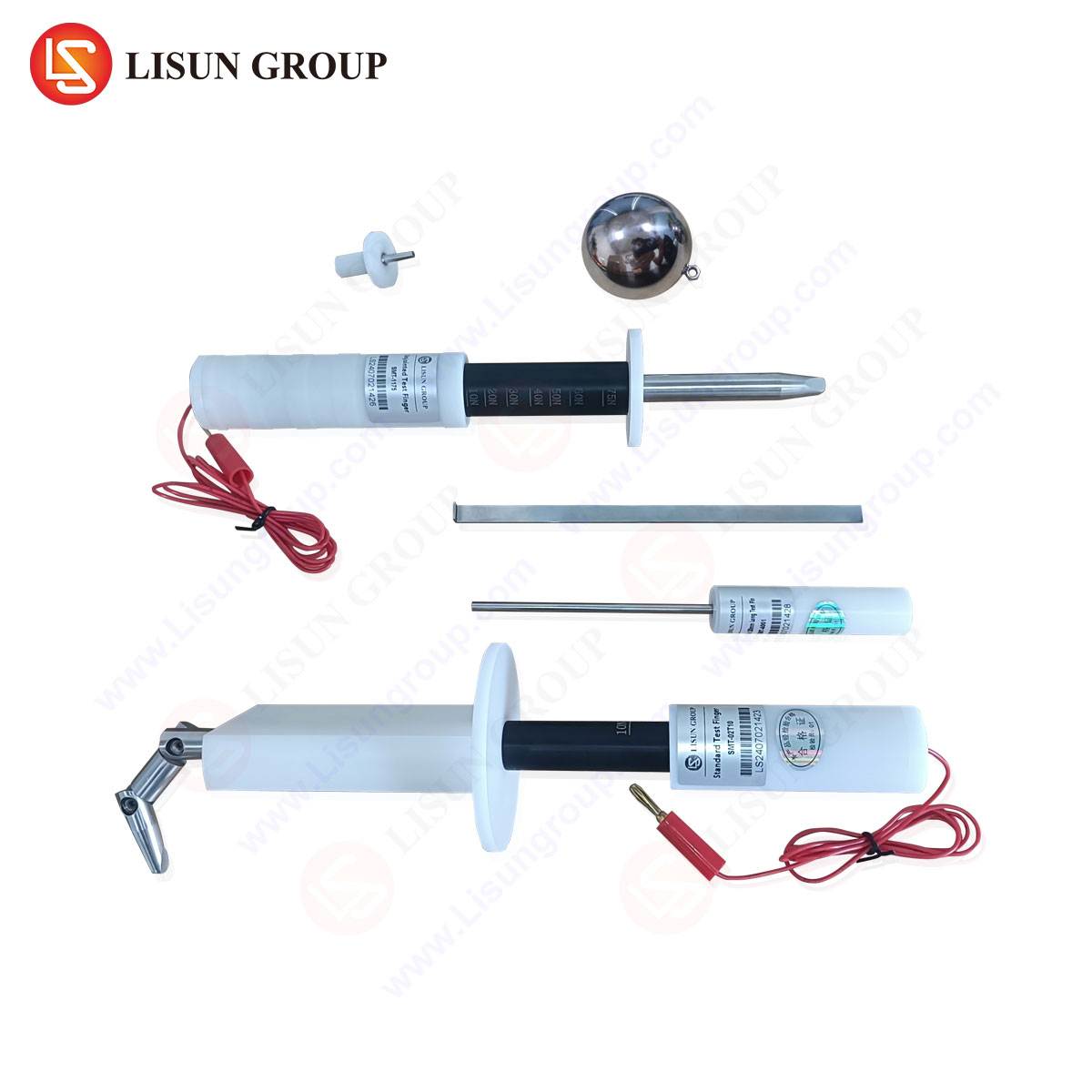
Accurate verification of 2 oz ground pin compliance demands instrumentation designed for precision, repeatability, and adherence to standardized testing protocols. The LISUN Gauges for Plugs and Sockets represent a dedicated solution for this critical measurement. This system is engineered to provide a deterministic assessment of both dimensional and mass-based compliance in alignment with UL 498, IEC 60884-1, and other national standards.
The gauge system typically incorporates a calibrated mass comparator or a precision weighing mechanism integrated into a dedicated test fixture. The ground pin of a plug is isolated within the fixture, and its mass is measured with a resolution exceeding 0.1g. The apparatus is designed to eliminate errors from cable weight or awkward positioning. The result is a direct, unambiguous readout of pin mass. This is complemented by a suite of “Go/No-Go” dimensional gauges within the same or a companion fixture, which verify pin thickness, width, length, and the critical radii at the pin’s tip and shoulder. The competitive advantage of such an integrated system lies in its ability to consolidate multiple compliance checks into a single, operator-efficient process, reducing test time and minimizing subjective interpretation.
Specifications for a system like the LISUN Gauges would include a weighing capacity of 0-100g with a readability of 0.01g, a calibration traceable to national standards (NIST, etc.), and fixture designs tailored to specific plug configurations (NEMA 5-15, 5-20, 6-15, etc.). The construction utilizes stable, low-thermal-expansion materials to ensure measurement consistency across varying environmental conditions in a quality lab.
Integration of Compliance Testing in Quality Assurance Workflows
In a high-volume manufacturing environment, ground pin compliance cannot be an afterthought or a spot-check procedure. It must be embedded within the quality assurance (QA) workflow at multiple stages. Incoming quality inspection (IQI) of procured pins or molded plug assemblies is the first control point. Here, statistical sampling using a gauge system verifies that supplier components meet specifications before entering production.
In-process testing during final assembly is equally critical. A dedicated test station, often automated, can perform a 100% check on every finished plug. The LISUN-type gauge can be integrated into such a station, where a robotic handler presents the plug, the mass and dimensions are verified, and the unit is accepted or rejected based on pre-programmed tolerances. This data can be fed into a Manufacturing Execution System (MES) for real-time statistical process control (SPC), allowing for trend analysis and predictive maintenance of molding or stamping tools before they produce non-conforming parts.
For certification laboratories and standards bodies, such gauges are indispensable for type-testing and surveillance audits. Their objective, repeatable measurements provide the empirical evidence required to grant or maintain a safety certification mark (UL, ETL, CSA, etc.).
Broader Implications for Product Liability and Industry Standards
Adherence to the 2 oz ground pin specification carries significant legal and commercial weight. In the event of an electrical incident, forensic investigation will invariably examine component compliance. A non-compliant ground pin can become the central point of failure in a product liability case, exposing the manufacturer to substantial risk. Demonstrating a rigorous, documented testing protocol using recognized instrumentation is a key component of a defensible due diligence strategy.
Furthermore, as global supply chains become more complex, standardized verification acts as a common language between designers, manufacturers, and certifiers. A specification of “2 oz minimum ground pin mass, verified per UL 498 Clause XX” is unambiguous. It ensures that a plug manufactured in one region will interoperate safely and reliably with sockets in another, provided both adhere to the same fundamental mechanical principles. This interoperability is the bedrock of international trade in electrical accessories.
Conclusion
The requirement for a 2 oz ground pin is a deceptively simple specification that encapsulates a profound depth of engineering consideration. It is a critical control point for mechanical safety, electrical performance, and manufacturing quality. As plug and socket designs evolve to accommodate smart technologies and higher power densities, the fundamental importance of robust, verifiable mechanical construction will only increase. The implementation of precise, reliable testing methodologies, as embodied by dedicated gauge systems, is therefore not merely a regulatory hurdle but an essential investment in product safety, reliability, and corporate responsibility. By ensuring each ground pin meets this foundational criterion, the industry upholds the integrity of the entire electrical ecosystem.
FAQ Section
Q1: Can a ground pin be over-mass and still be compliant?
A1: Typically, standards specify a minimum mass (e.g., 2 oz). There is usually no upper mass limit stated in the standard, provided the pin meets all other dimensional and shape requirements. However, excessive mass could indicate over-plating or a deviation from the specified alloy, which may affect other properties like conductivity or corrosion resistance. The primary focus is on ensuring the minimum threshold for mechanical strength is met.
Q2: How often should a gauge system like the LISUN Gauges be calibrated in a production environment?
A2: Calibration frequency depends on usage intensity and quality system requirements (e.g., ISO 9001). A common schedule is annual calibration by an accredited lab, traceable to national standards. Additionally, daily or weekly verification using a set of certified check weights is recommended to ensure ongoing accuracy and to detect any drift or damage between formal calibrations.
Q3: Does the 2 oz requirement apply to all types of plugs?
A3: No. The 2 oz specification is most commonly associated with the ground pins of heavier-duty North American plug configurations, such as NEMA 5-15, 5-20, 6-15, and 6-20. Other plug types (e.g., NEMA 1-15 ungrounded, or various IEC 60320 connectors) have their own set of mechanical and dimensional requirements, which may include different mass or force specifications. Always consult the applicable standard for the specific product.
Q4: Can a plug pass functional electrical tests but fail the 2 oz ground pin test?
A4: Yes, this is possible, especially in a new product. The plug may establish a temporary ground connection during a bench test. However, the non-compliant pin is a latent defect. Its reduced mechanical strength means it may deform or fail after a number of insertion cycles, leading to an intermittent or lost ground connection in the field. The mass test is a proactive measure to prevent this field failure.
Q5: What is the impact of plating (e.g., nickel, tin) on the mass measurement?
A5: Plating adds a thin layer of material, increasing the pin’s mass. The 2 oz minimum requirement applies to the final, finished pin, inclusive of all platings. Therefore, the base pin must be designed and manufactured to a target mass slightly below 2 oz to account for the plating weight. The gauge measures the final product, ensuring the plated pin meets the requirement. Inconsistent plating thickness can, however, cause mass variation within a production batch.