







Evaluating Protection Against Access to Hazardous Live Parts: The Critical Role of the 4.0mm Test Probe
Introduction to Safety Compliance and Enclosure Integrity
The fundamental mandate of product safety engineering is to prevent user contact with hazardous live parts under normal and foreseeable single-fault conditions. This principle, enshrined in international standards such as IEC 61032, IEC 60529, and their regional derivatives (e.g., UL, CSA, EN), forms the cornerstone of electrical equipment design. Compliance is not merely a regulatory hurdle but a critical risk mitigation strategy against electric shock, which remains a leading cause of injury and fatality across industrial and consumer environments. Verification of this protection hinges on a deceptively simple yet precisely defined tool: the standardized test probe. Among these, the 4.0mm diameter probe, often termed the “hazardous live parts probe” or “test pin,” represents a specific and stringent criterion for evaluating accessibility through small openings in enclosures. This article provides a technical examination of the 4.0mm probe, its application across diverse industries, and the essential characteristics of a compliant testing apparatus, with specific reference to the implementation by manufacturers such as LISUN.
Anatomic Simulation and Standardized Dimensions: The 4.0mm Probe Defined
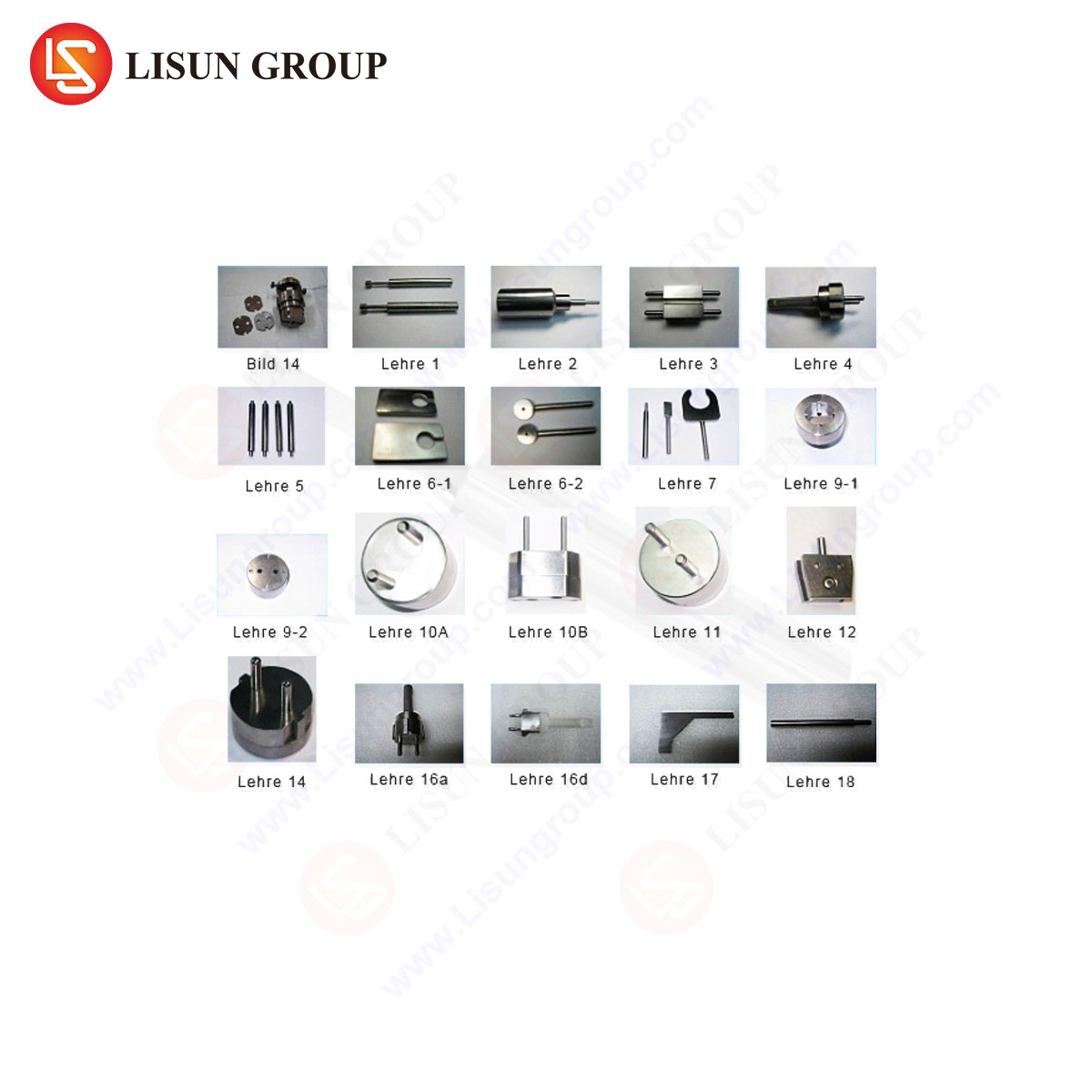
The 4.0mm test probe is not an arbitrary instrument; its dimensions are derived from anthropomorphic data representing a slender, rigid object that could be manipulated by a human finger or come into contact with equipment in use. It simulates a potential pathway for conductive objects like paperclips, tools, or children’s implements to breach an enclosure’s protective barrier. According to IEC 61032, Figure 2, Test Probe 13, the probe consists of a cylindrical metal pin with a hemispherical end. The critical dimension is the pin’s diameter: 4.0mm ±0.05mm. The length is typically sufficient to penetrate deeply into an opening, often 100mm or more, to assess reachability to live parts. The probe is applied with a standardized force, usually 1N ±0.1N, to simulate casual probing without excessive, unrealistic pressure. The test is binary in outcome: if the probe can contact a live part deemed hazardous, the enclosure design fails to meet the required degree of protection (IP code or similar). The LISUN Test Finger, Test Probe, Test Pin family includes this specific 4.0mm probe, manufactured from hardened, conductive material with a surface finish that ensures consistent electrical contact, calibrated to the exacting tolerances mandated by the standards.
The Underlying Electromechanical Testing Principle
The testing principle integrates mechanical access verification with electrical detection. The procedure is methodical. First, the equipment under test (EUT) is energized to its normal operating voltage. The standardized 4.0mm probe, often connected to a ground-referenced detection circuit (e.g., a series connection of an indicator lamp and a current-limiting resistor, or a more sophisticated contact detection system), is then methodically applied to every opening, joint, vent, or gap in the enclosure. This includes areas around knobs, shafts, and cable entry points. The probe is inserted at any angle likely in real-world use. The detection circuit is designed to mimic a plausible human or fault path; a typical test circuit might limit the current to a non-hazardous but easily detectable level, such as 40-50mA, using a supply voltage of no less than 40V. If the probe makes electrical contact with a live part, the circuit completes, and the indicator signals a failure. This process validates that the “creepage distance” and “clearance” design rules are physically enforced by the enclosure, preventing the establishment of a dangerous conductive path.
Specifications and Metrological Traceability of Compliant Probes
For test results to be legally and technically defensible, the probe itself must be a calibrated artifact. Reputable manufacturers like LISUN provide probes with full metrological documentation. Key specifications extend beyond the basic diameter:
- Dimensional Tolerance: The 4.0mm ±0.05mm diameter must be verified along the entire active length of the pin. Out-of-spec probes can yield false passes or fails.
- Material and Construction: The probe must be made of rigid, corrosion-resistant conductive material, such as stainless steel or brass with a suitable plating. The hemispherical tip must be smooth to prevent snagging and ensure consistent application.
- Surface Finish: A specified surface roughness (e.g., Ra ≤ 0.4 µm) ensures reliable electrical contact without excessive resistance.
- Force Application: The testing apparatus must incorporate a mechanism to apply the specified 1N force consistently. This is often achieved via a spring-loaded system integrated into the probe handle or a separate force gauge.
- Insulation and Handling: The probe handle must be adequately insulated for operator safety when testing live equipment.
- Calibration Certificate: Each probe should be supplied with a certificate of calibration from an accredited laboratory, tracing its dimensions to national or international standards (e.g., NIST, CNAS). This is non-negotiable for audit purposes in regulated industries like medical devices or aerospace.
Table 1: Key Specifications of a Standard-Compliant 4.0mm Hazardous Live Parts Probe
| Parameter | Specification | Standard Reference | Criticality |
| :— | :— | :— | :— |
| Probe Diameter | 4.0mm ±0.05mm | IEC 61032 Fig. 13 | Primary dimension for simulating small objects. |
| Tip Geometry | Hemispherical | IEC 61032 Fig. 13 | Ensures consistent entry into openings. |
| Application Force | 1 Newton ±0.1N | IEC 61032, IEC 60529 | Simulates casual probing force. |
| Material | Conductive metal (e.g., stainless steel) | Common Specification | Ensures electrical continuity for detection. |
| Surface Roughness | Typically Ra ≤ 0.4 µm | Manufacturer/Industry Standard | Guarantees reliable electrical contact. |
| Metrological Trace | Calibration certificate to national standard | ISO/IEC 17025 | Essential for audit compliance and result validity. |
Cross-Industry Application Scenarios and Use Cases
The 4.0mm probe test is ubiquitous, applied wherever electrical enclosures interface with users or service personnel.
- Household Appliances & Consumer Electronics: Testing vents on power supplies, gaps around control panels on ovens or washing machines, openings for USB/ports on chargers, and battery compartments in toys. A child’s probing with a metallic toy part is a primary risk scenario.
- Lighting Fixtures: Evaluating accessibility through slots in LED driver housings, gaps between diffusers and bodies of downlights, and openings in track lighting connectors.
- Industrial Control Systems & Automotive Electronics: Verifying protection on PLC enclosures, motor drive housings, automotive fuse boxes, EV charging connectors, and infotainment system modules where tool contact is possible during maintenance.
- Medical Devices: A critical test for patient-connected equipment (e.g., dialysis machines, monitors, surgical tools) where both patient and operator safety are paramount, governed by strict standards like IEC 60601-1.
- Telecommunications & Office Equipment: Testing data center rack PDUs, network switch vents, and openings in printers or copiers accessible to users.
- Aerospace and Aviation Components: Ensuring cockpit instrumentation, in-flight entertainment systems, and avionics bay enclosures prevent intrusion that could cause short circuits in critical systems.
- Electrical Components: Fundamental testing of switches, sockets, circuit breakers, and terminal blocks to ensure live contacts cannot be touched through designed openings.
Competitive Advantages of Precision-Engineered Test Probes
In this context, the advantages of a professionally manufactured solution like the LISUN Test Probe system are significant. First, guaranteed compliance eliminates a major source of regulatory risk; self-fabricated probes rarely meet the cumulative tolerance stack-up required. Second, metrological traceability provides the documented evidence necessary for certification audits by bodies like TÜV, UL, or Intertek. Third, ergonomic and integrated design—such as properly insulated handles, integrated force application, and compatibility with standard detection circuits—improves testing repeatability and technician safety. Fourth, durability ensures the probe does not deform with use, which would invalidate all subsequent tests. A worn or out-of-spec probe is a liability, potentially allowing unsafe products to reach the market or causing costly re-designs of safe products.
Interplay with IP Code Ratings and Other Test Probes
The 4.0mm probe is one element in a suite of accessibility test tools. Its application is specifically tied to certain IP (Ingress Protection) code ratings and product safety clauses. For example, IP20 (protection against fingers >12.5mm) requires the “standard test finger” (IEC 61032 Probe 11). Protection against tools and wires, as specified in IPXXB, also uses this finger. However, when the standard calls for protection against “small tools” or access to hazardous live parts, the 4.0mm probe (Probe 13) or the 1.0mm “test wire” (Probe 19) comes into play. The choice depends on the specific hazard being evaluated. A comprehensive testing laboratory will utilize the full LISUN set—Test Finger, Test Probe, Test Pin—to evaluate an enclosure against all relevant accessibility hazards, from large body parts to the most slender wires.
Mitigating Design Flaws Through Proactive Testing
Integrating probe testing during the design validation phase, rather than as a pre-certification afterthought, is a hallmark of mature engineering practice. Common design flaws revealed by the 4.0mm probe include: inadequate depth of baffles behind ventilation louvers, misaligned internal barriers, fastening holes that provide a direct line of sight to live terminals, and insulating membranes that are too thin or can be easily deformed by the probe’s force. By identifying these vulnerabilities early, designers can implement corrective actions such as adding internal shrouds, redesigning vent patterns to a honeycomb structure with sufficient depth-to-width ratio, using ribbed insulation, or specifying different fasteners. This proactive approach reduces time-to-market and avoids costly tooling changes.
Conclusion: A Foundational Pillar of Product Safety
The 4.0mm hazardous live parts probe embodies a critical convergence of regulatory science, human factors engineering, and precision manufacturing. Its application is a non-negotiable step in demonstrating that an electrical product provides basic protection against electric shock. The integrity of the test is wholly dependent on the physical and metrological qualities of the probe itself. Utilizing a calibrated, standards-compliant instrument from a recognized manufacturer like LISUN is therefore not a procurement detail but a fundamental investment in product safety, regulatory compliance, and brand integrity. As electrical devices become more compact and ubiquitous, the rigorous application of this seemingly simple test will remain a frontline defense in risk prevention.
Frequently Asked Questions (FAQ)
Q1: Can we use a drill bit or a homemade metal rod as a substitute for the standardized 4.0mm probe during internal design checks?
A: While a similar-sized object can be used for informal preliminary checks, it is not suitable for formal type testing or certification. Drill bits have flutes and a pointed tip, which do not replicate the hemispherical, smooth-surface geometry specified in the standard. Homemade rods lack controlled tolerances and a calibrated application force. Only a traceably calibrated probe like the LISUN Test Pin guarantees that the test is performed to the exact criteria mandated by the standard, ensuring legally valid results.
Q2: How often should a 4.0mm test probe be recalibrated?
A: Recalibration intervals depend on usage frequency, handling, and the quality management system requirements of the testing laboratory. A common interval is annual recalibration. However, the probe should be inspected visually for damage (nicks, bends, corrosion) before each use. Any physical damage necessitates immediate recalibration or replacement. The calibration certificate will typically state a recommended validity period.
Q3: The standard mentions a “test force” of 1N. How is this practically applied during testing?
A: The force must be applied axially (straight on) to the probe. High-quality probe sets incorporate a spring mechanism within the handle that compresses at the specified force, often indicated by a visual mark. Alternatively, a separate push-pull force gauge can be used to apply the probe. The key is to avoid exceeding the force, as this could deform compliant materials and create a false failure, or apply too little force, creating a false pass.
Q4: Our product has an IP54 rating. Does this automatically mean it passes the 4.0mm live parts probe test?
A: Not necessarily. The IP54 rating specifically defines protection against dust ingress (5) and water sprays from any direction (4). Protection against access to hazardous parts is denoted by the first characteristic numeral (0-6) or the additional letters (A, B, C, D). IP2X, for instance, requires the standard test finger. The 4.0mm probe test is often a separate requirement in product safety standards (e.g., IEC 62368-1, IEC 60335-1) that may be applied in conjunction with an IP rating. Always consult the specific end-product standard for the complete set of enclosure tests required.
Q5: For a medical device powered by a 12V DC internal supply, is the hazardous live parts probe test still required?
A: The applicability of the test is based on whether the internal parts are deemed “hazardous live.” This is a function of voltage and available energy. Standards like IEC 60601-1 define hazardous voltage levels (typically > 30 Vrms, 42.4 Vpeak, or 60 Vdc in dry conditions). While 12V DC is often below this limit, the circuit must also be evaluated for limited energy levels (e.g., according to IEC 62368-1). If the 12V circuit can deliver a hazardous current, the probe test may still apply. A risk assessment per the relevant standard is required to determine the necessity of the test.