




The 50mm Sphere Probe: A Foundational Instrument for Hazard Assessment in Electrical Equipment
Introduction to Accessible Hazard Evaluation
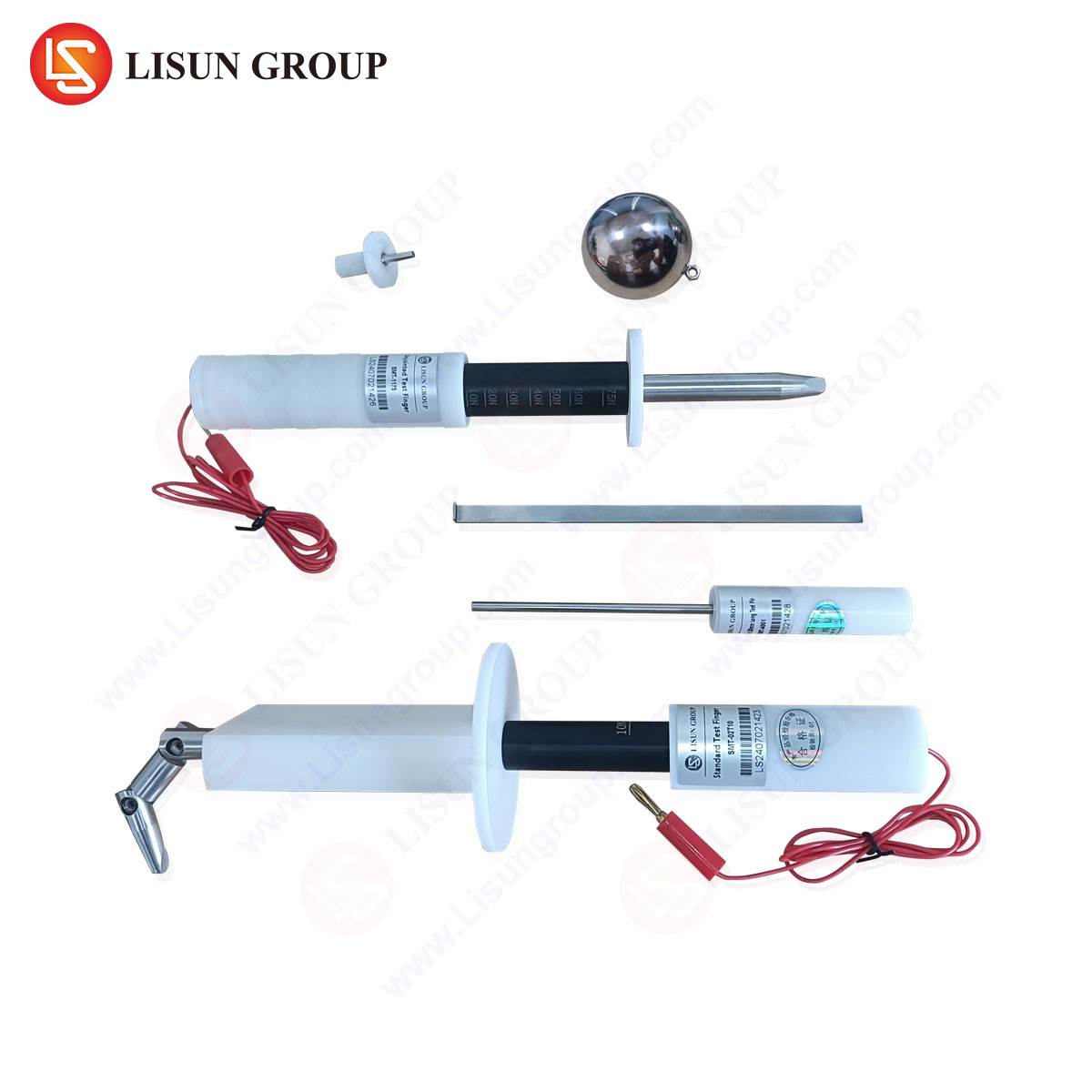
Within the comprehensive framework of product safety engineering, the evaluation of accessible parts to prevent electrical shock and mechanical injury is a non-negotiable prerequisite for market entry. This assessment relies on a suite of standardized test probes, designed to simulate the interaction between a product and the human body—or, critically, objects a person might introduce. Among these, the 50mm Sphere Probe, often referred to as the “test finger” or “jointed test finger,” serves as a primary tool. It is engineered to verify that hazardous live parts, moving components, or sources of excessive temperature are not accessible under normal or foreseeable conditions of use. The probe’s design, dimensions, and application methodology are not arbitrary; they are derived from extensive anthropomorphic data and risk analysis, codified within international safety standards such as IEC 61032, IEC 60529 (IP Code), and UL 60950-1. This article provides a technical examination of the 50mm Sphere Probe, its operational principles, and its critical role across diverse industries, with specific reference to the implementation of the LISUN Test Finger, Test Probe, Test Pin system.
Anthropomorphic Basis and Dimensional Specifications
The fundamental premise of the 50mm Sphere Probe is the simulation of a child’s finger or a small object that might be inserted into an opening in equipment casing. The 50mm diameter is a conservative representation, ensuring that if the sphere cannot penetrate an opening, smaller body parts or typical objects are also excluded. The probe itself is a precisely machined assembly. The canonical design, as embodied by instruments like the LISUN Test Finger, consists of three primary elements: a spherical tip of 50mm ± 0.1mm diameter, a cylindrical shaft, and a pivotal “joint” or “knuckle” section.
The joint is a critical feature, allowing the probe to articulate and simulate the natural probing motion of a finger seeking openings from various angles. The standard specifies that the joint can be bent up to 90° with respect to the axis of the handle in any direction, and it must maintain its position under a specified force. This articulation is essential for testing slots, grilles, and openings on curved or recessed surfaces. The handle is typically insulated and may incorporate a mechanism to apply the standardized test force, which is 30N ± 3N for accessibility checks and 10N ± 1N for IP code testing against solid foreign objects (IP2X). The materials of construction are often metals like brass or stainless steel for durability and electrical conductivity, with insulating sleeves to protect the operator during live testing.
Operational Principles and Testing Methodology
The application of the 50mm Sphere Probe follows a rigorous, procedure-driven methodology. The test is not a simple visual inspection but a dynamic, force-applied examination. The process can be segmented into distinct phases:
- Pre-Test Configuration: The equipment under test (EUT) is placed in its most unfavorable normal operating position. All covers that are intended to be opened by the user, or that are opened without the use of a tool, are removed or placed in their open position.
- Probe Application: The LISUN Test Probe is articulated to approximate the worst-case angle of entry. It is then deliberately inserted into every external opening—including joints, ventilation slots, keyholes, and gaps around controls—with the specified force (e.g., 30N for accessibility, 10N for IP2X).
- Electrical and Mechanical Detection: During accessibility testing for live parts, the probe is often connected to a “test lamp” circuit or a voltage detection network with a sensitive current limit (typically not exceeding 40mA). If the probe contacts a hazardous live part and completes a circuit to accessible conductive parts or earth, the indicator illuminates, signifying a failure. Simultaneously, the test assesses mechanical hazards; if the probe can contact moving parts like fans or gears, a hazard exists.
- Thermal Assessment: The probe may also be used to check for accessibility to hot surfaces. If the sphere can touch a surface that exceeds permissible temperature limits (as defined by standards like IEC 62368-1 for touch temperature), it constitutes a burn hazard.
A critical aspect of the test is the “unforeseeable use” clause. The probe must be applied with a degree of persistence, simulating curious probing. It is not sufficient for an opening to resist a straight-on insertion; it must resist entry from angled approaches facilitated by the probe’s joint.
Industry-Specific Applications and Use Cases
The universality of the 50mm Sphere Probe stems from its foundational role in hazard-based safety engineering. Its application permeates virtually every sector manufacturing electrical or electronic goods.
- Household Appliances & Consumer Electronics: For products like blenders, food processors, space heaters, and gaming consoles, the probe tests gaps around control panels, ventilation apertures, and the interfaces between housing sections. It ensures that fingers cannot contact internal wiring, live terminals on power supply boards, or high-temperature heating elements.
- Electrical Components and Wiring Systems: Manufacturers of switches, sockets, distribution boards, and connector housings use the probe to verify that live contacts are recessed sufficiently and that entry ports for cables do not provide a direct path to hazardous parts, even when a cable is partially withdrawn or bent.
- Automotive Electronics & Industrial Control Systems: In the harsh environments of vehicles and factories, enclosures for electronic control units (ECUs), sensor housings, and operator panels must prevent ingress of solid objects (IP2X) while also ensuring safety during maintenance. The LISUN Test Pin system, which includes the sphere probe, is used to validate gasket integrity and the security of covers intended to be opened with a tool.
- Lighting Fixtures and Telecommunications Equipment: LED drivers, ballasts, and outdoor luminaires have slots for thermal management. The probe ensures these slots are baffled or dimensioned to prevent access to live parts. Similarly, network switches and router vents are tested to prevent foreign object insertion.
- Medical Devices and Aerospace Components: Given the critical consequences of failure, these high-reliability sectors employ the probe during design verification. It checks ports for sensors, interfaces for accessories, and inspection covers on in-flight entertainment systems or patient monitoring devices, ensuring no single fault or curious intervention can create a hazard.
- Toy and Children’s Products Industry: This is a paramount application. Toy safety standards (e.g., IEC 62115) mandate stringent probe tests. The 50mm sphere checks for accessibility to batteries, internal circuits, and any pinch points in moving toys, directly addressing the behavior of young children.
Integration within the LISUN Test Probe Ecosystem
Effective compliance testing requires more than a single probe; it demands a coordinated system. The LISUN Test Finger, Test Probe, Test Pin product line provides this integrated solution. The 50mm Sphere Probe is a central component within a kit that typically includes:
- Jointed Test Fingers: Of varying sizes (e.g., 12mm for simulating smaller fingers per other standards).
- Test Pins: Straight pins of specified diameters (e.g., 1.0mm for IP1X testing) to simulate wires or tools.
- Accessories: Force gauges, test lamp circuits, and articulated stands for repeatable application.
The competitive advantage of a system like LISUN’s lies in its calibration traceability, manufacturing tolerances that strictly adhere to IEC 61032, and robust construction. For a test laboratory or quality assurance department, using a certified probe system mitigates risk. It ensures that a “pass” result is defensible during third-party certification audits by bodies like UL, TÜV, or Intertek, as the tool itself conforms to the normative requirements of the test standard.
Standards Compliance and Technical Validation
The authority of the 50mm Sphere Probe derives entirely from its strict conformity to published standards. The primary governing document is IEC 61032:1997, “Protection of persons and equipment by enclosures – Probes for verification.” This standard defines the exact dimensions, materials, articulation, and forces for the probe and its siblings. Its requirements are then incorporated by reference into a vast array of product-specific and horizontal standards.
Table 1: Key Standards Referencing the 50mm Sphere Probe
| Standard Number | Title | Primary Application |
| :— | :— | :— |
| IEC 61032 | Protection of persons and equipment by enclosures – Probes for verification | Defines the probe itself. |
| IEC 60529 | Degrees of protection provided by enclosures (IP Code) | Used for IP2X (finger protection) testing. |
| IEC 62368-1 | Audio/video, information and communication technology equipment | Hazard-based safety engineering for accessibility. |
| IEC 60335-1 | Household and similar electrical appliances – Safety | General requirement for accessible parts. |
| UL 60950-1 / UL 62368-1 | Safety of Information Technology Equipment (US) | US national adoption, essential for NRTL listing. |
Technical validation of a probe involves periodic calibration checks against certified gauges for diameter, sphere roundness, joint articulation range, and force application accuracy. A deviation of even a few tenths of a millimeter can alter the test’s severity, leading to non-conforming products being deemed safe or, conversely, safe products failing unnecessarily.
Conclusion: A Pillar of Objective Safety Assurance
The 50mm Sphere Probe is a deceptively simple tool that performs a profoundly important function. It translates abstract safety principles—”hazardous parts shall not be accessible”—into a quantifiable, repeatable, and objective laboratory test. Its design is a direct outcome of safety science, balancing realistic simulation with necessary conservatism. For engineers and compliance professionals across the electrical and electronic industries, proficiency with this probe is fundamental. Implementing a robust testing regimen with a certified system, such as the LISUN Test Finger, Test Probe, Test Pin kit, is not merely a procedural step; it is a critical investment in product integrity, risk mitigation, and regulatory compliance. As product forms evolve with new materials and miniaturization, the underlying need to assess accessible hazards remains constant, ensuring the continued relevance of this essential instrument.
Frequently Asked Questions (FAQ)
Q1: What is the difference between the 30N force and the 10N force when using the 50mm Sphere Probe?
The applied force is dictated by the specific test objective. A 30N ± 3N force is used when assessing the accessibility of hazardous live parts or dangerous mechanical parts under normal or foreseeable conditions, as per standards like IEC 62368-1. A lower force of 10N ± 1N is specified in IEC 60529 for verifying the degree of protection against solid foreign objects (specifically, the IP2X “finger-proof” designation). Using the incorrect force invalidates the test.
Q2: Can the 50mm Sphere Probe be used to test for IP water ingress ratings (e.g., IPX4 or IPX7)?
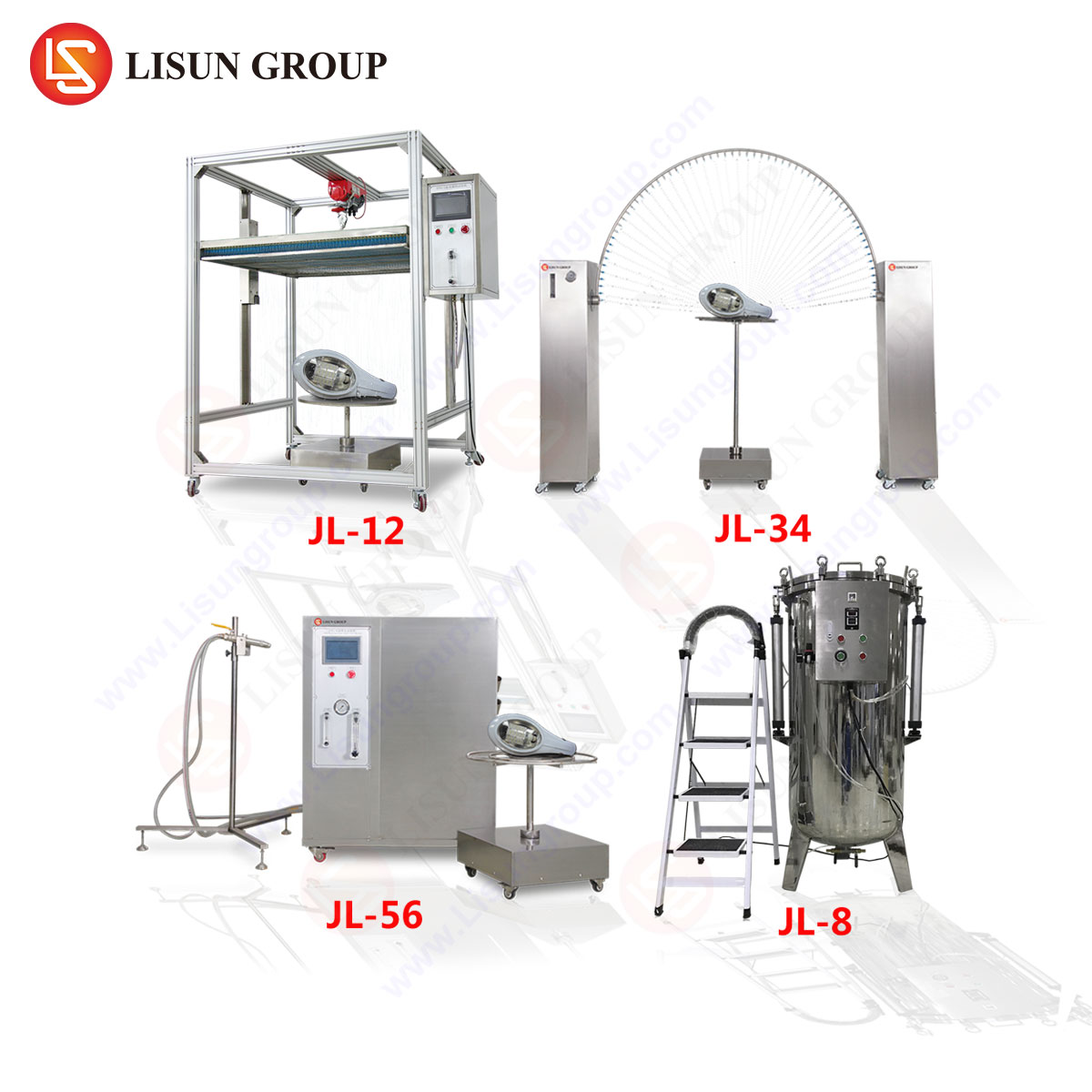
No, the 50mm Sphere Probe is exclusively for testing protection against contact with hazardous parts and ingress of solid objects. Water ingress testing (the second digit in the IP code) requires entirely different apparatus, such as oscillating tube or spray nozzle test fixtures, and immersion tanks, which simulate rain, splashing, or temporary submersion.
Q3: Our product has a decorative mesh grille with hexagonal openings. How do we determine if it will pass the probe test?
The test is performance-based, not purely geometric. While a simple rule of thumb states that an opening of less than 50mm in its smallest dimension should resist the sphere, the articulation of the probe’s joint can exploit flexible or deformable materials. The only definitive method is to perform the physical test as prescribed: apply the probe with the specified force at various angles to the grille. If the 50mm sphere can penetrate and contact a hazardous part behind it, the design fails regardless of the nominal opening size.
Q4: Why is a “test lamp” circuit used during electrical accessibility testing, and what does it simulate?
The test lamp circuit, typically comprising a 40-60V source and a sensitive current-limiting resistor or lamp, simulates a plausible fault condition in the human body. It detects if sufficient voltage and current can flow between the contacted live part and earth/accessible conductive part to present a shock hazard. The current limit (often set not to exceed 40mA) provides a safety margin below thresholds considered dangerous, while still providing a clear pass/fail indication (lamp on = fail). Modern versions may use electronic detection networks.
Q5: Is the 50mm Sphere Probe sufficient for all accessibility testing on children’s toys?
While the 50mm probe is crucial for testing battery compartments and larger openings, toy safety standards (e.g., IEC 62115, ASTM F963) mandate additional, smaller probes. These often include a “small parts cylinder” and smaller-diameter probes (like 3mm or 6mm) to simulate the exploration by very young children who may attempt to insert objects into smaller apertures. A complete toy safety assessment requires a full suite of probes appropriate for the age grading of the product.