




Technical Analysis of the 50mm Steel Ball with Hook for Enclosure Integrity Verification and Safety Compliance Testing
Abstract
This document provides a comprehensive technical examination of the 50mm Steel Ball with Hook, a standardized test apparatus critical for evaluating the mechanical integrity and safety of enclosures across multiple industries. The analysis encompasses its design specifications, underlying testing principles, and rigorous application within international safety frameworks. A focal point of this article is the contextualization of this device within a broader test tool ecosystem, notably in relation to complementary apparatus such as the LISUN Test Finger, Test Probe, and Test Pin, which together form a holistic approach to hazard-based safety engineering. The discourse is grounded in applicable standards, practical implementation methodologies, and empirical data, targeting engineers, compliance professionals, and quality assurance specialists in sectors including electrical equipment, automotive electronics, medical devices, and aerospace.
Introduction to Mechanical Impact and Access Protection Testing
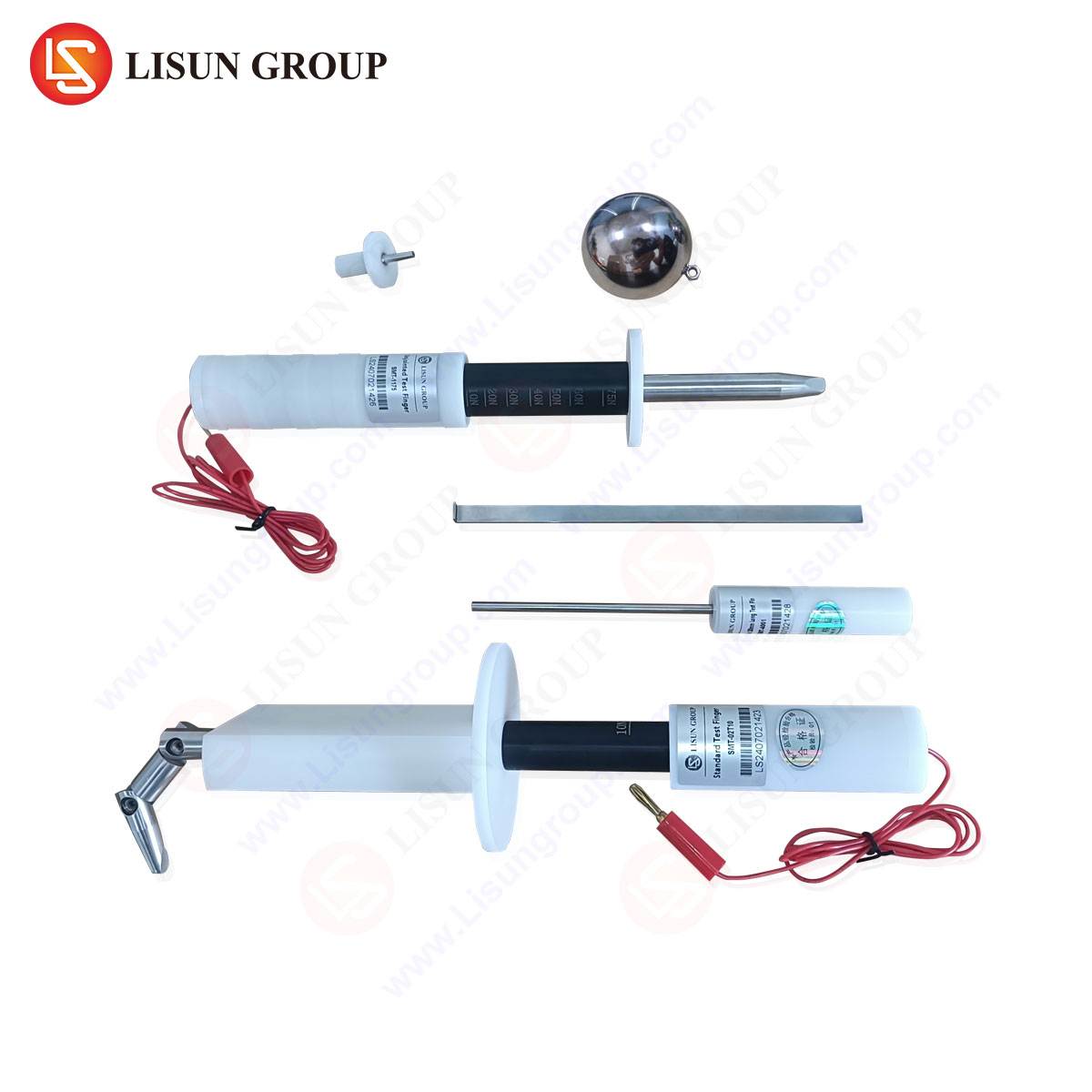
The proliferation of electrical and electronic equipment in domestic, commercial, and industrial environments necessitates stringent safety protocols to mitigate risks associated with mechanical damage and unintended human interaction. Enclosures serve as the primary defense, preventing access to hazardous live parts, moving components, and sources of ignition. Two fundamental but distinct assessment criteria are employed: protection against the ingress of solid foreign objects (including parts of the human body), and resistance to mechanical impacts. The 50mm Steel Ball with Hook is a definitive tool for the latter, simulating a high-energy, concentrated impact event. Its application is not performed in isolation; it is part of a sequential or parallel testing regimen that includes simulated human probing with tools like the LISUN Test Finger (simulating a child’s finger) and the LISUN Test Probe (a more rigid, articulated finger), as well as the LISUN Test Pin for evaluating openings intended to prevent access by small, rigid objects. Understanding the interplay between these tools is essential for comprehensive product safety certification.
Design and Material Specifications of the 50mm Steel Ball Apparatus
The 50mm Steel Ball with Hook is defined by its geometric and material precision, which are non-negotiable for test reproducibility. The core component is a sphere manufactured from grade 100Cr6 bearing steel or an equivalent alloy, hardened to a minimum of 61 HRC (Rockwell C scale). This ensures exceptional surface hardness and mass consistency, critical for delivering a repeatable impact energy. The nominal diameter is 50.0 mm ± 0.1 mm, resulting in a mass of approximately 0.535 kg (based on a steel density of 7.85 g/cm³). The calculation of its potential energy is straightforward: E = m g h, where ‘m’ is mass, ‘g’ is gravitational acceleration (9.81 m/s²), and ‘h’ is the drop height specified by the relevant standard.
The “hook” component is integral to the apparatus’s functionality. It is typically a welded or integrally machined eyelet or loop of sufficient strength to suspend the entire mass without deformation. The attachment point must be designed to minimize interference during the free-fall trajectory and to allow for clean release mechanisms. The surface finish of the ball is polished to a specified roughness (e.g., Ra ≤ 0.1 µm) to eliminate variables introduced by surface imperfections that could affect impact characteristics. Calibration of the assembly involves periodic verification of diameter, mass, spherical form error, and hardness to maintain traceability to national measurement institutes.
Governing Standards and Testing Principles: The IEC 60068-2-75 Framework
The primary international standard governing impact testing is IEC 60068-2-75, “Environmental testing – Part 2-75: Tests – Test Eh: Hammer tests.” This standard provides a catalog of spring, pendulum, and free-fall hammer tests. The 50mm steel ball is classified under Test Ehc: Free-fall hammer, ball with a diameter of 50 mm. The fundamental principle is kinetic energy transfer. The ball is suspended by its hook to a predetermined height above the test sample’s surface, calculated to deliver a specific energy level (e.g., 5 Joules). It is then released to strike the enclosure in its most vulnerable orientation. The test is typically repeated multiple times across a defined grid pattern on the sample.
The pass/fail criteria are multifaceted and context-dependent. Immediate failure indicators include fracture of the enclosure, exposure of hazardous live parts (as verified by subsequent probing with the LISUN Test Finger or Test Probe), impairment of safety-critical functions, or persistent deformation that compromises IP (Ingress Protection) rating seals. For instance, a crack in a household appliance’s plastic housing that allows the LISUN Test Finger to contact internal mains-voltage terminals constitutes a critical failure. The test simulates real-world incidents such as a heavy tool being dropped onto industrial control equipment or a high-impact event in an automotive electronics bay.
Synergistic Testing: Integrating the 50mm Ball with Probe and Finger Assessments
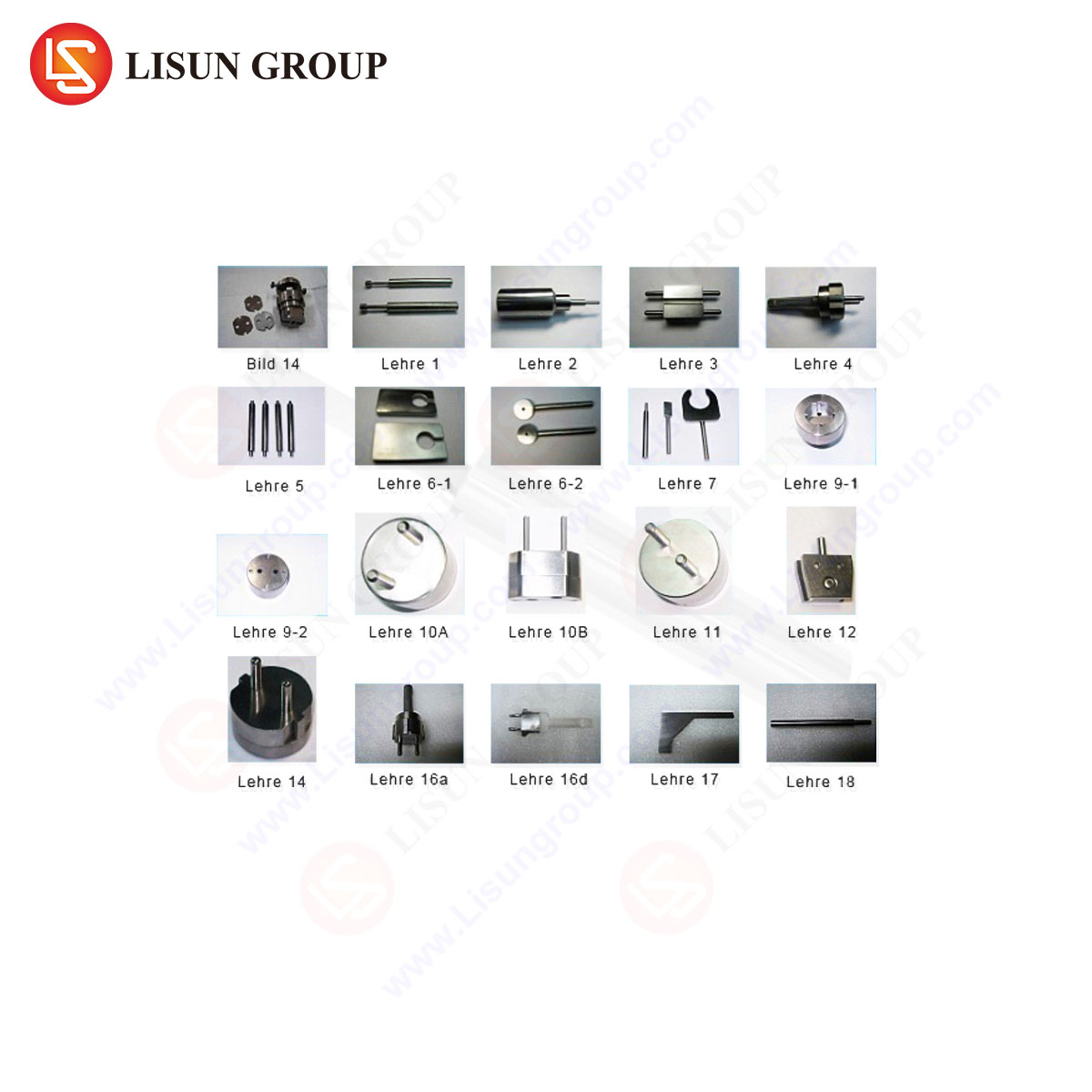
Safety evaluation is a layered process. The 50mm Steel Ball test assesses structural resilience, but the integrity of an enclosure post-impact is judged by its continued ability to prevent access. This is where the LISUN Test Finger (IEC 61032, Figure B), Test Probe (IEC 61032, Figure 13), and Test Pin (IEC 61032, Figure 12) become indispensable subsequent or parallel verification tools.
- LISUN Test Finger (Simulated Human Finger): This jointed test finger, with dimensions representing a child’s finger, is applied with a standardized force (typically 10N ± 1N) to any opening created or enlarged by the steel ball impact. Its purpose is to verify that hazardous parts remain inaccessible under conditions of casual human exploration. In the lighting fixtures industry, for example, a shattered diffuser must not allow finger contact with live LED driver components.
- LISUN Test Probe (Rigid Articulated Finger): A more rigid version of the test finger, it is used to apply greater force (30N ± 3N) to assess protection against deliberate probing. If a 50mm ball impact deforms but does not fracture a telecommunications equipment housing, the Test Probe is used to check if the deformation can be exploited to reach hazardous voltage points.
- LISUN Test Pin: This is a rigid, straight pin of 1.0 mm diameter. It is specifically designed to test openings intended to meet IP1X or IP2X (protection against solid objects >50mm and >12.5mm, respectively). Following an impact test on a medical device enclosure, the Test Pin verifies that no new openings larger than 1mm exist that could compromise the device’s IP rating or allow entry of small conductive debris.
This sequential methodology—impact, then probing—creates a robust validation chain. A product may survive the kinetic energy of the 50mm ball but fail if the resulting deformation permits access as per the LISUN Test Finger criteria.
Industry-Specific Application Contexts and Use Cases
The application of the 50mm Steel Ball with Hook is dictated by end-product safety standards. Below is a breakdown of its role across sectors:
- Electrical and Electronic Equipment / Household Appliances (IEC 60335, IEC 60950-1): Used to test the external casings of washing machines, refrigerators, and power supplies. Verifies that a dropped can or tool will not compromise basic insulation or create accessible live parts.
- Automotive Electronics (ISO 16750, various OEM standards): Assesses the robustness of electronic control unit (ECU) housings in engine compartments or underbody locations against impacts from flying road debris or accidental tool strikes during maintenance.
- Lighting Fixtures (IEC 60598): Evaluates the resilience of outdoor luminaire globes, streetlight housings, and high-bay industrial light covers against vandalism or accidental impact from falling objects.
- Industrial Control Systems (IEC 60204-1, IEC 61131-2): Ensures that programmable logic controller (PLC) enclosures and operator terminal screens can withstand incidental impacts in harsh factory environments.
- Telecommunications Equipment (ETSI EN 300 019, IEC 62368-1): Tests outdoor cabinet housings and data center hardware for resistance to impacts that could disrupt critical infrastructure.
- Medical Devices (IEC 60601-1): Validates the mechanical strength of device enclosures, ensuring that an impact does not affect safety or performance, a critical consideration for devices used in busy clinical settings.
- Aerospace and Aviation Components (RTCA DO-160, Airbus/ Boeing specifications): While often subject to more severe customized shock tests, the 50mm ball principle may be adapted for testing non-critical enclosure panels in cabin interiors or avionics bays against dropped handheld equipment.
- Electrical Components: Used on switches, socket outlets, and distribution board enclosures to confirm they can endure a high-energy blow without shattering or exposing conductors.
- Toy and Children’s Products Industry (ISO 8124, IEC 62115): Though more common tests involve smaller, lighter impactors, the 50mm ball may be specified for larger, heavy-duty toy enclosures or playground equipment containing electrical elements to simulate severe abuse.
Competitive Advantages of a Standardized Test Tool Ecosystem
The value of precision-engineered test apparatus like the 50mm Steel Ball with Hook and the LISUN probe family lies in standardization and reliability. Their advantages are multifaceted:
- Compliance Assurance: They provide the only accepted means of demonstrating conformity to clauses in IEC 60068-2-75, IEC 61032, and derivative product standards. Results obtained with non-compliant tools are not recognized by certification bodies (e.g., UL, TÜV, Intertek).
- Test Reproducibility: Manufacturing tolerances for mass, dimensions, and hardness are tightly controlled. This ensures that a test performed in a laboratory in Germany yields the same result as one performed in Japan, enabling global product acceptance.
- Risk Mitigation in Design: By employing these tools during the design verification phase, engineers can identify and rectify mechanical or safety flaws before costly tooling modifications or product recalls are necessary.
- Forensic Analysis: In post-failure incident investigations, standardized tools allow for the recreation of impact conditions to determine if a product was substandard or subjected to forces beyond its rating.
Data and Empirical Considerations
A key consideration is the relationship between impact energy, material behavior, and failure modes. For a 50mm steel ball, the energy (E) in Joules for a given drop height (h) in meters is: E = 0.535 9.81 h. Common test severities include 2J (h ≈ 0.38m), 5J (h ≈ 0.95m), and higher.
Table 1: Example Impact Energies for a 50mm Steel Ball (m=0.535kg)
| Target Energy (J) | Calculated Drop Height (m) | Typical Application Context |
| :——————– | :—————————-: | :—————————— |
| 2 J | 0.38 | Light-duty indoor equipment |
| 5 J | 0.95 | General-purpose appliances, IT equipment |
| 10 J | 1.91 | Heavy-duty industrial equipment |
| 20 J | 3.81 | Robust outdoor enclosures |
Material response is non-linear. A polycarbonate enclosure may exhibit ductile deformation at 5J but brittle fracture at 7J. An aluminum casting may dent at 10J but crack at 15J. The subsequent probe test (using LISUN Test Finger/Probe) is crucial because a ductile dent may “spring back” enough to prevent probe access, while a brittle crack may not.
Conclusion
The 50mm Steel Ball with Hook is a deceptively simple yet profoundly important instrument in the safety engineer’s toolkit. Its function—to deliver a calibrated, high-energy impact—is a cornerstone of mechanical integrity testing for enclosures worldwide. Its true efficacy, however, is realized only when its application is integrated with the probing assessments enabled by the LISUN Test Finger, Test Probe, and Test Pin. This combined methodology addresses the full spectrum of hazards: from gross mechanical abuse to subtle access-related risks. For manufacturers across the electrical, electronic, automotive, and medical landscapes, mastery of this test regimen, supported by precisely manufactured and standardized equipment, is not merely a compliance exercise but a fundamental component of responsible product design and risk management, ultimately safeguarding users and ensuring operational reliability in demanding environments.
Frequently Asked Questions (FAQ)
Q1: After a successful 50mm steel ball impact test with no visible cracks, is the product automatically deemed compliant with safety standards?
A1: No. The absence of fracture is a necessary but insufficient condition. The enclosure must then be subjected to the appropriate accessibility probe test (e.g., LISUN Test Finger or Test Probe) as mandated by the relevant product safety standard. Compliance is only achieved if the enclosure continues to prevent access to hazardous parts after the impact event.
Q2: Can the 50mm Steel Ball test be substituted with a different impactor, such as a rubber hammer, for in-house quality checks?
A2: While alternative methods can be useful for internal comparative stress screening, they cannot replace the standardized test for formal certification. The mass, geometry, hardness, and kinetic energy profile of the 50mm ball are specifically defined. Substitutions will not yield equivalent or recognized results for compliance purposes due to differences in energy transfer, contact area, and material interaction.
Q3: How does the test account for different environmental temperatures, such as equipment destined for cold climates?
A3: The base standard IEC 60068-2-75 typically calls for testing at room temperature. However, many end-product standards (e.g., for automotive or outdoor telecommunications equipment) specify that impact tests be performed on samples conditioned at extreme high and low operating temperatures. This is critical because material brittleness increases at low temperatures, making an enclosure more susceptible to fracture from an impact of the same energy.
Q4: What is the recommended calibration interval for a 50mm Steel Ball with Hook assembly?
A4: While the specific interval may be dictated by a laboratory’s accreditation body (e.g., ISO 17025), annual calibration is a common industry practice. This calibration should verify mass, diameter, spherical form, surface hardness, and the integrity of the hook attachment. A calibration certificate traceable to national standards is required for accredited testing.
Q5: In the context of the LISUN Test Finger and Probe, what determines which one to use after an impact test?
A5: The choice is strictly governed by the applicable product standard. Generally, the Test Finger (Figure B) is used to simulate accidental contact by a person, while the more rigid Test Probe (Figure 13) simulates deliberate probing. Many standards, like IEC 62368-1 (Audio/Video, Information and Communication Technology equipment), specify the use of the Test Probe for verifying protection after an impact test on certain types of enclosures. The product’s standard will explicitly state the required probe.