

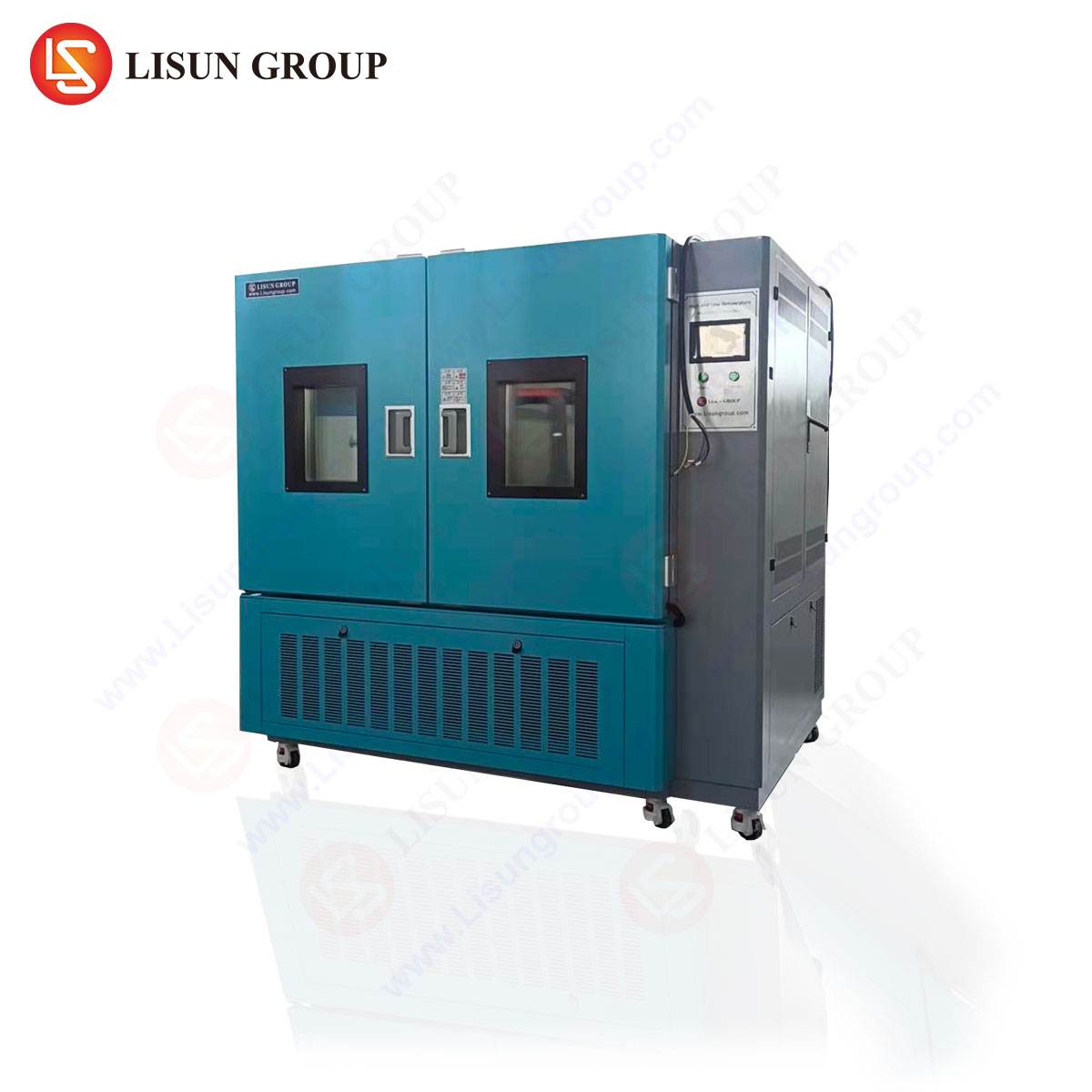



Advanced Cyclic Corrosion Testing: A Critical Methodology for Modern Material Validation
The relentless pursuit of product durability and reliability across industrial sectors necessitates accelerated testing methodologies that accurately simulate the complex, multifaceted nature of real-world environmental degradation. Traditional steady-state corrosion tests, while valuable for baseline comparisons, often fail to replicate the synergistic effects of fluctuating climatic conditions encountered by products in service. In response to this technological gap, Cyclic Corrosion Test (CCT) chamber technology has evolved from a specialized tool into a cornerstone of modern qualification protocols. Advanced CCT chambers provide a controlled, reproducible environment to subject materials and components to a precisely sequenced regimen of corrosive atmospheres, humidity, drying, and rest phases. This technical article examines the principles, implementation, and critical importance of advanced CCT technology, with a specific analysis of its application through instruments such as the LISUN YWX/Q-010X cyclic corrosion test chamber.
The Evolution from Static to Cyclic Corrosion Testing Paradigms
Historically, salt spray (fog) testing, standardized in methods like ASTM B117, has served as a ubiquitous but limited tool for corrosion resistance assessment. This static exposure to a continuous saline mist offers a consistent, aggressive environment but presents a significant divergence from actual service conditions. In operational environments, materials are seldom subjected to unremitting wetness and salt deposition. Instead, they experience cycles: nocturnal condensation, daytime drying, rainfall, exposure to UV radiation, and intervals of lower humidity. These cyclic variations profoundly influence corrosion kinetics, often accelerating failure through mechanisms such as wet-dry cycling, which concentrates electrolytes and promotes galvanic activity, and through the introduction of mechanical stresses from repeated swelling and contraction.
The advanced CCT paradigm was developed to bridge this simulation gap. By programming chambers to execute automated transitions between distinct environmental states, test engineers can create accelerated models of daily, seasonal, or operational cycles. This approach does not merely accelerate a single corrosion mechanism but accelerates the sequence of events that lead to field failures, including coating delamination, crevice corrosion, galvanic attack, and stress corrosion cracking. The resulting data possesses a significantly higher correlation with outdoor exposure results and real-world performance, enabling more predictive design and material selection.
Architectural Principles of a Modern CCT Chamber System
A sophisticated CCT chamber is an integrated environmental simulation system comprising several core subsystems that operate in concert. The chamber structure itself is typically constructed from corrosion-resistant polymers or composite materials, such as fiber-reinforced polyester, ensuring long-term integrity against the aggressive internal atmosphere. A critical component is the precision climate control system, which must reliably and rapidly achieve specified conditions for temperature and relative humidity (RH). This is commonly accomplished through a combination of resistive heaters, refrigeration units, and steam humidifiers or atomizing systems, all managed by a high-resolution programmable logic controller (PLC).
The corrosion generation system is equally vital. For salt spray phases, a compressed air-driven atomizer creates a consistent, settling fog of a prepared electrolyte solution, often a 5% sodium chloride solution per ASTM G85 or other industry-specific formulations. Advanced chambers incorporate separate reservoirs and nebulizers for different corrosive media, allowing sequential or mixed exposure to salts, acids (e.g., for acid rain simulation), or other chemicals. The drying phase is not merely an absence of spray; it is an active process involving heated, often low-humidity air circulation to ensure complete evaporation of surface moisture, a key driver for corrosion product formation and coating adhesion loss. A high-integrity sealing system and robust, corrosion-resistant internal fixtures are mandatory to maintain chamber purity and ensure test specimen isolation.
The LISUN YWX/Q-010X: A System for Precision Cyclic Corrosion Evaluation
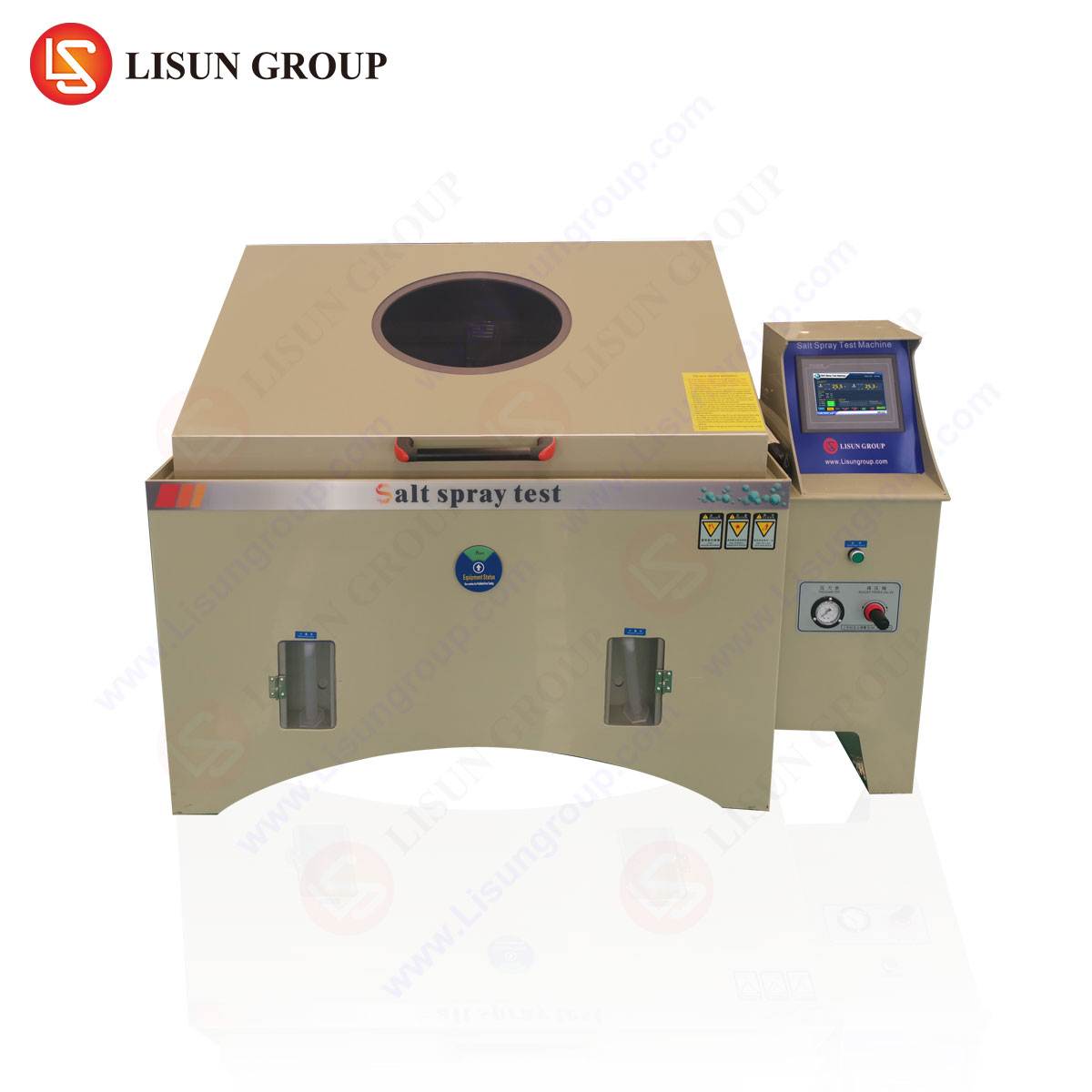
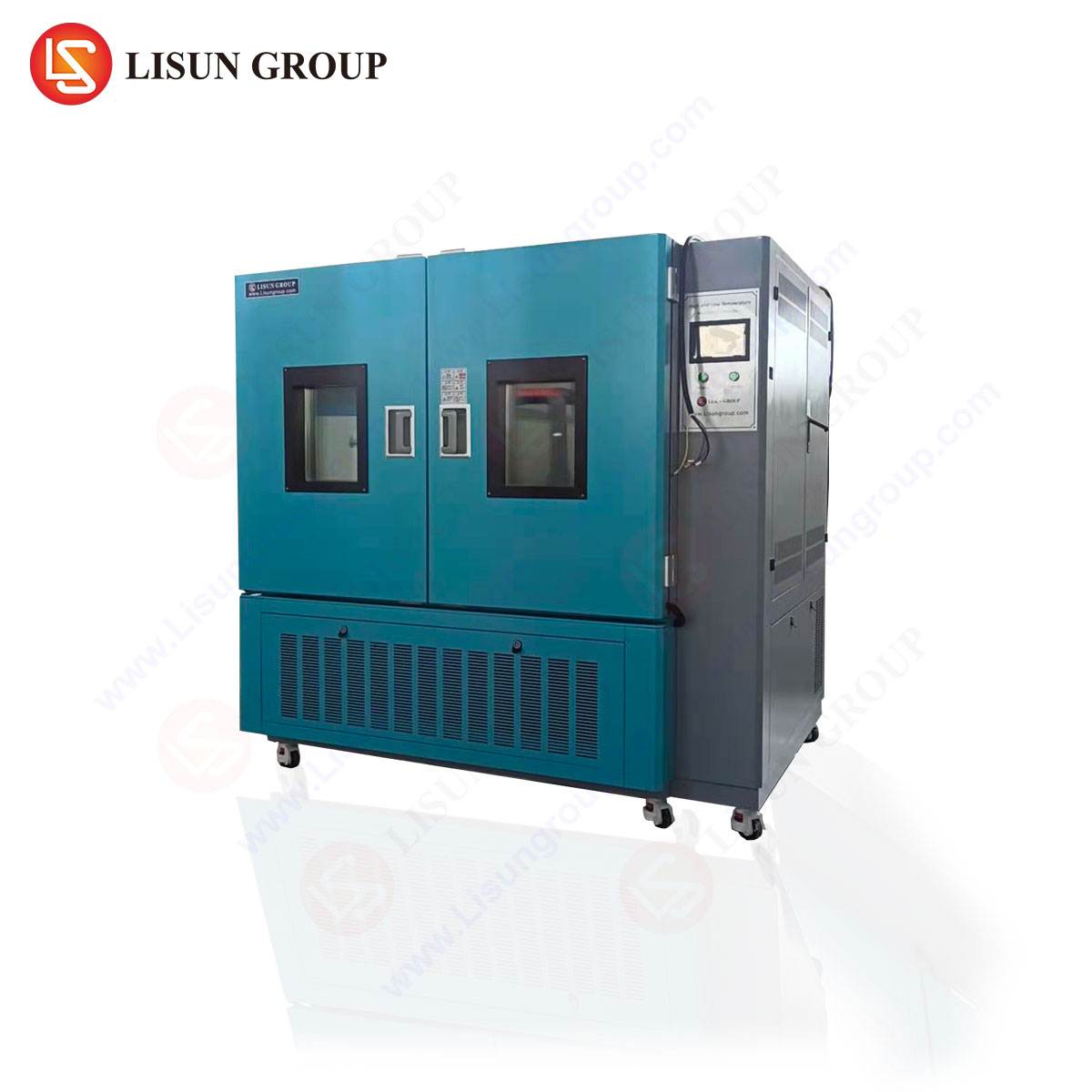
The LISUN YWX/Q-010X cyclic corrosion test chamber embodies the technological principles outlined above, engineered to meet stringent international test standards. This chamber is designed to execute complex cyclic profiles, including, but not limited to, standards such as ASTM G85, IEC 60068-2-52, ISO 9227, and JASO M609. Its architecture facilitates the seamless transition between salt spray, dry-off, humidity, and condensation phases within a single, unified test space.
Key Specifications and Operational Principles:
- Test Volume: Provides a standardized workspace for consistent fog distribution and environmental uniformity.
- Temperature Range: Typically spans from ambient +5°C to +55°C, with controlled tolerance, enabling simulation of varied climatic conditions.
- Humidity Range: Capable of maintaining relative humidity from 30% to 98% RH, critical for simulating tropical humidity or controlled drying phases.
- Corrosive Solution: Utilizes a heated, saturated, and filtered air supply to atomize the test solution, ensuring a consistent and reproducible salt fog density. The system includes a large-capacity reservoir with level monitoring.
- Control System: Features a touch-screen PLC interface allowing for the programming of multi-segment, cyclic test profiles. Each segment can define temperature, humidity, spray on/off, and duration, with automatic cycling for extended unattended operation.
- Construction: Employing a fiber-reinforced plastic (FRP) inner lining and cover, along with polypropylene (PP) for the solution reservoir, ensuring chemical inertness and structural longevity.
The testing principle revolves around the programmable execution of a user-defined “cycle.” For example, a common automotive test cycle might comprise: a 4-hour salt spray phase at 35°C, a 2-hour ambient air drying phase, followed by an 18-hour high-humidity phase at 40°C and 95% RH. The YWX/Q-010X automates this sequence, repeating it for hundreds or thousands of hours, thereby compressing years of environmental exposure into a manageable test duration.
Industry-Specific Applications and Test Protocols
The value of advanced CCT technology is realized through its adoption across diverse, quality-critical industries.
- Automotive Electronics & Components: This is a primary application domain. Connectors, wiring harnesses, engine control units (ECUs), sensors, and lighting assemblies are subjected to cycles mimicking winter road salt exposure, followed by underhood heating and engine wash-off. Standards like SAE J2334 or manufacturer-specific derivatives are routinely executed in chambers like the YWX/Q-010X to validate protective conformal coatings, connector seals, and material pairings.
- Aerospace and Aviation Components: While often requiring specialized salt concentrations and profiles, CCT is used for testing avionics housings, in-flight entertainment systems, and non-critical structural fittings exposed to coastal or carrier-deck environments.
- Electrical & Electronic Equipment, Industrial Control Systems: Printed circuit board assemblies (PCBAs), programmable logic controllers (PLCs), and switchgear are tested for resistance to corrosive industrial atmospheres, which may contain sulfur compounds (simulated with Kesternich tests) alongside salinity. This validates the efficacy of conformal coatings and enclosure ingress protection (IP) ratings.
- Telecommunications Equipment: Outdoor enclosures, base station components, and broadband hardware are exposed to cyclic tests simulating years of coastal or urban pollution, ensuring signal integrity and mechanical functionality are not compromised by corrosion-induced failures.
- Lighting Fixtures (Indoor & Outdoor): LED drivers, housings, and connectors for streetlights, architectural, and automotive lighting are rigorously tested. CCT assesses the integrity of gaskets, heat sink coatings, and lens adhesives against thermal cycling combined with salt and humidity.
- Medical Devices and Consumer Electronics: Portable devices, diagnostic equipment housings, and wearables may be tested to ensure they can withstand periodic exposure to cleaning agents, perspiration, and incidental moisture ingress over their service life.
Analytical Advantages and Correlation to Field Performance
The competitive advantage of employing an advanced CCT system lies in its predictive validity. Data generated is not merely a pass/fail metric against a continuous spray test but offers nuanced insights into failure modes. Engineers can observe:
- Progression Rates: How quickly corrosion propagates from a scribe or cut-edge.
- Coating Adhesion: The tendency for paints, powder coatings, or platings to blister or delaminate at interfaces during wet-dry cycles.
- Galvanic Compatibility: The severity of bimetallic corrosion between dissimilar metals in an assembly.
- Crevice Corrosion Initiation: The propensity for corrosion to begin in shielded areas, such as under gaskets or between fastened plates.
Studies have demonstrated that a well-constructed CCT profile can achieve a time-compression factor of 5x to 10x relative to static field exposure, with a far superior correlation coefficient (often exceeding 0.8) compared to traditional salt spray testing. This allows for more rapid design iteration, more confident material qualification, and ultimately, the release of more durable and reliable products to the market.
Integration into Comprehensive Quality Assurance Frameworks
An advanced CCT chamber should not operate in isolation. Its greatest utility is realized when integrated into a broader product validation strategy. Pre- and post-test analysis is essential. This includes precise specimen preparation (e.g., standardized scribing per ISO 17872), meticulous photographic documentation at regular intervals, and post-test evaluation using quantitative methods such as mass loss measurement, pit depth analysis, or electrochemical impedance spectroscopy (EIS) to assess coating degradation. The test parameters themselves must be meticulously controlled and recorded; the precision of the YWX/Q-010X in maintaining temperature, humidity, and fog settlement rates is a direct contributor to test reproducibility and inter-laboratory comparison.
Furthermore, CCT results feed into failure mode and effects analysis (FMEA), guiding design-for-manufacturing (DFM) decisions and informing warranty and lifecycle predictions. In sectors like automotive and aerospace, where supplier qualification is paramount, the ability to perform standardized, reproducible CCT testing is often a contractual requirement, making capable instrumentation a critical piece of industrial infrastructure.
Conclusion
Advanced Cyclic Corrosion Test chamber technology represents a significant maturation in environmental simulation, moving beyond simplistic accelerated aging to a more faithful reproduction of real-world degradation sequences. The technical capability to automate complex profiles of salinity, humidity, and temperature, as implemented in systems like the LISUN YWX/Q-010X, provides engineers across the electrical, automotive, aerospace, and consumer goods industries with a powerful tool for predictive validation. By enabling the early identification of material and design vulnerabilities, this technology reduces the risk of field failures, enhances product longevity, and supports the development of more robust and reliable engineered systems in an increasingly demanding global marketplace.
Frequently Asked Questions (FAQ)
Q1: How does cyclic corrosion testing (CCT) differ from a traditional salt spray test, and when should I specify CCT over a standard test?
Traditional salt spray (e.g., ASTM B117) provides a constant, aggressive corrosive environment and is best used for comparative quality control, such as checking batch-to-batch consistency of a plating process. CCT introduces programmed cycles of corrosion, humidity, and drying to better simulate real-world service conditions. CCT should be specified when evaluating complete assemblies, coated systems, or materials for outdoor or harsh environment applications where wet-dry cycles occur. It is more appropriate for predicting long-term field performance and identifying specific failure modes like coating delamination.
Q2: What are the critical factors to monitor to ensure the reproducibility of tests in a chamber like the YWX/Q-010X?
Key factors include: 1) Fog Collection Rate: The volume of salt solution collected per unit area per hour must be verified against the relevant standard (e.g., 1.0 to 2.0 ml/80cm²/h for many tests). 2) Temperature Uniformity and Stability: The chamber must maintain the specified temperature within a tight tolerance (e.g., ±2°C) throughout the workspace. 3) Solution Chemistry and pH: The pH and concentration of the prepared salt solution must be rigorously controlled and monitored. 4) Humidity Accuracy: During humidity phases, the setpoint must be accurately achieved and maintained. Regular calibration and adherence to a preventative maintenance schedule are essential for all these parameters.
Q3: Can the YWX/Q-010X chamber accommodate industry-specific test standards that use acidified salt solutions or other corrosive media?
Yes, advanced CCT chambers are designed to accommodate a variety of test solutions as stipulated by different standards. This includes neutral salt solutions (NaCl), acidified salt solutions (e.g., with acetic acid for ASTM G85, Annex A2), or solutions with other additives. The chamber’s construction materials (such as FRP and PP) are selected for chemical resistance, and the nebulization system is designed to handle these solutions. The user must ensure the correct solution is prepared and loaded according to the specific standard being followed.
Q4: For testing electronic assemblies, how should specimens be prepared and evaluated after a CCT test?
Specimens should be representative of the final product, including all coatings and seals. A standardized scribe through the coating to the substrate is often applied to create an intentional defect for assessing undercutting. Prior to testing, electrical functionality should be verified. Post-test, evaluation is multi-stage: 1) Visual inspection and photographic documentation of corrosion products, blistering, or creepage from the scribe. 2) Gentle rinsing to remove salts, followed by drying. 3) Removal of corrosion products if required, to assess pit depth or mass loss. 4) Final functional testing to determine if electrical failure (e.g., short circuits, increased resistance, dielectric breakdown) has occurred. The specific evaluation criteria are typically defined by the product specification or relevant standard.