

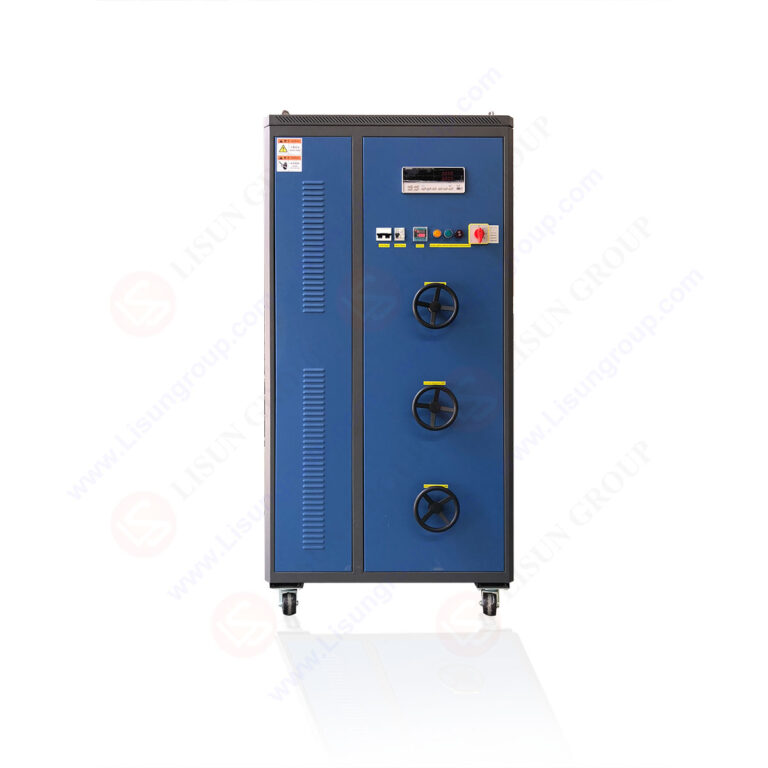



Advanced Corrosion Testing Methodologies and the Role of Precision Salt Spray Chambers
Corrosion represents a pervasive and economically debilitating phenomenon, impacting the longevity, safety, and reliability of materials across virtually every industrial sector. For manufacturers of electrical and electronic equipment, automotive electronics, aerospace components, and medical devices, the electrochemical degradation of metals and protective coatings is not merely an aesthetic concern but a critical failure mode with significant operational and financial implications. Consequently, accelerated corrosion testing has become an indispensable component of product development, quality assurance, and compliance validation. Among these methodologies, salt spray (fog) testing remains a cornerstone technique, standardized globally to provide a controlled, aggressive environment that simulates years of field exposure within a condensed timeframe. The efficacy and repeatability of such testing are wholly dependent on the precision and capability of the test chamber employed. This article examines advanced corrosion testing principles and details the implementation of one such instrument, the LISUN YWX/Q-010 salt spray test chamber, within rigorous quality control frameworks.
The Electrochemical Foundations of Accelerated Corrosion Testing
At its core, salt spray testing accelerates corrosion through the manipulation of environmental variables that govern electrochemical reactions. The process initiates when an electrolyte—a sodium chloride solution in standardized testing—forms a thin, continuous film on the test specimen’s surface. This electrolyte facilitates ionic conduction, enabling anodic metal dissolution and cathodic oxygen reduction reactions to proceed at an accelerated rate. The chamber environment elevates temperature, typically to 35°C ± 2°C as per many standards, which increases ionic mobility and reaction kinetics. Furthermore, the continuous introduction of a salt-laden fog ensures a constant supply of corrosive agents (chloride ions) and maintains surface wetness, preventing the formation of protective, passivating oxide layers that might occur under cyclic drying conditions.
The test does not precisely replicate any single natural environment but provides a severely corrosive, standardized, and reproducible condition. It is particularly effective for evaluating the relative corrosion resistance of metallic materials with and without protective coatings, such as electroplated zinc or nickel on electrical connectors, anodized aluminum in aerospace components, or painted surfaces on automotive electronic control units (ECUs). The primary assessment metrics include time to initial red rust, extent of creepage from scribes (undercutting of coatings), and the density and distribution of corrosion products.
Critical Design Parameters for Modern Salt Spray Chambers
The transition from basic corrosion cabinets to advanced testing instruments hinges on the precise control of several interdependent parameters. Chamber construction must utilize materials inherently resistant to the corrosive environment, typically high-grade polymers like polyvinyl chloride (PVC) or polypropylene for the main body, with reinforced glass for viewing windows. The atomization system is paramount; it must generate a consistent fog of specified droplet size and sedimentation rate. This is commonly achieved using compressed, purified air passed through a venturi nozzle immersed in a reservoir of test solution, creating a fine, uniform mist.
Temperature uniformity is non-negotiable. Advanced chambers employ a forced air circulation system with strategically placed baffles to eliminate thermal gradients, ensuring every specimen within the workspace is subjected to identical conditions. Humidity control, often maintained near saturation (95-98% RH) by the nature of the test, must be stable to prevent solution concentration variations. Modern chambers integrate sophisticated sensor arrays and programmable logic controllers (PLCs) to monitor and adjust these parameters in real-time, logging data for audit trails and test validation. The integrity of the test is further safeguarded by features such as automatic level control for the salt solution reservoir, saturated air towers to pre-heat and humidity the incoming air, and redundant safety systems to prevent chamber over-temperature or solution depletion.
Introducing the LISUN YWX/Q-010 Salt Spray Test Chamber
The LISUN YWX/Q-010 embodies the engineering principles required for compliant and repeatable accelerated corrosion testing. Designed to meet and exceed the stipulations of key international standards including ASTM B117, ISO 9227, JIS Z 2371, and IEC 60068-2-11, this chamber provides a controlled environment for rigorous material evaluation.
Key Specifications and Operational Principles:
- Test Chamber Volume: 108 liters, providing a usable workspace suitable for a range of component sizes.
- Temperature Range & Control: The chamber operates with a temperature range for the test zone of Ambient +5°C to 55°C. Control stability is maintained within ±0.5°C, facilitated by a high-efficiency air-heating system and PID (Proportional-Integral-Derivative) controller algorithms. The saturated barrel (air temperature) is separately controlled to ensure the incoming atomizing air is heated and humidified to the correct temperature, typically 47°C ± 2°C for a standard 35°C chamber test, preventing solution concentration.
- Atomization System: Utilizes a tower-style atomizer with adjustable fog dispersion. The compressed air is preconditioned through a series of filters and a saturated air tower to remove impurities and achieve thermal equilibrium. The sedimentation rate, a critical metric defined by standards (e.g., 1.0 to 2.0 ml/80cm²/h in ISO 9227), is calibrated and verifiable.
- Construction: The interior is fabricated from imported grade 1 polyvinyl chloride (PVC) plate, offering excellent resistance to thermal distortion and chemical attack. The outer housing is constructed from powder-coated mild steel or PVC-coated cold-rolled steel for durability.
- Control Interface: Features a digital, programmable controller with a color touchscreen interface. This allows for the setting of test parameters, multi-segment programming for cyclic tests, and real-time monitoring of temperature, test duration, and system status. Data logging capability is standard.
Industry-Specific Applications and Testing Protocols
The YWX/Q-010 finds application in diverse sectors where corrosion resistance is a key performance indicator.
- Automotive Electronics: Testing electronic control units (ECUs), sensor housings, connector terminals, and lighting assemblies (e.g., LED driver enclosures). Tests often follow ISO 9227, with assessments for white corrosion on zinc-plated terminals and cosmetic corrosion on painted housings.
- Electrical Components & Telecommunications: Evaluation of galvanized steel brackets, plated copper busbars, RJ45 connector shells, and antenna components. A typical test might involve a 96-hour exposure per IEC 60068-2-52, followed by inspection for base metal corrosion and measurement of contact resistance degradation.
- Aerospace and Aviation Components: While often requiring more specialized tests (e.g., acidified salt spray per ASTM G85), standard salt spray is used for screening materials, fasteners, and non-critical aluminum housings for avionics cooling systems.
- Medical Devices: Validating the corrosion resistance of stainless-steel surgical instrument housings, external components of imaging equipment, and electrical contacts within diagnostic devices. Biocompatibility considerations make the integrity of protective coatings paramount.
- Lighting Fixtures & Consumer Electronics: Assessing the performance of anodized aluminum heat sinks in LED luminaires, the protective coatings on outdoor lighting fixtures, and the metalized finishes on consumer device chassis. Testing often includes a scribe through the coating to evaluate undercut creepage.
Table 1: Example Test Regimens by Application
| Industry | Component Example | Typical Standard | Common Test Duration | Key Evaluation Metric |
| :— | :— | :— | :— | :— |
| Automotive Electronics | Zinc-plated connector | ASTM B117 | 96-240 hours | Time to appearance of red rust; white rust coverage. |
| Electrical Components | Copper busbar with tin plating | IEC 60068-2-11 | 48-96 hours | Solderability after test; presence of pitting. |
| Lighting Fixtures | Painted aluminum housing | ISO 9227 | 500-1000 hours | Creepage from scribe; blister density. |
| Telecommunications | Steel rack mounting hardware | JIS Z 2371 | 72 hours | Corrosion products affecting dimensional fit. |
Ensuring Validity: Calibration, Maintenance, and Standards Compliance
The generation of reliable, auditable data mandates strict adherence to calibration and maintenance schedules. Critical calibration points for the YWX/Q-010 include:
- Chamber Temperature: Verified using traceable, independent sensors placed at multiple locations within the workspace.
- Saturated Air Barrel Temperature: Calibrated to ensure proper conditioning of the atomizing air.
- Solution pH and Concentration: The collected condensate must be analyzed periodically to confirm it remains within the standard’s specified range (e.g., pH of 6.5 to 7.2 for neutral salt spray).
- Sedimentation Rate: Measured by placing specific collection funnels inside the chamber for a defined period (typically 16-24 hours) and calculating the volume of solution collected per unit area per hour.
Preventive maintenance involves regular cleaning of the chamber interior and nozzles to prevent salt buildup, inspection of air filters and saturation tower water levels, and validation of all sensor readings. Proper operation also requires the use of specified reagents—distilled or deionized water and sodium chloride of high purity (≥99.5% NaCl with limited contaminant levels)—to prevent introduction of confounding variables.
Comparative Advantages in Precision Testing
The technical differentiation of an instrument like the LISUN YWX/Q-010 lies in its integration of control stability, user-centric design, and construction integrity. The PID temperature control system, coupled with forced air circulation, ensures spatial uniformity that is critical for testing mixed product loads. The digital controller not only simplifies operation but also provides a defensible record of environmental conditions throughout the test duration, a requirement for ISO/IEC 17025 accredited laboratories.
The chamber’s design mitigates common failure points. The tower-type atomizer is less prone to clogging than some diaphragm-based systems. The use of industrial-grade PVC for the interior resists stress cracking and deformation over time, ensuring long-term geometric stability of the workspace. Furthermore, the inclusion of automated failsafes—for low solution level, over-temperature, and air supply failure—protects both the test specimens and the chamber itself from invalid test conditions or damage. In competitive analysis, these factors contribute to reduced test variability, lower long-term cost of ownership through durability, and enhanced confidence in the correlation between accelerated test results and real-world performance.
Interpreting Test Results and Correlation to Service Life
A fundamental challenge in accelerated testing is correlating chamber hours to years of field service. This correlation is non-linear and highly dependent on the specific service environment (marine, industrial, rural). Salt spray test results are primarily comparative and qualitative. They are most effectively used for:
- Quality Control: Batch-to-batch comparison of a known material or coating process.
- Screening & Ranking: Evaluating several candidate materials or coating systems to select the best performer.
- Process Validation: Verifying that a change in manufacturing process (e.g., plating bath chemistry, pretreatment, curing temperature) does not adversely affect corrosion resistance.
For a more predictive assessment, cyclic corrosion tests (CCT) that incorporate wet, dry, and humidity phases often provide better correlation. While the YWX/Q-010 is optimized for continuous salt spray, its programmable controller can be used to manage simple cyclic profiles, enhancing its utility. Ultimately, test duration is selected based on industry norms, past correlation studies, and the severity of the intended application. A 96-hour test might be sufficient for a benign indoor consumer electronics application, while a critical automotive under-hood component may require 720 hours or more of exposure.
Frequently Asked Questions (FAQ)
Q1: What is the purpose of the saturated air tower in the YWX/Q-010 chamber?
A1: The saturated air tower serves a critical preconditioning function. The compressed air used for atomization is bubbled through a column of heated, deionized water. This achieves two goals: it heats the air to a temperature slightly above the chamber setpoint (preventing cooling of the fog upon entry and subsequent condensation which would dilute the solution), and it humidifies the air to near 100% RH. This process ensures the salt solution concentration in the collected fog remains consistent, maintaining the specified pH and chloride concentration as per testing standards.
Q2: Can the chamber be used for tests other than neutral salt spray (NSS), such as Acetic Acid Salt Spray (AASS)?
A2: Yes, the YWX/Q-010 is constructed from materials resistant to a range of test solutions. To perform AASS (per ASTM G85) or CASS (Copper-Accelerated Acetic Acid Salt Spray), the user would prepare the appropriate acidified solution as defined by the standard. The chamber’s PVC construction, pump, and nebulizer system are compatible with these mildly acidic solutions. However, a thorough cleaning and purging of the system is mandatory when switching between different test solution types to prevent cross-contamination.
Q3: How is the sedimentation rate verified, and why is it important?
A3: Sedimentation rate is verified using standardized collection devices—typically two or more glass or plastic funnels with a specific collection area (e.g., 80 cm²) connected to graduated cylinders. These are placed within the chamber at designated locations, and the volume of solution collected over a minimum 16-hour period is measured. The rate is then calculated in ml/80cm²/h. This metric is crucial because it standardizes the “dose” of corrosive electrolyte settling on the specimens. An incorrect rate can lead to non-compliant test conditions, making results invalid and non-comparable to those from other laboratories.
Q4: What are the critical preparatory steps for test specimens before placement in the chamber?
A4: Proper specimen preparation is essential for meaningful results. Key steps include: 1) Cleaning: Removing all oils, fingerprints, and contaminants using a solvent that does not attack the substrate or coating (e.g., ethanol, acetone). 2) Drying: Allowing specimens to fully dry at ambient temperature. 3) Masking: If necessary, using inert, non-absorbent tape or wax to protect specific areas (e.g., threaded holes, mating surfaces), ensuring the masking material itself does not induce corrosion. 4) Scribing: For coated samples, making a single-line scribe through to the substrate using a standardized tool, as required by the test method, to evaluate underfilm corrosion progression. Specimens must then be placed at a (15° – 30°) angle from vertical within the chamber to allow uniform fog settlement and runoff.